EPA research on diesel-fuel underground storage tanks found that 35 of 42 systems studied showed moderate or severe corrosion — a reminder that surfaces which look fine from the outside can be deteriorating underneath. Add in OSHA's confined space rules, which treat tanks as inherently hazardous environments requiring atmospheric testing and rescue planning, and it becomes clear why inspection and cleaning deserve real process discipline.
This article covers what tools and setup you need, the three main inspection/cleaning methods available, how to read your results, common mistakes, and best practices for keeping your tank compliant and safe.
TL;DR
- Schedule professional inspections every 3–5 years, plus visual checks weekly or daily
- Pick the right method: drain-and-enter, diver-assisted, or zero-human-entry robotics
- Use sediment, corrosion, and coating findings to flag routine vs. urgent work
- Bristola’s patented airlock entry system removes downtime and worker risk with zero human entry
- Keep a consistent inspection schedule to protect water quality and extend tank life
What You Need to Inspect and Clean a Water Tank
Your access method, tools, and safety setup determine whether an inspection catches problems or misses them.
Tools and Indicators Required
A thorough inspection relies on a full toolkit, not a flashlight alone:
- Flashlight and dipstick/level gauge for basic visual checks and water level
- Dry film thickness (DFT) gauge to measure coating thickness against spec
- Underwater camera or ROV for documenting interior surfaces without draining
- Sediment vacuum for sludge and debris removal
- Water quality test kit to confirm safety before returning the tank to service

Preconditions and Setup
Before any inspection begins, confirm the basics:
- Tank status: Is it in-service or drained? This determines whether confined space entry protocols apply.
- Access points: Verify hatches, lighting, and visibility are adequate for the chosen method.
- Disinfection readiness: Any equipment entering potable water needs a clear decontamination protocol beforehand.
OSHA requires testing atmosphere in a specific order: oxygen first, then combustible gases, then toxic gases, before anyone enters a permit-required confined space. Skipping this sequence isn't a shortcut; it's a documented cause of fatalities.
Methods to Inspect and Clean Water Tanks
The right method depends on your budget, tank type, and whether you can tolerate downtime.
Method 1: Traditional Drain-and-Enter Cleaning
This is the most familiar approach: fully drain the tank, then send workers in to scrub, disinfect, and inspect. Tools needed:
- PPE
- Detergent and pressure washer
- Chlorine-bleach solution
- Water test kit Steps:
- Drain the tank completely
- Scrub, rinse, and disinfect interior surfaces
- Refill and test water samples before returning to service Pros:
- Thorough cleaning and direct visual inspection Cons:
- Production downtime and temporary water supply needs
- Full confined-space entry protocols required OSHA tank-cleaning guidance calls for isolation, ventilation, an outside attendant, and rescue equipment before anyone enters.
Method 2: Diver-Assisted Cleaning and Inspection
Certified divers clean and inspect while the tank stays full, so you avoid a full drain. Tools needed:
- Disinfected wetsuit
- Vacuum system
- Topside support team Steps:
- Disinfect diving equipment before entry
- Diver vacuums sediment while inspecting structural condition
- Surface team monitors and documents findings Pros:
- No dewatering required Cons:
- Higher service cost and cross-contamination risk
- Confined-space diving hazards under OSHA commercial diving standards
Method 3: Zero-Human-Entry Robotic Inspection and Cleaning
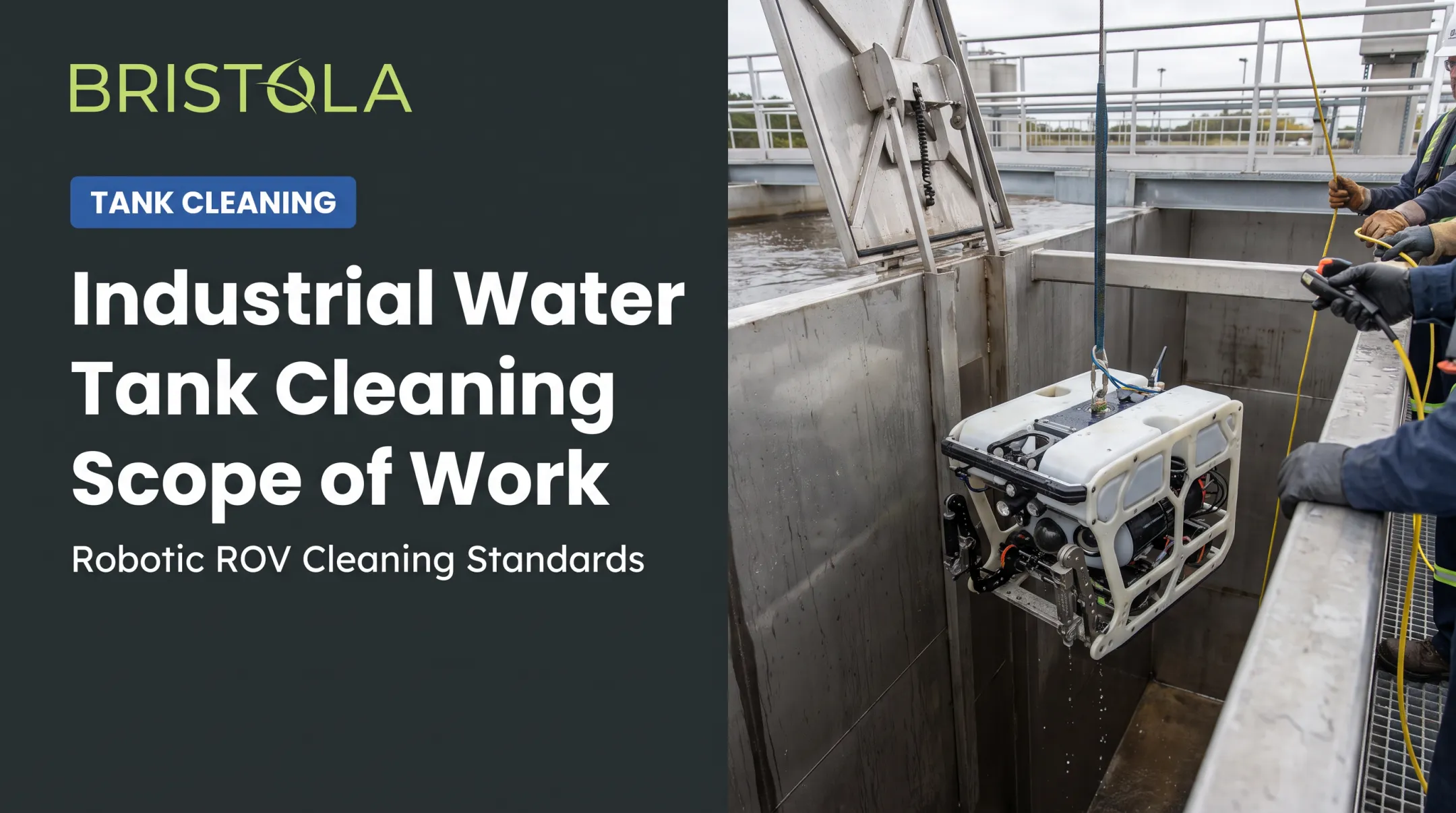
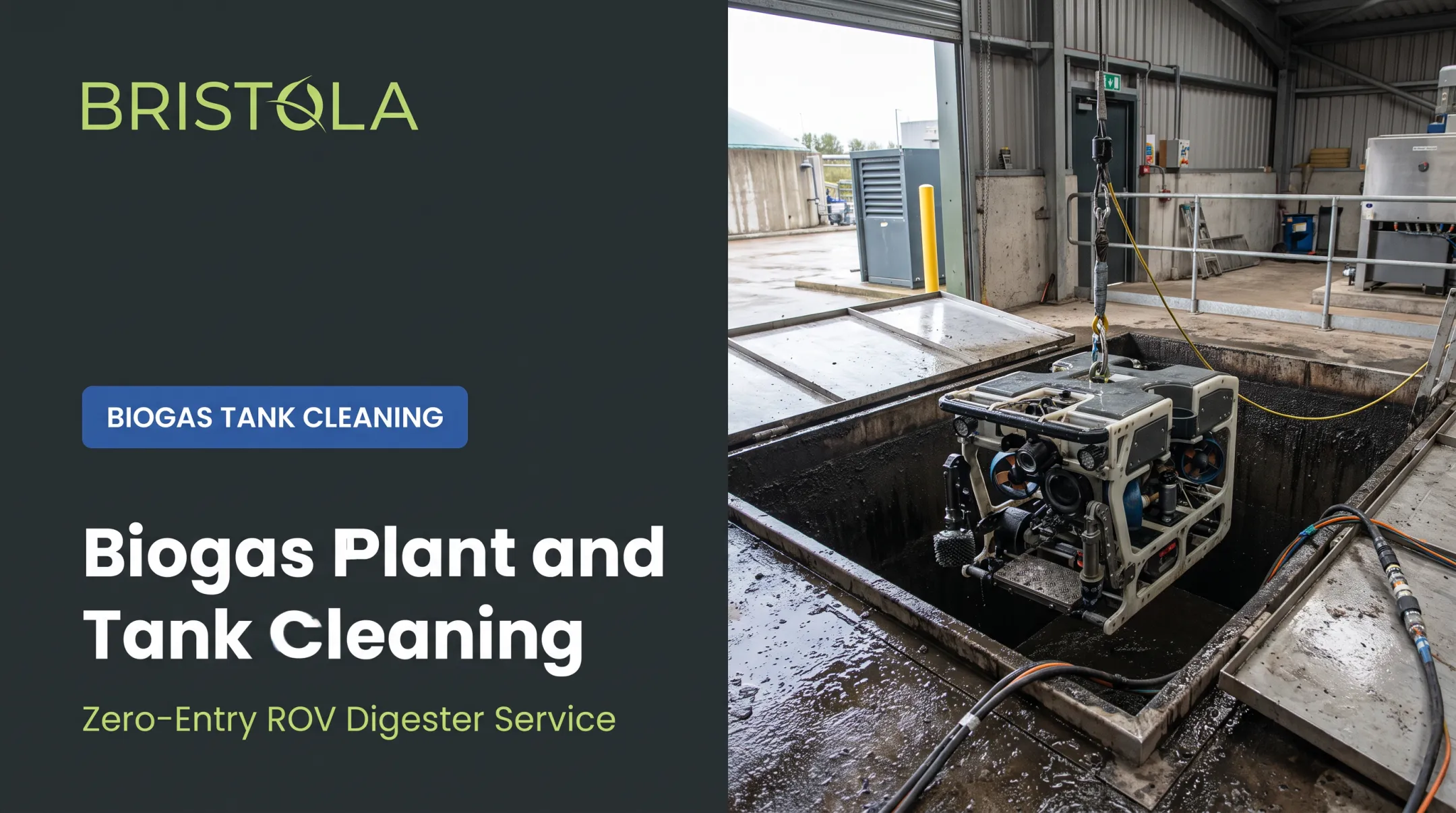
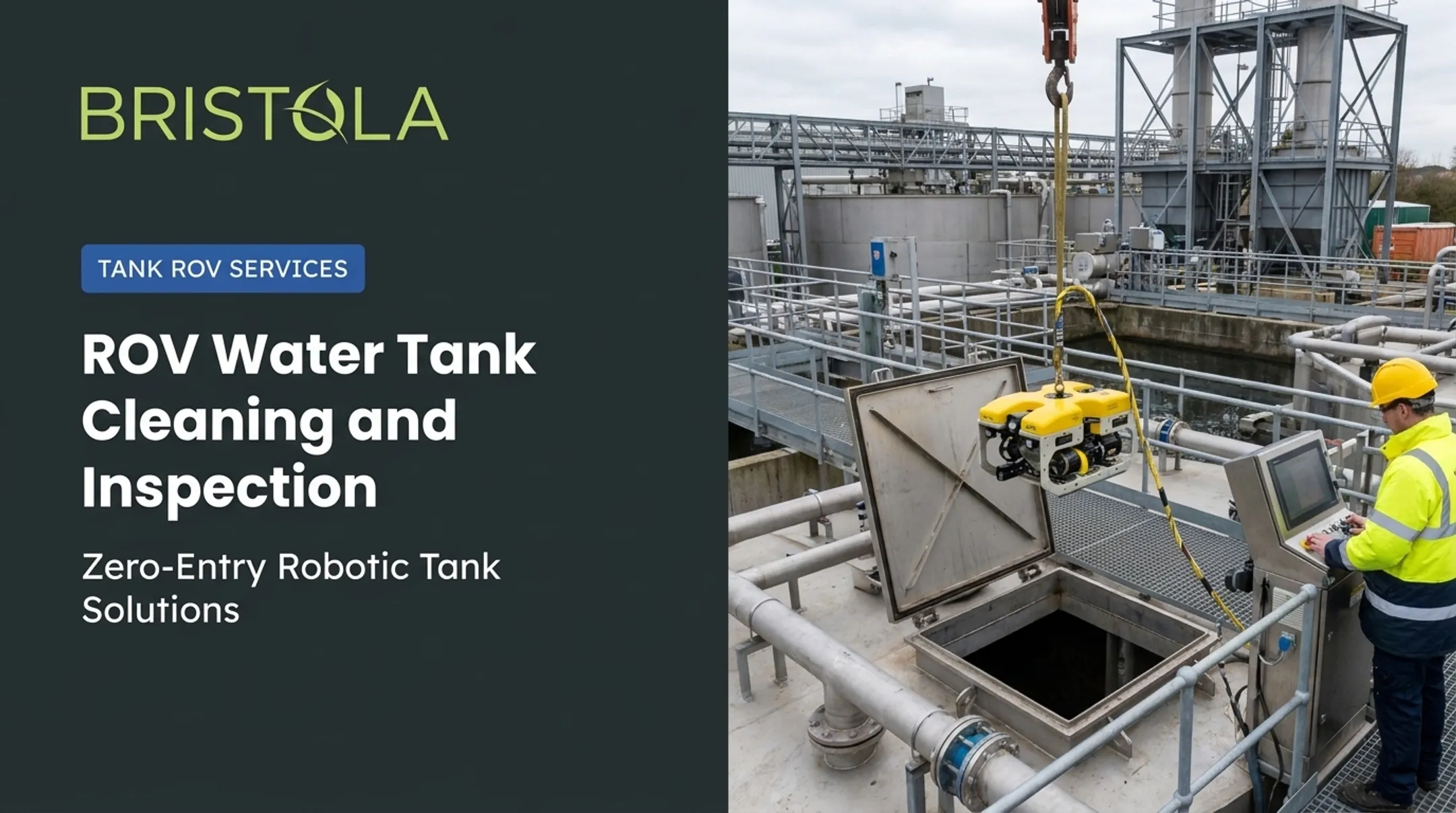
Remote-controlled robotic systems clean and inspect tanks with no one entering the vessel and without taking the tank offline. Bristola’s patented equalization-chamber entry system uses a reusable portal that fits manholes 24 inches or larger. A submersible ROV enters through the portal, descends on a winch, and removes sludge through a flexible hose while the facility keeps running. Tools needed:
- Sealed entry portal
- Submersible ROV with vacuum hose
- Winch and topside controls Steps:
- Deploy the robot through a sealed entry port while the tank stays operational
- Robot vacuums sediment and captures video/photo documentation
- Data is compiled into a facility condition report for review Pros:
- No downtime or temporary water storage
- No human exposure to confined-space hazards Cons:
- Upfront cost to install the entry system For continuous-operation sites, avoided shutdown costs often offset that investment. One traditional digester cleanout—draining, roof removal, and crane-and-clamshell excavation—took 12 days. Robotic cleaning is designed to finish the job without that stoppage.

How to Interpret Inspection Results
Misreading tank conditions is costly either way — it can delay a critical repair or trigger a shutdown that wasn't necessary.
| Condition | What You'll See | Action |
|---|---|---|
| Normal | Clear water, minimal sediment, intact coatings | Continue routine monitoring |
| Minor issues | Light sediment buildup, small coating wear, slight discoloration | Schedule cleaning or spot repair within weeks |
| Out-of-spec | Heavy corrosion, coating delamination, biofilm growth, structural cracks | Requires immediate professional intervention |
One documented case found heavy corrosion in the gas zone of a digester's concrete wall. The top four feet needed cleaning, repair, and a corrosion-resistant epoxy coating. That's the kind of finding that shouldn't wait for the next scheduled cleanout.

When you review the data, treat borderline readings with the same care as obvious defects:
- Coating readings outside the specified dry-film-thickness range are not automatic proof of failure, but they do need evaluation against the coating system's spec
- Sediment depth should be measured at multiple points, not estimated from a single sample
Common Errors in Water Tank Inspections
Even experienced teams fall into predictable traps:
- Skipping interior inspection because the exterior looks fine. Surface appearance tells you almost nothing about internal corrosion
- Misjudging sediment depth by measuring at just one point instead of surveying multiple locations
- Returning the tank to service without post-cleaning water tests that confirm quality before reuse
- Overlooking vents, hatches, and overflow pipes during visual checks, which are common points of failure

Safety and Best Practices
Confined space entry is a serious, regulated activity, not a routine maintenance task.
- Follow lockout/isolation procedures and confined space entry protocols whenever human entry is unavoidable
- Use proper PPE and disinfect all tools before they contact potable water
- Prioritize no-entry technologies to eliminate confined-space risk entirely, rather than managing that risk
- Maintain documentation and inspection records to track tank condition over time
That last point is why Bristola exists. Founder Jared Burma built the company's zero-human-entry system after his own close call inside a tank in 2019. That experience shaped a business around one premise: the safest confined space entry is the one that never happens.
Traditional cleaning meant draining tanks and sending workers inside to remove sludge, exposing them to hazardous atmospheres and OSHA's confined-space regulations. Robotic access removes that exposure at the source.
Conclusion
Accurate, regular water tank inspections protect water quality, structural integrity, and the crews who maintain them. The right method, whether traditional, diver-assisted, or robotic no-entry, depends on your downtime tolerance and safety requirements.
Whatever you choose, turn results into an action plan: routine monitoring, scheduled repair, or immediate intervention. Data left in a file cabinet wastes the inspection.
Frequently Asked Questions
How often should water tanks be inspected?
Professional inspections are recommended every 3-5 years, though this varies by tank type and service history. Daily or weekly visual checks by operators help catch issues between formal inspections.
What types of water tank inspections are there?
Common types include visual checks, structural assessments, internal inspections, and specialized ROV or robotic inspections for tanks that need to stay in service.
What are signs my water tank needs cleaning?
Cloudy water, unusual odor, visible sediment, or discoloration are the clearest indicators. Any of these signs warrant scheduling cleaning soon.
How much does it cost to clean out a water tank?
Costs vary significantly based on tank size, method chosen, and whether downtime or water loss is involved. Ask providers for quotes tied to your tank size, access, and configuration.
Can water tanks be cleaned without draining them?
Yes. Drain-and-enter and diver-assisted methods usually require downtime, while no-entry robotic cleaning can remove sediment while the tank stays in service—choose based on safety limits and how much shutdown you can allow.