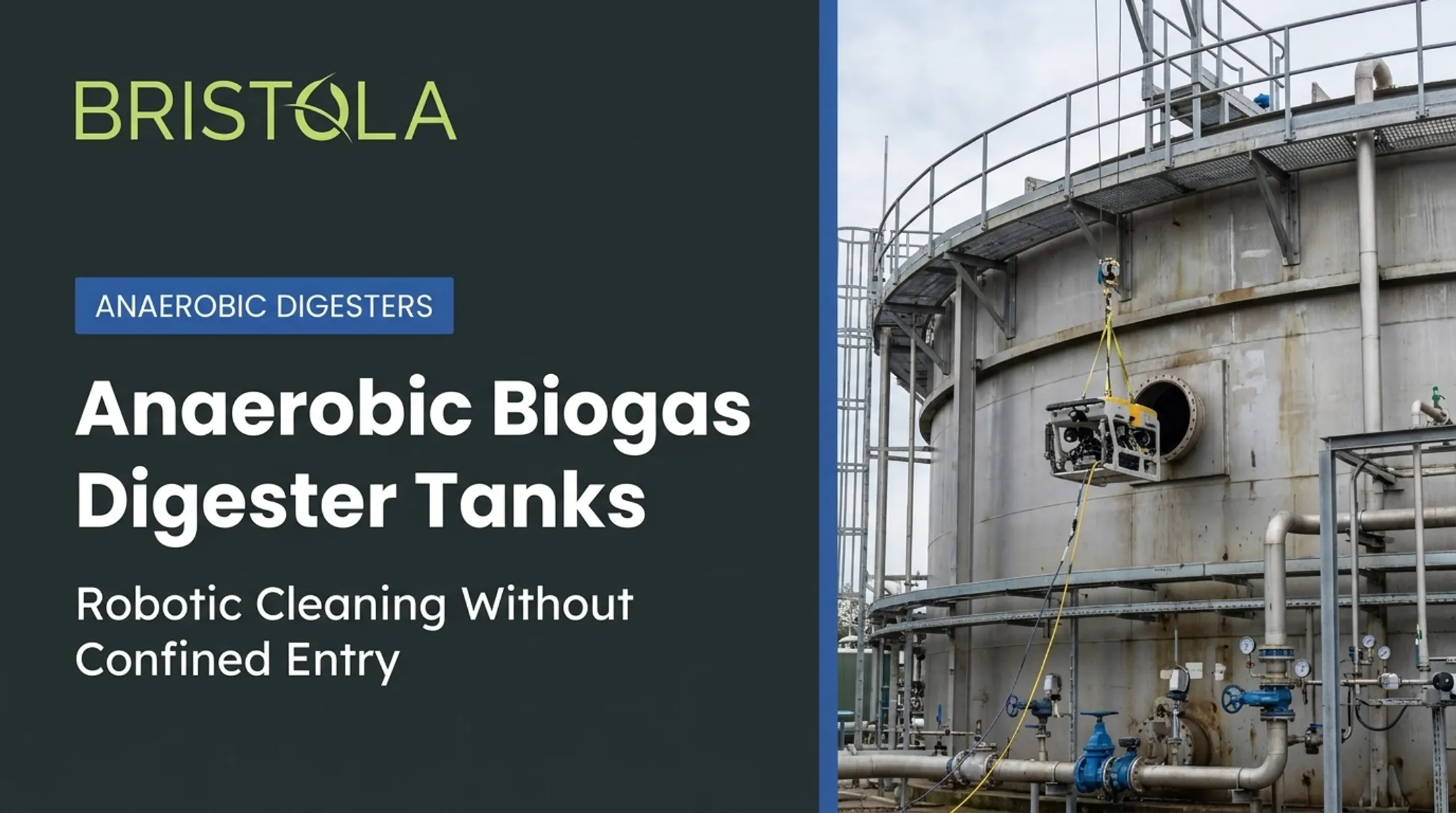
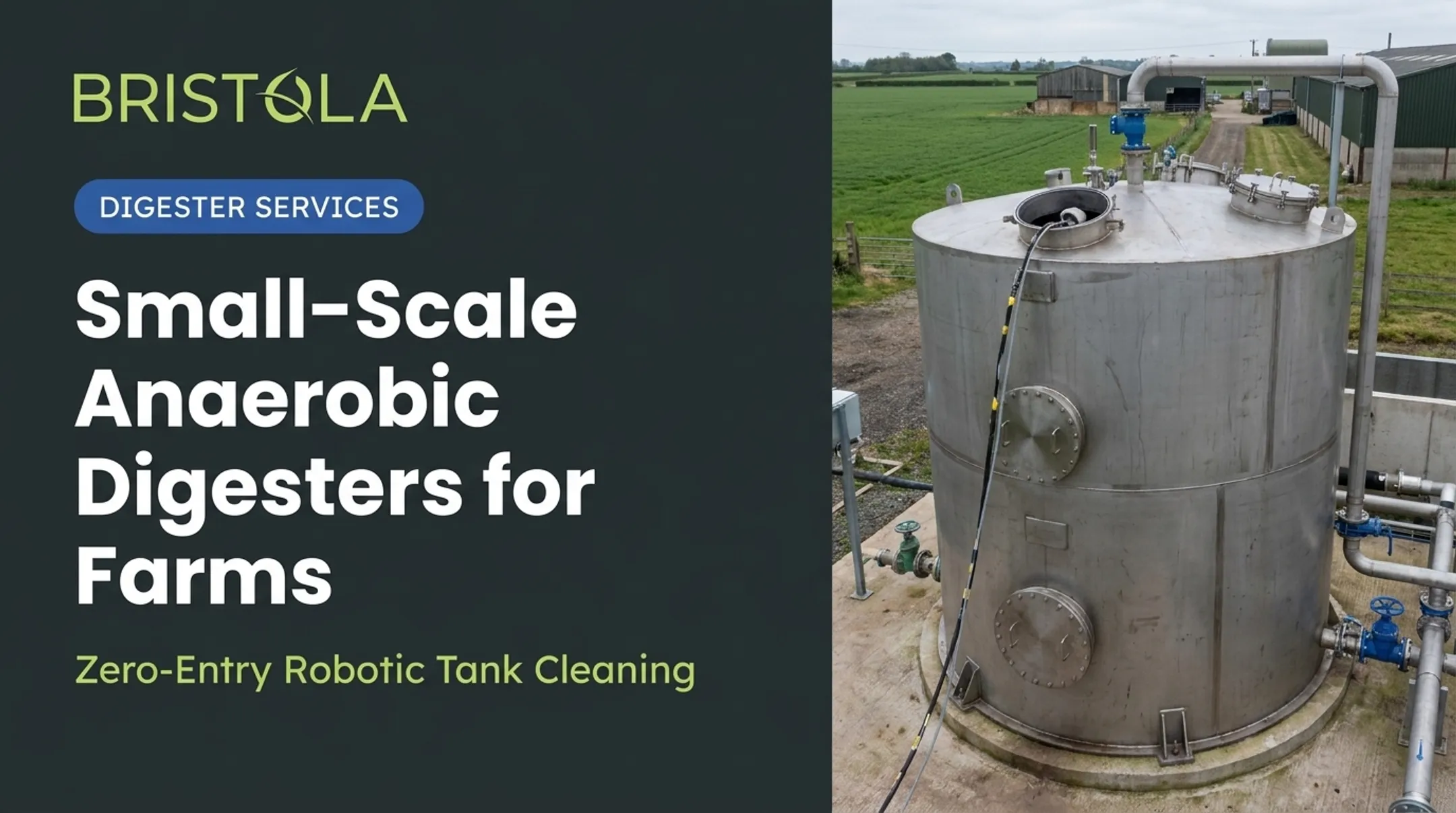
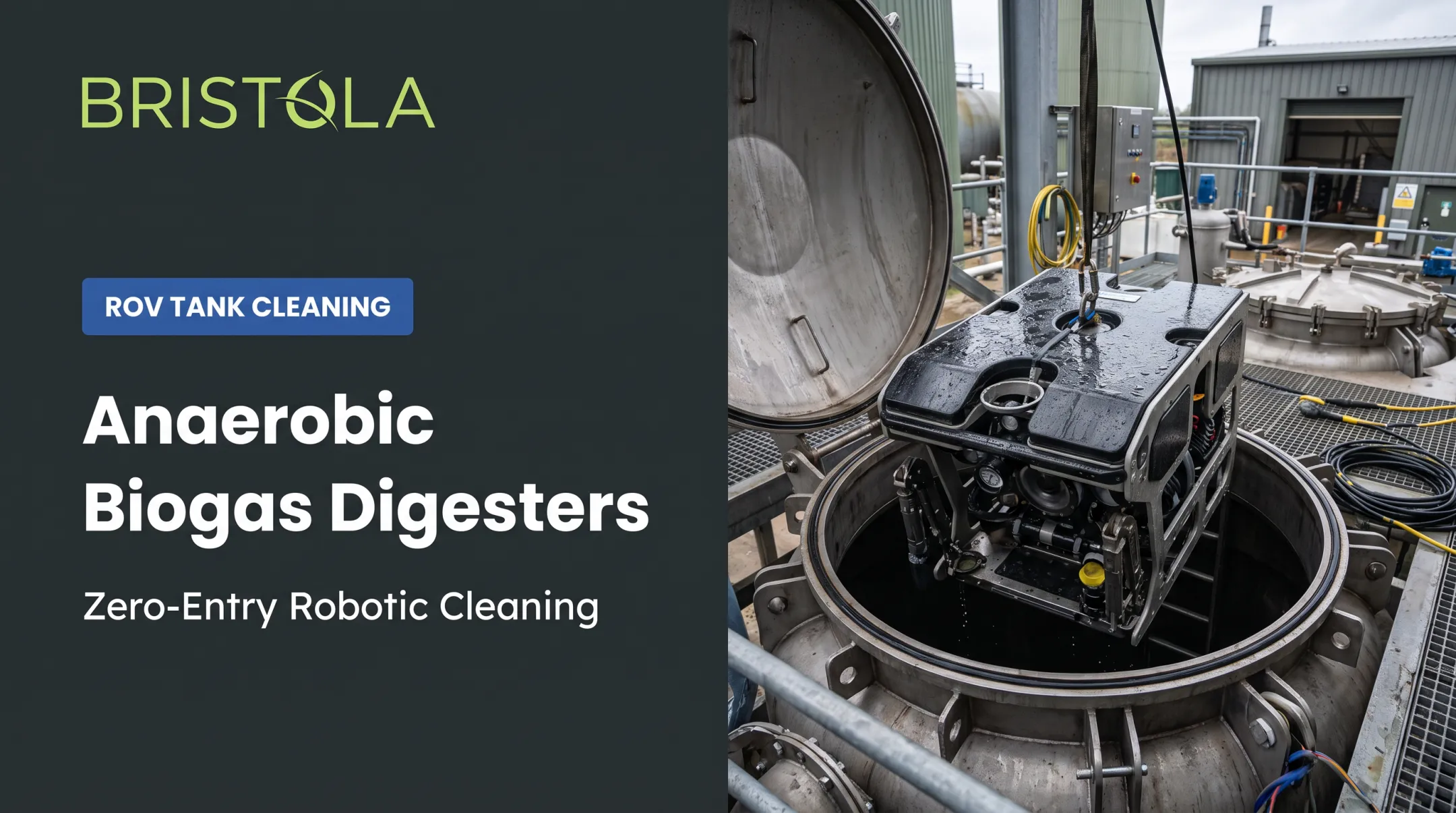
But operators know these systems aren't maintenance-free. Odor breakthroughs, cover damage, and sludge buildup are common headaches. Traditional cleaning means draining the lagoon, halting biogas production, and sending workers into a confined space that OSHA and NIOSH both flag as genuinely dangerous.
This article breaks down how covered lagoon digesters work, the benefits they deliver, and what it actually takes to keep one performing at capacity year after year.
Key Takeaways
- Covered lagoons capture methane under an impermeable cover, controlling odor while creating usable biogas
- Temperature and pH management directly affect methane yield : cold weather slows bacterial activity quickly
- Sediment buildup is inevitable and requires periodic cleaning to protect digester capacity
- Zero-human-entry robotic cleaning removes sludge without draining the lagoon or stopping production
What Is a Covered Anaerobic Lagoon Digester?
A covered anaerobic lagoon is a large earthen or lined basin fitted with a flexible, gas-tight cover (typically HDPE) that traps the methane produced as microorganisms break down organic waste. The EPA's AgSTAR program describes this design as a lagoon where biogas is recovered under a flexible cover and piped to a combustion device rather than escaping into the atmosphere.
Uncovered lagoons versus covered lagoons:
- Uncovered lagoons release methane and odor compounds directly into the air
- Covered lagoons trap that gas for energy use and cut odor
Many designs use two cells: one covered cell for digestion at a constant level, and one uncovered cell for storage that rises and falls seasonally.
Typical lagoon depths run 8 feet or greater, since deeper designs are more cost-effective to build. Detention times vary by design and climate, and site engineers size that duration around volatile-solids loading and a minimum retention period suited to the region.

Common Industries That Use Covered Lagoon Digesters
Covered lagoons show up most often in:
- Dairy and livestock operations
- Food and beverage processing plants
- Slaughterhouses and protein processors
- Municipal and industrial wastewater treatment facilities
Bristola works across many of these same sectors. Its submersible robotic cleaning systems service anaerobic digesters, biogas digesters, and covered lagoons for renewable energy operators, food processors, and agricultural clients nationwide.
How Covered Anaerobic Lagoon Digesters Work
Anaerobic digestion happens in stages. Influent enters the lagoon and separates into solid and liquid layers. Bacteria then break down organic material in two phases:
- Acid formation: Complex compounds convert to volatile fatty acids
- Methane production: A different set of microorganisms convert those acids into biogas
Two conditions determine how well this works:
- Temperature: Cold slows bacterial activity, so unheated lagoons produce less biogas in winter than in summer, according to Iowa State University Extension.
- pH: The optimal range sits between 6.6 and 7.6 (neutral to slightly basic), per Oklahoma State University Extension. Drift outside that window and methane-forming bacteria struggle.
The cover itself does the heavy lifting on gas capture. Methane and carbon dioxide rise and collect beneath the impermeable membrane, where they're piped out for combustion, electricity generation, or upgrading to renewable natural gas.
Design matters too. Constant-volume lagoons keep the covered cell at a steady level to optimize digestion, while rise-and-fall designs let liquid levels shift with storage needs, a distinction that affects how the cover is engineered and anchored.

That flexibility helps explain why covered lagoons remain one of the most widely used digester types on American farms. EPA AgSTAR's database shows 174 of the 400 operational manure-based digester projects it tracks use covered-lagoon designs, roughly 43% of documented projects.
Key Benefits of Covered Anaerobic Lagoon Systems
Covered lagoons rely on natural decomposition instead of mechanical tanks and heating systems, which keeps capital costs down. One economic study found covered-lagoon digesters delivered the highest net present value for farms with 2,600 cows or more.
Cost is only part of the return. Operators also gain:
- Captured methane that fuels electricity, heat, or pipeline-quality renewable natural gas
- Covers that trap odors and emissions before they reach neighboring properties
- Digested effluent that doubles as nutrient-rich fertilizer and cuts farm input costs
- Measurable climate gains — livestock digester projects in the EPA’s database cut 14.84 million metric tons of CO2 equivalent in 2023 (all digester types, not covered lagoons alone)
Shifting manure from passive decomposition to captured energy turns a compliance burden into revenue, lower inputs, and fewer neighbor complaints.
Common Challenges and Maintenance Requirements
Sludge doesn't disappear. It settles. Over months and years, sediment accumulates at the bottom of the lagoon, shrinking the active digestion volume and dragging down biogas output. Oklahoma State Extension recommends removing roughly half the accumulated solids once sludge nears the lagoon's design capacity.
Traditional cleaning creates real problems:
- Draining the lagoon halts biogas production entirely
- Crews must enter a confined space with hazardous gas potential
- OSHA has documented worker deaths from hydrogen sulfide exposure during manure-pit cleaning
- NIOSH reports that roughly 60% of confined-space fatalities involve would-be rescuers trying to help a first victim
That safety data isn't abstract. It's the reason confined-space entry for lagoon cleaning requires atmospheric testing, ventilation, an attendant, and a rescue plan every single time.
Sludge is only half the maintenance load. Cover damage is the other recurring issue. Wear, weather, and wildlife can compromise the membrane, leading to gas leaks or reduced capture efficiency. Regular visual inspection catches small tears and seam failures before they become expensive repairs.
Scheduled solids removal plus routine cover checks keep active digestion volume and gas capture on target—neglect either one, and output fades long before a hard failure shows up.

Optimizing Performance: From Passive to Hybrid Digestion
A passive, uninsulated, unmixed lagoon captures only a fraction of the biogas potential sitting in its feedstock. Without heat or agitation, solids settle unevenly, cold zones form, and bacterial activity slows in winter months.
Three upgrades change that equation:
- Insulation — reduces heat loss and stabilizes internal temperature through seasonal swings
- Heating — keeps bacterial activity in a productive range even in cold climates
- Mixing — prevents solids from settling into dead zones and improves contact between bacteria and feedstock
Iowa State research confirms covered lagoons and heated, mixed digesters behave differently in gas-output patterns. Heated systems maintain more consistent production through winter, while unheated lagoons see clear seasonal dips.
Monitoring matters just as much as equipment. Tracking pH, alkalinity, and volatile fatty acid levels helps operators catch chemical imbalances before they show up as a production slump. Bristola's cleaning systems already track facility condition and performance data through sonar navigation and real-time monitoring during service visits. That gives operators a clearer picture of sediment levels and structural condition alongside routine maintenance.
How Bristola's Zero-Human-Entry Technology Supports Covered Lagoon Digesters
Bristola built its cleaning system around a simple problem: lagoons need regular sludge removal, but draining them means lost production and safety risk. Its patented robotic system removes sludge without draining the lagoon or taking the cover off.
Here's how it works:
- A patented entry portal and pressure box are installed at the cover, compatible with manholes 24 inches in diameter or larger
- A remote-controlled submersible robot deploys through this portal on a winch, reaching the lagoon floor without draining the basin or removing the cover
- Sludge travels out through a flexible hose to a processing option chosen by the operator
- The robot retracts into the pressure box when cleaning is complete

The lagoon stays covered, stays full, and keeps producing biogas the entire time. Initial installation does require draining and partial cover removal, but every cleaning cycle after that happens without downtime or human entry into the confined space.
For renewable energy operators managing RNG output (clients like BERQ RNG and other RNG operators) this means consistent digester capacity without the production gaps that traditional draining creates. No crew in a hazardous atmosphere. No weeks of lost biogas while a lagoon sits empty.
Frequently Asked Questions
How much does a covered anaerobic lagoon digester cost?
Costs vary widely depending on lagoon size, cover material, and whether heating or mixing equipment is included. A design engineer can provide site-specific estimates based on your feedstock volume and location.
Can human waste be turned into biogas in a covered anaerobic lagoon digester?
Yes, human waste (biosolids) can be anaerobically digested similarly to animal manure. However, EPA Part 503 imposes pathogen control, pollutant limits, and monitoring requirements that differ from agricultural manure regulations.
Do covered anaerobic lagoon digesters produce odors?
Covers significantly reduce odor compared to uncovered lagoons by trapping gases that would otherwise escape. Damaged covers or poor maintenance can still allow odors to leak out over time.
How often should a covered lagoon digester be cleaned?
Cleaning frequency depends on feedstock solids content and how fast sediment builds up in the lagoon. Most facilities set the interval from periodic inspection and sediment checks rather than a fixed calendar.
What is the ideal temperature for anaerobic digestion in a covered lagoon?
Mesophilic digestion generally performs best between roughly 77-95°F. Colder temperatures slow bacterial activity and cut methane production significantly.