Inspections aren't optional best practice. They're mandated by federal rules, state codes, and industry standards, with real fines and real consequences for skipping them. This guide breaks down the regulations, how often inspections are required, what API 653 actually covers, and how robotic technology is reshaping what "in compliance" looks like.
Key Takeaways
- AST inspections are governed by EPA/SPCC, OSHA, state codes, and standards such as API 653 and STI SP001
- Inspection intervals run from monthly checks to 20+ year internals, based on tank type, size, and risk category
- Traditional internal inspections require draining the tank and confined-space entry—both costly and high-risk
- Robotic, in-service methods can complete some inspections and cleaning without downtime
- Non-compliance risks fines, environmental damage, and preventable safety incidents
What Are Aboveground Storage Tanks and Why Do They Need Inspection?
Aboveground storage tanks (ASTs) are industrial vessels that store liquids above grade rather than underground. They come in several forms: shop-fabricated tanks, field-erected tanks, portable containers, and secondary containment systems. They hold everything from petroleum and chemicals to water, wastewater, and digestate, and appear in refineries, anaerobic digesters, and food processing plants alike.
Common failure mechanisms include:
- Corrosion, including microbiologically influenced corrosion (MIC) that eats through tank bottoms undetected
- Weld or crack failures, often at roof-to-shell joints
- Foundation settlement, which distorts shells and stresses piping
- General structural fatigue from age and cyclic loading
A documented case shows the cost of cutting corners. A 300,000-barrel tank pulled for a scheduled 10-year internal inspection had bottom sampling limited to just 21 locations because replacing the lining was estimated at $750,000.
The tank later failed, triggering a $2.3 million cleanup, $300,000 above comparable local repairs. Corrosion under the bottom, later attributed to MIC, was the culprit.

That failure was preventable. Regular inspection is what stands between a functioning tank and a million-dollar cleanup.
Federal, State, and Industry Regulations Governing AST Inspections
EPA's SPCC Rule
The Spill Prevention, Control, and Countermeasure (SPCC) rule under the Clean Water Act applies once a facility's aggregate aboveground oil storage exceeds 1,320 gallons, counting any container 55 gallons or larger. Under 40 CFR 112, owners must:
- Maintain written inspection and testing procedures
- Retain signed inspection records with the SPCC Plan
- Review the Plan at least every five years
EPA does not prescribe a fixed inspection calendar. Instead, it directs qualified facilities to follow industry standards like STI SP001 for integrity inspections.
OSHA's Role
OSHA doesn't regulate tank corrosion intervals, but it governs the work around the tank:
- 1910.106 requires leaks and deformations to be corrected before a tank returns to service, plus proper support and stress controls
- 1910.146 mandates confined-space evaluation, entry permits, attendants, and rescue planning for permit-required spaces
Confined-space work carries serious risk. OSHA recorded 1,030 confined-space deaths across all U.S. industries between 2011 and 2018. Tank entry remains high-risk even when procedures are followed.
State Layers
Many states add their own AST rules on top of federal requirements. EPA is explicit that state and local codes may apply in addition to SPCC, so operators need to check with their state environmental agency rather than assume federal compliance covers everything.
Key Industry Standards
- API 653 — governs field-erected steel tanks built to API 650/12C, covering repair, alteration, and reconstruction
- STI SP001 — applies to shop-built and smaller field-erected tanks using a risk-based Category 1-3 system
- NFPA 30/30A — fire and combustible-liquid safeguards, plus local IFC/IBC codes that may add municipal requirements

How Often Do Aboveground Storage Tanks Need to Be Inspected?
Routine Owner Inspections
- Monthly: Visual checks of shell, containment, leak detection, and safety equipment — performed by trained facility personnel
- Annual: Broader checks covering fencing, venting, cathodic protection, and overflow systems
STI SP001 Risk-Based Schedule
STI SP001 sorts tanks into three risk categories based on containment, release detection, size, and inspection history. Depending on category:
- Formal external inspections: every 5-20 years
- Formal internal inspections: every 10-20 years
- Leak testing (as an alternative for higher-risk tanks): every 1-10 years
Some Category 1 tanks under 30,000 gallons with proper spill control and continuous release detection can skip internal entry inspections entirely in favor of leak testing.
API 653 Schedule
API 653 doesn't use a fixed calendar. Instead, inspectors calculate intervals from metal loss, corrosion rate, and remaining life data specific to each tank.
As a general guide, external inspections commonly occur at least every 5 years. Internal inspections typically range from 10 to 30 years, depending on calculated corrosion trends.

Those intervals also drive cost. Choosing the wrong standard for your tank type can mean paying for a more intensive API 653 program when a risk-based STI SP001 approach would satisfy SPCC requirements at lower cost. The reverse is true if your tank's risk profile demands more rigor.
Taking a large tank out of service is expensive in labor and lost operating time. In one EPRI/TVA demonstration, robotic inspection of three ~1-million-gallon fuel-oil tanks finished in 3.5 days and eliminated an estimated 850 confined-space hours versus traditional methods—the kind of downtime burden a conventional out-of-service inspection usually creates.
What Is an API 653 Tank Inspection?
API 653, developed by the American Petroleum Institute, governs inspection, repair, alteration, and reconstruction of field-erected storage tanks. It addresses fitness-for-service questions, brittle fracture risk, and overall structural integrity.
Components typically inspected include:
- Foundation and bottom plates
- Shell courses and welds
- Roof structure
- Nozzles and appurtenances
Who Performs the Inspection
An API 653 inspection must be conducted by an Authorized API 653 Inspector. Certification requires:
- Relevant tank experience within the past 10 years while employed by an authorized inspection agency
- A 7.5-hour exam with 170 questions (140 scored), split between open- and closed-book sections
- Recertification every 3 years, with at least 20% of that period spent on active inspection work
The credential signals real field experience, not a paper qualification.
The Traditional Inspection Process vs. Modern Approaches
The Traditional Route
A conventional out-of-service internal inspection typically follows this sequence:
- Plan the outage and arrange temporary storage
- Empty the tank
- Degas and clean the interior
- Strip old paint/coating
- Conduct the inspection
- Complete repairs
- Repaint and return to service

This process can take weeks. It requires confined-space entry under OSHA's permit-required protocols, including attendants and rescue planning, plus emissions released during venting and cleaning.
Why It's Costly Beyond the Inspection Itself
- Lost production during the outage
- Temporary storage costs for displaced material
- Confined-space entry risk for personnel
- Air emissions from venting operations
The Shift Toward In-Service Inspection
Those outage costs pushed the industry toward in-service methods. Inspectioneering reported more than 700 tanks had been inspected using in-service robotics by late 2012, and adoption has continued since. These systems collect floor-thickness data without draining the tank. Some tanks still need full out-of-service work based on condition or age.
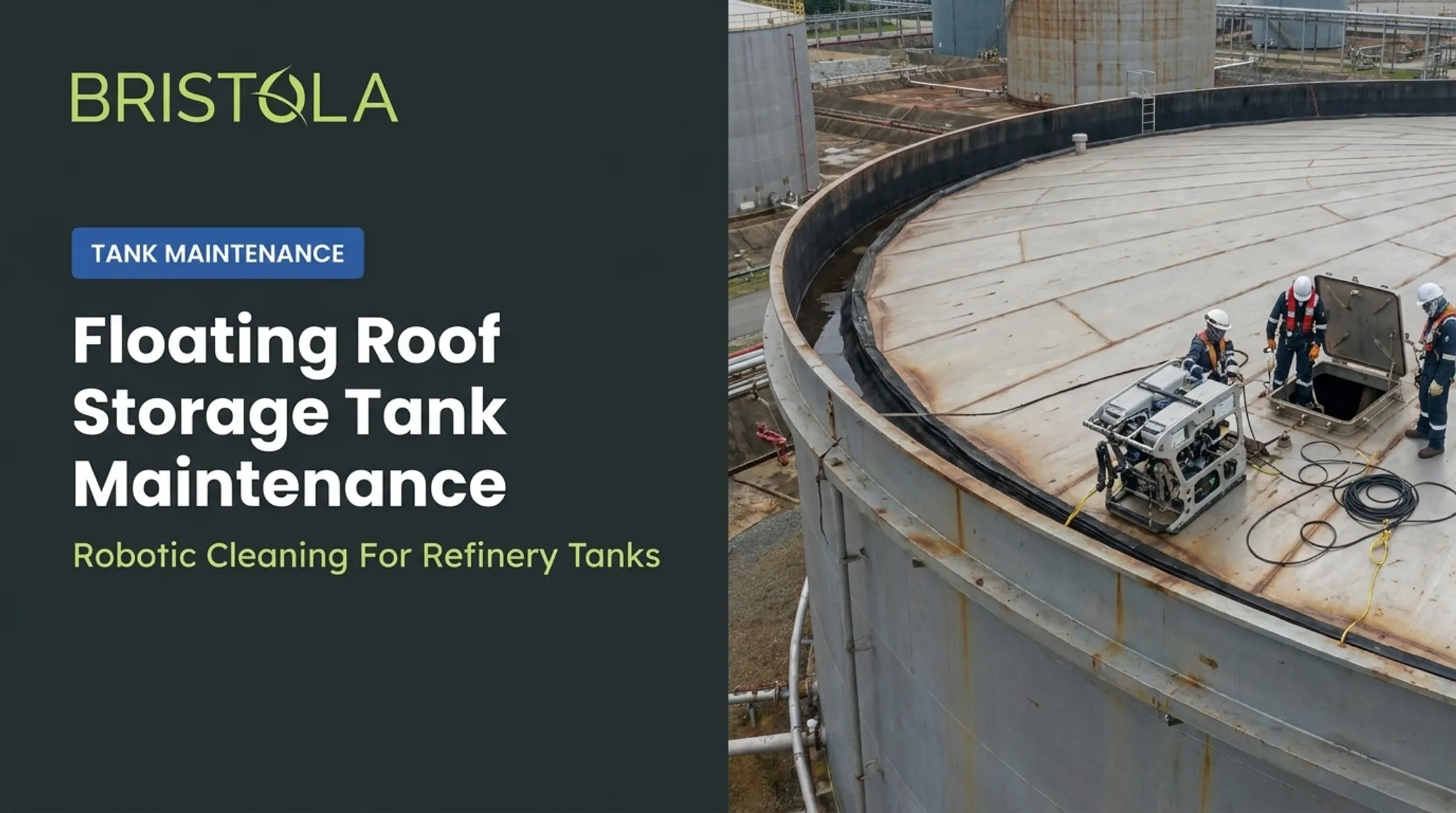
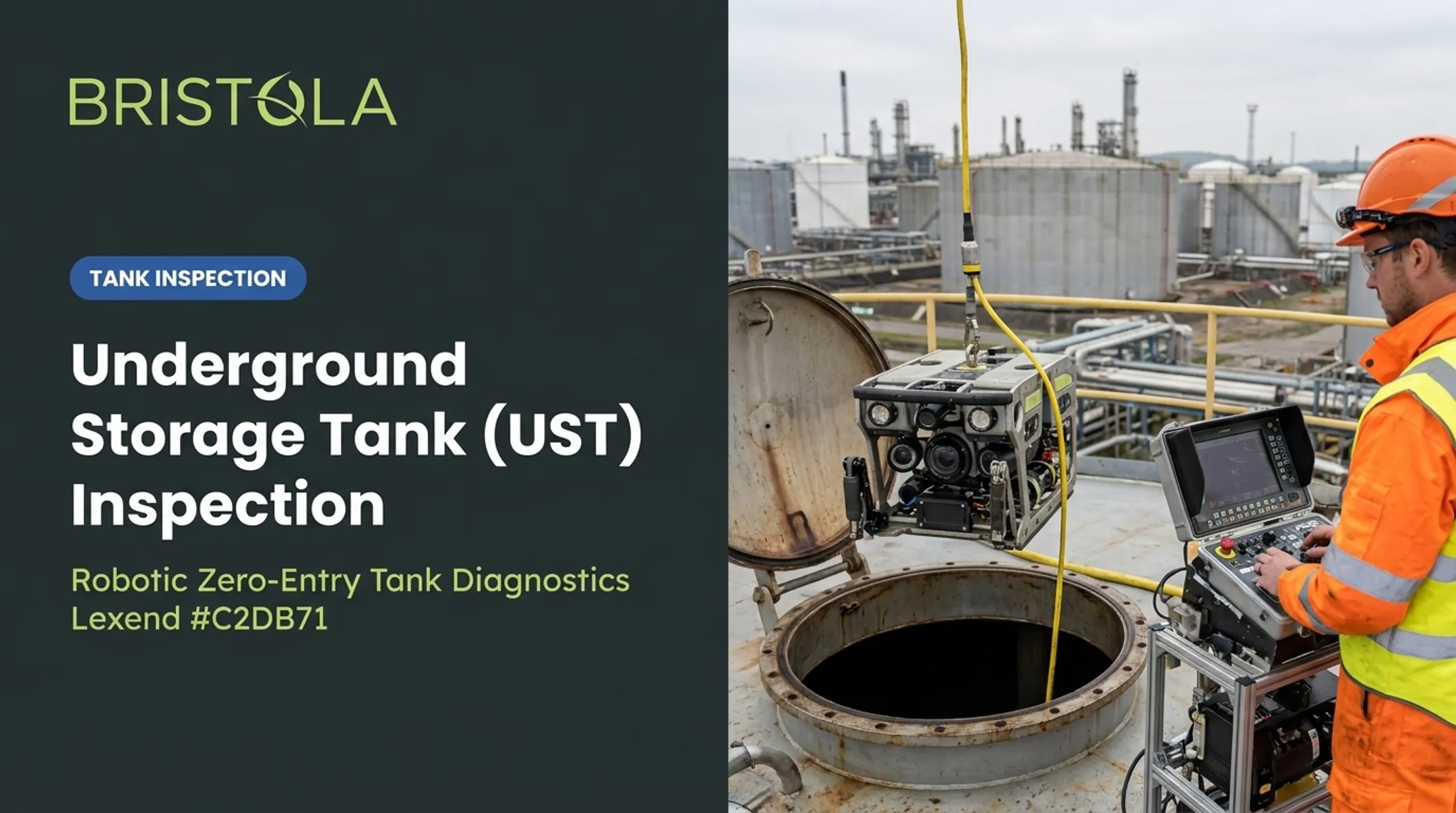
Between formal internals, in-service cleaning and monitoring help limit sludge buildup and keep condition data current without a shutdown. Bristola's patented entry system installs over an existing roof manhole (24 inches or larger) so a remote-controlled submersible robot can enter a full, operating tank—no draining and no human entry. The system:
- Removes sludge through a flexible hose while the tank stays online
- Captures sonar data during the cleaning pass to support condition tracking
- Stores and reports visit data for facility maintenance records

For anaerobic digesters, refineries, and renewable energy facilities, that means less lost production between required API 653 internals. It does not replace a formal out-of-service internal inspection when one is due.
Building a Compliant AST Inspection Program
A solid compliance program isn't complicated. It just needs to be consistent.
- Maintain a documented checklist covering visual, structural, containment, and leak-detection elements for monthly and annual reviews
- Work with certified third-party inspectors for formal external and internal work required under SPCC, API 653, or STI SP001
- Keep detailed records. Regulators expect them during audits, and they're the only way to track corrosion trends over years
Between formal inspections, ongoing condition data fills the gaps. Bristola's system evaluates and reports on facility condition during each cleaning visit, giving operators extra data points beside formal inspection records (not a replacement, but a useful addition to the file).
Frequently Asked Questions
What are the regulations for aboveground storage tanks?
ASTs are regulated under EPA's SPCC rule (40 CFR 112), OSHA workplace safety standards, and applicable state and local codes. Industry standards like API 653 and STI SP001 guide the actual inspection practices.
How often do aboveground storage tanks need to be inspected?
Monthly and annual routine inspections are standard for all tanks. Formal external inspections occur every 5-20 years, and internal inspections every 10-30 years, depending on tank type and risk category.
What is an API 653 tank inspection?
API 653 is the American Petroleum Institute's standard for inspecting, repairing, and maintaining field-erected steel storage tanks. It covers structural integrity, corrosion assessment, and fitness-for-service decisions.
Who is responsible for AST inspections?
Facility owners and operators are ultimately responsible for compliance. Formal inspections, however, must be conducted by certified API 653 or STI SP001 inspectors.
What happens if an AST fails inspection?
Failed inspections typically require corrective repairs within a defined timeline before the tank returns to service. Non-compliance can lead to regulatory fines and, in serious cases, forced shutdowns.
Can tank inspections be done without taking the tank out of service?
Yes, in certain cases. Robotic and remote-entry tools can measure floor thickness and monitor condition while the tank stays full and operating. That cuts downtime and avoids confined-space entry.