What does a tank inspector do?
A tank inspector evaluates the condition, performance, and maintenance needs of a tank or lagoon system. That can include checking for sludge buildup, structural wear, corrosion, roof or mixer issues, entry-point condition, and operational risks. At Bristola, inspection-related services also include sediment mapping and condition assessment data that help operators plan cleaning, repairs, and preventive maintenance more accurately.
How often should a water tank be inspected?
While specific inspection intervals depend on the tank type, contents, and operating conditions, Bristola's approach emphasizes proactive maintenance planning. Using sediment mapping and condition assessment data, operators can better understand buildup patterns and structural wear over time, enabling them to set maintenance schedules that prevent unplanned shutdowns and extend the useful life of liquid storage assets.
What is the procedure of tank cleaning?
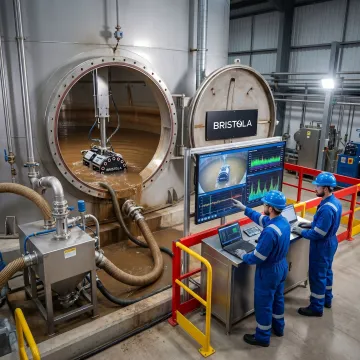
Tank cleaning typically starts with assessing the tank's condition, sludge levels, access points, and operational constraints. Traditional methods often require draining the tank and sending crews inside. Bristola's approach uses zero-human-entry robotic systems to remove solids while the tank remains in service when conditions allow. For some retrofit projects, an initial manual cleanout and hardware installation may be required before future in-service cleanings.
Can tanks be cleaned without shutting down operations?
Yes, many tanks and covered lagoons can be cleaned without shutting down operations when they are equipped for Bristola's zero-human-entry system. The robotic cleaning process is designed to remove sludge and sediment while the facility remains active, which helps avoid production losses, temporary storage costs, and the scheduling challenges that come with draining and taking assets offline.
Why is zero-human-entry tank cleaning safer than traditional methods?
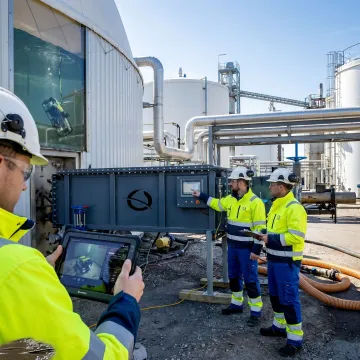
Zero-human-entry tank cleaning improves safety by removing the need for workers to enter hazardous confined spaces where exposure, engulfment, atmospheric, and access risks are higher. Bristola's remotely operated system performs cleaning from outside the tank while maintaining operational control over sludge removal. This approach helps facilities reduce employee exposure hours, improve safety planning, and support more consistent maintenance practices.
What types of tanks and facilities does Bristola service?
Bristola supports a wide range of liquid storage environments, including anaerobic digesters, biogas digesters, covered lagoons, wastewater and water treatment tanks, food and beverage processing facilities, slaughterhouse and protein facilities, pulp and paper operations, steel mills, refineries, and other industrial or commercial storage systems. Services are tailored to the tank design, contents, and operating requirements of each site.
Can existing tanks be retrofitted for future robotic cleaning?
Yes, existing tanks and storage facilities can often be retrofitted with the hardware needed for future zero-human-entry service. The retrofit process may begin with manual cleaning to remove existing sediment, followed by installation of entry portals and system components. Once installed, the setup allows Bristola to re-enter and service the tank more efficiently over the long term with less disruption.
Where does Bristola provide tank inspection, cleaning, and repair services?
Bristola is headquartered in Des Moines, Iowa, and supports industrial tank and lagoon projects across both domestic and international service areas. Current service regions include the United States, Canada, India, Europe, the Middle East, and Australia, making Bristola a global resource for facilities that need safer, more efficient tank maintenance solutions.