Automated and automatic tank cleaning systems change that equation. Instead of sending a worker into a toxic, oxygen-poor space, mechanical and robotic systems now handle the job — some without ever stopping production.
This article covers how these systems work, why manual cleaning is losing ground, which industries are adopting the technology fastest, and how to choose the right solution for your facility.
Key Takeaways
- Automated tank cleaning eliminates confined-space entry and the hazards that come with it
- Robotic systems clean tanks and covered lagoons without stopping production
- Systems span fixed spray-ball CIP setups to fully submersible zero-entry robots
- Choose based on residue type, tank geometry, and compliance requirements
What Is Automated/Automatic Tank Cleaning?
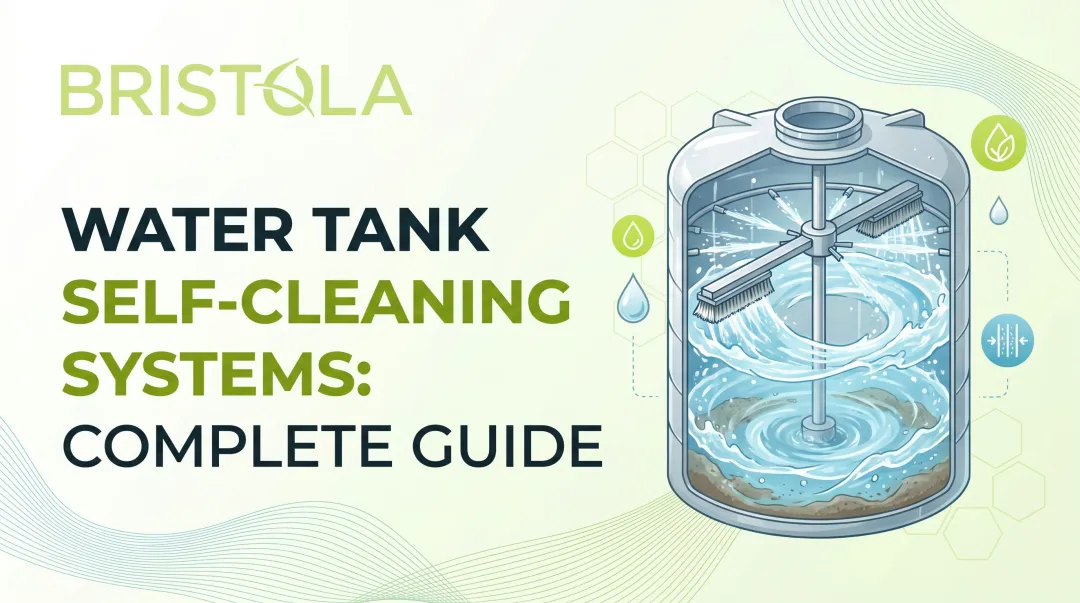
Automated tank cleaning uses mechanical, robotic, or programmable systems to clean tank interiors without manual scrubbing or human entry. It's a broad category, and the terms "automatic" and "automated" cover meaningfully different approaches.
Automatic typically refers to Clean-in-Place (CIP) systems: fixed spray balls or nozzles installed permanently inside a tank that run pressurized water or chemical cycles without disassembly. These are sanitary-design standards, governed in part by 3-A SSI's spray-device standard.
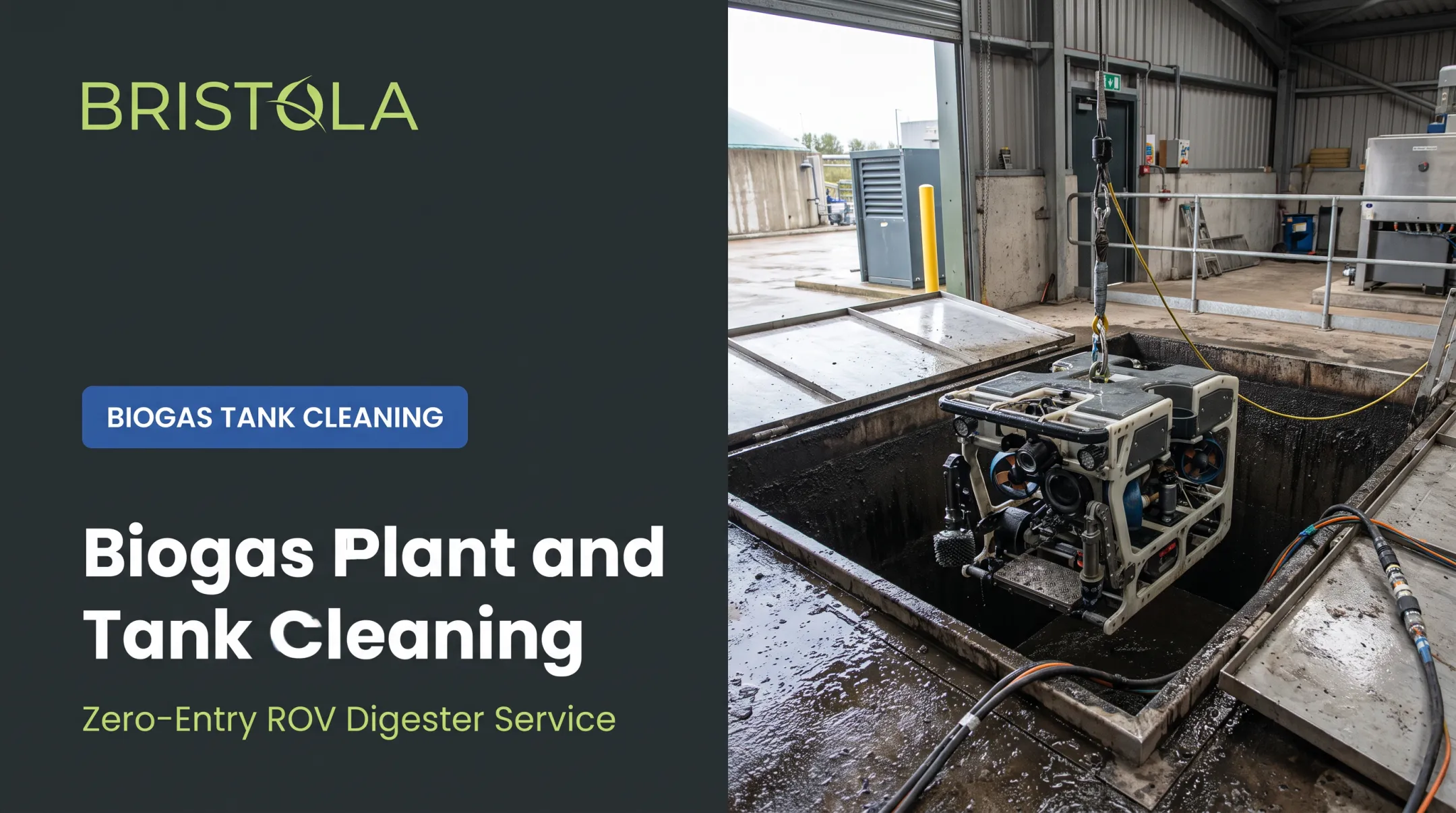
Automated/robotic systems go further: submersible robots or remote crawlers physically navigate the tank floor, targeting sludge and residue that fixed sprays can't reach.
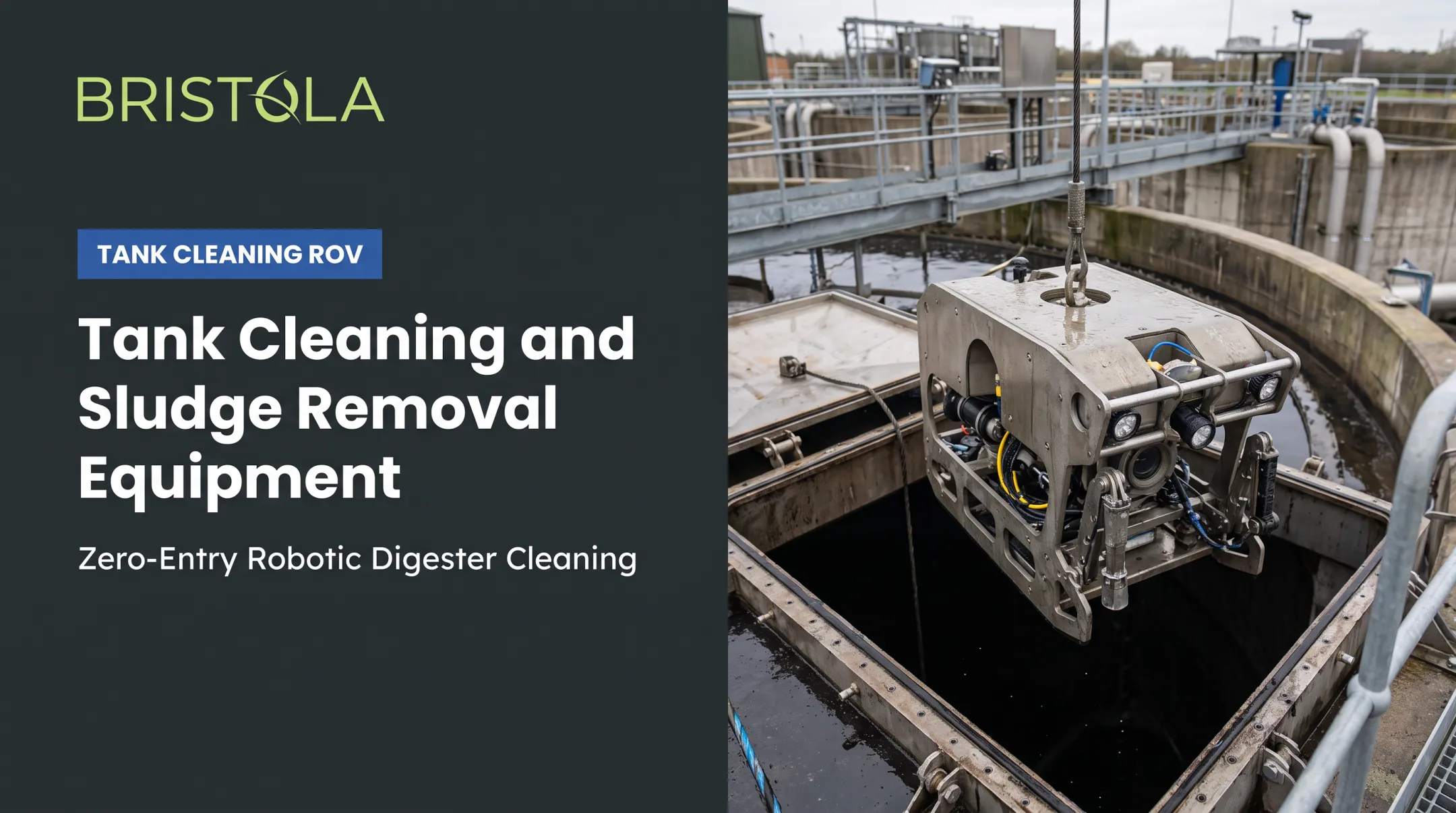
Bristola's approach falls on this robotic, zero-entry end of the spectrum. It uses a patented equalization chamber and airlock-type entry port fitted to any manhole 24 inches in diameter or greater. A remote-controlled submersible robot enters a live tank through that port—no person steps inside.
This distinction matters most for facilities handling hazardous, viscous, or biologically active contents:
- Anaerobic digesters processing organic waste under gas pressure
- Wastewater tanks with variable, unpredictable atmospheres
- Oil and gas storage tanks with flammable residues
In these environments, zero-entry cleaning is often the only practical option that avoids a shutdown and keeps people out of confined space.
How Does an Automated Tank Cleaning System Work?
Most automated cleaning follows a similar sequence, whether it's a clean-in-place (CIP) unit or a full robotic system: preparation, entry, cleaning action, and rinse or extraction. The specifics vary by system type, but the goal is always the same: clean surfaces without a person breathing tank air.
A Typical Robotic Cleaning Sequence
Bristola's process illustrates how a zero-human-entry system operates end to end:
- Deploy the robot — A winch lowers it through the entry portal into a full tank or covered lagoon
- Navigate to the target area — Sonar guides the robot through opaque liquid to the tank floor, including zones reachable at different heights
- Remove sediment — Sludge and buildup travel through a flexible hose to a processing option chosen for the site
- Retrieve the robot — Winch and hose systems pull the robot back to its home position and out through the entry box
- Evaluate and report — The system logs facility condition and cleaning performance for ongoing monitoring
The critical detail here is the equalization chamber. It acts as an airlock, letting the robot pass into a pressurized or full tank without draining it or exposing anyone to the interior atmosphere. With real-time sonar monitoring, operators run the entire cycle from outside. No atmospheric testing, entry permit, or rescue standby is required.

The Time Factor
Published time-savings figures vary widely by vendor and application. One Spraying Systems case study reported a 65% reduction in water usage and cleaning time cut in half after switching to automated nozzles.
Those are single-site results, not industry averages. Still, they reflect a consistent pattern: automation removes the slow sequential steps—draining, ventilating, testing, and manual scrubbing—that stretch manual cleaning into hours or days.
Manual vs. Automated Tank Cleaning: Why the Shift Matters
The comparison isn't close on safety. Manual cleaning requires confined-space entry, which OSHA classifies as permit-required whenever a tank could contain a hazardous atmosphere, cause engulfment, or trap an entrant.
That means testing oxygen levels, flammable gases, and toxins in sequence, plus an attendant and rescue plan on standby, per 29 CFR 1910.146.
Zero-entry robotic systems sidestep that requirement, since no one enters the space.
Downtime and cost tell a similar story:
- Manual cleaning generally requires draining the tank, arranging temporary storage, and stopping production
- Advanced robotic systems, like Bristola's, clean tanks and covered lagoons while they remain full and in operation
One documented Bristola case involved an EnviTec digester that needed 12 days of downtime for draining, roof removal, and crane and clamshell work. After the entry door was retrofitted, later robotic cleanings avoided that disruption.
Consistency and documentation add another clear gap. Manual results depend on the worker's thoroughness and visibility inside the tank. Automated systems run programmable, repeatable cycles and generate data logs on facility condition over time, which supports compliance audits and long-term maintenance planning.

Key Benefits of Automated Tank Cleaning
- Eliminates human entry: removes exposure to toxic atmospheres, engulfment, and asphyxiation risks entirely
- Reduces or eliminates downtime: systems built for live-tank operation clean without halting production
- Supports consistent output: keeps digesters and biogas plants free of sediment that drags down performance
- Lowers operational costs: no temporary storage, no draining, no re-filling cycle
- Cuts water and chemical waste: targeted cleaning cycles use resources more efficiently than blanket manual scrubbing
- Offers retrofit flexibility: installable on new builds or added to tanks and covered lagoons already in service
Bristola's internal case data shows one tank cleaning project at an annualized $170,000, compared to $250,000 for traditional cleaning—about $80,000 in yearly savings per tank. That figure is facility-specific, not a universal guarantee, but it shows what facilities save when downtime and labor costs leave the budget.

Industries and Applications Benefiting from Automated Tank Cleaning
Sectors with continuous uptime needs or strict hygiene rules pay the highest price for manual tank cleaning.
| Industry | Why It Matters |
|---|---|
| Anaerobic digesters & biogas | Continuous uptime maximizes gas capture; sediment buildup can reduce output |
| Food & beverage, protein, dairy | Requires contamination-free, documented hygienic cleaning |
| Oil & gas, refineries | Hazardous residues make entry especially dangerous |
| Wastewater treatment, pulp & paper, steel mills | Heavy sludge and scale demand robotic reach and extraction |
The US alone has roughly 2,600 biogas sites and over 1,240 water-resource-recovery facilities using digesters, according to the American Biogas Council. That footprint is a large market for zero-entry maintenance.

Bristola's client base spans these sectors directly, including renewable energy operators like Vanguard Renewables and BERQ RNG, industrial names like ADM and Shell, and food processors like JBS. That range shows how widely zero-entry cleaning applies once a facility decides confined-space entry is no longer worth the risk.
Choosing the Right Automated Tank Cleaning Solution
Not every system fits every tank. Before selecting a solution, work through these factors:
- Tank size and geometry — Standard tanks and covered lagoons need different installs; Bristola, for example, adapts lagoons with a berm modification and below-liquid manhole.
- Residue type and frequency — Sludge and sediment favor robotic extraction; lighter residue may suit fixed spray systems.
- Access requirements — Entry portals typically need an existing manhole at least 24 inches in diameter.
- Downtime tolerance — Confirm live, full-tank operation versus a required drain—often the deciding factor when production cannot stop.
The right system is the one matched to your tank's geometry, contents, and operational constraints—not a one-size-fits-all pick.
Frequently Asked Questions
How long does tank cleaning take?
Traditional manual cleaning can take many hours to days once you factor in entry procedures, testing, and staging. Automated or robotic systems cut that timeline sharply, and advanced zero-entry systems can clean without stopping production.
What must be completed before any tank cleaning operation?
Manual cleaning requires safety assessments, isolation procedures, and atmospheric testing for oxygen, flammable gases, and toxins in that order. Automated zero-entry systems largely remove confined-space entry steps because no one goes inside the tank.
What is an automated tank cleaner?
An automated tank cleaner is a mechanical or robotic system that cleans tank interiors by remote operation, with little to no human involvement. Systems range from fixed spray nozzles to fully submersible robots.
How are chemical tanker tanks cleaned?
Common methods include rotary jets, CIP systems, and robotic vacuums, depending on the residue. Hazardous chemical residues require extra precautions around ventilation, PPE, and compatible cleaning chemistry.
What industries benefit most from automated tank cleaning?
Renewable energy and biogas, food and beverage processing, oil and gas, and wastewater treatment see the biggest gains, mainly from uptime demands or strict hygiene requirements.
Can automated systems clean tanks while they remain in operation?
Yes. Advanced zero-entry robotic systems can clean while tanks stay online. Bristola's system, for example, cleans live tanks and covered lagoons without halting production or draining the facility first.