That volume doesn't disappear. It accumulates in tanks, digesters, and lagoons — reducing capacity, degrading performance, and creating regulatory and safety exposure that compounds the longer it's ignored.
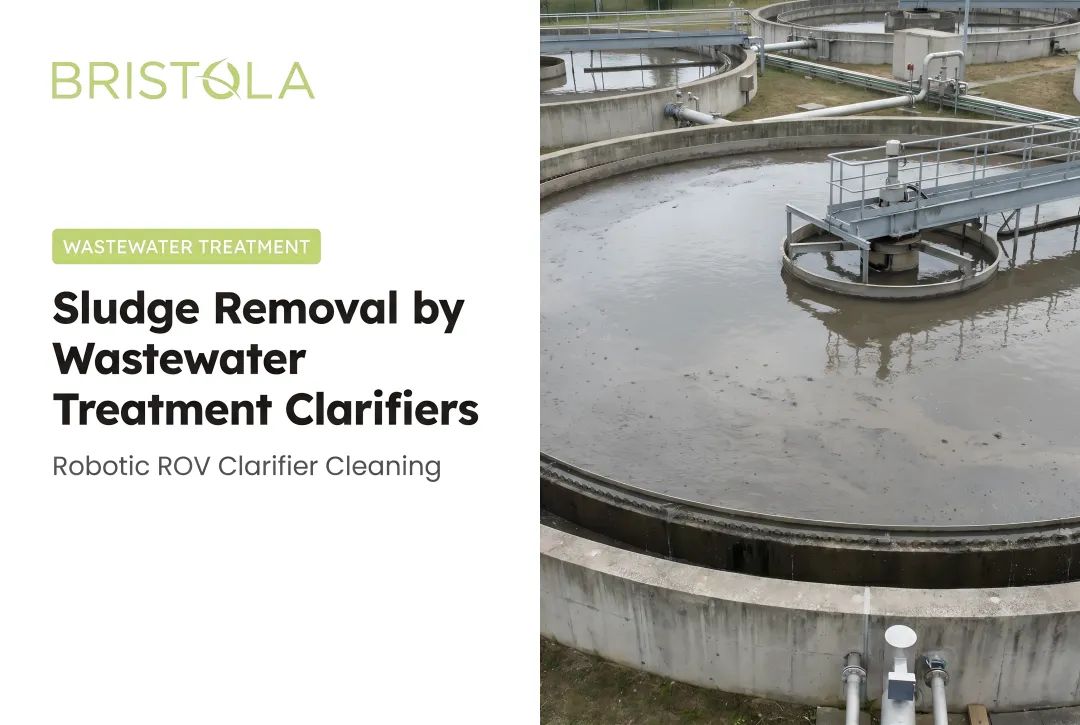
This article covers what sludge is, how it forms across treatment stages, why removal is non-negotiable, which methods facilities use, and what the real operational costs of traditional removal look like — including why no-entry robotic approaches are reshaping how facilities think about maintenance.
Key Takeaways
- U.S. facilities generate millions of dry tons of sludge annually — managing it is a regulatory and operational requirement, not optional
- Sludge builds through three treatment stages; in digesters, accumulation directly reduces biogas yield and working volume
- EPA's 40 CFR Part 503 governs disposal with criminal penalties up to $50,000/day for willful violations
- Traditional confined space cleaning averages 1,030 worker deaths over eight years nationally — placing it among the deadliest routine industrial tasks
- Robotic no-entry systems eliminate both the safety hazard and the production downtime, cutting liability exposure and operational costs simultaneously
What Is Sludge and How Does It Form in Wastewater Systems?
Sludge is the semi-solid residue — organic matter, microorganisms, heavy metals, and chemical contaminants — that accumulates as an unavoidable byproduct of treating wastewater. Its buildup is a predictable consequence of the treatment process itself, not a sign that something has gone wrong.
Sludge Formation Across Treatment Stages
Sludge forms at three distinct points in the treatment process:
- Primary sludge — heavier solids settle out during initial sedimentation in primary clarifiers, before biological treatment begins
- Secondary (biological) sludge — microbial activity during secondary treatment generates biomass as organisms consume organic matter; this waste activated sludge (WAS) must be periodically removed
- Tertiary sludge — chemical polishing processes in advanced treatment leave behind residue from nutrient removal and precipitation reactions
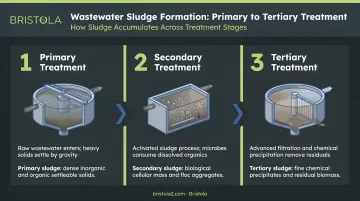
The characteristics vary significantly by source. Municipal wastewater plants, food processing facilities, anaerobic digesters, and covered lagoons each produce sludge with different compositions, densities, and hazard profiles.
Of these, anaerobic digestion facilities have some of the most well-documented accumulation data — partly because sediment buildup there has direct, measurable consequences for energy output.
Industry case-study data from a 1.2-million-gallon digester shows grit buildup progressing from roughly 5% of tank volume in year one to 30% by year five. Sand-bedded dairy manure substrates can accumulate grit at roughly twice that pace — approaching 60% of working volume within five years. That sediment layer — often called digestate solids — doesn't just sit there. It directly displaces working volume and shortens the hydraulic retention time available for active digestion.
Why Sludge Removal Can't Be Ignored
Deferred sludge management creates overlapping risks across four categories.
Environmental and Public Health Risk
EPA has identified over 700 chemicals in sewage sludge, including nine regulated heavy metals, pathogens (bacteria, viruses, protozoa, helminths), and persistent emerging contaminants like PFAS. Uncontrolled sludge that overflows, leaks, or is improperly disposed of introduces these compounds into groundwater and surface water.
The pathogen load alone creates direct health risk for workers and surrounding communities, particularly before stabilization or containment.
Regulatory and Compliance Risk
EPA's 40 CFR Part 503 governs three sludge management pathways — land application, incineration, and surface disposal — under Clean Water Act Section 405. Requirements include:
- Pollutant concentration limits for nine heavy metals
- Class A or Class B pathogen reduction standards
- Vector attraction reduction requirements
- Annual reporting for larger facilities
Willful violations carry criminal fines of $5,000 to $50,000 per day and up to three years imprisonment. EPA actively pursues enforcement — nine settlement agreements for biosolids land-application violations were completed in a single year alone. Regulatory scrutiny is also expanding: EPA's active PFAS risk assessment program signals that Part 503 standards are likely to tighten.
Operational Efficiency Loss
Sludge buildup directly reduces tank working volume and shortens retention time. A 1.2-million-gallon EnviTec digester that hadn't been cleaned in over four years showed exactly how far performance can fall:
- Volatile solids reduction dropped to less than 25%
- The facility could no longer maintain mesophilic temperature (95–101°F) during winter months
- Daily biogas yield dropped by 20%
At roughly $60/MMBTU in environmental credits, a 20% production loss on a 125 MMBTU/day digester translates to approximately $383,000 in annual lost revenue — before accounting for any cleaning costs.
The "Pay Now or Pay More Later" Problem
That same EnviTec facility didn't just lose revenue — it eventually required emergency intervention. Proposals came in at over $300,000 for roof replacement and more than $300,000 for the cleanout. During the process, extensive corrosion damage was discovered inside the concrete gas zone — damage that wouldn't have required emergency repair under a routine maintenance schedule. Total project cost reached $411,000 with 12 days of downtime.
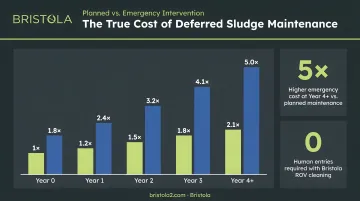
Planned maintenance consistently costs less than emergency intervention. The longer removal is deferred, the more those two numbers diverge — and the less control a facility has over the timing, cost, and scope of what comes next.
Sludge Removal Methods: Physical, Chemical, Biological, and Thermal
Most facilities use a combination of methods depending on sludge type, volume, and end-use requirements. No single approach covers every scenario.
Physical Methods
Three core approaches dominate:
- Sedimentation/gravity thickening — solids settle naturally in large basins; low energy, but slow and volume-intensive
- Filter presses — belt filter presses produce approximately 18–35% cake solids; recessed-plate filter presses achieve the highest cake solids content and solids capture rate of any mechanical option
- Centrifugation — continuous-feed, high-speed separation that's been in use since the 1930s; output adjustable via operational parameters
All three methods reduce sludge liquid volume substantially, cutting storage, transportation, and downstream treatment costs.
Chemical Methods
Chemical precipitation and coagulation destabilize suspended particles, causing them to agglomerate and settle. Polymer flocculants are commonly added before or during dewatering to aggregate fine particles into larger flocs:
- Produces a firmer biosolid cake that's easier to handle and transport
- Improves downstream dewatering performance across mechanical systems
Biological Methods
Anaerobic digestion is the primary biological approach: microorganisms break down organic sludge in oxygen-free conditions, reducing volume while generating methane-rich biogas. The combination of waste reduction and energy recovery makes it the preferred method for facilities with sufficient sludge volume to justify digester operation.
Alternatives include:
- Aerobic digestion — oxygen-assisted microbial breakdown; effective but energy-intensive
- Composting — combined with bulking agents, produces a stable soil amendment
- Bio-drying — reduces moisture and pathogens before disposal
Thermal Methods
Reserved for high-volume or highly contaminated sludge:
- Incineration — reduces sludge to ash with maximum volume reduction; raises air emission compliance concerns
- Thermal hydrolysis — high-pressure heat treatment that breaks sludge into simpler compounds, improving downstream digestion efficiency and dewatering
- Pyrolysis — oxygen-free heating that produces biochar, bio-oil, and gas byproducts; emerging as an economical treatment option for high-moisture feedstocks
What Happens to Sludge After It's Removed?
Treated sludge that meets EPA standards earns the designation "biosolids" — and at that point, it's a resource rather than a waste product.
Beneficial reuse pathways:
- Land application — applied as agricultural fertilizer at agronomic rates, recovering nitrogen and phosphorus for crop nutrition; accounts for roughly 47% of U.S. biosolids
- Composting — blended with organic bulking agents for use in landscaping and horticulture
- Construction materials — dried sludge incorporated into bricks, cement, and road base
Disposal for non-qualifying sludge:
- Landfilling (24% of U.S. biosolids) — requires meeting chemical and pathogenic thresholds
- Incineration (15%) — effective volume reduction with air quality compliance requirements
- Deep-well injection in select jurisdictions
Whichever pathway a facility uses, EPA 503 rules require documented handling, treatment, and final disposition records. Unauthorized land application or illegal dumping carries significant fines. With PFAS risk assessments still in progress, new concentration limits could alter the cost calculus for land application and incineration within the next regulatory cycle.
The Hidden Costs of Traditional Sludge Removal
The operational and financial costs of conventional cleaning are well understood. The safety costs are harder to quantify — until an incident forces the calculation.
Confined Space Entry: The Baseline Risk
Traditional sludge removal requires workers to physically enter tanks, digesters, or lagoons — classified as permit-required confined space entry under OSHA 29 CFR 1910.146. The Bureau of Labor Statistics documented 1,030 worker deaths in confined spaces between 2011 and 2018, with annual fatalities ranging from 88 to 166 per year — and trending upward through 2017.
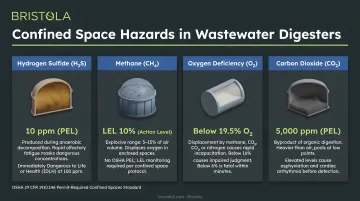
Wastewater and digester environments compound the baseline hazard:
- Hydrogen sulfide (H₂S) accumulates from anaerobic decomposition; at 700–1,000 ppm, it causes unconsciousness within one to two breaths. OSHA's ceiling limit is 20 ppm
- Methane creates simultaneous explosion and asphyxiation risk
- Oxygen-deficient atmospheres develop as biological processes consume available oxygen
- Engulfment risk from semi-solid sludge layers that can shift under a worker's weight
These conditions can be fatal within minutes. Rescue attempts by colleagues without proper equipment have historically multiplied fatalities in single incidents.
The Downtime Cost
To allow safe human entry, facilities must shut down, drain the tank, ventilate the space, and implement lockout/tagout procedures. For a 1.2-million-gallon anaerobic digester, the cost breakdown from documented case-study data is stark:
| Cost Component | Amount |
|---|---|
| Lost gas sales during draining (22 days) | $141,900 |
| Heavy equipment cleaning + top removal | $220,000 |
| Lost gas sales during refill/restart (22 days) | $141,900 |
| Single cleaning total | $703,800 |
| Annual revenue loss from ongoing grit accumulation | $383,250 |
| Five-year total cost per digester | ~$2.6 million |
That $703,800 single-event figure doesn't include confined space rescue standby crews, temporary storage logistics, restart time, or remobilization costs. When those are added, a single cleanout typically pushes past $900,000 in total impact for a digester of that size.
And that's the scenario where everything goes right. A worker illness, injury, or fatality triggers OSHA investigations, regulatory penalties, and civil liability that no cleaning budget accounts for.
The Case for No-Entry, No-Downtime Sludge Removal
The industry has moved. Robotic, no-human-entry systems now exist that can access and clean active digesters, tanks, and covered lagoons without stopping production and without putting anyone inside.
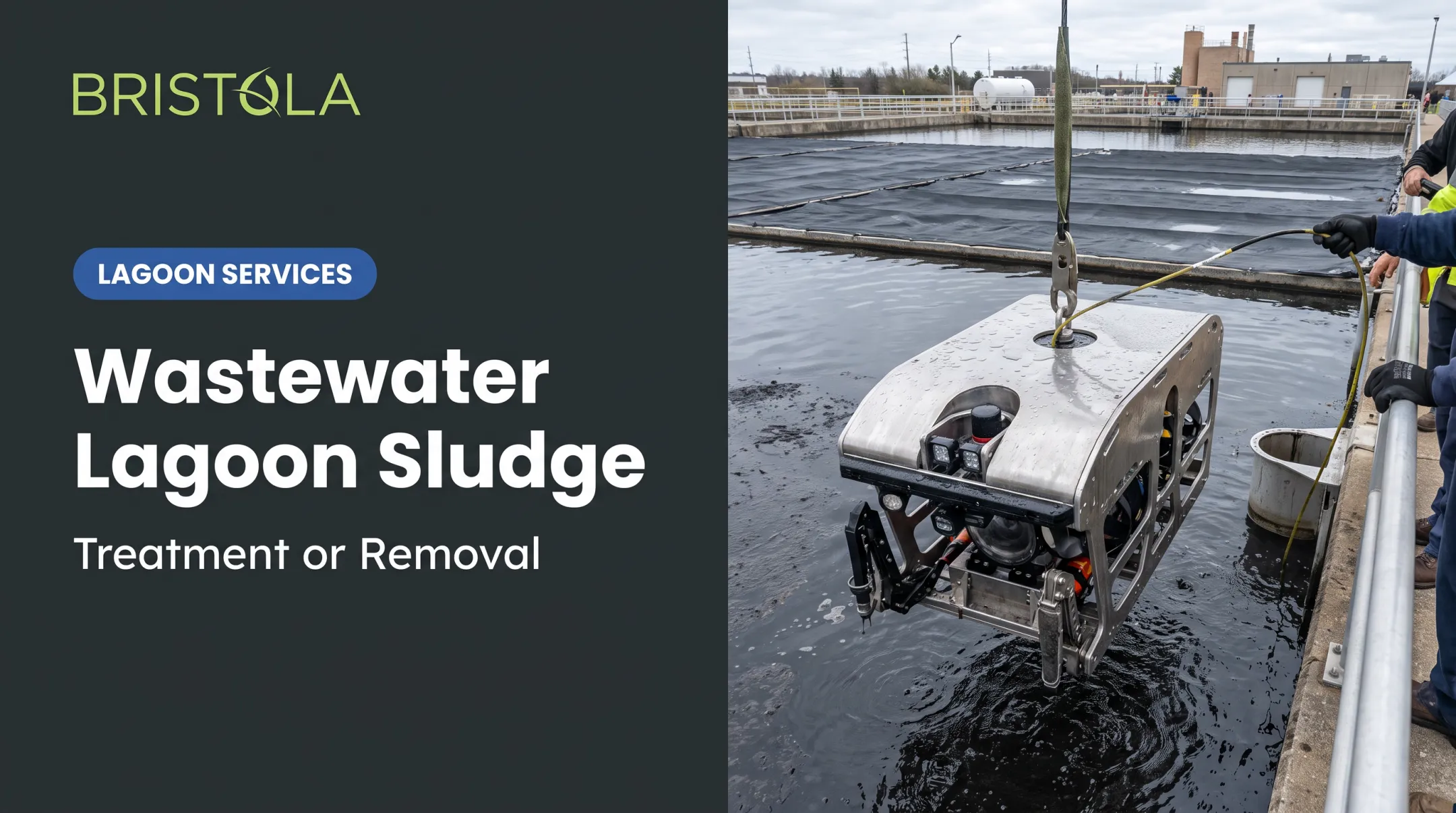
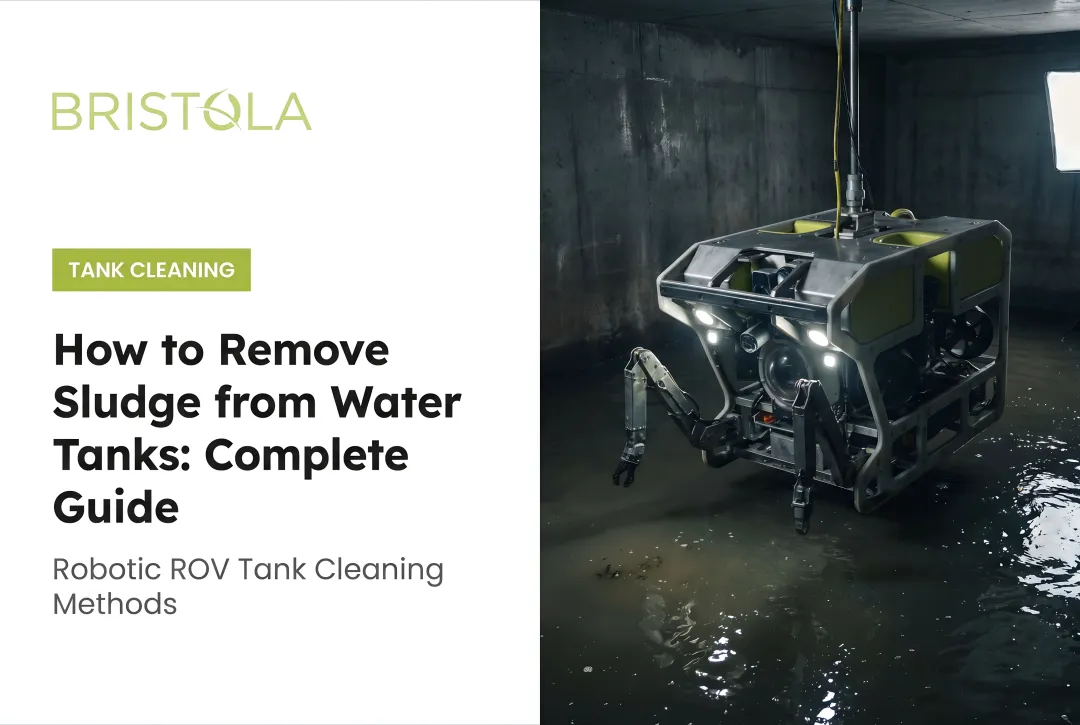
Bristola's robotic cleaning system deploys a submersible ROV through a patented airlock-type equalization chamber — a purpose-built entry portal that allows the robot to access the tank while it remains full and operational. No draining. No human entry. No confined space rescue standby.
Once inside, the ROV uses sonar navigation to move through opaque liquid environments, vacuuming accumulated sludge through a flexible hose to a processing option of the operator's choice. The system simultaneously collects and reports real-time facility condition and performance data — making it both a cleaning tool and an ongoing monitoring asset.
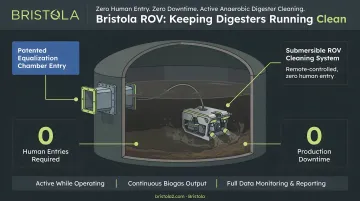
The cost difference is direct and documented:
- Traditional drain-and-clean methods: ~$250,000 annualized cost per tank
- Bristola's system: ~$170,000 annualized cost per tank
- Net savings: ~$80,000 per tank per year — with safety liability eliminated
The system installs alongside new facility builds or retrofits onto existing infrastructure with manholes 24 inches or greater. Bristola's clients include Brightmark, Vanguard Renewables, BERQ RNG, JBS, Shell, ADM, and over a dozen other operators across the renewable energy, food processing, and wastewater sectors.
Bristola was founded in 2019 by Jared Burma after a near-death experience inside a storage tank. That experience is the reason this technology exists.
Frequently Asked Questions
What is sludge removal?
Sludge removal extracts the semi-solid waste byproduct — organic matter, microorganisms, and contaminants — that builds up in wastewater treatment tanks, digesters, and lagoons. Keeping it under control is essential for plant efficiency, regulatory compliance, and public health.
How do you remove sludge from water treatment?
Four main approaches are used, often in combination:
- Physical: sedimentation, centrifugation, filter presses
- Chemical: coagulation and polymer-aided dewatering
- Biological: anaerobic and aerobic digestion
- Thermal: incineration, thermal hydrolysis
Most facilities combine methods based on sludge type, volume, and disposal requirements.
What is done with sludge after water treatment?
Treated sludge meeting EPA standards — called biosolids — can be land-applied as agricultural fertilizer, composted, or incorporated into construction materials. Sludge that doesn't qualify is landfilled, incinerated, or managed through other approved routes under EPA 503 biosolids regulations.
How often do lagoons need to be cleaned of sludge?
Most guidance points to a 10–25 year desludging interval, depending on loading rates and lagoon design — Kansas KDHE cites 15–25 years, while EPA recommends desludging when sludge reaches 30% of total lagoon depth. Annual sludge depth monitoring is the most reliable way to determine when cleaning is needed.
Is sludge the same as sewage?
No. Sewage is the liquid wastewater flowing through collection systems into treatment plants. Sludge is the semi-solid residue that remains after sewage has been treated — the concentrated solids removed during processing, which must then be separately managed, treated, and disposed of under applicable regulations.