What you'll actually pay depends on tank type, size, location, accessibility, and how contaminated the tank has become. This guide breaks down realistic pricing ranges, the factors that push costs up or down, and how to budget correctly whether you're maintaining a backyard rainwater tank or a 500,000-gallon industrial digester.
TL;DR
- Industrial and digester cleanouts are project-priced, often $300,000+ when repairs are included
- Residential tanks usually run about $740/year for combined cleaning and inspection
- Size, access, contamination level, and human-entry needs drive most of the final price
- Zero-downtime robotic cleaning typically yields the largest savings on large, always-on tanks
How Much Does Water Tank Cleaning Cost? (Pricing Overview)
Water tank cleaning is quoted per job, not on a national sticker price. Tank size, sediment load, access, cleaning method, and disposal set the number more than any generic “per tank” rate.
Common budgeting mistakes include:
- Underestimating sludge volume and disposal fees
- Treating disinfection as free “included” work
- Budgeting one clean as if it replaces a maintenance cycle
- Ignoring downtime, temporary storage, or confined-space entry costs
Typical Cost Ranges
Commercial and industrial work is almost always scoped after a site review. Published ballparks still help with early planning:
| Tank / job profile | Typical range (USD) | What usually drives the price |
|---|---|---|
| Small commercial or light process tanks | $500–$3,000 | Access, light sediment removal, basic wash/disinfect |
| Standard industrial storage / treatment tanks | $3,000–$6,500 | Power washing or chemical clean for biofilm and scale |
| Large digesters, lagoons, or complex cleanouts | Project quote; $400,000+ when repairs are bundled | Heavy sludge, mapping, multi-day scope, structural work |

Method matters as much as size. ROV or remote sediment vacuuming often lands on the lower end when the tank can stay in service. Diver-assisted or full drain-and-enter jobs climb fast once you add safety setup, downtime, and temporary storage.
What Quotes Usually Include (and Exclude)
Often included: sediment or sludge removal, wall/floor cleaning, and disinfection when specified as a line item.
Usually excluded: structural repairs, excavation, permits, hazardous-waste premiums, and any temporary holding or haul-off beyond the base disposal allowance.
For digesters, covered lagoons, and wastewater or process tanks, ask vendors to separate cleaning labor, disposal, inspection/reporting, and downtime impact. That split is what makes competing bids comparable—and what keeps a “cheap” clean from turning into an outage-cost surprise.
Key Factors That Affect the Cost of Water Tank Cleaning
Pricing depends on technical, operational, and access-related variables. Here's what actually moves the number.
Tank Size and Capacity
Bigger tanks mean more surface area to scrub, more sludge to remove, and more disposal fees. Labor time scales directly with gallon capacity: a 50,000-gallon process tank and a 500,000-gallon wastewater or digester tank aren't in the same conversation.
Tank Type, Access, and Operating Constraints
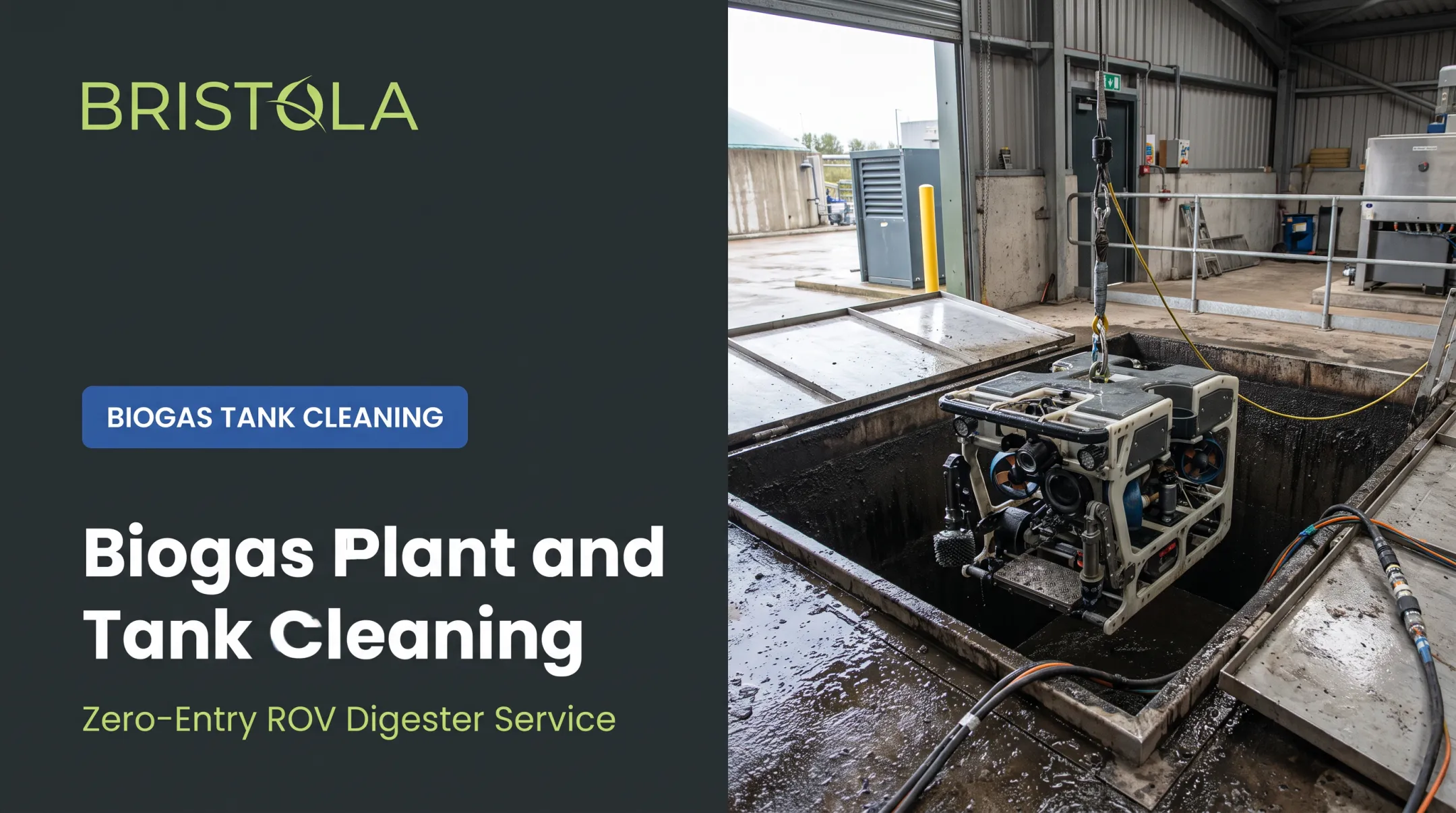
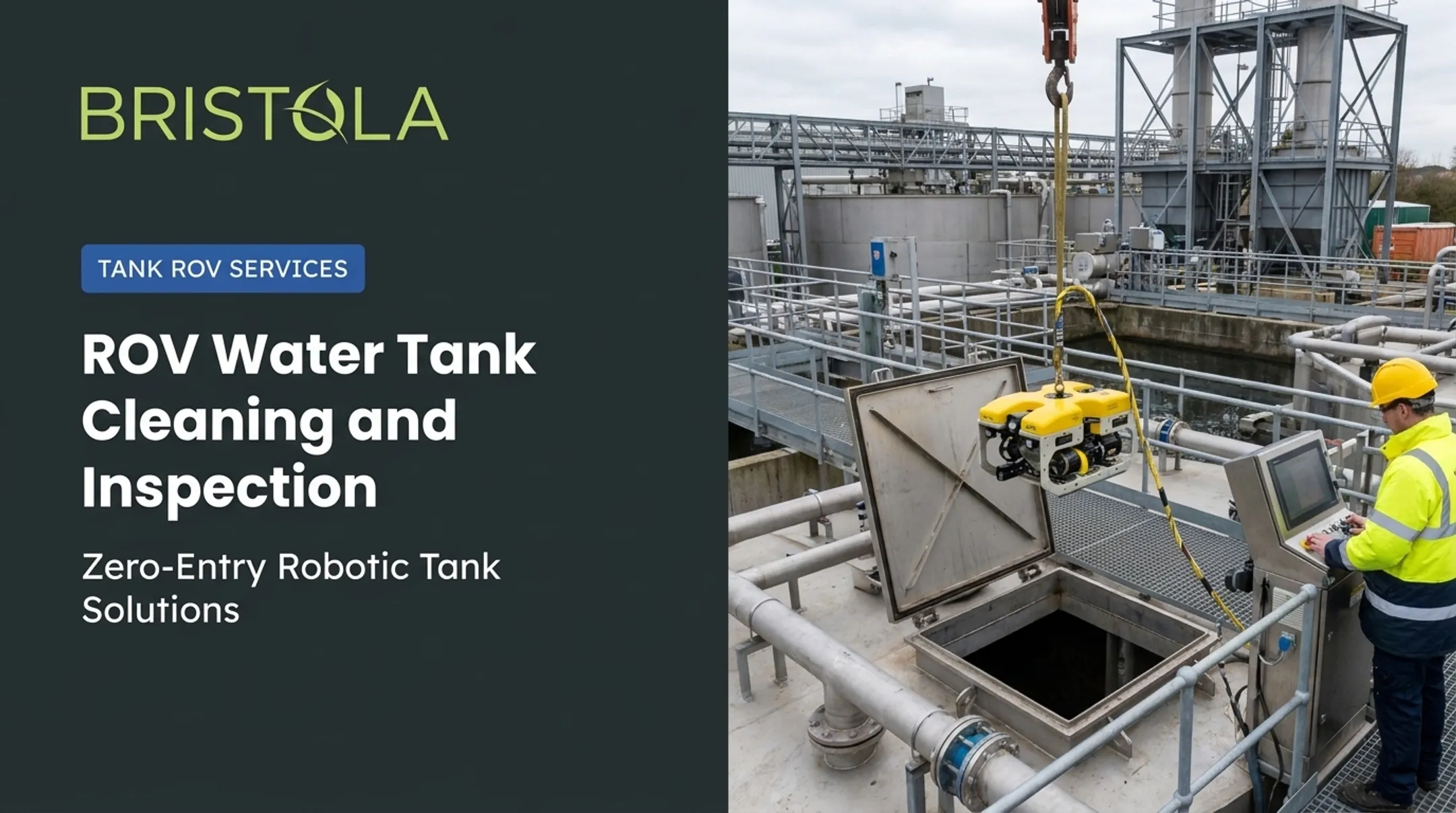
Underground and confined-space tanks cost more because of safety protocols and specialized equipment. Traditional industrial tank cleaning usually requires draining the tank completely and sending workers inside, which triggers costly production downtime while the facility sits offline. Bristola uses patented zero-human-entry robotic systems that clean tanks while they stay full and in service. That removes downtime from the cost equation, which matters most for continuously operating facilities like anaerobic digesters and wastewater plants.

Level of Contamination or Sludge Buildup
Years without cleaning mean thicker sludge, more labor hours, and higher disposal costs. A tank cleaned annually costs far less to service than one left untouched for five years.
Accessibility and Site Conditions
Ladder access, buried lids, and confined spaces all add labor cost. Anything that slows a crew down or requires special rigging shows up on the invoice.
Frequency of Service (One-Time vs Contract)
Annual maintenance contracts or recurring commercial service agreements typically lower the per-visit cost compared to one-off jobs. Bristola, for example, structures industrial service as an annual subscription rather than a one-time cleanout, with monitoring, data reporting, and cleaning under one recurring cost.
Cost Breakdown of Water Tank Cleaning
Total cost includes more than the base service fee. Here's what typically shows up on a quote:
| Component | Frequency | What It Covers |
|---|---|---|
| Draining and pumping | One-time per visit | Removing water/liquid before physical cleaning begins |
| sludge and debris removal | One-time per visit | Extracting accumulated solids and disposing of them |
| Scrubbing and pressure cleaning | One-time per visit | Removing biofilm and buildup from walls and floors |
| Disinfection and sanitizing | One-time per visit | Sanitizing surfaces to prevent bacterial regrowth |
| Downtime/production loss | Variable/recurring | Hidden cost from taking a commercial tank offline |
That last line item is the one most people underestimate.
In one documented industrial cost comparison, traditional cleaning carried roughly:
- $200,000 in lost revenue during the cleaning window
- $300,000 in direct cleaning costs
- $240,000 in chemical treatment and storage
Annualized, traditional cleaning worked out to about $250,000 per tank per year, versus $170,000 with a submersible robotic system. That is a savings of roughly $80,000 per tank annually, because the tank never has to stop production.

Low-Cost vs High-Cost Water Tank Cleaning — What's the Difference?
Budget and premium water tank cleaning differ in scope, not only in price.
Thoroughness
- Lower-cost: Quick rinse; may skip disinfection entirely
- Higher-cost: Full drain, scrub, sanitize, and inspection
Equipment and Safety Compliance
- Lower-cost: Basic manual tools and minimal safety infrastructure
- Higher-cost: Confined-space compliance gear or robotic entry systems
Long-Term Value
- Lower-cost: Higher recontamination risk, which drives repeat visits and repeat costs
- Higher-cost: Longer intervals between cleanings and measurably safer water
Sediment and biofilm left behind raise disinfection demand and can contribute to regulated disinfection by-products over time. A cheap partial clean often costs more in the long run.

How to Estimate the Right Budget for Water Tank Cleaning
Match your service level to your tank type rather than shopping on price alone. Consider:
- Tank size, access points, and on-site constraints
- Time since the last cleaning and current sludge or sediment load
- Tank duty—wastewater, process water, digester, or industrial storage
- Whether a maintenance contract beats repeated one-off cleanings
For industrial operators, the maintenance decision usually drives total cost. A one-time quote can look cheap until you add the next cleanout, production downtime, and sludge buildup a planned service interval could have limited.
What Most People Miss When It Comes to Water Tank Cleaning Cost
Four cost mistakes show up again and again on industrial and commercial water tank jobs:
- Quoted price only — scope, disposal, and add-ons never get checked
- Downtime on commercial or industrial tanks often dwarfs the cleaning fee itself
- Deferred cleaning lets sludge build up and raises later labor and disposal costs
- Lowest bid without verified method, confined-space safety, and disposal standards
Conclusion
Water tank cleaning costs vary significantly by size, type, and condition. There's no universal price tag, only a set of variables that determine your specific quote.
A realistic budget comes from the full cost breakdown—not just the cleaning fee. For industrial and large-scale facilities, downtime often rivals the service charge itself.
If your operation can't go offline, Bristola's zero-human-entry robotic systems clean while the tank stays in service, so you avoid drain-down costs and production loss.
Frequently Asked Questions
How often should you have your water tank cleaned?
Industrial tanks and digesters are usually cleaned on a sludge- and inspection-driven schedule, often every 1–3 years. Well-monitored systems can stretch longer between full cleanings when sediment mapping shows slow buildup.
How is the cost of cleaning calculated?
Estimates usually factor tank capacity, sludge volume, access, disposal, and whether the job needs a shutdown or human entry. Providers may quote flat-rate, per-day, or volume-based pricing depending on scope.
What is included in a professional water tank cleaning service?
A complete scope should cover sludge and sediment removal, disposal handling, basic inspection or condition notes, and a clear statement of method. Confirm whether draining, confined-space entry, or production downtime is required before you compare quotes.
Does tank size affect the cost significantly?
Yes. Larger tanks mean more labor time, higher sludge disposal volume, and often specialized equipment—so unit size is one of the strongest price drivers on the quote.
Is it cheaper to clean multiple tanks at once?
Usually yes. Bundling tanks into one mobilization cuts repeat travel, setup, and crew costs, and many providers price a combined visit lower than separate trips.
How can industrial facilities reduce the cost of tank cleaning over time?
Cutting out production shutdowns is the largest long-term lever. No-entry cleaning that works while the tank stays in service can remove stoppage and temporary-storage costs—one comparison showed about $80,000 in annual savings per tank.