Neglected clarifiers back up. Digesters lose efficiency. And operators face a choice between costly downtime or risky manual tank entry. Add regulatory scrutiny into the mix, and poor maintenance becomes an expensive gamble.
This guide walks through the full cleaning process, compares traditional methods to modern zero-entry technology, and covers best practices for keeping plants compliant and efficient.
Key Takeaways
- Regular cleaning of clarifiers, digesters, and sludge tanks prevents pollution, equipment damage, and regulatory fines
- A structured process of assessment, sludge removal, disinfection, and inspection keeps plants compliant and reliable
- Confined-space entry creates avoidable safety and cost risks that zero-human-entry robotics eliminate
- Set cleaning frequency by facility size, tank type, and usage load rather than a fixed calendar
Why Wastewater Treatment Plant Cleaning Matters
Untreated sludge and debris don't just sit quietly. Buildup creates cascading problems:
- Reduces treatment efficiency
- Corrodes equipment over time
- Produces odors that trigger community complaints
The regulatory risk is real. The EPA's 2012 settlement with the City of Jackson, Mississippi involved more than 2,300 sanitary sewer overflows and operation-and-maintenance failures, resulting in $437,916 in civil penalties. A smaller 2024 case saw Salem, West Virginia pay a $25,000 fine for exceeding NPDES effluent limits. Neither case proves that cleaning failures alone caused the violations. But poor operation and maintenance clearly contribute to permit exposure.
Operational costs climb too. EPA research found that personnel costs make up almost 50% of treatment-plant annual O&M budgets, with sludge handling and equipment repair consuming a large share of that spend. Over-pumping sludge also wastes energy. One EPA example found intermittent dewatering could cut energy use by roughly 45% at a 1 mgd facility.
Neglected maintenance shortens equipment lifespan and drains budgets long before a violation notice ever arrives.
Components and Areas That Require Regular Cleaning
Different parts of a treatment facility accumulate different kinds of buildup, and each needs regular, targeted cleaning.
Key components requiring routine attention:
- Clarifiers – settled sludge and floating scum that create septic conditions if left unchecked
- Anaerobic and aerobic digesters – grit, grease, and hard floating mats that cut digester capacity
- Covered lagoons – bottom solids that shrink effective volume over time
- Biosolids basins – accumulated sediment that slows throughput
- Cooling towers – scale and lime deposits from mineral-heavy water
- Pumps and aeration systems – debris buildup that hurts performance long before an alarm sounds

Regular visual checks catch these problems early, before they turn into full equipment failures.
Step-by-Step Wastewater Treatment Plant Cleaning Process
A structured cleaning cycle protects both compliance and equipment. Here's the general sequence operators follow.
Assessment and Removal
- Assess and plan – Evaluate sludge and debris levels, plan any necessary bypasses, and prepare PPE for confined-space work if entry is required
- Remove solids – Use sludge pumps, dredges, or vacuum trucks to extract material from tanks and basins. EPA guidance recommends slow pumping with frequent sampling, stopping once sludge becomes thin
- Support biological breakdown – Use dewatering and microbial processes to separate remaining organic material before final cleanup
Cleaning and Restart
- Scrub and disinfect – Clean tank walls, remove scale and lime buildup, and apply disinfectants to eliminate pathogens
- Inspect equipment – Check pumps, aerators, and clarifier mechanisms for wear once the tank is accessible
- Verify and restart – Confirm tank integrity and water quality before returning the unit to service

This is where traditional and modern methods diverge most clearly, especially in steps 1 and 6, where entry and downtime become unavoidable in older approaches.
Traditional Cleaning Methods vs Modern Zero-Entry Technology
For decades, cleaning a tank meant one thing: drain it, halt operations, and send workers inside.
The Cost of Confined-Space Entry
Manual entry cleaning requires a full permit-space program under OSHA's 1910.146 standard: atmospheric testing, ventilation, an attendant, rescue planning, and retrieval equipment. The risks aren't theoretical.
The Bureau of Labor Statistics reports 1,030 confined-space fatalities between 2011 and 2018, with annual totals ranging from 88 to 166 deaths. Toxic gas exposure and engulfment remain the leading hazards.
Beyond safety, traditional methods carry a financial toll:
- Extended downtime while tanks drain and dry
- Temporary storage costs for displaced waste
- Lost production output during the outage window
| Factor | Traditional Entry | Zero-Entry Robotic |
|---|---|---|
| Tank status | Drained and offline | Stays full and online |
| Worker exposure | Confined-space entry required | No human entry |
| Downtime | Days to weeks | Minimal to none |
| Extra costs | Temp storage, lost output | No temporary storage needed |

A Zero-Entry Alternative
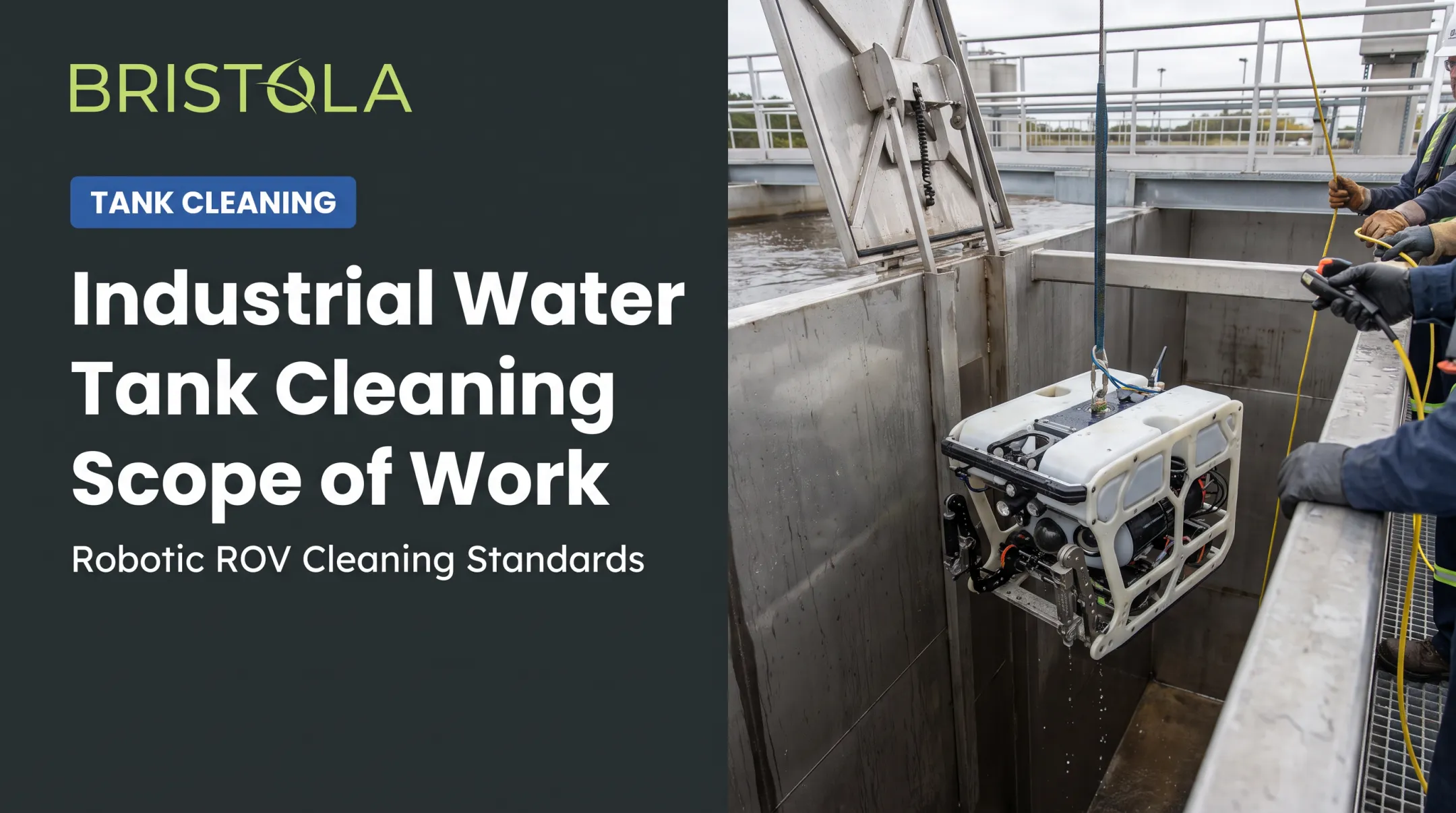
Bristola's zero-entry system skips the drain-and-enter cycle. A patented equalization-chamber entry portal installs over an existing manhole 24 inches in diameter or larger.
A remote-controlled submersible robot enters through that portal on a winch system, reaches the tank floor, and removes sludge through a flexible hose. The tank stays full. Production continues. No one climbs inside.
The system also supports:
- Retrofits onto existing wastewater and digester facilities
- Maps tank condition with sonar and tracks performance over time
- Serves anaerobic digesters, covered lagoons, and wastewater tanks
That retrofit path showed up on a New York digester project: Bristola fitted a 24-inch entryway with an isolation valve so the facility could run future live cleanings without shutting down again. Cleaning becomes scheduled maintenance—not a planned outage.

Safety Risks, Cleaning Frequency & Best Practices
Neglected or poorly executed cleaning creates serious hazards for staff and equipment. Hydrogen sulfide gas from decaying organic matter is a primary threat (OSHA lists 100 ppm as immediately dangerous to life and health).
Other common risks include:
- Pathogen exposure during sludge handling
- Mold-related respiratory hazards in damp process areas
- Structural or electrical failures tied to aging equipment
Those hazards are why cleaning frequency should follow plant conditions, not a fixed calendar alone.
How Often Should Cleaning Happen?
There's no single national interval. EPA guidance points to condition-based triggers instead:
- Rising sludge blankets or poor settling performance
- Persistent odors or septic conditions
- Reduced effective tank volume
- Grit interference with mixing equipment
General inspection every 6-12 months is still a reasonable baseline for most facilities. Septic and holding-tank systems typically need full pump-outs every 3-5 years, per EPA septic system guidance, depending on load and tank size.
Best Practices to Adopt
- Conduct routine visual inspections between full cleaning cycles
- Train staff thoroughly on PPE and confined-space protocols
- Use remote-entry or sonar-monitoring technology to limit manual exposure
- Track sediment mapping data to plan cleaning before problems escalate
Frequently Asked Questions
How often does a wastewater treatment tank need cleaning?
Industrial wastewater tanks and digesters typically need cleaning every 1–5 years, depending on solids loading, process type, and tank size. Regular inspections help set the right interval for your facility.
How do you know when a wastewater treatment plant needs cleaning?
Watch for reduced treatment efficiency, unusual odors, rising alarms, or visible sludge and scum buildup. Declining biogas production in digesters is another key warning sign.
What is the safest way to clean a wastewater tank?
Zero-human-entry robotic systems offer the safest option, avoiding the toxic gas exposure and engulfment risks tied to manual confined-space entry entirely.
Can a wastewater treatment plant be cleaned without shutting it down?
Yes. Modern robotic systems like Bristola's can clean tanks and lagoons while they remain full and operational, unlike traditional draining methods that require a full shutdown.
What happens if a wastewater treatment plant isn't cleaned regularly?
Skipping regular cleaning risks pollution discharge, regulatory fines, accelerated equipment wear, and increased health hazards for staff and surrounding communities.
Who is responsible for maintaining a wastewater treatment plant?
Plant operators, facility managers, or contracted maintenance and cleaning providers typically share responsibility for upkeep, inspections, and scheduling cleaning cycles.