What are the 4 types of inspection?
In industrial asset management, four common inspection types are visual inspection, non-destructive testing, condition-based inspection, and internal inspection. Visual inspection checks accessible surfaces for obvious issues. Non-destructive testing uses tools such as sonar or other sensing methods without damaging the asset. Condition-based inspection relies on performance data and observed wear. Internal inspection evaluates the inside of tanks or vessels, traditionally through confined-space entry but increasingly through robotic systems.
What are the different types of tank inspections?
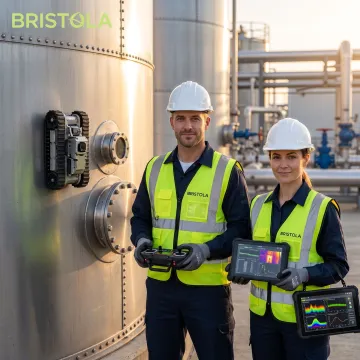
Tank inspections can include external visual inspections, internal inspections, sediment or sludge mapping, structural condition assessments, leak or integrity evaluations, and preventive maintenance inspections. The right mix depends on tank design, contents, operating conditions, and regulatory requirements. Bristola’s robotic and minimal-entry solutions are especially valuable when operators need internal condition insight while reducing human exposure and limiting operational disruption.
How does robotic tank inspection work?
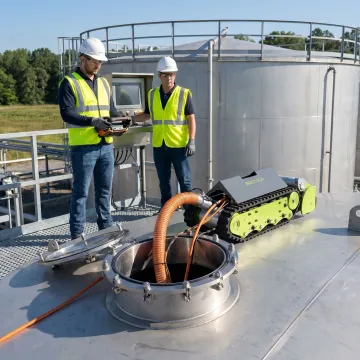
Robotic tank inspection uses remotely operated equipment to enter or assess a tank through a controlled access point rather than sending personnel inside. Depending on the application, the system may use cameras, sonar, positioning tools, and specialized entry hardware to gather condition data. This approach helps operators inspect sediment buildup, internal conditions, and service needs while reducing confined-space risk and minimizing downtime.
What are minimal entry point solutions for tanks?
Minimal entry point solutions are access methods that allow robotic equipment to enter or assess a tank through a smaller, controlled opening such as a compatible manhole or specialized portal. Instead of opening large sections of the tank or preparing for full human entry, operators can use these systems to support inspection and service more safely. This improves repeatability, reduces disruption, and supports long-term maintenance planning.
Can tank inspections be performed without human entry?
Yes, many tank inspections can now be completed without routine human entry by using robotic systems, sonar-based mapping, and specialized access hardware. This is especially useful for facilities trying to reduce confined-space exposure, improve safety protocols, and avoid lengthy shutdowns. While some situations may still require manual verification or repair work, robotic inspection can significantly reduce the need for personnel to enter hazardous environments.
What types of facilities benefit from robotic tank inspection?
Robotic tank inspection is useful for anaerobic digesters, wastewater and water treatment facilities, food and beverage plants, oil and gas operations, pulp and paper sites, steel mills, covered lagoons, and other industrial liquid storage assets. These environments often face sediment buildup, difficult access, safety concerns, or costly downtime. Robotic methods help operators gather condition data and plan maintenance with less disruption to production.
When should a tank be inspected?
A tank should be inspected on a scheduled preventive maintenance basis and whenever operators notice reduced performance, sediment accumulation, flow issues, unusual readings, or signs of structural concern. New assets also benefit from early baseline inspections to support long-term maintenance planning. Regular inspection intervals help facilities identify problems before they lead to shutdowns, emergency cleanouts, product quality issues, or more expensive repairs.
Can Bristola support both retrofit and new-build inspection access?
Yes, Bristola supports both retrofit and new-build applications. For existing facilities, the company can install hardware and system components that enable safer robotic access for future inspection and service. For new builds, access solutions can be integrated during construction so the tank is better prepared for long-term maintenance. This flexibility helps operators improve serviceability whether they are upgrading an older asset or planning a new one.