Many pond owners struggle with knowing when a little muck is normal versus when it's a real problem. Common culprits include stormwater runoff carrying soil and debris, unprotected shorelines eroding into the water, and organic matter breaking down faster than it can be flushed out.
This guide walks through the warning signs, why sediment accumulates, a step-by-step removal process, and when the job calls for more than a rake and some patience — especially for covered lagoons and industrial liquid storage ponds where traditional dredging isn't safe or practical.
TL;DR
- Sediment forms from runoff, erosion, and decomposing organic matter; the process is natural but accelerates without maintenance
- Light muck often responds to DIY raking, bacteria treatments, or aeration; heavy buildup usually needs dredging
- Removal follows four steps: assess, choose a method, remove, then stabilize the shoreline
- Covered lagoons and industrial ponds need specialized approaches. Confined-space entry carries real risk
What Is Pond Sediment?
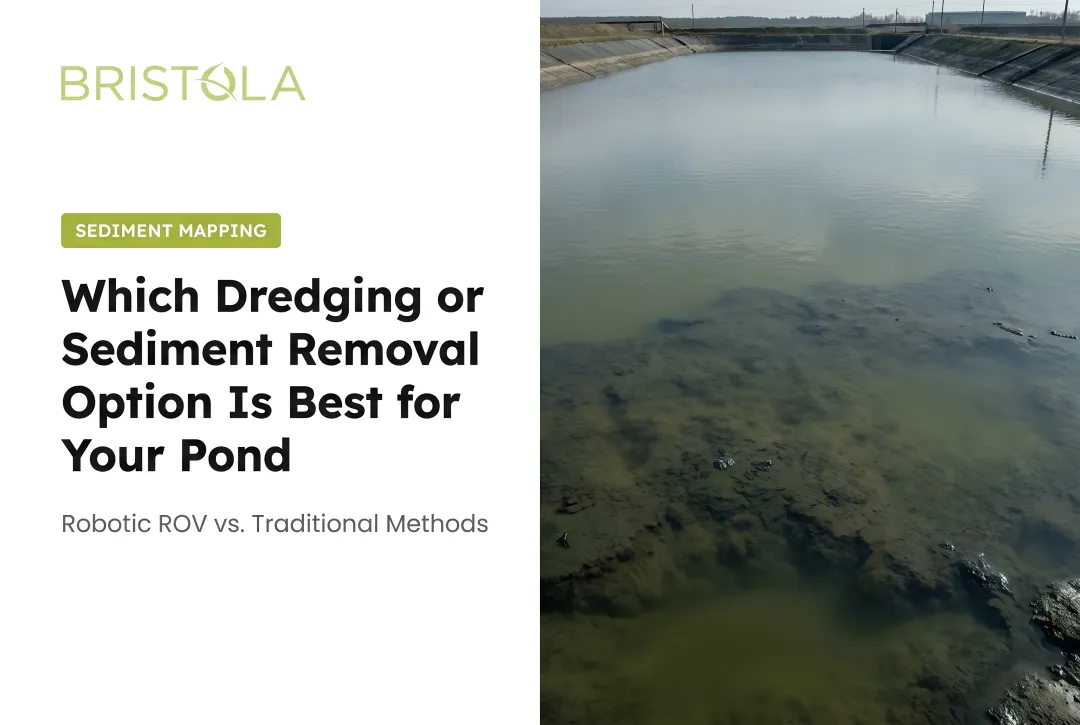
Pond sediment is the layer of soil, decayed organic matter, silt, and debris that settles on the bottom over time. As runoff enters a pond, the water slows down, and everything it's carrying — dirt, leaves, fertilizer residue — drops out of suspension and settles permanently on the pond floor.
More material keeps stacking on:
- Shoreline erosion washing soil into the water
- Decomposing leaves, algae, and aquatic plants
- Organic muck from seasonal die-off
Nutrient loading that fuels this buildup is called eutrophication, and it is entirely natural. Every pond ages this way.
Sediment itself is normal. Without maintenance, the buildup accelerates. Left unchecked, a healthy pond gradually turns into a shallow, nutrient-rich puddle that struggles to support fish, drainage, or recreation.

Signs Your Pond Has a Sediment Problem
Sediment issues tend to follow predictable patterns. If you know what to look for, you can catch problems early.
Shallow water and exposed muddy shoreline. Water levels appear lower than they used to, and muddy banks stay exposed even without drought. Accumulated sediment is displacing water volume, especially near inlets where runoff enters.
Cloudy or murky water that won't clear. Water stays turbid for days or weeks after storms pass. Fine sediment particles stay suspended, and cloudy water can reduce oxygen and block sunlight fish need.
Excess algae, weeds, or a "rotten egg" smell. Thick algae mats, dense weed growth, or a sulfurous odor when the bottom gets disturbed often signal sediment buildup. Shallower water lets more sunlight reach the bottom, fueling plant growth.
The odor usually comes from a black organic layer common in ponds that get fertilizer runoff or heavy leaf fall.
Poor drainage or flooding after storms. Stormwater ponds that used to handle heavy rain now overflow or drain sluggishly. Sediment has reduced the pond's designed storage capacity, since these ponds are engineered for a specific volume.

Why Sediment Builds Up (Root Causes)
Sediment accumulation traces back to a few real-world conditions:
- Stormwater runoff carrying soil, leaves, and debris from surrounding land
- Shoreline erosion from wave action, wind, or banks with no vegetation buffer
- Decomposing organic matter that adds nutrients and accelerates eutrophication (nutrient overload that fuels algae and muck)
- Lack of maintenance or aeration, letting muck accumulate unchecked
Ignoring the problem gets expensive. Left alone, sediment:
- Shrinks water storage and raises flooding risk
- Stresses fish and wildlife through low oxygen and poor clarity
- Blocks inlets and outlets, straining spillways and berms
- Costs more to remove the longer you wait
How to Remove Sediment From a Pond (Step-by-Step)
Jumping straight to removal without understanding what you're dealing with wastes both time and money. A structured approach ensures you pick the right method, address the sediment fully, and avoid the pond refilling with muck a year later.
Step 1: Assess the Sediment Problem
Before touching a shovel or hiring equipment, figure out the scope:
- Measure sediment depth with a probe or, for larger ponds, a bathymetric survey
- Document visible symptoms — shallow spots, muck thickness, cloudy water, odor
- Identify the source — is it an inlet pipe, eroding bank, or decaying vegetation?
- Note the functional impact — is it affecting drainage, flooding, or recreational use?
Step 2: Choose the Right Removal Method
Not every pond needs an excavator. Match the method to the problem:
| Situation | Recommended Method |
|---|---|
| Small pond, light sediment | Manual or mechanical removal |
| Large pond, heavy sediment | Hydraulic or mechanical dredging |
| Light organic muck, ongoing upkeep | Biological/bacterial treatment |
| Small lined or ornamental pond | Filtration system |
Choosing correctly avoids overpaying for heavy equipment when a lighter fix would do — or worse, under-treating a serious sediment problem that keeps coming back.

Step 3: Remove the Sediment
Light to moderate muck
- Manual raking, vacuuming, or hydro-raking to pull sediment to shore
- Beneficial bacteria or enzyme treatments to speed decomposition
- Aeration installation to reduce future organic buildup
Heavy sediment requiring dredging
- Mechanical dredging with excavators or draglines for smaller, accessible ponds
- Hydraulic dredging with suction pumps and pipelines for larger or hard-to-reach ponds
- Plan dewatering and disposal carefully: many ponds qualify as Waters of the United States under Section 404, so check with the Army Corps of Engineers before you dig
Covered lagoons or industrial/wastewater storage ponds
Traditional dredging on these facilities usually means draining the lagoon and sending workers into a confined space. That creates a real safety risk and expensive downtime.
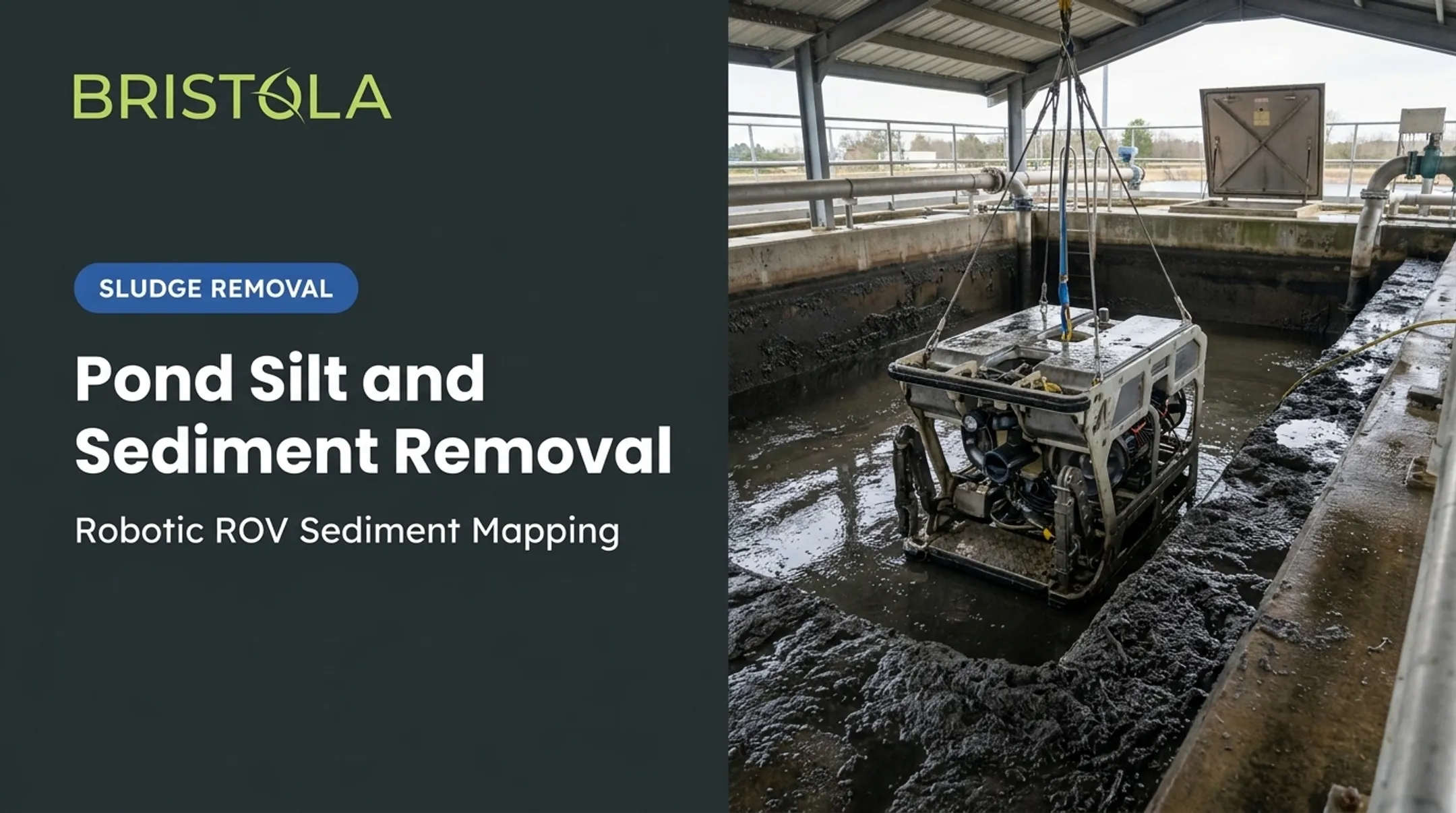
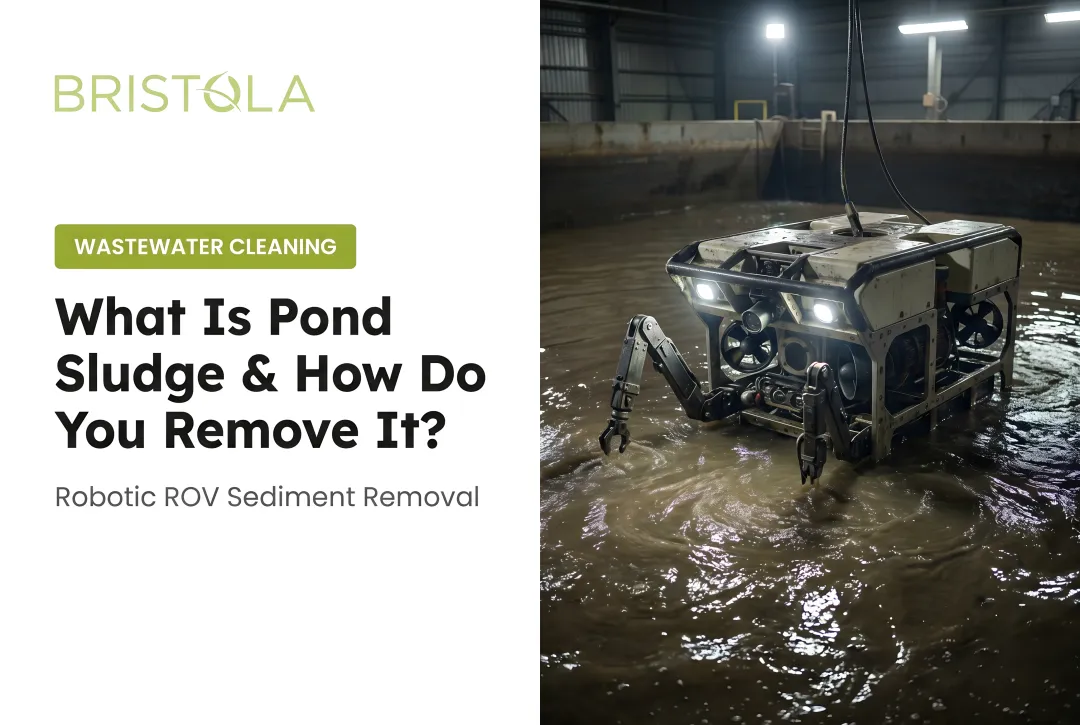
For covered lagoons and industrial storage ponds, Bristola's zero-human-entry robotic system is built for this exact constraint. A remotely operated submersible robot enters through a patented equalization-chamber portal, an airlock-style entry that fits manholes 24 inches or larger.
- The robot goes in while the lagoon stays full
- No confined-space entry, draining, or production stoppage
- Facility condition is evaluated and reported during the clean

Step 4: Stabilize the Shoreline and Verify Results
Removal isn't the finish line. Stabilize the site, then confirm the pond actually regained the capacity you needed:
- Repair eroded banks and add riprap where needed
- Reseed with native vegetation to hold soil in place
- Recheck water depth and clarity
- Confirm drainage or storage volume is restored (critical for stormwater ponds built around a design capacity)
When Should You DIY vs. Call a Professional?
Cost, safety, and long-term performance all factor into this decision.
- Light seasonal muck in a small residential pond: DIY works fine. Raking, bacteria treatments, and filters usually keep things manageable. Call a professional if odor or fish stress doesn't improve.
- Multiple feet of sediment buildup or exposed sediment bars: DIY isn't recommended. This scale of buildup needs professional dredging.
- Stormwater or detention pond failing to drain properly: Temporary fixes might buy time, but compliance-driven dredging from a professional is usually required.
- Covered lagoon, digester, or industrial liquid storage pond: DIY is neither safe nor feasible due to confined-space risk. Zero-entry robotic sediment removal, such as Bristola's system, is the practical option.
Confined spaces are defined by OSHA as large enough for entry, with restricted access, and not designed for continuous occupancy. Permit-required spaces demand rigorous testing, monitoring, and rescue procedures before anyone goes in. Avoiding entry altogether is the safer approach.
Common Mistakes to Avoid When Removing Pond Sediment
These missteps waste budget, raise safety risk, and let sediment return fast:
- Treating symptoms instead of causes: Algaecides mask blooms without removing the sediment that feeds them
- Skipping a depth survey: Choosing a removal method without mapping depth leads to under- or over-treatment
- Drain-and-enter without controls: Emptying confined tanks or lagoons and sending people inside is high-risk when safer options exist—and unsafe without full protocols
- Ignoring shoreline stabilization: Skipping bank protection after removal lets erosion refill the pond within a season or two
Preventive Measures to Avoid Future Sediment Buildup
Prevention costs far less than a full dredging project. Build these steps into regular pond care so sediment never reaches crisis levels:
- Keep vegetated shoreline buffers to trap soil and nutrients before runoff hits the water
- Run aeration to keep water moving and limit fine particles settling on the bottom
- Check depths every few years so you catch buildup before it becomes a dredging job
- Control upstream runoff and stabilize inlets and outlets where most sediment enters
Conclusion
Sediment buildup is a natural process, but you can manage it if you catch it early. The right fix depends on an honest assessment of depth, access, and how the pond is used.
Light cases may only need a rake and bacteria treatment. Heavier buildup can require full dredging. Covered lagoons and industrial ponds often need specialized robotic removal that avoids confined-space risk entirely.
Staying proactive saves money, downtime, and long-term damage to pond performance. For covered lagoons and industrial sites where human entry is not an option, Bristola provides zero-entry robotic cleaning that works while the facility stays online.
Frequently Asked Questions
How often should a pond be dredged or desilted?
There's no universal timeline. It depends on runoff volume, watershed size, and shoreline maintenance. Many guidance sources recommend dredging once sediment reduces storage capacity by around 25%, rather than following a fixed calendar.
What's the difference between dredging, desilting, and sediment removal?
These terms largely overlap and all refer to physically removing bottom material from a pond. None can be replaced by chemical treatments alone, since chemicals address symptoms like algae, not the underlying muck.
Can dredging be done without draining the pond?
Yes, hydraulic dredging uses suction pumps and can operate with water in place. Mechanical dredging with excavators typically requires partial dewatering to access the pond bottom.
How deep should a pond be to stay healthy long-term?
Recreational ponds generally do best at 6-8 feet average depth, with a maximum around 10-12 feet. Stormwater ponds need to maintain their originally designed storage depth to function properly.
What happens if I ignore sediment buildup in my pond?
Ignoring it raises flooding risk, accelerates shoreline erosion, stresses fish through low oxygen, and increases removal costs the longer you wait.
Is it safe to manually clean sediment from an industrial pond or covered lagoon?
No. These are confined spaces with serious risks including oxygen deficiency and engulfment hazards. Zero-human-entry solutions, like Bristola's robotic system, remove sediment without anyone entering the space.