Frac tank cleaning is the systematic removal of sludge, sediment, and residual fluids from a tank's interior to restore capacity and safety. Crews and site managers often call it "hosing it out," but that phrase undersells what actually happens. Real cleanouts involve specific steps, safety protocols, and equipment decisions that affect cost, turnaround time, and worker safety.
This article covers what the process is, why oil and gas sites and other industries rely on it, how it works step by step, and what factors shift the approach from tank to tank.
TL;DR
- Frac tanks build up sediment, oil, and chemical residue between uses, cutting usable capacity
- Cleaning is manual (confined space entry) or mechanized/robotic, which lowers worker risk
- Core process: evaluation, sediment breakup, extraction, and waste disposal
- OSHA confined space rules heavily shape which cleaning method a site can legally choose
- Zero-entry robotic systems are preferred for higher-risk or frequent cleanouts
What Is the Frac Tank Cleaning Process?
Frac tank cleaning removes solids, sludge, and fluid residue that build up on a tank's floor and walls after storing water, drilling fluids, proppant, or petroleum products. Left alone, that buildup cuts usable capacity, risks cross-contamination, and speeds corrosion.
The goal is threefold:
- Restore full storage capacity so the tank holds what it's rated for
- Prevent cross-contamination between different fluid types used across jobs
- Extend tank lifespan by cutting corrosion and structural stress from trapped residue
This is distinct from routine tank maintenance. Inspections and corrosion checks are passive — they look for problems. Cleaning is the active removal of material that has already accumulated.
Why the Frac Tank Cleaning Process Is Used in Oil & Gas and Industrial Applications
Frac tanks get rotated hard. A single site typically runs several tanks simultaneously, often storing freshwater one week and brine or diesel-based fluids the next. That rotation is exactly why cleaning between uses isn't optional: it's how operators avoid mixing incompatible fluids in the same vessel.
Skip cleaning, and problems compound fast:
- Reduced usable volume as sediment eats into tank capacity
- Clogged pumps and transfer lines from carried-over solids
- Accelerated corrosion from trapped moisture and chemical residue
- Regulatory violations tied to improper waste handling
- Higher spill and leak risk from degraded tank integrity
Industrial Use Beyond the Oilfield
Tank trailers, railcars, and above-ground storage tanks face the same issue outside the oilfield. Food and beverage processors, chemical manufacturers, and wastewater treatment facilities all run cleaning programs for the same reason: buildup compromises capacity and safety over time.
The Regulatory Layer
OSHA's confined space entry rules and environmental waste management requirements turn this from routine upkeep into a compliance obligation. Manual cleanout crews entering a tank must follow 29 CFR 1910.146, which governs permit-required confined spaces. That means atmospheric testing, ventilation, an attendant, and rescue procedures before anyone climbs in.
OSHA's own accident records show the stakes. On June 26, 2022, two workers died while emptying and cleaning an open-topped frac tank containing roughly two feet of water and oil residue. Investigators detected hydrogen sulfide at the scene—proof that manual cleanout is a confined-space hazard, not a hose-and-go chore.

How the Frac Tank Cleaning Process Works (Conceptual Flow)
The process moves through a predictable sequence: evaluation, sediment breakup, extraction, and waste handling. What varies is how each stage gets done.
Three elements go into every cleanout:
- Wash fluid — water, diesel, or a surfactant-based solution depending on residue type
- A delivery/agitation mechanism — jetting nozzles, mechanical agitators, or a robotic crawler
- An extraction system — vacuum trucks, suction pumps, or gravity drains

Technicians loosen sediment through jetting or agitation, then pump or drain it out. Control can be manual—with a technician inside the tank—or remote, using a positioned nozzle or a submersible robotic system. Both paths aim at the same outcome, and the right path starts with evaluation.
Step 1: Evaluation and Planning
Before any wash fluid goes in, technicians assess:
- Sediment depth across the tank floor
- Tank geometry, including internal baffles and manway placement
- Residue type — mud, hydrocarbons, or brine — since each responds differently to agitation
This step determines which equipment and method actually make sense for the job.
Step 2: Cleaning Execution
Crews introduce wash fluid through jetting or nozzle-based machines, either positioned inside the tank or fed through the access opening. High-pressure sprays or mechanical agitation break up compacted sediment that will not move on its own.
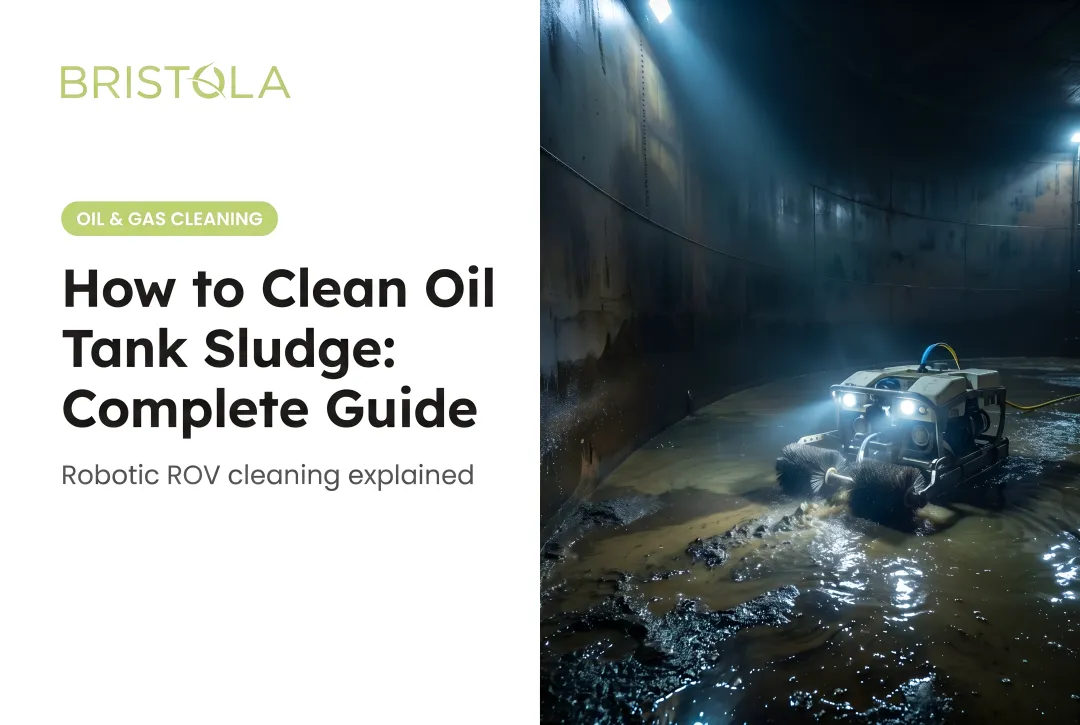
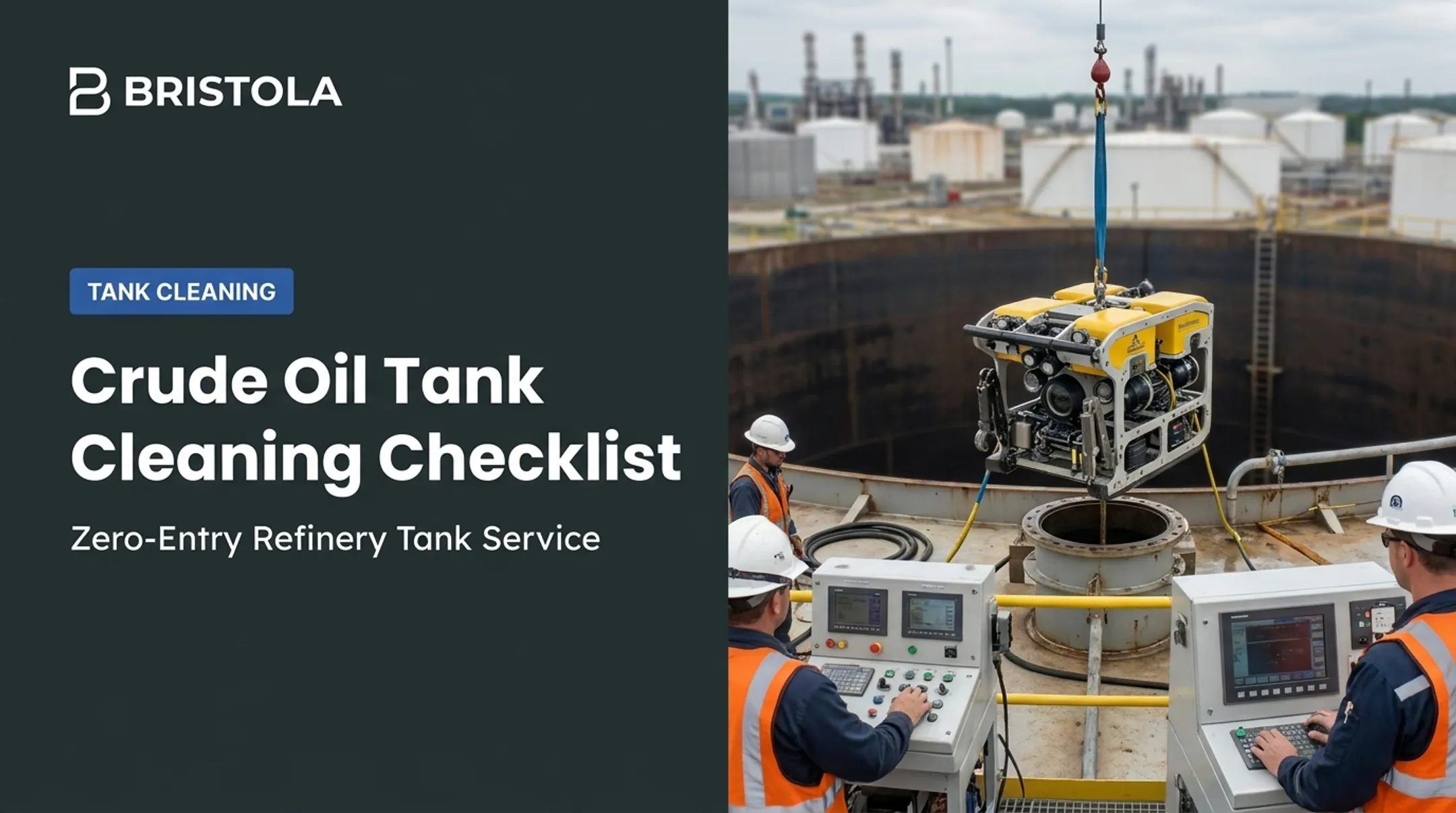
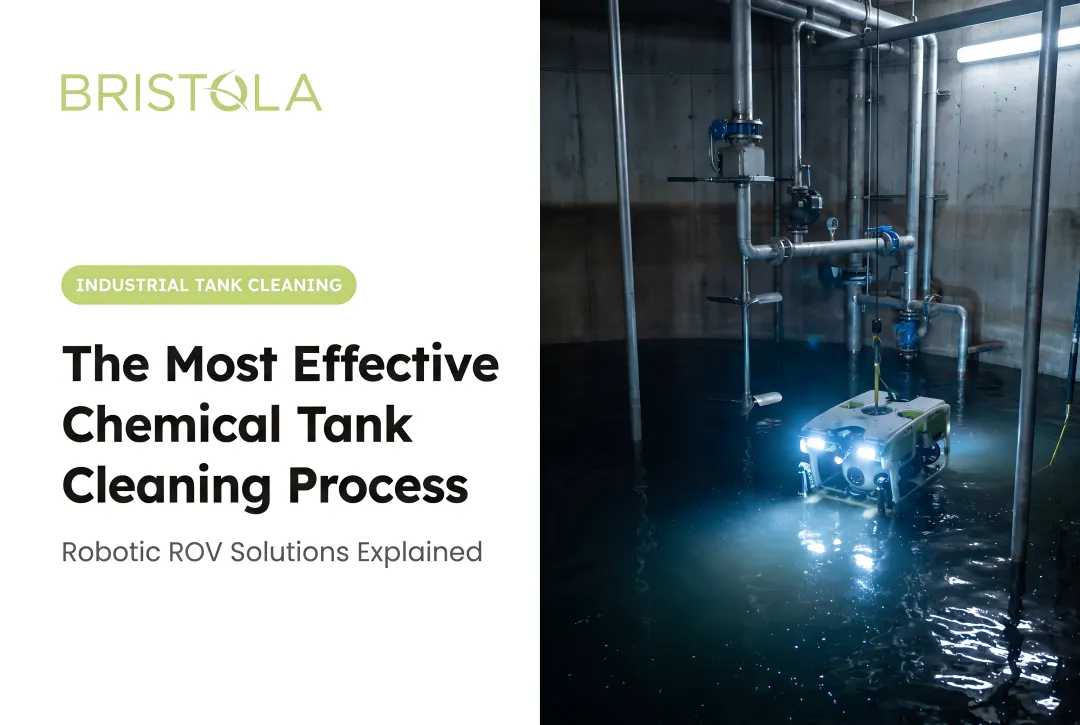
Mechanized and robotic systems change how this step runs. A zero-human-entry submersible ROV can complete agitation and wash-down without anyone climbing inside:
- Removes confined-space entry from the cleanout
- Keeps the tank in service in many cases
- Cuts the need for drain-down and temporary storage
Step 3: Extraction and Waste Disposal
Once sediment is loosened, it needs to leave the tank. Common extraction methods include:
- Vacuum trucks for high-volume sludge removal
- Suction pumps for lighter sediment
- Gravity draining for straightforward liquid removal

Some operations filter and recirculate recovered wash water to cut water and chemical costs. Residual waste still has to meet environmental rules, and classification is rarely automatic.
Under EPA's RCRA framework, many oil and gas exploration and production wastes are exempt from hazardous waste regulation under Subtitle C. That exemption is not a blanket pass. Qualification depends on:
- Origin of the waste stream
- Whether it was mixed with other waste types
- Whether it exhibits hazardous characteristics
State rules add another layer. Texas, for example, requires proper classification and disposal documentation for oil-and-gas waste through the TCEQ.
Key Factors That Affect the Frac Tank Cleaning Process
Not every cleanout looks the same. These variables shape method selection:
- Residue type and viscosity: light sediment responds to simple jetting, while compacted mud or hydrocarbon sludge often needs mechanical breakup
- Tank geometry and access: manway size, internal baffles, and corrugated versus flat bottoms all affect how equipment gets positioned
- On-site versus mobile needs: a tank that must stay in place calls for different equipment than one headed to a fixed wash station
- Fluid rotation frequency: tanks switching between fluid types need more frequent cleaning to avoid cross-contamination
- Confined space regulations: safety protocols may require a no-entry method rather than permitting manual access at all
Common Issues, Misconceptions, and When Manual Cleaning Falls Short
A few misconceptions keep circulating around frac tank cleaning. Each one tends to cost operators money or create compliance headaches. "Pressure washing is enough." It isn't, at least not alone. Compacted sediment often needs mechanical breakup or vacuum extraction to fully clear. A tank that looks clean after a hose-down can still hold hardened material at the base or in corner seams. "Clean" and "compliant" aren't the same thing. A visibly clear tank might still fail an environmental disposal or inspection standard if waste wasn't characterized and handled correctly. Manual cleanouts routinely take longer than planned. Confined space entry means crews of two or more, atmospheric testing, ventilation setup, and rescue standby, all before actual cleaning starts. Jobs that seem like a few hours can stretch into a full day or more once regulatory steps are factored in. Traditional methods also force a choice: pause production or arrange temporary storage while the tank is offline. That's the gap no-entry, in-service systems are built to close. Bristola's patented airlock-entry system, for example, uses an equalization chamber so a submersible ROV can pass through a manway of 24 inches or larger while the tank stays full and online. Operators gain:
- Cleaning without draining or shutting down the tank
- No confined-space entry for personnel
- Less need for temporary storage during the cleanout Wastewater treatment and food processing facilities are adopting the same zero-human-entry approach for recurring cleanouts, not only oil and gas. Not every tank needs the same treatment. Size, prior contents, and site-specific rules should drive the method. One-size-fits-all cleanouts usually mean overpaying on some jobs and underdelivering on others.

Frequently Asked Questions
What does frac tank mean?
A frac tank is a large, portable storage vessel used to hold water, drilling fluids, chemicals, or other liquids during oil and gas operations.
What is the procedure for frac tank cleaning?
The process follows three stages: evaluating sediment depth and access points, executing the cleaning through jetting, agitation, or robotic systems, and extracting waste with proper disposal.
Which chemicals are used for frac tank cleaning?
Surfactants, degreasers, and water-based wash fluids are most common. The right choice depends on whether you're dealing with oil-based sludge or water-soluble sediment — always check site-specific safety data sheets first.
How long does it take to clean a frac tank?
Manual methods can take several hours to a full day depending on sediment buildup and confined space protocols. Mechanized or robotic systems often cut that timeline substantially, depending on tank condition and residue type.
Is confined space entry always required for frac tank cleaning?
No. Traditional methods often require entry, but modern no-entry robotic and jetting systems can clean tanks without sending anyone inside.
How often should frac tanks be cleaned?
It depends on usage rate, how often fluid types rotate, and how quickly sediment accumulates. High-turnover sites may need cleaning between nearly every job to prevent cross-contamination.