That's where a qualified UST contractor comes in. These professionals handle installation, inspection, cleaning, repair, and decommissioning under a patchwork of federal and state rules. This guide covers what these contractors do, how to vet one, and how technology like remote-entry cleaning is changing tank maintenance for the better.
Key Takeaways
- Hire state-certified UST contractors for install, inspection, repair, cleaning, and decommissioning
- EPA sets the baseline; states such as Texas and Ohio issue the licenses that count
- Verify insurance, UST experience, and cleaning method to cut liability and downtime
- Remote and robotic cleaning is replacing confined-space entry for safer, faster work
What Is a UST Contractor?
An underground storage tank (UST) sits below grade, unlike an aboveground storage tank (AST), which sits on the surface and is generally easier to inspect visually. That underground placement is exactly why USTs carry higher regulatory scrutiny: leaks aren't visible until soil or groundwater is already contaminated.
A UST contractor is a licensed professional or company qualified to install, inspect, maintain, repair, or remove these buried systems. Federal rules under 40 CFR Part 280 set performance standards, but they don't create a single national contractor license.
Types of UST Contractor Certifications
Certification requirements vary by state:
- Texas: TCEQ contractor registration (1 year experience, $232 fee, $1M liability insurance) plus supervisor licensing (12–40 hours training and an exam)
- Ohio: 36-hour installer course, documented experience, and a passing exam (engineering backgrounds may qualify for waivers)
- Federal Class A/B operator training (related compliance credential): 80% passing score minimum; states may set additional or different rules (EPA)
Hiring an uncertified contractor can void compliance status, delay permitting, and expose the tank owner to liability if something goes wrong later.
Core Services Offered by UST Contractors
Installation and Testing
Installation must follow a nationally recognized code of practice, such as API 1615 or PEI RP100, along with manufacturer instructions. Contractors typically cover:
- Site assessment and excavation
- Tank placement and backfill
- Leak-detection setup
- Automatic line-leak detectors rated to catch at least 3 gallons per hour at 10 psi
Cleaning and sludge Removal
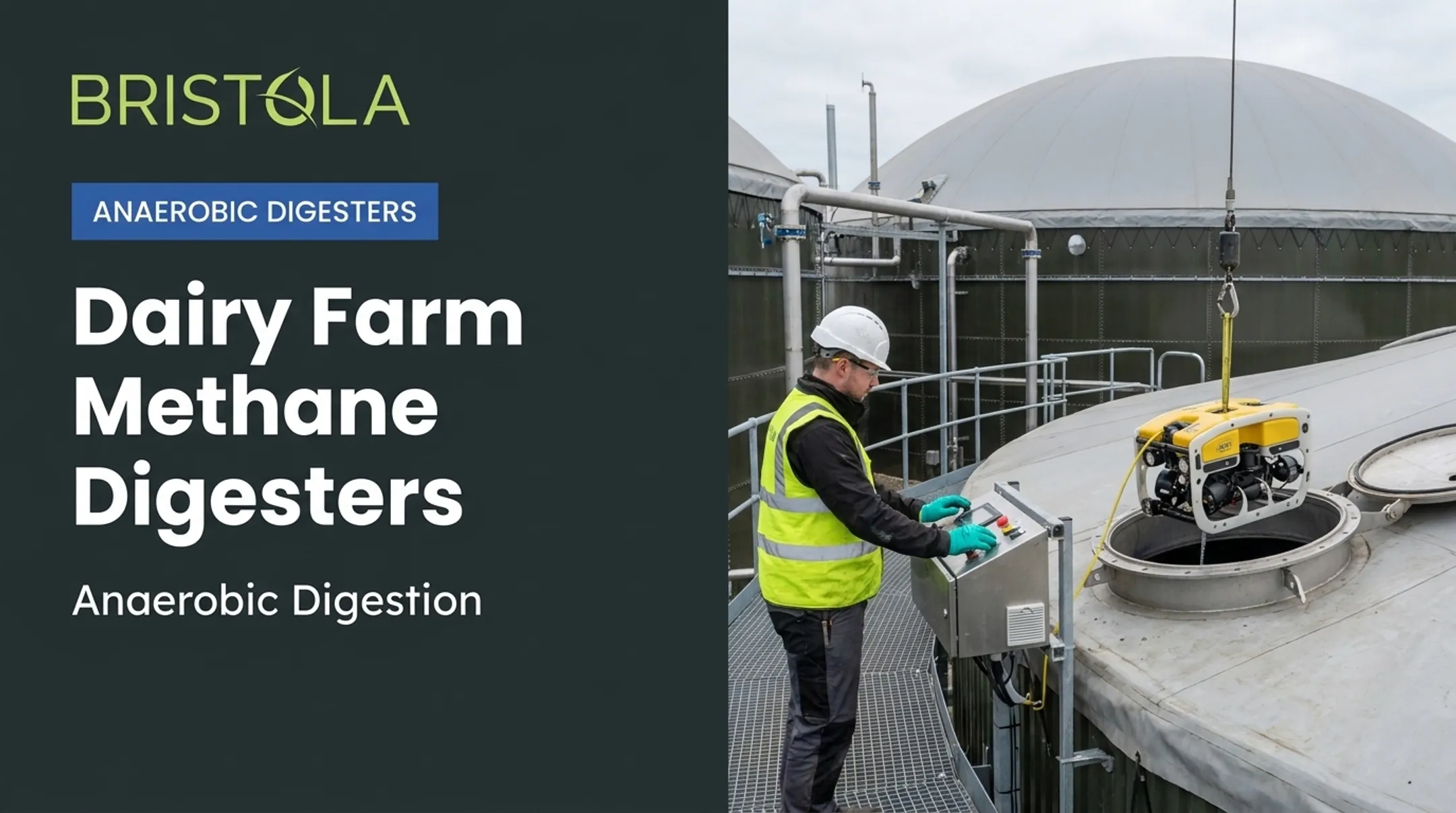
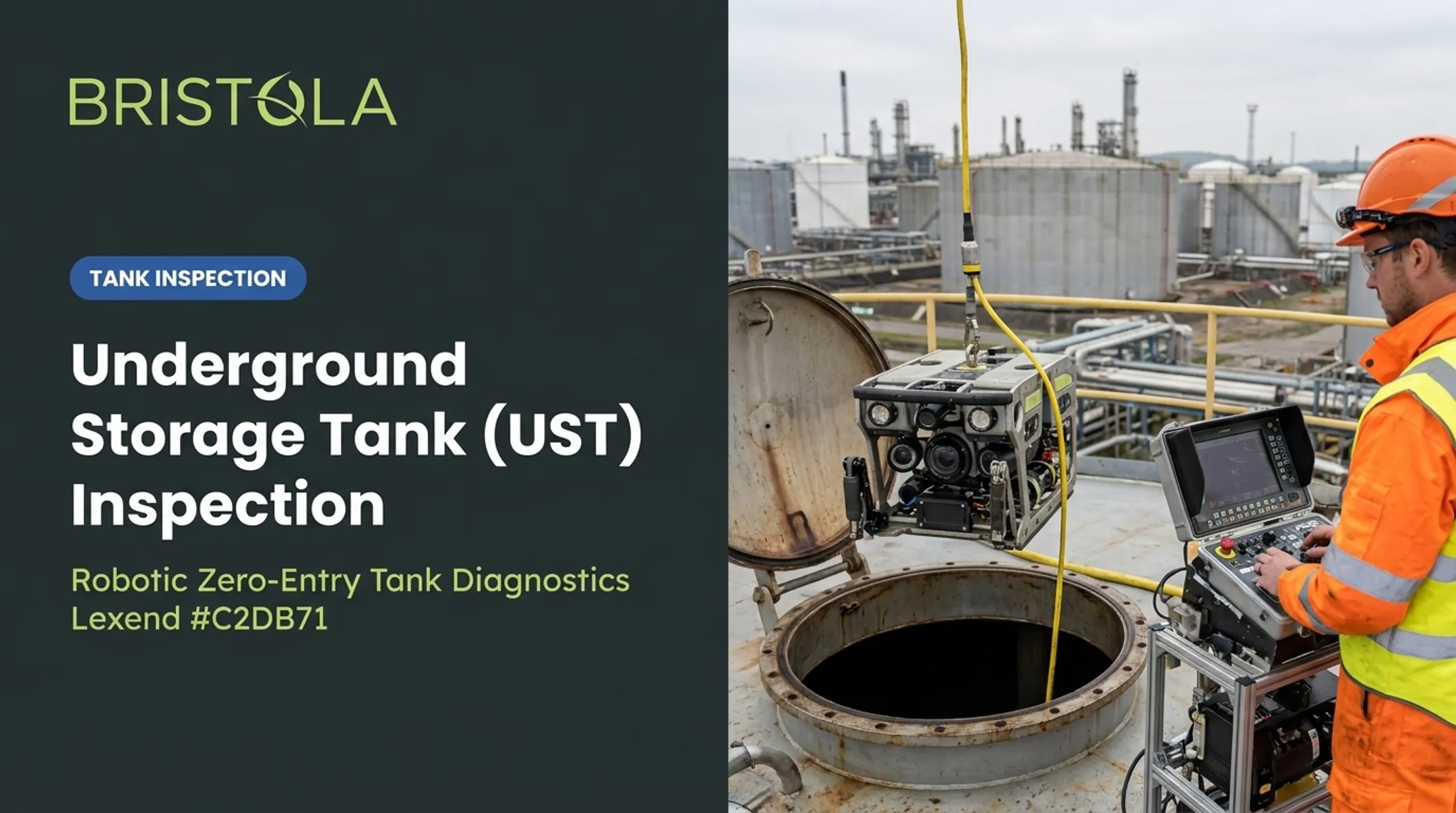
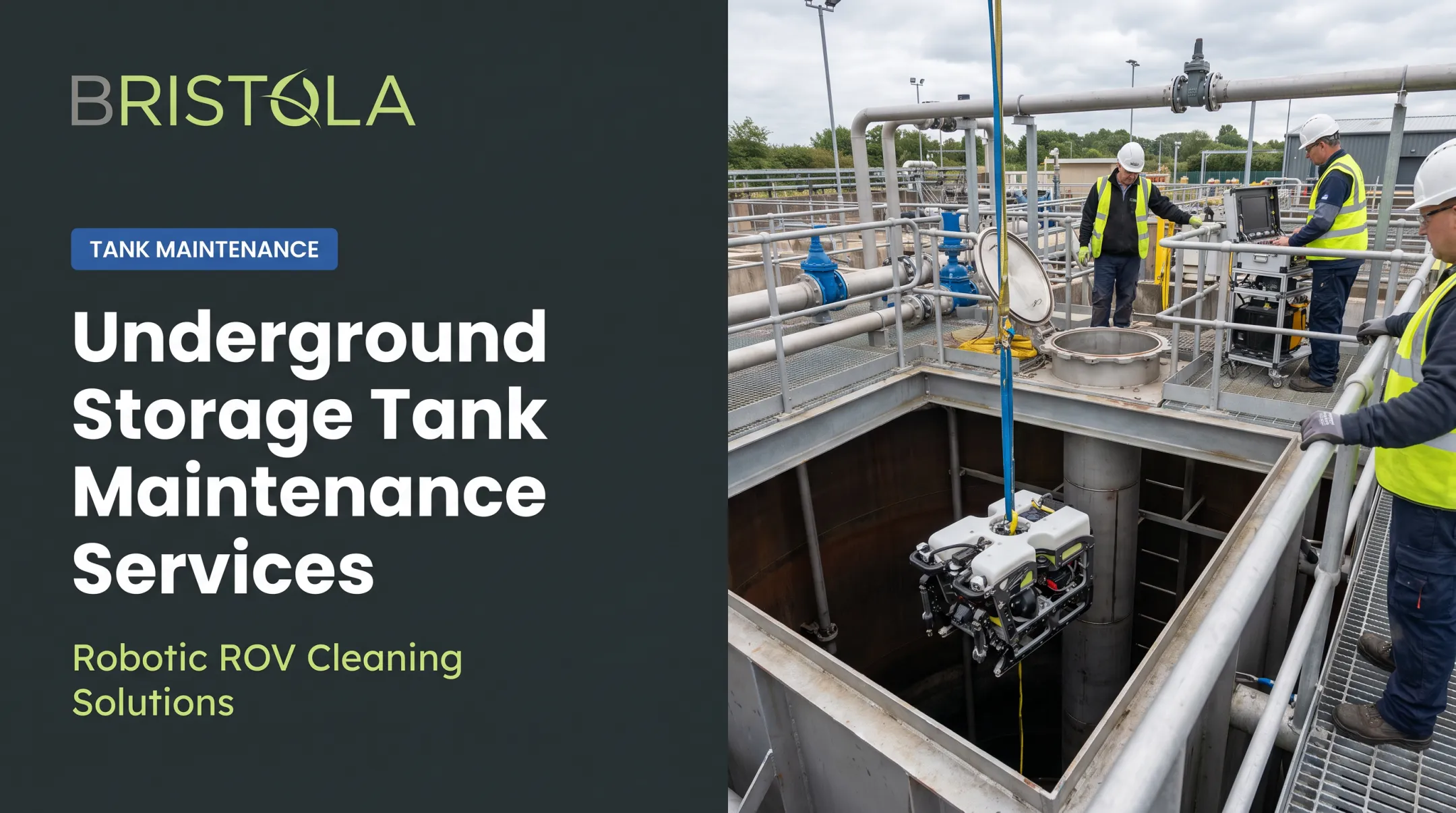
Traditional tank cleaning requires confined-space entry: a worker climbs inside to remove sludge manually. This is genuinely dangerous work. OSHA classifies tanks as confined spaces (OSHA 1910.146). The Bureau of Labor Statistics documented 1,030 confined-space deaths from 2011–2018, including fatalities inside oil storage tank interiors. Modern remote-entry methods cut that risk without taking the tank offline. Bristola's Submersible Robotic Cleaning System uses a patented equalization-chamber entry portal—compatible with manholes 24 inches or larger—to deploy a remotely operated robot while the tank stays full and in service. The robot reaches the floor on a winch, pulls sediment out through a flexible hose, and never puts a person inside the space. That removes both the downtime and the confined-space exposure that draining and manual entry create.

Repair, Retrofitting, and Decommissioning
- Corrosion protection: Cathodic protection systems need testing within six months of install, then every three years
- Spill/overfill upgrades: Containment sumps must be tested for liquid tightness every three years
- Closure and removal: Owners must give 30 days' advance notice before permanent closure, with soil sampling where contamination is most likely

How to Choose the Right UST Contractor
UST work carries release, compliance, and confined-space risk that general contractors are not always set up to handle. Before you sign, run through this checklist:
- Verify state licensing directly through your state UST program office, not just the contractor's own claims
- Request proof of insurance and bonding (Texas, for example, requires $1 million in liability coverage for registered contractors)
- Confirm experience with your tank type, whether that's fuel storage, industrial liquids, or a specialized process tank
- Ask for references or case studies showing past compliance inspections and completed projects
- Compare cleaning methods: traditional confined-space entry versus remote or robotic options, and how each affects safety, downtime, and cost

If uptime and crew safety matter, a contractor limited to manual entry cleaning is rarely the strongest fit.
UST Compliance, Inspections, and Funding
A UST inspection typically covers visual checks, tightness testing, and verification that leak-detection systems are functioning. Under the Energy Policy Act, EPA and participating states must inspect regulated USTs at least once every three years (EPA).
Equipment follows its own schedule on top of that:
- Impressed-current rectifiers: every 60 days
- Cathodic protection: every three years
- Spill and overfill equipment: every three years
Funding for cleanup and upgrades varies widely by state. Illinois, for instance, operates a UST Fund that covers eligible corrective-action costs after a deductible of $5,000 to $100,000, depending on when the release was reported. Most state funds, Illinois included, generally don't cover routine upgrade costs—only post-release cleanup.
UST Size and Cost Considerations
There's no single "standard" 10,000-gallon tank. Dimensions depend entirely on the manufacturer:
| Manufacturer | Model | Dimensions | Weight |
|---|---|---|---|
| Newberry | STI Permatank | 96 x 324 inches | 9,324 lb |
| Newberry | STI ACT-100 | 96 x 324 inches | 15,100 lb |
| WEMAC | Horizontal config | 96 x 324 inches | Varies |
Installation and cleaning costs depend on tank size, material, secondary containment design, site access, and soil conditions. There's no universal national price range, but the cost drivers are consistent across projects.
Downtime and labor are where costs can spiral. One documented comparison of traditional cleaning cycles (roughly every five years) put annualized cost at about $250,000 per tank, including direct cleaning, lost production, chemical treatment, and cleanout.
A zero-human-entry approach that skips draining and confined-space labor cut that figure substantially:
- Traditional cleaning: ~$250,000 annualized per tank
- Zero-human-entry cleaning: ~$170,000 annualized per tank
- Annual savings: ~$80,000 per tank

Those figures come from Bristola's cost modeling in other tank applications, but the principle holds for USTs: cut downtime and manual labor, and long-term maintenance spend drops.
Frequently Asked Questions
What is a UST inspection?
A UST inspection is a routine check for leaks, corrosion, and proper functioning of monitoring systems, required under EPA and state regulations. Inspections typically occur at least every three years, with some equipment checked more frequently.
What is a UST certification?
A UST certification is a state-issued credential verifying that a contractor is qualified to install, inspect, or remove underground storage tanks. Requirements vary by state and can include exams, training hours, and documented field experience.
What is UST funding?
UST funding refers to state trust fund programs that help tank owners cover costs like leak cleanup after a confirmed release. Most funds don't cover routine upgrades, only corrective action after contamination is reported.
How big is a 10,000-gallon UST?
It depends on the manufacturer and tank orientation. A common horizontal layout is about 8 feet in diameter by 27 feet long (roughly 96 × 324 inches). Always confirm dimensions on the specific manufacturer’s drawing.
How often should a UST be cleaned or inspected?
Facility inspections are required at least every three years under federal guidelines, though equipment like cathodic protection systems needs more frequent checks. Cleaning frequency depends on sludge buildup, product type, and inspection findings rather than a fixed calendar.
Can UST tanks be cleaned without confined-space entry?
Yes. Remote-operated systems, like Bristola’s Submersible Robotic Cleaning System, use a patented entry portal to send a robot into the tank while it stays full and operational—no worker entry required.