That's the problem. Sediment piles up, vegetation takes over, and outlet pipes clog, all without much visible warning. Then a heavy storm hits, the pond can't handle the volume, and you're looking at flooding, a regulatory violation, or a dredging bill nobody budgeted for.
This guide walks through why maintenance matters, the different types of upkeep involved, warning signs to watch for, a realistic maintenance schedule, and the mistakes that cost property owners the most.
TL;DR
- Regular inspections, vegetation control, sediment checks, and structural reviews keep ponds working as designed
- Preventive maintenance is far cheaper than dredging or repairs after neglect
- Watch for clogged inlets/outlets, erosion, algae blooms, and unusual water levels
- Set inspection frequency by pond type, drainage area, and local regulations
- HOAs, property managers, or municipalities are usually responsible per the recorded maintenance agreement
Why Stormwater Pond Maintenance Is Important
A stormwater pond only works if it can hold and treat the volume it was designed for. Maintenance keeps that capacity intact, protects water quality downstream, and keeps you on the right side of local regulations.
Flood Control and Water Quality Depend on Capacity
Sediment buildup and overgrown vegetation reduce storage volume over time. Minnesota's stormwater guidance notes that sediment, blocked outlets, damaged pipes or risers, and weakened embankments all cut a pond's flood-control and pollutant-removal capability. Once meaningful storage is gone, the next big storm has nowhere to go but into streets and yards.
Ponds also trap pollutants before they reach streams and rivers. When maintenance lapses, that trapped material re-suspends, and nutrient-rich runoff feeds algae blooms instead of settling out. You end up with a pond that looks bad and performs worse.
Compliance and Cost: Prevention Wins
Most jurisdictions require documented inspections. Butner, North Carolina, for example, mandates monthly inspections of runoff structures plus an annual report from a qualified professional. Spartanburg County maintenance agreements warn of fines up to $500 per day per violation for neglected ponds. Check your local ordinance and recorded agreement: enforcement varies widely by jurisdiction.
Routine upkeep stays far cheaper than corrective work:
- Minnesota estimates annual wet-basin operations and maintenance at 3–5% of construction cost
- A 2024 ASCE/VDOT study found routine basin tasks averaging $400, with about $1,100 in typical annual upkeep
Full dredging (surveys, dewatering, disposal, and restoration) climbs fast once sediment reaches critical levels. Catching erosion or clogging early costs a fraction of a major repair later.

Types of Stormwater Pond Maintenance
Maintenance falls into three tiers, from simple upkeep to major capital projects.
Routine / Preventive Maintenance
This is the day-to-day work that keeps a pond functioning:
- Mowing and debris removal around the perimeter
- Clearing inlets and outlets of trash and sediment buildup
- Managing vegetation and correcting minor erosion before it spreads
Most of this runs through operating budgets and happens monthly or quarterly. It is low-cost and predictable—and skipping it is usually where bigger problems begin.
Corrective / Reactive Maintenance
This tier kicks in when something's already wrong:
- Inspection flagged a deficiency
- Storm damage needs repair
- A violation notice landed on your desk
Work here includes pipe repairs, embankment fixes, and control structure replacement. The longer these sit unaddressed, the more expensive they get. A small crack in a riser today can become a structural repair project within a year.
Major Maintenance: Sediment Removal and Dredging
When corrective fixes are no longer enough, sediment removal becomes the capital-tier job. Sediment accumulates naturally in every pond and slowly eats into storage capacity until dredging is unavoidable.
Minnesota's guidance points to sediment removal every 2–7 years, or once a forebay or permanent pool loses 50% of its capacity. Those figures vary enough that a bathymetric survey—mapping underwater depth and sediment volume—is the only reliable way to know when your pond actually needs it.
Traditional dredging relies on mechanical equipment like clamshells, draglines, and backhoes, or hydraulic methods like suction pipelines. Dewatering, disposal, and restoration drive wide cost swings from project to project.
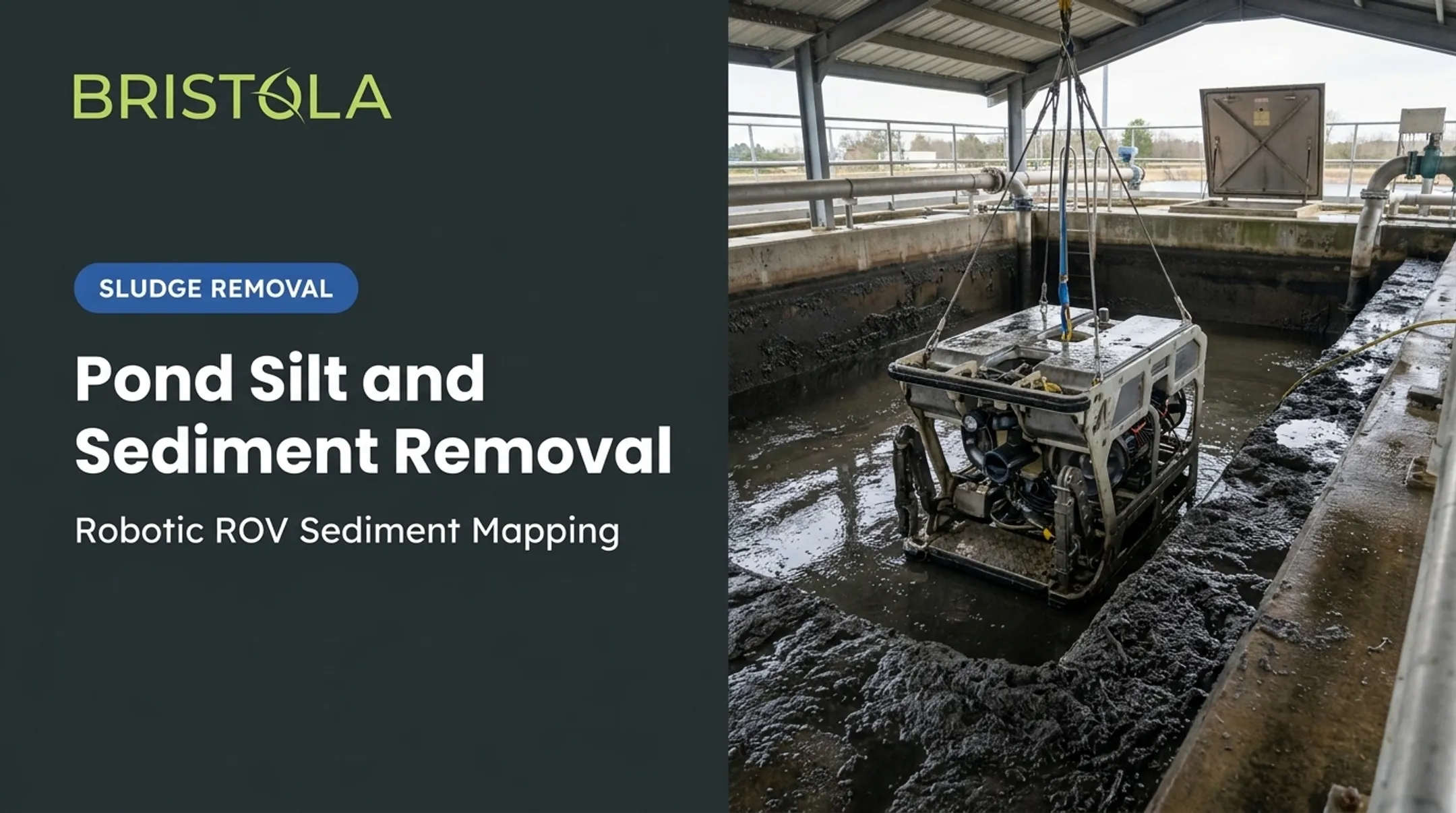
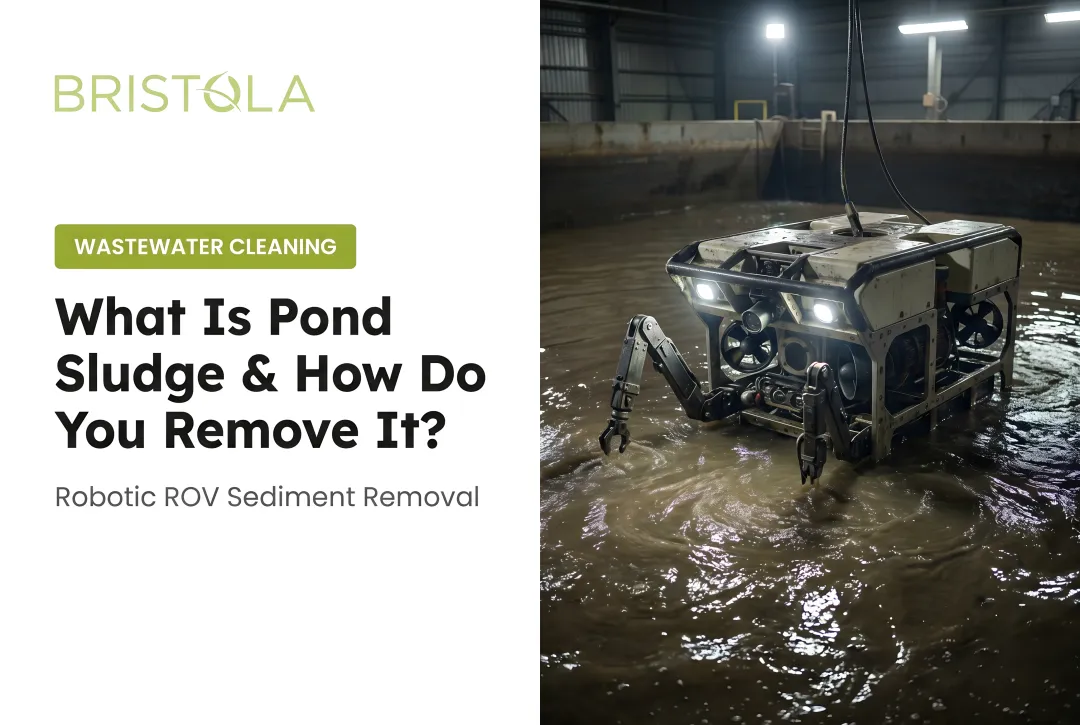
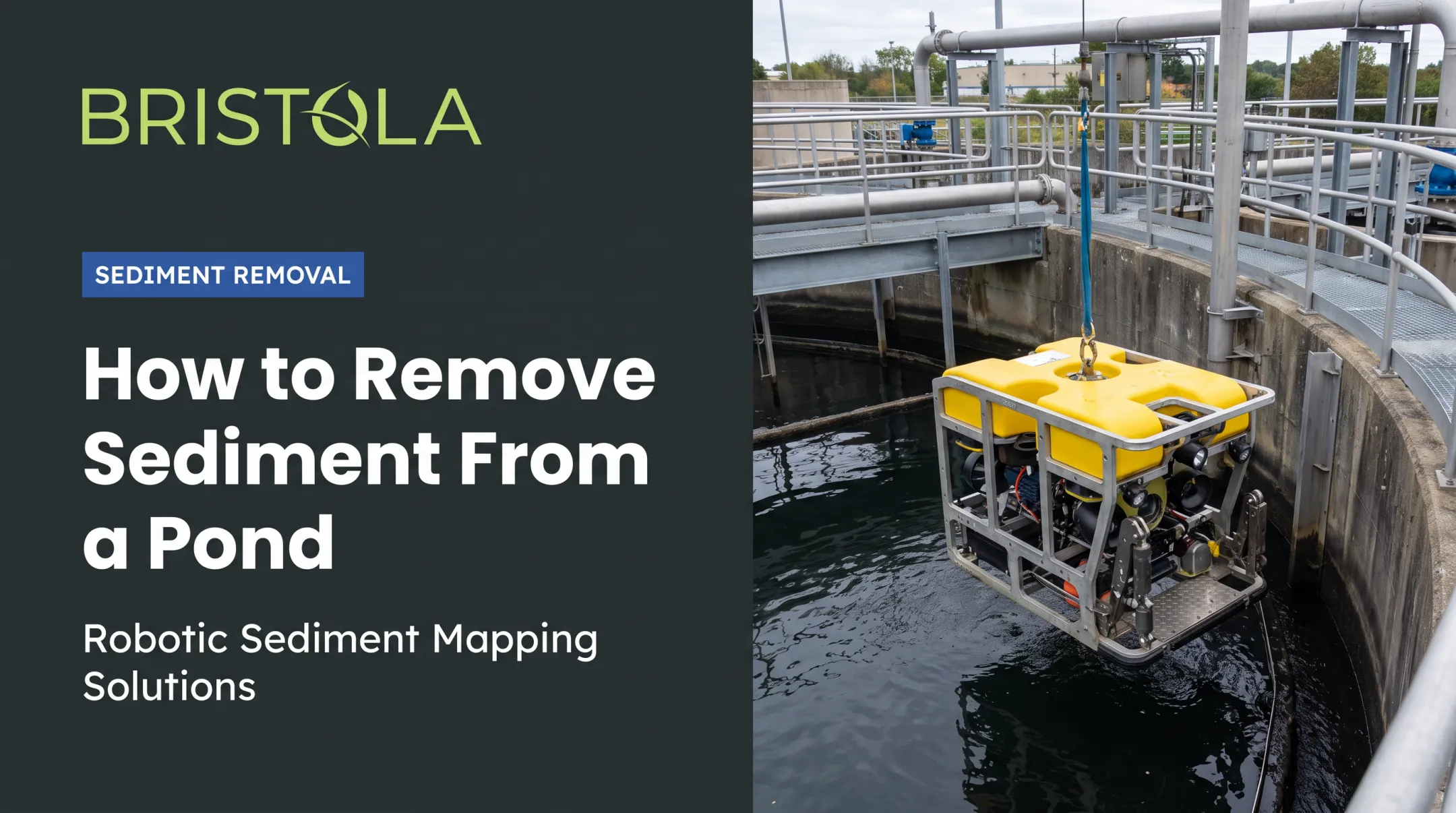
For covered lagoons and liquid storage tanks tied to the same facility, some operators use zero-human-entry robotic cleaning instead of traditional dredging. Bristola's submersible ROV system, for example, enters through a patented equalization chamber and removes sediment without draining the asset or stopping operations. That approach is proven on industrial tanks and covered lagoons; it is not a direct substitute for open-air stormwater pond dredging.

Signs Your Stormwater Pond Needs Maintenance
Catching warning signs early turns a small fix into avoided repair costs, downtime, and compliance risk.
Water Quality and Appearance Changes
- Turbid, murky water signaling excess nutrient runoff
- Visible algae blooms covering more than 20% of the surface
- Unusual odors or discoloration that weren't there before
Structural and Flow Issues
- Clogged or damaged inlets, outlets, pipes, or risers
- Standing water beyond 48 hours (most dry ponds should drain in that window)
- Slow drainage or unexpectedly high water levels after rain
Erosion and Vegetation Problems
- Bare soil, gullies, or undercut banks along the shoreline
- Overgrown or invasive vegetation blocking access to structures
- Woody growth on embankments that can weaken structural integrity with root intrusion

Stormwater Pond Maintenance Schedule (General Guidelines)
Frequency depends on pond type, drainage area, and local requirements. Use this framework as a starting point:
| Frequency | Tasks |
|---|---|
| Monthly | Debris removal, mowing, visual checks |
| Semi-annual / after major storms | Self-inspection of inlets, outlets, and erosion points |
| Annual | Certified inspection, sediment monitoring, vegetation management review |
| Every 3–5+ years (as needed) | Bathymetric survey, dredging, major structural repair |
Ponds with high runoff or heavy sediment loads need more frequent attention than ponds with upstream pretreatment already handling part of the filtering.

Who's Responsible and Common Mistakes to Avoid
Responsibility usually sits with whoever holds the recorded maintenance agreement, which could be an HOA, a property manager, or a municipality. Philadelphia's guidance is blunt about it: the obligation stays attached to the land, even after a sale.
Two mistakes come up again and again:
- Using general landscaping crews instead of stormwater specialists. Mowing is easy. Recognizing a failing riser or invasive root system on an embankment takes different expertise entirely.
- Waiting until erosion or sediment triggers a violation. By the time an inspector flags it, you're usually looking at corrective work or dredging, not a quick fix.
Conclusion
Stormwater ponds protect against flooding, protect water quality, and keep you compliant with local regulations—but only with steady upkeep. Routine inspections plus prompt corrective work keep costs manageable and prevent the neglect that turns into a five-figure dredging project.
Build a documented maintenance plan now, and act on what inspections find before sediment, vegetation, and outlet problems compound.
Frequently Asked Questions
Are stormwater ponds safe to swim in?
No. Most stormwater ponds aren't designed or maintained for recreational use, and water quality, algae, and safety hazards make swimming risky. Check local regulations before considering it.
How often should a stormwater pond be inspected?
Most jurisdictions require at least one certified inspection annually, with self-inspections recommended semi-annually and after major storms.
Who is responsible for maintaining a stormwater pond in a neighborhood?
Responsibility typically falls to the HOA, property owner, or municipality, as defined by the recorded maintenance agreement and local requirements.
How much does stormwater pond maintenance cost?
Costs vary widely by task — routine mowing and debris removal run low, while dredging and structural repairs run high. Proactive budgeting keeps costs from spiking.
What happens if a stormwater pond is not maintained?
Neglect leads to reduced flood control capacity, declining water quality, potential fines, and far costlier repairs down the road.
How do you know if a pond needs dredging?
Visible sediment buildup, reduced storage capacity, and results from a bathymetric survey are the clearest indicators it's time to dredge.