NIOSH lists ammonia's immediately dangerous to life or health (IDLH) threshold at just 300 ppm, with an OSHA permissible exposure limit of 50 ppm over an 8-hour shift (CDC/NIOSH). A tank that fails at the wrong moment doesn't give plant staff much room for error.
That's why inspection programs exist. Beyond protecting workers, they satisfy CGA G-2 and API 510/653 requirements, and they catch small problems before they become expensive ones. This guide walks through the tools, methods, and interpretation strategies that keep ammonia tanks safe — and where non-entry technology fits into the picture.
TL;DR
- External visual inspection is required annually at minimum; internal or RBI-based assessments may stretch to 10-25 years
- Ammonia stress corrosion cracking (SCC) in carbon steel welds is the primary damage mechanism to monitor
- Risk-Based Inspection (RBI) plus Fitness-for-Service (FFS) analysis sets inspection intervals based on actual risk and remaining life
- Non-entry robotic systems remove confined-space risk and avoid unnecessary downtime
- Misread UT data and skipped lockout/tagout steps are the most common, and most dangerous, mistakes
What You Need to Check Ammonia Storage Tanks
The right toolkit depends on tank type. Pressurized, refrigerated, and atmospheric ammonia tanks each present different access points and risk profiles, so your inspection plan should match the vessel, not a generic checklist.
Tools and Indicators Required
A solid inspection kit typically includes:
- Calibrated ultrasonic thickness (UT) gauges
- Magnetic particle inspection kits (wet fluorescent method is especially sensitive to fine SCC)
- Acoustic emission (AE) sensors
- Calibrated ammonia gas monitors
- Pressure relief valve test equipment
- Borescopes for visual access to restricted areas

Preconditions and Setup
Before any internal work begins:
- Confirm isolation and lockout/tagout: depressurize the tank fully before entry-based work starts
- Verify confined-space entry permits and have a standby rescue team in place per OSHA 1910.146
- Test the atmosphere in sequence: oxygen first, then combustibles, then toxics (OSHA)
- Bump-test gas detectors before anyone approaches the tank
Caution: opening and warming a refrigerated ammonia tank unnecessarily can introduce conditions that promote SCC initiation. Sometimes the safest inspection is the one that doesn't require entry at all.
Methods to Check Ammonia Storage Tanks
Method choice depends on tank criticality, suspected damage mechanisms, and whether you can avoid emptying or warming the vessel.
Method 1: External Visual Inspection
CGA G-2 requires an external visual check of the shell, supports, welds, and appurtenances at least once every year, with pressure relief valves inspected annually as well. What to check:
- Corrosion, dents, or coating failure on the exterior shell
- Foundation and support cracking or settlement
- PRVs, connections, and piping for leaks This method is fast and low-cost, but it can't see inside the tank. It won't catch internal cracking or wall thinning near welds.
Method 2: Ultrasonic Thickness (UT) Testing
UT testing measures wall thickness directly, letting you calculate corrosion rates over time. CGA G-2 Section 18.14.2.3 specifically calls for thickness testing on corroded or abraded shell and head areas. How it works:
- Divide the tank surface into a grid pattern
- Take readings at each point, paying close attention to shell-to-bottom and shell-to-roof welds
- Compare results against baseline thickness and calculate the corrosion rate Trade-off: UT quantifies metal loss precisely, but it requires tank access and surface prep — which means downtime.

Method 3: Risk-Based Inspection with Fitness-for-Service
RBI combined with FFS analysis moves ammonia inspection off a fixed calendar. It models risk from actual operating conditions instead. The process:
- Review operating history — oxygen ingress, water content, commissioning records
- Run finite element analysis to identify high-stress zones (bottom corner joints, nozzles) most prone to SCC
- Use acoustic emission testing non-intrusively to monitor crack activity and validate calculated intervals E2G's 2024 research frames API 581 risk as probability of failure × consequence of failure, with FFS evaluating how tolerant a tank is to crack-like flaws (E2G). Fertilizers Europe guidance, summarized in that same research, suggests intervals ranging from 20-25 years down to immediate action, depending on findings. The upside: you avoid unnecessarily emptying or warming the tank, which itself lowers SCC initiation risk. The downside: this method needs specialized engineering expertise you may not have in-house.

Method 4: Non-Entry Robotic Cleaning and Inspection
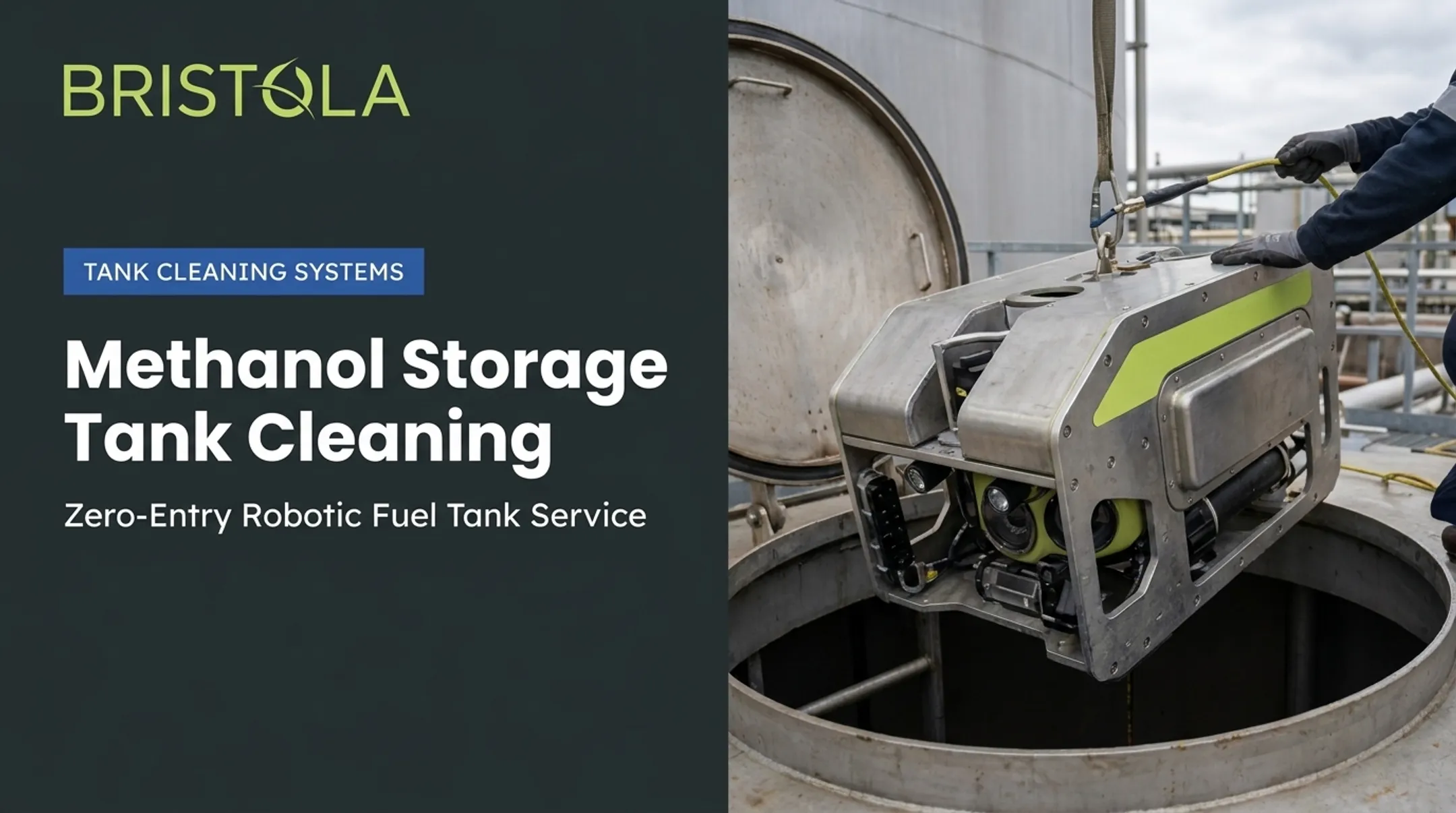
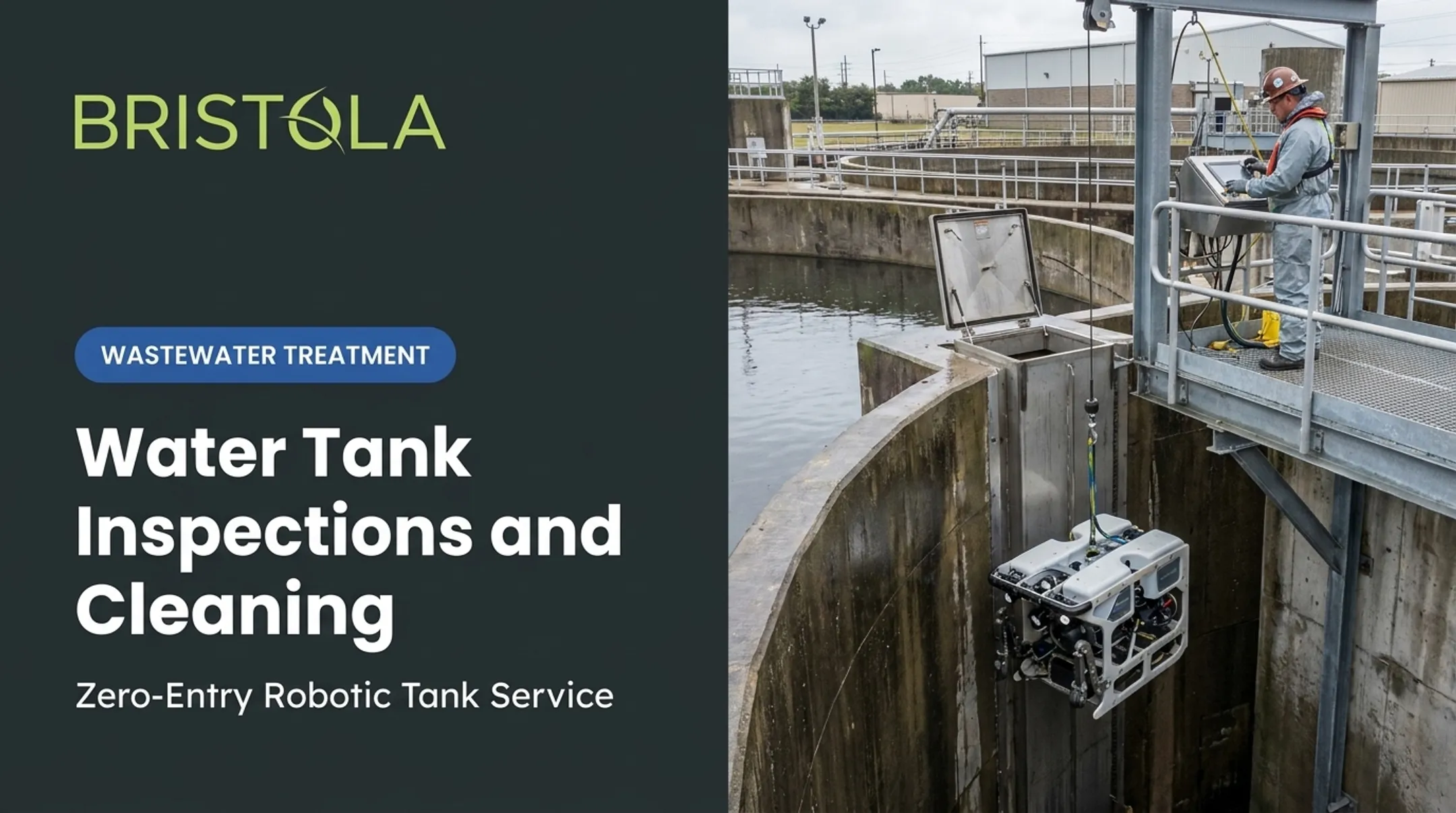
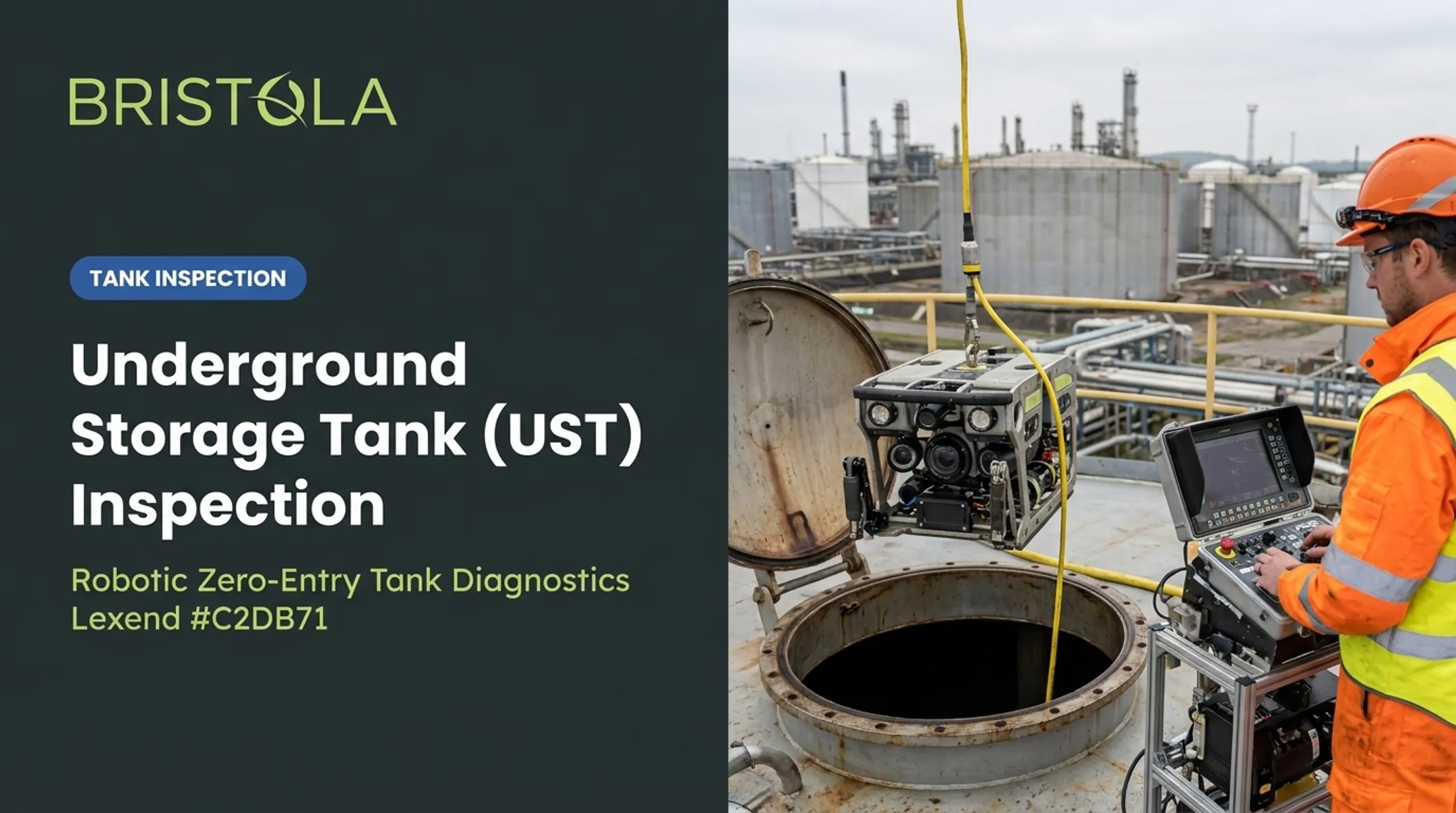
Non-entry robotics let you inspect without putting a person in a confined space. A remote-controlled submersible robot enters through an airlock-type equalization chamber while the tank stays in service. How Bristola's approach works:
- Install an entry portal on the tank — compatible with manholes 24 inches or larger — without stopping operations
- Deploy the robot to remove sludge and sediment while capturing video of internal surfaces
- Review footage to flag areas needing follow-up nondestructive examination This method eliminates confined-space entry risk and keeps the tank online during cleaning. It suits routine cleaning and inspection prep, not full fracture-mechanics analysis, and lets you see inside and clear sediment without a shutdown. General BLS data cited in a 2024 OSHA release put confined-space fatalities at 1,030 between 2011 and 2018 (OSHA). That figure is not ammonia-tank specific, but it underscores why entry avoidance still matters.

How to Interpret the Results
Misreading inspection data is how early stress corrosion cracking (SCC) or corrosion goes unnoticed until it's a release or a catastrophic failure.
| Result Category | What It Looks Like | Action |
|---|---|---|
| Normal/Acceptable | UT readings at or above nominal thickness, no visible cracking | Continue standard inspection interval |
| Minor Issues | Localized thinning within corrosion allowance, minor coating wear | Schedule follow-up monitoring, document in records |
| Out-of-Spec | Thickness below minimum required, crack-like indications near welds, PRV failure | Trigger immediate fitness-for-service (FFS) assessment, consider shutdown |
Corrosion rate sets the next inspection interval. Under API 653, rate equals previous thickness minus actual thickness, divided by the years between measurements. That math only holds if your grid points stay consistent from reading to reading.
Common Errors in Checking Ammonia Storage Tanks
The mistakes that show up most often are procedural gaps, not exotic failures:
- Inconsistent UT grid points make corrosion rate trending unreliable across inspection cycles
- Skipping the operating history review leaves water content and oxygen ingress data buried in old records, even though both are critical for assessing SCC susceptibility
- Overlooking high-stress zones such as shell-to-bottom corner joints, where SCC most commonly develops while inspection focus drifts elsewhere
- Unnecessary warming of refrigerated tanks: opening a tank just to look inside can initiate the very cracking you're trying to detect
A National Board historical review of ammonia pressure vessels found that roughly 3% failed within three years, with SCC identified as the likely cause when inspection gaps went unaddressed.
Safety and Best Practices
Treat these as non-negotiable before any ammonia tank inspection or entry-related work:
- Isolate and depressurize the tank with proper lockout/tagout before any entry-based work
- Use calibrated, redundant gas detectors and maintain a standby rescue team during confined-space entry
- Consider non-entry technology for routine cleaning and inspection prep. It removes the confined-space hazard entirely
- Keep permanent, progressive inspection records as CGA G-2 requires, so corrosion trends are trackable over time
Bristola's founder, Jared Burma, built the company's zero-human-entry system after a near-death experience inside a storage tank. That history sets a clear priority: keep people out of the most dangerous part of the job.
Conclusion
Reliable ammonia tank inspection combines visual checks, UT thickness testing, and RBI/FFS analysis, each tailored to your tank's specific SCC risk profile. Get that mix right, and you cut both safety hazards and unplanned downtime.
The results should drive real decisions: when to repair, how often to inspect, and whether non-intrusive methods can safely extend your tank's service life without the cost of taking it offline.
Frequently Asked Questions
How often should ammonia storage tanks be inspected?
CGA G-2 requires annual external visual inspection at minimum. Internal or RBI-based assessments can range from 10 to 25 years depending on calculated risk level.
What is a 653 tank inspection?
API 653 is the standard governing inspection, repair, and reconstruction of aboveground storage tanks. It includes formal external and internal inspection intervals, with external inspections commonly performed every five years by a certified inspector.
What are the requirements for an ammonia storage tank?
Key requirements include proper material selection, secondary containment, relief valves, gas detection systems, and adherence to CGA G-2 or API 510 maintenance programs, depending on tank design.
What are the proper storage conditions for ammonia?
Ammonia must be stored under controlled pressure and temperature (pressurized, refrigerated, or atmospheric), with monitored water and oxygen content to limit stress corrosion cracking risk.
Why is ammonia stress corrosion cracking a concern?
SCC develops in carbon steel welds exposed to anhydrous ammonia combined with oxygen contamination and tensile stress. It can progress with little visible warning before causing sudden failure.
Can ammonia tanks be inspected without shutting down operations?
Yes. Acoustic emission testing and non-entry robotic systems allow inspection and cleaning while the tank stays in service, reducing both downtime and the SCC risk tied to warming a refrigerated tank unnecessarily.