The challenge compounds when treatment infrastructure itself is the problem. Sludge-filled digesters and lagoons quietly undermine biological processes even when all other equipment is functioning correctly.
This article covers what BOD is, why it matters environmentally and operationally, what causes it to spike, how it's measured, and which treatment strategies actually work — including the infrastructure maintenance piece that frequently gets overlooked.
Key Takeaways
- BOD measures dissolved oxygen consumed by microorganisms breaking down organic matter — expressed in mg/L; higher BOD means higher organic pollution
- EPA secondary treatment limits (40 CFR Part 133): 30 mg/L (30-day average), 45 mg/L (7-day average), minimum 85% removal
- The BOD5 test takes 5 days — use COD as a faster proxy after confirming a stable COD:BOD ratio at your facility
- Sludge accumulation is a hidden BOD driver — a lagoon with 4 feet of solids in a 10-foot basin loses 40% of its effective treatment volume
- Layered treatment works: primary solids removal, biological treatment, and chemical optimization each address distinct BOD contributors
What Is BOD and Why Does It Matter?
Defining Biochemical Oxygen Demand
Biochemical Oxygen Demand (BOD) measures the quantity of dissolved oxygen aerobic microorganisms consume while decomposing organic matter in a water sample under controlled conditions (specifically, 5 days at 20°C in sealed 300 mL bottles kept in the dark). Results are expressed in mg/L or ppm.
The word "demand" is the key. The more organic matter present, the more oxygen microorganisms need to break it down , and the less oxygen remains available for aquatic life. A sample with 300 mg/L BOD places an enormous oxygen demand on any receiving water body.
BOD vs. COD: These two tests are often confused but serve different purposes:
- BOD measures only the biodegradable fraction of organic matter through actual biological activity
- COD uses chemical oxidation to measure all oxidizable substances — biodegradable, non-biodegradable, and some inorganics
- COD values are always higher than BOD for the same sample
- Both are wastewater quality indicators, but they serve different operational purposes
Why BOD Matters
Environmental consequences are severe. When high-BOD effluent enters rivers, lakes, or streams, surging microbial activity depletes dissolved oxygen rapidly. According to the EPA, aquatic life stress begins below 5.0 mg/L DO, acute fish kills can occur below 3.0 mg/L, and hypoxic "dead zones" form below 2.0 mg/L. Eutrophication follows, accelerating algal growth that can lock an ecosystem into long-term decline.
Regulatory consequences are equally direct. Under 40 CFR Part 133, EPA secondary treatment standards require:
| Parameter | 30-Day Average | 7-Day Average | Required Removal |
|---|---|---|---|
| BOD5 | 30 mg/L max | 45 mg/L max | ≥85% |
| CBOD5 (alternative) | 25 mg/L max | 40 mg/L max | ≥85% |
Exceeding these limits triggers permit violations, fines, and potential shutdowns.
Beyond compliance, elevated effluent BOD is a diagnostic signal that the biological treatment process is underperforming. Overloading, equipment failure, and sediment accumulation inside the treatment vessel are the most common culprits — each with different remediation paths.
What Causes High BOD in Wastewater?
Industrial Discharges
Industrial sources generate wastewater with BOD concentrations far exceeding domestic sewage. The gap is significant:
| Source | Typical BOD5 (mg/L) |
|---|---|
| Untreated domestic sewage | 200–300 |
| Food processing (general) | 300–3,200 |
| Dairy processing | 483–6,080 |
| Pristine rivers | <1 |
Food processing wastewater can carry 10–20 times the organic load of municipal sewage. Breweries, slaughterhouses, and pulp and paper mills generate similarly high-strength streams. Without adequate pretreatment, these facilities can overwhelm treatment capacity entirely.
Agricultural Runoff and Domestic Sewage
Animal waste, organic fertilizers, and household sewage introduce large quantities of biodegradable organic matter into treatment systems. Nitrogen and phosphorus co-contaminants from fertilizers compound the problem downstream. Algal blooms fed by those nutrients eventually die and decompose, consuming dissolved oxygen and driving hypoxic conditions in receiving waters.
Sludge and Sediment Accumulation
This is the operational factor most commonly underestimated. As sludge accumulates inside treatment tanks, anaerobic digesters, and lagoons, several problems compound each other:
- Reduced active treatment volume — a 10-foot-deep lagoon with 4 feet of sludge functions as a 6-foot lagoon, a 40% loss of capacity
- Shortened hydraulic retention time — organic matter passes through without adequate contact with microbial communities
- Anaerobic decomposition of settled sludge (benthal feedback) releases additional BOD back into the water column
- Microbial inhibition — high zinc and copper concentrations in accumulated sludge can suppress the microorganisms responsible for BOD reduction
Effluent BOD climbs as a direct consequence — even when all treatment equipment is otherwise functioning correctly.
How Is BOD Measured in Wastewater?
The Standard BOD5 Test
The only EPA-approved BOD measurement method is APHA Standard Method 5210 B. The procedure:
- Fill sealed 300 mL bottles with sample (or diluted sample)
- Measure initial dissolved oxygen using a DO meter or Winkler titration
- Incubate at 20°C ± 1°C in the dark for exactly 5 days
- Measure final dissolved oxygen
- Calculate BOD = (initial DO − final DO) × dilution factor
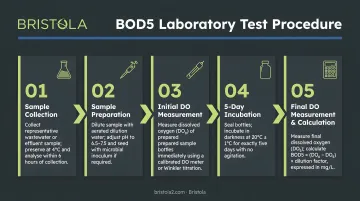
High-strength industrial wastewater typically requires serial dilution before testing, since BOD concentrations far exceed dissolved oxygen saturation limits.
Limitations Operators Should Know
The 5-day window creates a practical problem: results arrive too late for real-time process adjustments. Other documented limitations include:
- Reproducibility varies ±10–20% between replicates
- Chlorine interference — residual chlorine suppresses microbial activity; samples must be collected before chlorination or dechlorinated first
- pH requirements — samples outside the 6.5–7.5 range must be neutralized before testing
- Seeding requirements — industrial effluents lacking sufficient native microorganisms need a bacterial inoculum added
Faster Monitoring Alternatives
Waiting five days for results is impractical when process conditions shift daily. Most facilities rely on faster supplementary methods for operational decisions:
- COD testing delivers results in 2–3 hours. Once you've established a stable COD:BOD ratio across at least 10 paired samples, COD becomes a reliable real-time proxy — no five-day wait required
- Soft sensor technology — machine learning models trained on plant data (flow, DO, temperature) can estimate BOD in near-real-time
- UV-fluorescence sensors — instruments like the Proteus BOD sensor correlate fluorescence signatures of organic compounds with BOD concentrations, delivering readings every few minutes rather than every five days
BOD vs. COD: Understanding the Relationship
BOD and COD measure organic load differently, and understanding that gap is what makes the relationship operationally useful. COD uses potassium dichromate, a strong chemical oxidant, to break down both biodegradable and non-biodegradable organics along with certain inorganics. BOD captures only what aerobic microorganisms can actually decompose in 5 days. Because COD counts everything and BOD counts only what biology can handle, COD will always exceed BOD for the same sample.
The BOD/COD Ratio as a Diagnostic Tool
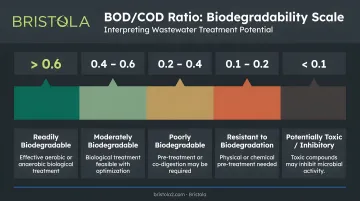
The BOD/COD ratio tells operators how biodegradable their waste stream actually is:
| BOD/COD Ratio | Biodegradability | Treatment Implication |
|---|---|---|
| >0.5 | Readily biodegradable | Well-suited to biological treatment |
| 0.3–0.5 | Moderate | Biological treatment feasible; may need optimization |
| <0.3 | Low / refractory | Chemical pretreatment or advanced oxidation needed first |
| <0.1 | Potentially toxic | High organics may inhibit microbial activity |
A ratio below 0.3 means a large fraction of organic content contains toxic compounds, industrial chemicals, or complex molecules that microorganisms can't break down efficiently. Pushing this wastewater through biological treatment without pretreatment wastes capacity and typically fails to meet discharge limits.
Building Your Own COD:BOD Ratio
Operators can establish a facility-specific ratio by running paired COD and BOD5 tests on the same samples over time. The process:
- Run at least 10 paired samples across different operating conditions
- Calculate the average ratio for your specific waste stream
- Update the ratio periodically as influent characteristics change
- Use routine COD results as a real-time BOD estimate for process control
For facilities with consistent influent, a well-established COD:BOD ratio can cut the lag between sampling and actionable data from five days to hours.
How to Reduce and Control BOD in Wastewater Treatment
Primary Treatment: Removing Solids First
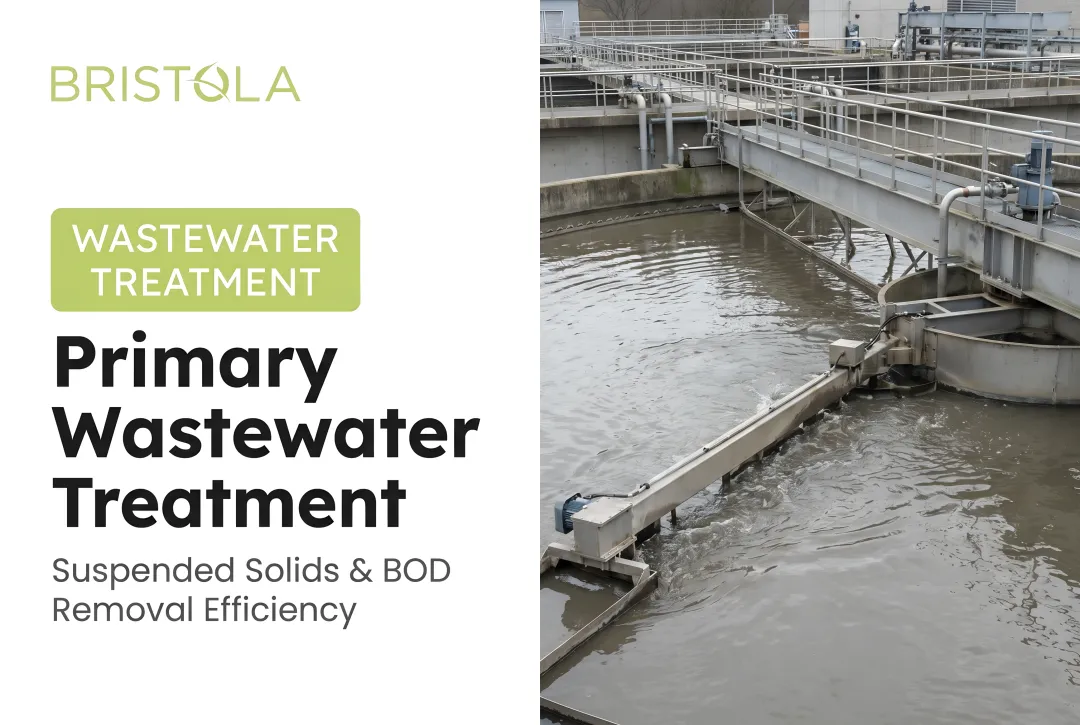
Screening, sedimentation, and dissolved air flotation (DAF) physically remove suspended solids, oils, fats, and grease before wastewater reaches biological treatment. Primary sedimentation typically removes 25–40% of BOD and 50–70% of total suspended solids. DAF is particularly effective for grease and solids-laden streams in food processing and dairy applications.
Primary treatment alone cannot achieve regulatory compliance — it reduces the load that biological treatment must handle, but secondary biological treatment is required to meet the 85% removal threshold.
Biological Treatment: The Core of BOD Reduction
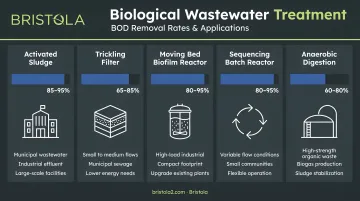
Activated sludge remains the most widely used biological treatment technology. Aeration of wastewater in treatment tanks maintains elevated dissolved oxygen, stimulating dense microbial populations to oxidize organic matter. Well-operated activated sludge systems achieve 85–98% BOD removal. Controlling aeration rates, sludge retention time, and nutrient balance is critical to sustaining this performance.
Temperature matters significantly. Mesophilic bacteria — the primary workhorses of wastewater treatment — thrive between 20–40°C (68–104°F). Cold-weather temperature drops slow microbial metabolism, reduce BOD removal efficiency, and can push effluent above permit limits. Facilities in colder climates need supplemental heating or extended retention times to compensate.
For high-strength industrial wastewater, specialized systems often outperform standard activated sludge:
- Membrane Bioreactors (MBR) — combine biological treatment with high-efficiency membrane filtration; typically achieve >95% BOD removal
- Moving Bed Biofilm Reactors (MBBR) — biofilm grows on carrier media, increasing surface area for microbial colonization; up to 97%+ BOD removal when combined with MBR
- Trickling filters — used for pretreatment of extremely high-strength streams in food industry applications
Chemical and Process Optimization
Coagulants and flocculants aggregate fine colloidal organic particles that pass through primary treatment, making them easier to remove. pH management — maintaining the 6.5–7.5 range for biological treatment — ensures microorganisms operate at peak efficiency. Outside this range, microbial activity drops sharply and BOD removal suffers.
Maintaining Clean Treatment Infrastructure
Chemical and process controls only work as well as the infrastructure they operate in. Sludge and sediment buildup inside anaerobic digesters, covered lagoons, and wastewater storage tanks progressively degrades treatment performance — even when every other system is working correctly. As active volume shrinks, retention time shortens and organic matter passes through incompletely treated.
One documented example: when an EnviTec anaerobic digester went four years without cleaning, volatile solids reduction dropped below 25%, the facility couldn't maintain mesophilic temperature during winter months, and daily biogas production fell by 20%. The sludge had completely compromised the digester's biological function.
Regular tank cleaning restores treatment capacity, maintains microbial balance, and keeps effluent BOD within permit limits. Traditional drain-and-clean approaches require halting biological treatment entirely, which creates compliance gaps and can cost facilities upward of $200,000 in lost revenue per cleaning cycle.
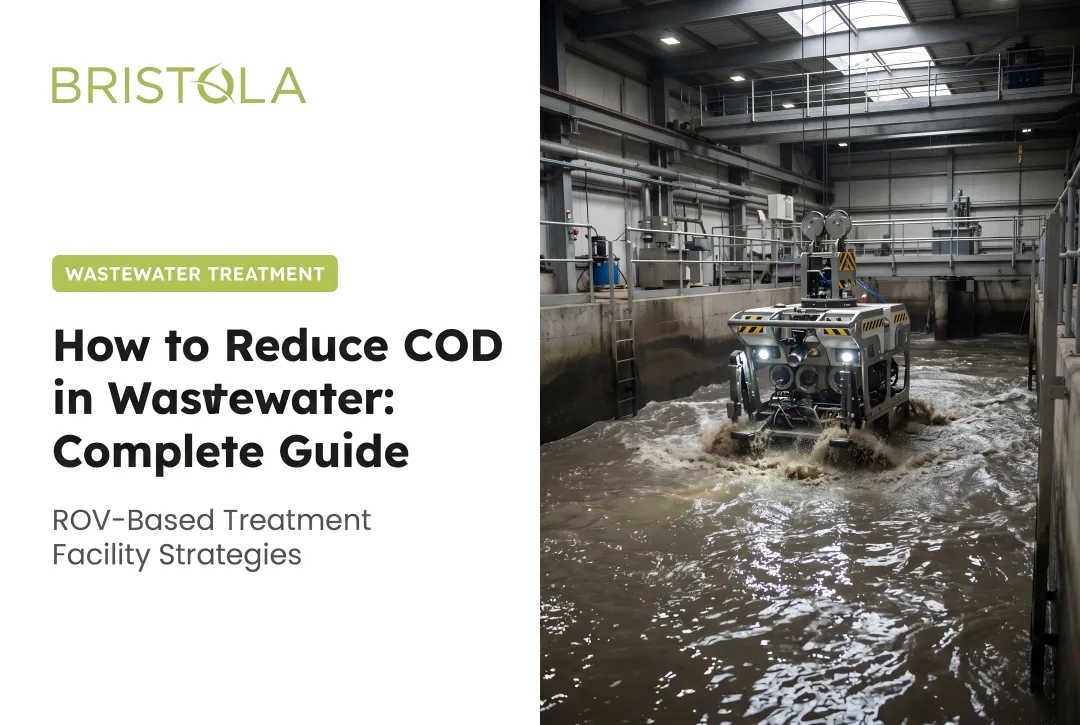
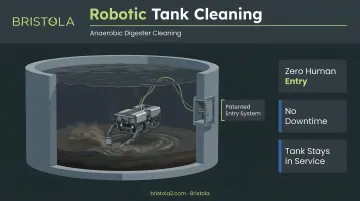
Bristola's submersible robotic cleaning system was built to solve this problem. The ROV enters tanks and covered lagoons through a patented equalization chamber entry system — no draining required, no human confined-space entry. Because the tank remains in active operation throughout cleaning, biological treatment continues without interruption.
For biogas and RNG operators, covered lagoon operators, and food processing wastewater facilities, this means treatment infrastructure can be maintained continuously rather than degrading between infrequent shutdowns.
Bristola also offers sonar/GPS-based sediment mapping for open lagoons, generating 3D renderings of sediment depth, volume, and distribution. This allows operators to quantify accumulation before committing to a cleaning intervention and to monitor infilling rates over time — exactly the kind of data needed to anticipate BOD compliance risks before they become permit violations.
Frequently Asked Questions
Is higher BOD good or bad in wastewater treatment?
High BOD is consistently bad. In influent, it signals heavy organic loading that demands greater treatment capacity. In effluent, it means treatment is failing — discharge limits are likely being violated, and the receiving water environment will be impacted.
What causes high BOD in wastewater?
High BOD typically comes from several sources:
- Industrial discharges from food processing, dairy, brewing, and slaughterhouse operations
- Agricultural runoff carrying animal waste and fertilizers
- Domestic sewage
- Sludge accumulation inside treatment tanks, which reduces biological processing capacity and shortens hydraulic retention time
How is BOD measured in wastewater?
Using the BOD5 method (APHA Standard Method 5210 B): dissolved oxygen is measured before and after a 5-day incubation at 20°C in sealed bottles, and the difference (adjusted for dilution) equals the BOD in mg/L. This is the only EPA-approved BOD measurement method.
What is the BOD limit for a sewage treatment plant?
Under 40 CFR Part 133, EPA secondary treatment standards set a 30-day average effluent limit of 30 mg/L, a 7-day average of 45 mg/L, and a minimum BOD removal requirement of 85%. CBOD5 limits are slightly tighter at 25 mg/L and 40 mg/L respectively.
What is considered high BOD in wastewater?
Pristine rivers measure below 1 mg/L. Moderately polluted waterways fall between 2–8 mg/L. Untreated municipal sewage averages 200–300 mg/L. High-strength industrial wastewater from food processing reaches 300–3,200 mg/L, and dairy processing wastewater can exceed 6,000 mg/L.
What does a BOD/COD ratio of 0.3 indicate?
A ratio of 0.3 signals low biodegradability — much of the organic content resists microbial breakdown, often due to toxic compounds, industrial chemicals, or complex molecules. Biological treatment alone won't be enough; chemical pretreatment or advanced oxidation is typically needed first.