Here's the harder truth: cleaning methanol tanks the traditional way, with a worker climbing inside, is one of the most dangerous jobs in industrial maintenance. Methanol's flammability and toxicity turn a routine maintenance task into a life-threatening one.
This guide breaks down why cleaning matters, what makes methanol uniquely hazardous, the warning signs you shouldn't ignore, cleaning methods including zero-entry robotic technology, and how often you should actually be doing this.
TL;DR
- Regular cleaning prevents contamination, corrosion, and product quality loss in methanol tanks
- Low flash point and toxicity make manual tank entry extremely hazardous
- Robotic, zero-human-entry cleaning eliminates downtime and confined-space risk
- Water contamination, sludge buildup, or off-spec wall wash results signal it's time to clean
- A proactive cleaning schedule protects safety, output quality, and operational uptime
Why Methanol Tank Cleaning Matters
Methanol is hygroscopic—it pulls moisture from the air every time your tank breathes during level changes. In coastal facilities, that incoming air can also carry dissolved chloride salts.
According to the Methanol Institute, water that accumulates with chloride salts can accelerate under-deposit corrosion, localized pitting, and crevice corrosion, especially in carbon steel tanks.
Product specifications reinforce why this matters. IMPCA's Reference Specification sets tight tolerances for methanol quality:
| Quality parameter | Limit |
|---|---|
| Purity (dry basis) | Minimum 99.85% W/W |
| Water content | Maximum 0.100% W/W |
| Chloride (as Cl⁻) | Maximum 0.5 mg/kg |
| Appearance | Clear, free from suspended matter |
Those limits function as contamination triggers, not cleaning schedules. A failed appearance or chloride result should prompt an immediate check of tank condition—not another sample and a retest.
Contamination inside the shell is only part of the risk. Ancillary equipment exposed to methanol vapor and moisture fails too. In one documented case, an aluminum flame arrester corroded over 12 years until it failed and contributed to a methanol tank fire. Routine inspection would have caught it.

Effective methanol tank care goes beyond washing the shell:
- Inspect everything methanol contacts (shell, vents, flame arresters, nozzles)
- Remove water and under-deposit solids before they drive pitting
- Document findings so the next outage starts from known condition
Waiting until quality fails or equipment breaks costs more than planned maintenance:
- Rejected or off-spec batches
- Unplanned downtime and rushed logistics
- Premature failure of tanks and safety devices
Methanol's Unique Hazards During Cleaning
Manually cleaning a methanol tank isn't like cleaning a water tank with an unpleasant smell. Methanol brings two serious threats into the confined space at once.
Flammability. OSHA lists methanol's flash point at 52°F, with a vapor pressure of 96 mmHg. That means flammable vapor can form even in cool storage conditions, well below temperatures workers might assume are "safe." A drained tank is not automatically a gas-free tank.
Toxicity. NIOSH sets methanol's exposure limit at 200 ppm over an 8-hour shift, with a short-term limit of 250 ppm and a skin notation for absorption risk. The immediately dangerous to life or health (IDLH) threshold sits at just 6,000 ppm. Vapor inhalation and skin contact both carry real risk, including optic nerve damage.
Confined-space work carries its own baseline danger, methanol or not. The Bureau of Labor Statistics recorded 1,030 confined-space fatalities between 2011 and 2018, with fires, explosions, and toxic inhalation among the leading causes.
That's a general industrial benchmark, not a methanol-specific number. It still shows why confined spaces demand extreme caution regardless of the liquid involved.

Combine methanol's chemistry with confined-space risk, and the case for eliminating human entry becomes clear. That is exactly where robotic cleaning technology comes in.
How to Tell If Your Methanol Storage Tank Needs Cleaning
Catching contamination early keeps it from spreading into your product or your equipment. Watch for these product-quality and operational signals.
Product Quality and Testing Red Flags
- Failed or borderline wall wash results indicating oil or hydrocarbon contamination on tank walls
- Visible discoloration, cloudiness, or haze in stored methanol
- Unusual odor that wasn't present in previous batches
- Appearance results outside the "clear, free from suspended matter" standard
Physical and Operational Warning Signs
- Sludge, sediment, or sticky residue found during inspections or level checks
- Rising water content in stored methanol
- Internal corrosion, rust, or pitting on tank walls
- Recurring quality rejections tied to the same tank
- Increasing frequency of contamination-related downtime
None of these show up overnight. Routine wall wash testing and visual inspection catch the early signs before they force an emergency shutdown.
Methods for Cleaning Methanol Storage Tanks
The right cleaning method depends on your tank's design, contamination level, and how much risk you're willing to accept. Here's how the two main approaches compare.
Traditional Manual Cleaning Methods
OSHA's permit-required confined space standard (1910.146) sets the baseline for manual entry: purging, continuous ventilation, atmospheric testing for oxygen, combustibles, and toxics, PPE, an attendant stationed outside, and a rescue plan ready to go.
Following the standard correctly takes real coordination:
- Isolate and purge the tank before anyone approaches the opening
- Test the atmosphere in sequence: oxygen first, then combustibles, then toxics
- Ventilate continuously and re-verify air quality throughout the job, not just at the start
- Staff an attendant outside the space for the full duration
- Keep rescue equipment on standby in case something goes wrong

Beyond the safety burden, manual cleaning usually means draining the tank, arranging temporary storage, and taking the facility offline. Those steps drive lost production time and higher labor costs.
Zero-Human-Entry Robotic Cleaning
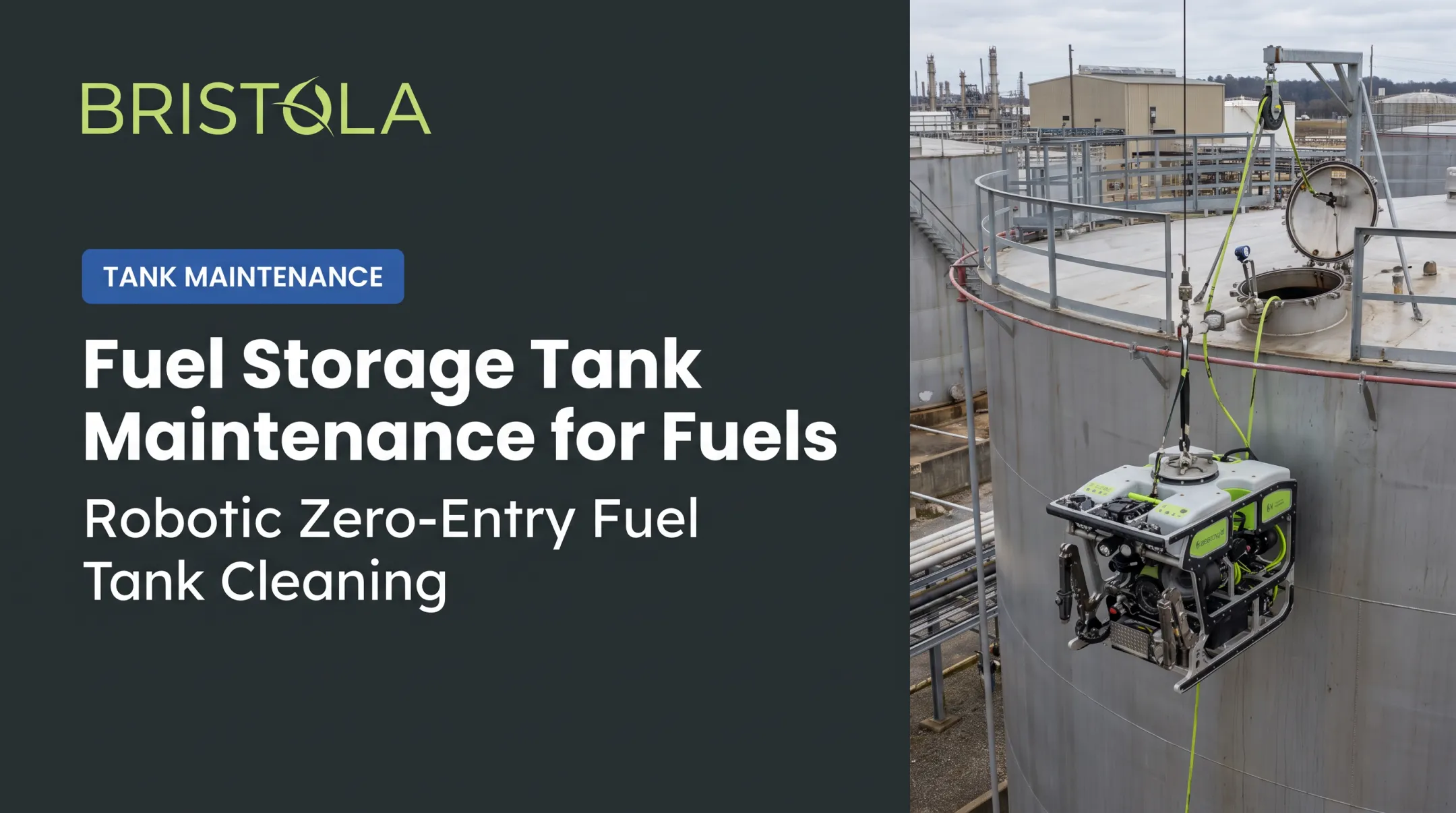
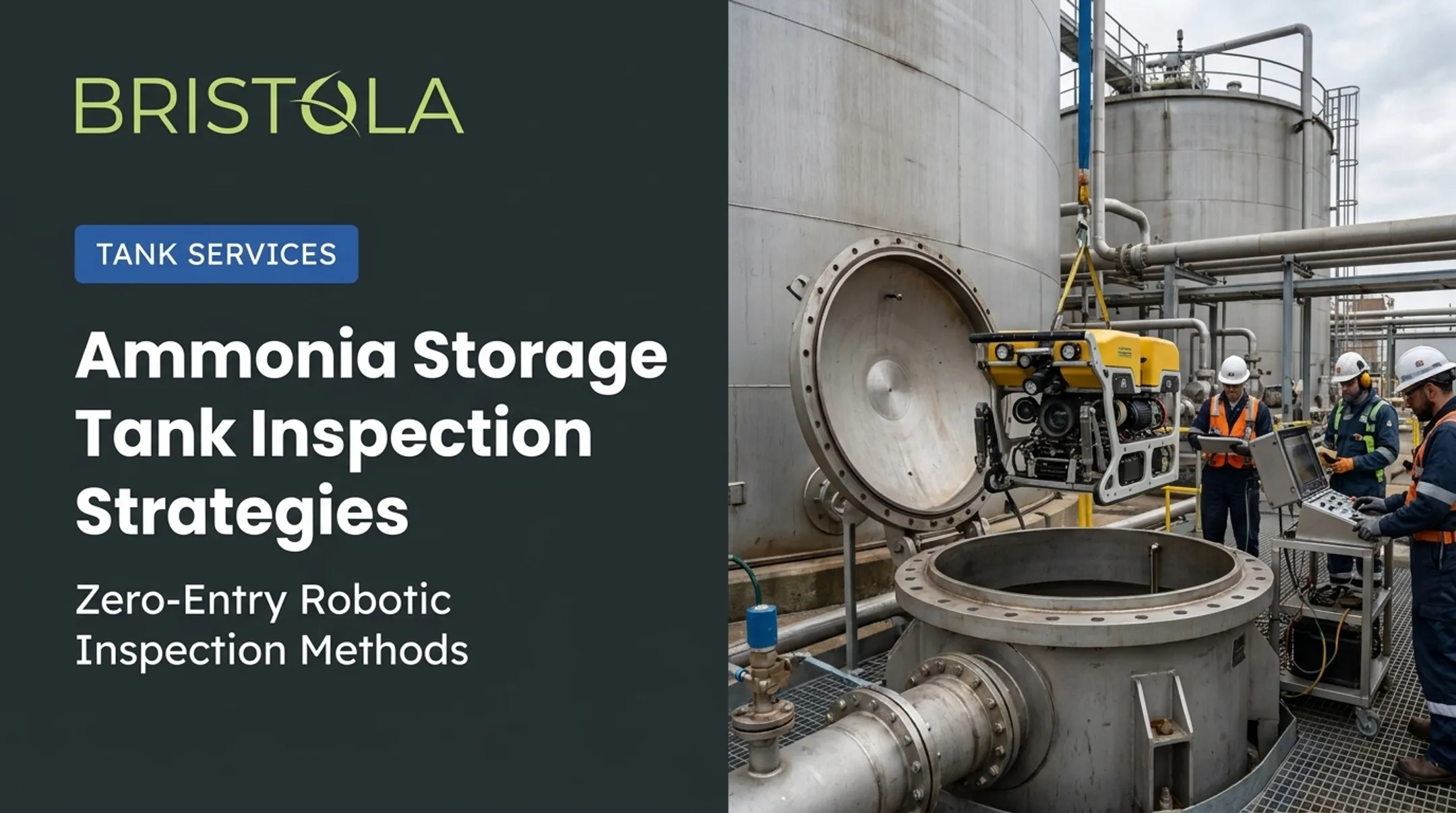
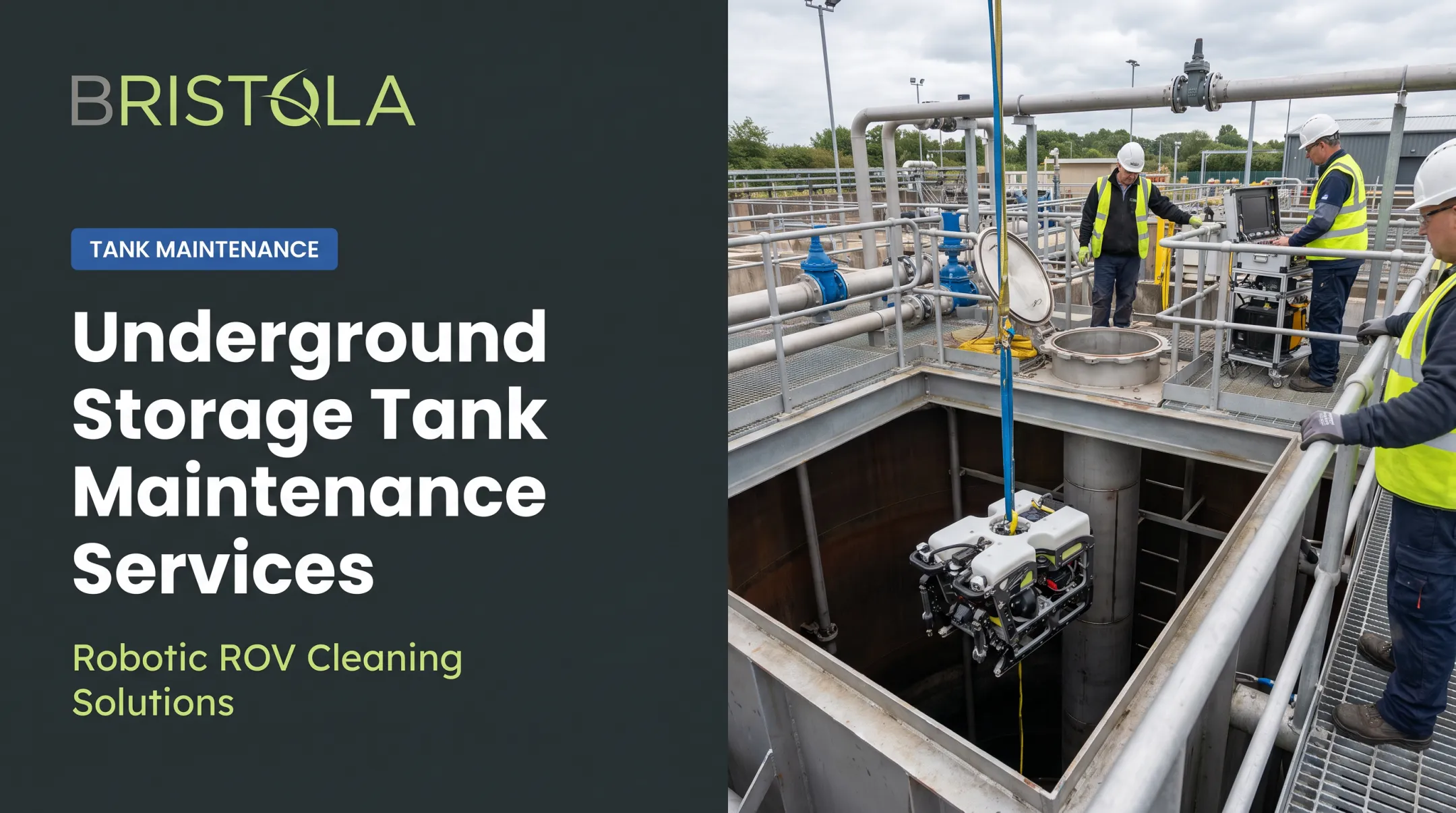
Bristola's method keeps people out of the space. A patented airlock-style entry system lets a remote-controlled robotic vacuum enter through the manway and clean the tank—no human steps inside.
Operational differences include:
- Entry portal fits manholes 24 inches or larger, on new-build or retrofit installations
- Tanks can often stay full and in service, so production does not stop for cleaning
- System reports tank condition and performance data throughout the cycle, giving managers a documented record
Fuel-storage clients have reported annualized cleaning costs around $170,000 with the robotic system versus $250,000 for traditional methods—roughly $80,000 saved per tank each year. That gap comes from three avoided costs:
- Drained-tank downtime
- Temporary storage rentals
- Labor overhead of a full confined-space entry program

Methanol's flammability and toxicity require confirmed equipment compatibility and hazardous-area suitability before any robotic deployment. Not every ROV is rated for low-flash-point liquids, so verify ratings with your provider before finalizing project scope.
Methanol Tank Cleaning Schedule (General Guidelines)
There's no single universal number for "clean every X months." OSHA's Process Safety Management standard instead calls for inspection frequency based on manufacturer recommendations, operating experience, and documented risk, not a one-size-fits-all calendar.
That said, a few practical guidelines hold up across most methanol storage operations:
- Run visual inspections and wall wash testing regularly. Prioritize checks before major loading and unloading cycles
- Schedule full cleanings based on throughput. High-turnover storage facilities accumulate contamination faster than low-usage tanks and need more frequent attention
- Use contamination history as a trigger. A failed test or rising water content should shorten your interval rather than waiting for the next scheduled date
One advantage of zero-entry robotic systems is that they don't require draining the tank or a full confined-space shutdown. That makes more frequent, low-disruption cleaning cycles realistic.
Facilities can address sediment buildup before it becomes a quality problem, rather than waiting for a scheduled outage.
Conclusion
Methanol tank cleaning protects three things at once: product purity, equipment longevity, and worker safety. Skipping it, or handling it reactively, puts all three at risk.
Facilities are moving from manual confined-space entry to zero-entry robotic cleaning because the hazards are documented and persistent: flammable vapor, toxic exposure, and confined-space fatalities. Plan cleaning before residue and risk build up—so your crew stays out of the tank and production stays online.
Frequently Asked Questions
Can methanol be used for cleaning?
Methanol is used as a testing agent in wall wash tests because it flags hydrocarbon contamination. Cleaning a methanol storage tank is different—it means removing sludge, water, and residue from the tank interior.
Does methanol go bad?
Methanol doesn't chemically degrade like organic substances do. It can, however, become contaminated by water absorption, hydrocarbons, or accumulated tank residues over time, which is exactly why regular monitoring matters.
How often should a methanol storage tank be cleaned?
Frequency depends on throughput and contamination monitoring results. High-usage tanks with frequent level cycling need more attention than low-turnover storage, and failed test results should always shorten the interval.
Is entering a methanol tank for cleaning dangerous?
Yes. Methanol’s 52°F flash point creates flammable vapor even in cool conditions, and the vapor is toxic under strict exposure limits. Add confined-space risks like oxygen depletion, and manual entry is high-risk work.
What is a wall wash test and why does it matter for methanol tanks?
A wall wash test samples tank-wall residue for appearance, hydrocarbons, and chlorides. It confirms the tank is clean enough to load; a fail usually means hold the load until the tank passes.
Can methanol tanks be cleaned without shutting down operations?
Yes. Zero-human-entry robotic systems can clean a tank while it remains full and in service, unlike traditional methods that typically require draining the tank and halting production entirely.