Here's the catch: digesters can't just shut down for maintenance. Plants need continuous operation, and traditional cleaning methods require draining tanks and sending workers into confined spaces. That's a safety risk and a costly production stoppage rolled into one.
This article covers how digesters work, the main types used in US plants, what cleaning and maintenance actually costs, where the sludge ends up afterward, and how odor gets managed. We'll also look at how robotic cleaning technology is changing the maintenance equation entirely.
Key Takeaways
- Anaerobic digestion turns organic solids into usable biogas and nutrient-rich digestate without oxygen
- Match digester type to plant scale, sludge characteristics, and capital vs. operating budget
- Scheduled maintenance stops scum buildup, odor issues, and costly unplanned downtime
- Zero-entry robotic cleaning removes solids while digesters stay online—no confined-space entry or shutdowns
What Are Anaerobic Digesters and How Do They Work?
Anaerobic digestion is a biological process in which microorganisms break down organic matter inside sealed, oxygen-free tanks, converting waste into methane-rich biogas and stabilized solids. Unlike aerobic treatment, no air is pumped in, which means less energy spent on aeration.
The process happens in four connected stages:
- Hydrolysis: Complex organic molecules (proteins, fats, carbohydrates) break down into simpler compounds
- Acidogenesis: Bacteria convert those compounds into volatile fatty acids
- Acetogenesis: Fatty acids convert further into acetic acid, hydrogen, and carbon dioxide
- Methanogenesis: Methane-producing organisms convert these products into biogas

From sludge to Biogas: The Typical Flow
Most municipal plants follow a similar path. Plants thicken primary and secondary sludge first, cutting volume before it enters the digester. Inside the tank, heating and mixing keep conditions stable for the microorganisms doing the work. The output then separates into biogas and digestate.
Biogas itself is mostly methane and carbon dioxide, and many plants capture it for on-site power and heat generation rather than flaring it off. Captured well, it becomes a real on-site energy asset.
Most US plants treat more than 38% volatile solids reduction as a baseline performance goal. According to a 2020 review of municipal wastewater sludge treatment, solids typically enter at around 75% volatile content and drop below 40% by the time digestion finishes.
Types of Anaerobic Digesters Used in Wastewater Treatment
Digesters are classified partly by feedstock (municipal versus industrial or agricultural waste) and partly by tank design. For wastewater plants, design matters most.
Standard Rate (Single-Stage) Digesters
These are the workhorses of municipal wastewater treatment. Standard-rate digesters use a complete-mix, CSTR-style tank that handles heating, mixing, and feeding all in one vessel. They're common because they're straightforward to operate and maintain, so they remain the default for small and mid-sized plants.
High-Rate and Two-Stage Digesters
High-rate digesters add mechanical mixing and heating equipment to handle higher organic loading rates than standard-rate systems. Two-stage systems go a step further, separating the process entirely:
- First reactor (acid-phase): handles hydrolysis, typically at a 3-6 day retention time
- Second reactor (methane-phase): handles acetogenesis and methanogenesis over 10-30 days at a pH above 7
A 2025 review of advanced digestion technology found temperature-phased anaerobic digestion (TPAD) to be the most common advanced configuration among the North American plants surveyed, with 20 facilities using this design. Mesophilic-mesophilic TPAD systems typically run at 35-37°C.

Advanced & Specialized Configurations
Beyond staged and temperature-phased systems, some plants need layouts built around flow path or sludge type. Plug-flow designs move influent through a long rectangular channel with minimal mixing, displacing older material as new feed enters. Separate sludge digestion treats primary and secondary sludge in distinct tanks when the two streams differ sharply. These setups show up mainly in larger or more specialized facilities, not typical municipal plants.
Cost Considerations for Anaerobic Digesters
Capital costs for anaerobic digesters vary widely by plant size, sludge volume, and whether you're building new or retrofitting. There's no single reliable "small plant vs. large plant" benchmark, but real project data gives useful context.
The Liverpool WWTP project in Medina County, Ohio is one example. The $35 million design-build solids-treatment system includes thermal-hydrolysis pretreatment and stainless-steel digesters. Methane is expected to supply roughly 30% of facility energy needs, while cutting annual operating costs by about 50% to $1.656 million.
Operating costs depend on several factors:
- Heating requirements to maintain digestion temperatures
- Mixing equipment type and energy draw
- Labor and downtime tied to cleaning cycles
- Maintenance frequency and cleaning method
Biogas energy recovery can offset a meaningful share of these costs over the digester's operating life. Plants increasingly treat digesters as revenue-generating assets when equipment stays clean enough to produce consistent gas output.
What Happens to Sludge After Anaerobic Digestion
Once digestion finishes, the resulting digestate needs dewatering. Centrifuges or filter presses separate the solids from a liquid byproduct called centrate.
Centrate is nutrient-rich and typically returns to the treatment stream, sometimes after separate nutrient removal, disinfection, or polishing.
Sidestream loads can be substantial—an estimated 15–20% of daily influent nitrogen and 20–35% of phosphorus loads at some plants.

The dewatered solids, now called biosolids, can be reused as agricultural fertilizer or soil amendment. Reuse is not automatic:
- Biosolids must meet 40 CFR Part 503 pollutant concentration limits
- Class A biosolids require fecal coliform below 1,000 MPN per gram (dry weight)
- Sewage sludge must achieve at least a 38% reduction in volatile solids mass to qualify under certain treatment pathways
- Part 503 also requires ongoing monitoring and record-keeping for pollutants, pathogens, and vector attraction reduction
Part 503 compliance is mandatory, and missed limits create real liability. Stable digester performance is what delivers the volatile solids reduction and pathogen control those pathways require—not only biogas yield.
Do Anaerobic Digesters Produce Odors, and How Are They Managed?
Yes. Unlike aerobic digestion, anaerobic digestion can generate hydrogen sulfide and other odor-causing compounds. These gases are a natural byproduct of the biological process, and they need active management.
Common odor and H2S control methods include:
- Covered tanks that contain gases before they escape
- Biofilters that use microbial media to break down odor compounds
- Chemical (wet) scrubbing systems
- Dedicated H2S removal systems ahead of engines or generators
Biofilters work well when properly sized and maintained. EPA data shows removal rates exceeding 98% for H2S and 95% for general odor units under optimal conditions. Newer combined anaerobic/microaerobic reactors have also shown sulfide removal rates approaching 96% in controlled studies.
Consistent maintenance matters as much as the scrubbing equipment itself. Preventing scum and solids buildup inside the digester significantly reduces odor complaints and gas leak risks. A digester full of accumulated sediment loses efficiency. It also becomes much harder to control from an odor standpoint.
Maintaining Digesters Without Downtime: A Safer, Smarter Approach
Traditional digester cleaning follows a familiar, painful sequence: drain the tank, send workers into a confined space, and hope nothing goes wrong. It often does. The Bureau of Labor Statistics recorded 1,030 US worker deaths involving confined spaces between 2011 and 2018, a figure that spans many industries but underscores a real, ongoing risk.
Beyond safety, there's the operational cost. One documented case involving four 950,000-gallon anaerobic digesters reported roughly $120,000 per digester for manual sludge removal, with cleaning taking over a month per tank. That's a month of lost biogas production, not just a line-item expense.
A Zero-Entry Alternative
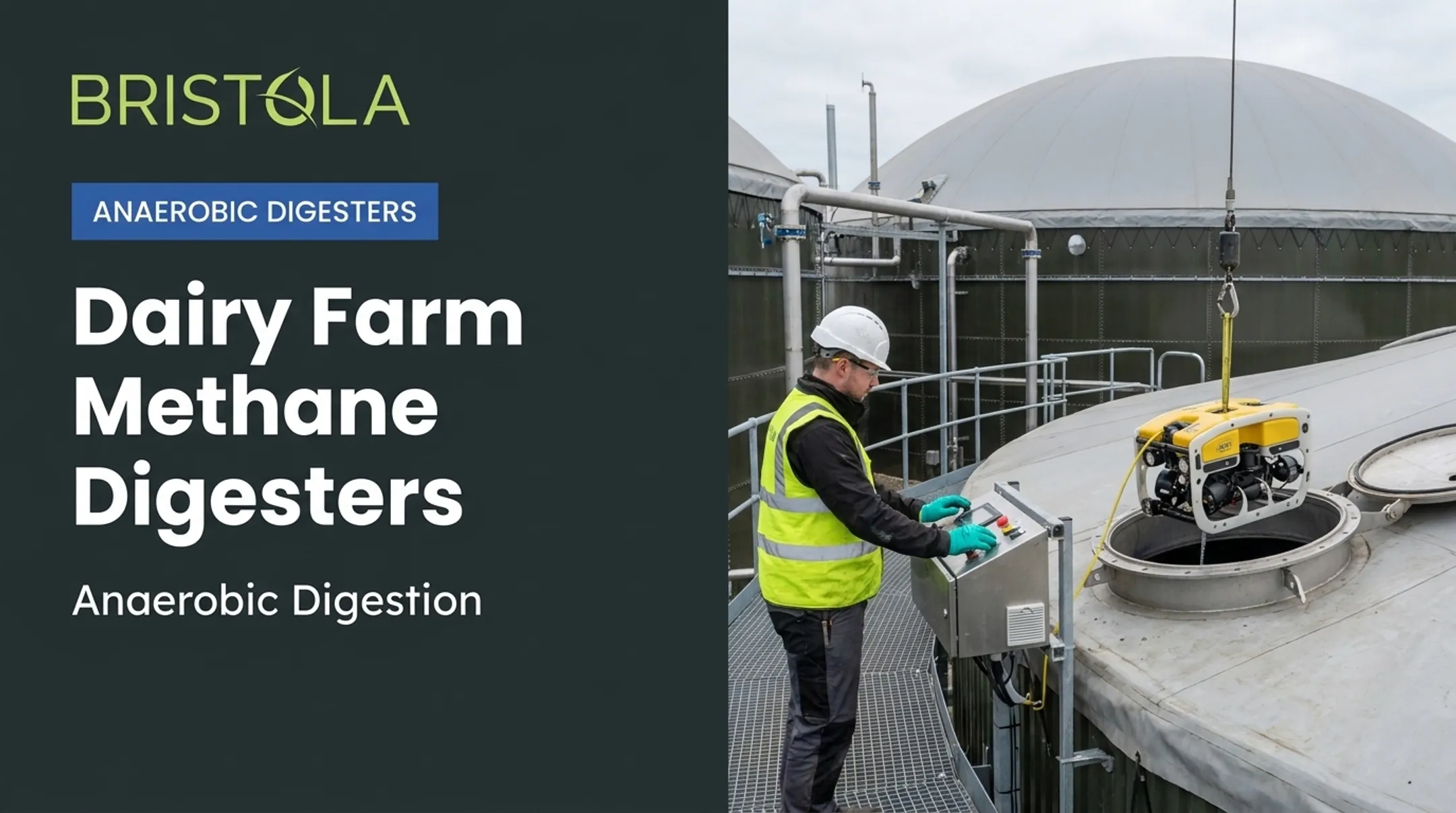
This is where Bristola's approach differs. Its patented equalization-chamber entry system lets a remote-controlled submersible robot enter a digester or covered lagoon while the vessel stays full and operational. No draining. No human entry. No confined-space risk.
How it works, in practice:
- An entry portal connects to the digester and adapts to an existing manhole 24 inches or larger.
- The submersible robot passes through the portal without disturbing tank operations.
- A winch system guides the robot to the digester floor.
- The robot removes sludge and sediment, then transfers it through a flexible hose for processing.
- When cleaning is complete, the robot retracts back through the entry system.

Each cleaning cycle also generates condition and performance data, so plants can track sediment buildup over time instead of finding problems only after biogas output has already dropped.
On cost, Bristola's comparison puts the subscription-based robotic system at roughly $170,000 annualized versus $250,000 for traditional cleaning—about $80,000 in annual savings per tank. The same setup works for new construction or retrofits, including facilities already in production.
Frequently Asked Questions
How much does an anaerobic digester cost?
Costs vary significantly based on plant scale, sludge volume, and design complexity, ranging from hundreds of thousands to tens of millions of dollars. Consult a wastewater engineer for a site-specific estimate based on your facility's needs.
What are digesters in wastewater treatment and how do they work?
Anaerobic digesters use oxygen-free biological processes to break down organic sludge through four stages: hydrolysis, acidogenesis, acetogenesis, and methanogenesis. The outputs are biogas (used for energy) and stabilized digestate.
What are the types of digesters?
Standard-rate (single-stage) digesters handle mixing, heating, and feeding in one tank and are most common in municipal plants. High-rate and two-stage systems separate acid and methane phases for higher throughput; plug-flow and other advanced designs serve specialized applications.
What happens to sludge after anaerobic digestion?
Digested sludge is dewatered via centrifuges or filter presses, separating solids from liquid centrate. The centrate returns to treatment, while dewatered biosolids may be reused as fertilizer if they meet EPA Part 503 contamination limits.
Do anaerobic digesters produce odors?
Yes, anaerobic digestion can produce hydrogen sulfide and other odor compounds, unlike aerobic digestion. Common controls include covered tanks, biofilters, and chemical scrubbing systems, paired with regular maintenance to prevent buildup.
How often should anaerobic digesters be cleaned or maintained?
Maintenance frequency depends on feedstock type and how quickly scum and sediment accumulate. Traditional cleaning often runs every few years and usually requires a shutdown. In-service robotic systems allow more frequent cleaning without taking the digester offline.