Tightening local discharge limits, rising surcharge fees, and equipment damage from fugitive oils have pushed this topic to the top of facility managers' priority lists. A single fouled pump or clogged line can shut down production for hours. This article breaks down what oily wastewater actually is, why it matters, the main treatment methods available, and how to choose — and maintain — the right system for your facility.
TL;DR
- Oily wastewater contains free, dispersed, and emulsified oils from food processing, oil & gas, metalworking, and treatment plants
- Untreated discharge causes clogging, equipment damage, fines, and environmental harm
- Core methods: physical separation, chemical treatment, biological treatment, and membrane filtration — often combined
- Method selection depends on oil type, concentration, flow, and budget
- Upstream tank and lagoon maintenance keeps treatment systems performing long-term
What Is Oily Wastewater and Why Does It Need Treatment?
Oily wastewater is water contaminated with free, dispersed, or emulsified oils, fats, and grease from industrial, commercial, or municipal sources. The oil exists in three physical states. Free oil means droplets larger than 150 micrometers. Dispersed oil falls between 20 and 150 micrometers. Emulsified oil sits below roughly 20 micrometers and resists separation without help.
Common sources include:
- Refineries and oil & gas production sites
- Food & beverage processors
- Metalworking and machining shops
- Anaerobic digesters
- Slaughterhouses and protein processors
Discharge limits vary by jurisdiction. There's no single federal number, but EPA's pretreatment guidance found local fats-oils-and-grease (FOG) limits commonly clustering around 100 mg/L, with a documented range of 50 to 450 mg/L depending on the municipality.
Houston currently enforces a 200 mg/L limit. Always check with your specific POTW.
Left untreated, oily wastewater causes real operational headaches: clogged pipes, coated equipment, fouled DAF units and filters, and reduced treatment efficiency.
For scale, produced water from U.S. oil and gas operations alone is estimated at 15-20 billion barrels per year, according to a DOE/Argonne technical report, and that's just one sector.
Types of Oily Wastewater Treatment Methods
No single method fits every facility. Oil type, concentration, and flow volume vary too much across industries. Most effective treatment trains combine two or more approaches rather than relying on one technology alone.
Physical Separation (Gravity, Skimming, DAF)
Gravity separators, including API separators, rely on the density difference between oil and water. Oil skimmers pull floating free oil off the surface, while dissolved air flotation (DAF) uses microbubbles to lift emulsified oil after coagulant treatment.

Best suited for: refineries, metalworking shops, and stormwater runoff with high free-oil content.
Strengths:
- Low operating cost
- Simple to install
- Works as pretreatment or a standalone option for free oil
Limitations: Physical separation struggles with tight emulsions below roughly 20 microns. It also needs adequate residence time and space to work well.
When free oil is gone but emulsions remain, chemical treatment is the usual next step.
Chemical Treatment (Coagulation, Flocculation, Demulsification)
Coagulants like ferric chloride and aluminum sulfate neutralize the charges holding emulsions together. Flocculants then bind freed droplets into larger flocs that can be skimmed or floated out.
This method targets emulsified oils that physical separation alone can't remove.
A 2018 study on ship-generated emulsified wastewater with 10-15 micron droplets found that polyaluminum ferric chloride combined with microbubble flotation brought effluent oil below 15 mg/L. That result depended on specific feed concentrations and will not transfer to every waste stream.
Best suited for: food processing effluent, fine emulsions, DAF pretreatment.
Strengths:
- Breaks stable emulsions physical methods miss
- Pairs well with DAF and other flotation steps
- Relatively fast once dosing is dialed in
Limitations:
- Dosing must be precise; over- or under-dosing can re-emulsify oil
- Generates chemical sludge that needs disposal

For streams that still miss discharge limits after physical and chemical steps, facilities often add biological or membrane polishing.
Biological and Advanced Membrane Treatment
Biological treatment uses lipase-producing bacteria to digest oil aerobically over time. Membrane systems (ultrafiltration and ceramic membranes) physically filter oil at the micron scale instead.
These are different tools: biological treatment degrades oil; membranes separate it.
A hybrid membrane bioreactor study achieved up to 99% TPH removal at a 24-hour retention time. That figure is study-specific, not a universal benchmark. Real performance still hinges on salinity, toxicity, and nutrient balance.
Membranes can produce near-drinking-water-quality effluent in many cases. Ceramic membrane studies report oil rejection from 73% to 99%, depending on membrane material and feed conditions.
Strengths:
- High removal rates on residual dissolved and emulsified oil
- Membrane effluent often meets strict reuse or discharge limits
- Biological systems can cut sludge volume versus pure chemical trains
Limitations:
- Biological treatment is slow and energy-intensive
- Membranes foul easily and need regular cleaning or pretreatment

How to Choose the Right Oily Wastewater Treatment Method
Match the method to your wastewater's characteristics and your facility's goals. Start with these factors:
- Oil type and concentration — free vs. emulsified oil, and required discharge or reuse quality
- Flow volume and variability across your production cycles
- Available space and capital vs. operating budget
- Regulatory limits set by your local POTW or environmental agency
- Long-term goals — water reuse, sludge reduction, or lower chemical use
Run jar tests before locking in a chemical program. Real dosing data beats generic industry assumptions every time.
Maintaining Treatment Performance: The Overlooked Factor
Even a well-designed treatment system loses effectiveness if upstream tanks, lagoons, and digesters accumulate sludge and scale unchecked. Sediment buildup reduces working volume, throws off retention times, and can send solids downstream into equipment that isn't built to handle them.
The problem is that traditional tank cleaning means confined-space entry, drained tanks, and days of downtime. Many facilities defer this maintenance because the safety risks and production losses feel too costly — until performance degrades enough to force the issue.
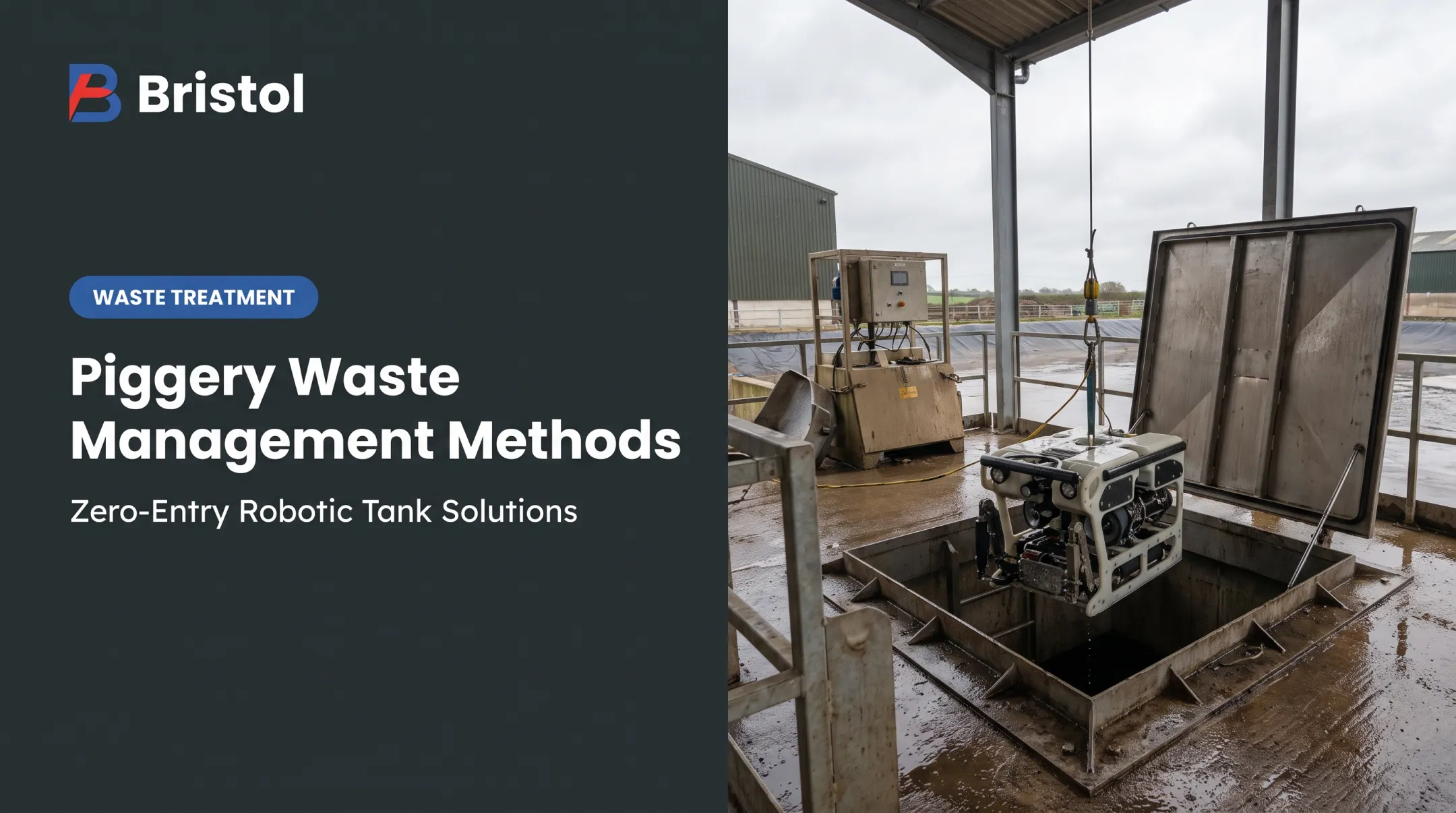
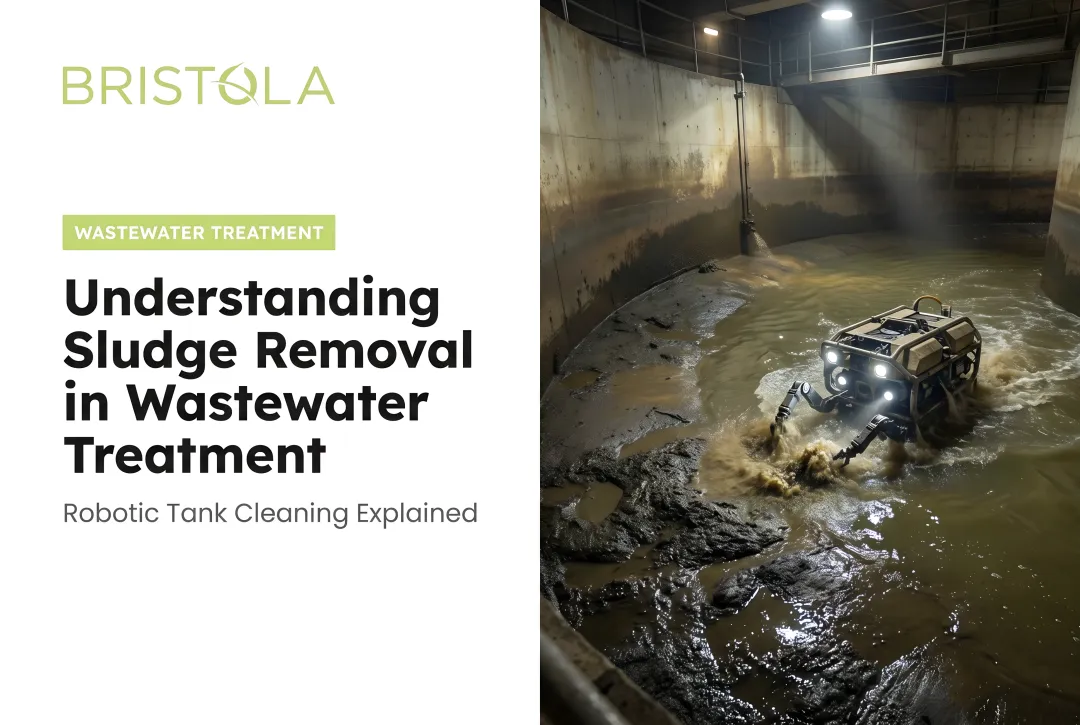
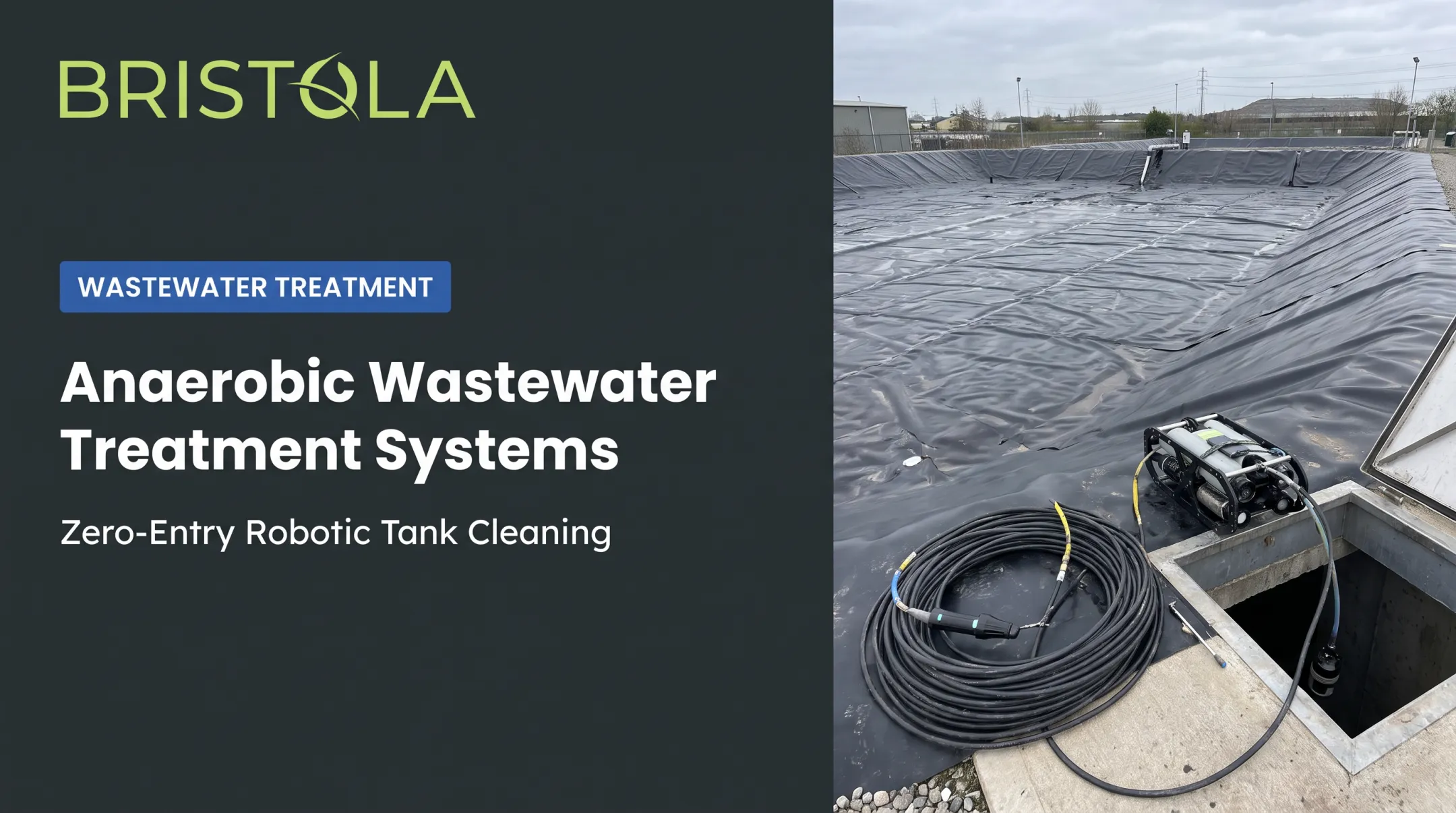
Bristola's zero-human-entry robotic tank cleaning system solves that tradeoff. A submersible ROV enters through a patented equalization-chamber portal (compatible with manholes 24 inches or larger) while the tank or covered lagoon stays full and operational. No draining, no confined-space entry, no shutting down production.
The robot:
- Navigates with sonar to reach accumulated sludge and sediment
- Transfers material out through a flexible hose
- Evaluates and reports facility condition over time
Facilities across wastewater treatment, oil & gas, and food processing use it to keep tanks clean without traditional cleanout downtime. Managers get ongoing visibility instead of guessing when the next cleanout is due.

Conclusion
Oily wastewater treatment isn't a single choice you make once and forget. It's essential for regulatory compliance, protecting equipment, and meeting environmental obligations. Physical separation, chemical treatment, biological processes, and membrane filtration each address different oil types and facility needs, and most effective systems combine several of them.
Choosing the right method matters, but it's only half the equation. Pairing that treatment method with consistent tank and lagoon maintenance is what keeps performance and cost savings sustainable over the long run. That is where operators often turn to specialists such as Bristola, whose zero-human-entry robotic systems clean tanks and covered lagoons while they stay in service—no confined-space entry and no production shutdown.
Frequently Asked Questions
What are the different treatment methods for oily wastewater?
The four main categories are physical separation, chemical treatment, biological treatment, and membrane filtration. Most facilities combine two or more methods depending on oil type and concentration.
What is oily wastewater?
It's water contaminated with free, dispersed, or emulsified oils, fats, and grease from industrial, commercial, or municipal sources. It commonly comes from refineries, food processors, and metalworking operations.
Which industries produce high-oil-content wastewater?
Refineries, metalworking and machining shops, food processing plants, and oil & gas operations typically generate the highest-oil-content wastewater streams.
What is the typical discharge limit for oil and grease in wastewater?
Many POTWs reference 100 mg/L as a benchmark, though actual limits range from 50 to 450 mg/L depending on the jurisdiction. Always confirm the specific limit with your local authority.
Can oily wastewater be recycled or reused?
Yes, with adequate treatment such as membrane filtration, oily wastewater can be purified for internal reuse or discharge, and recovered oil can sometimes be recycled. The right treatment train depends on your intended reuse application.
How often should oily wastewater treatment systems and storage tanks be maintained?
Frequency depends on oil loading and system type, but regular monitoring and periodic cleaning, ideally without production downtime, prevent gradual performance decline.