But operators face real pain points: choosing the right design, keeping microbes happy, and avoiding the maintenance failures that quietly kill gas output. This guide covers how digesters work, the main system types, their benefits, and the maintenance challenges most operators underestimate until it's too late.
Key Takeaways
- Digesters convert organic waste into biogas (methane + CO2) and digestate in four stages
- Covered lagoon, complete-mix, and plug-flow are the three most common US designs
- Manure-based digesters cut 14.8 million metric tons of CO2e in 2023 alone
- Sludge buildup chokes gas output; traditional cleanout needs risky confined-space entry
- Robotic cleaning maintains digesters without draining or shutting down
What Is an Anaerobic Biogas Digester?
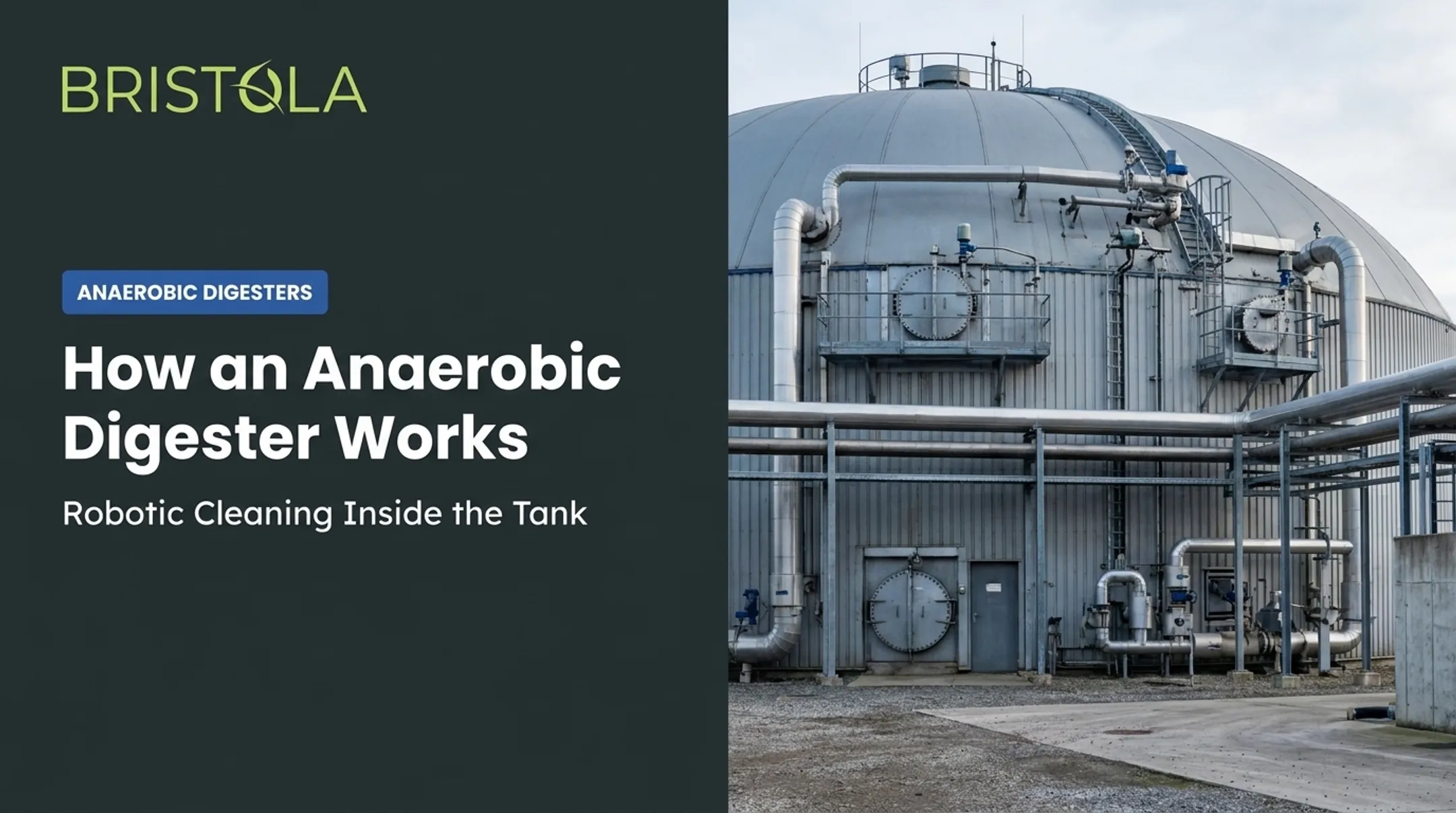
An anaerobic digester is a sealed, engineered vessel where bacteria break down organic matter without oxygen. EPA describes this process as biochemical decomposition that yields methane and carbon dioxide as byproducts. The tank creates controlled conditions (temperature, retention time, pH) that keep microbial communities active and productive.
Two outputs come out the other end:
- Biogas: burned for heat, converted to electricity, or upgraded to renewable natural gas (RNG) for vehicle fuel or pipeline injection
- Digestate: the leftover solid and liquid material, used as fertilizer or soil amendment
Common US Feedstocks
Operators typically feed digesters with:
- Livestock manure (dairy and hog operations)
- Food processing waste
- Municipal wastewater sludge
- Crop residues
Many facilities practice co-digestion, blending multiple feedstocks to boost gas yield. According to EPA's 2022-2023 food-waste survey, 89 on-farm co-digesters and 128 wastewater co-digestion systems operate nationally.
How Anaerobic Digestion Works: The Process
Digestion happens in four biological stages:
- Hydrolysis: complex organic matter breaks into simpler compounds
- Acidogenesis: bacteria convert those compounds into volatile fatty acids
- Acetogenesis: fatty acids further break down into acetic acid, hydrogen, and CO2
- Methanogenesis: methane-producing microbes convert these into biogas
Mechanically, the process flows through five steps:
- Feedstock intake
- Mixing and agitation
- Heating
- Gas capture (often via a membrane roof)
- Digestate removal

Mesophilic vs. Thermophilic Operation
Operators choose between two temperature ranges, each with trade-offs:
| Type | Temperature | Retention Time (SRT) |
|---|---|---|
| Mesophilic | 86-100°F | 12-25 days |
| Thermophilic | 122-140°F | 10-12 days |
Some low-rate systems run 30-60 days SRT. Thermophilic systems process faster but need more energy to hold higher temperatures, per EPA technical guidance.
Feedstock solids content also shapes system design. Wet digestion handles dilute, pumpable material; dry digestion processes higher-solids feedstock like stacked manure.
Commercial systems typically produce biogas with roughly 60% methane and 40% CO2, plus trace gases.
Types of Anaerobic Biogas Digesters
Common Digester Designs
EPA's AgSTAR database breaks down US manure-based systems by type: covered lagoons (174), plug-flow (107), and complete-mix (105), plus smaller numbers of induced blanket reactors and other designs.
- Covered lagoon digesters — suited to dilute livestock waste; common on hog and dairy operations with lower total solids
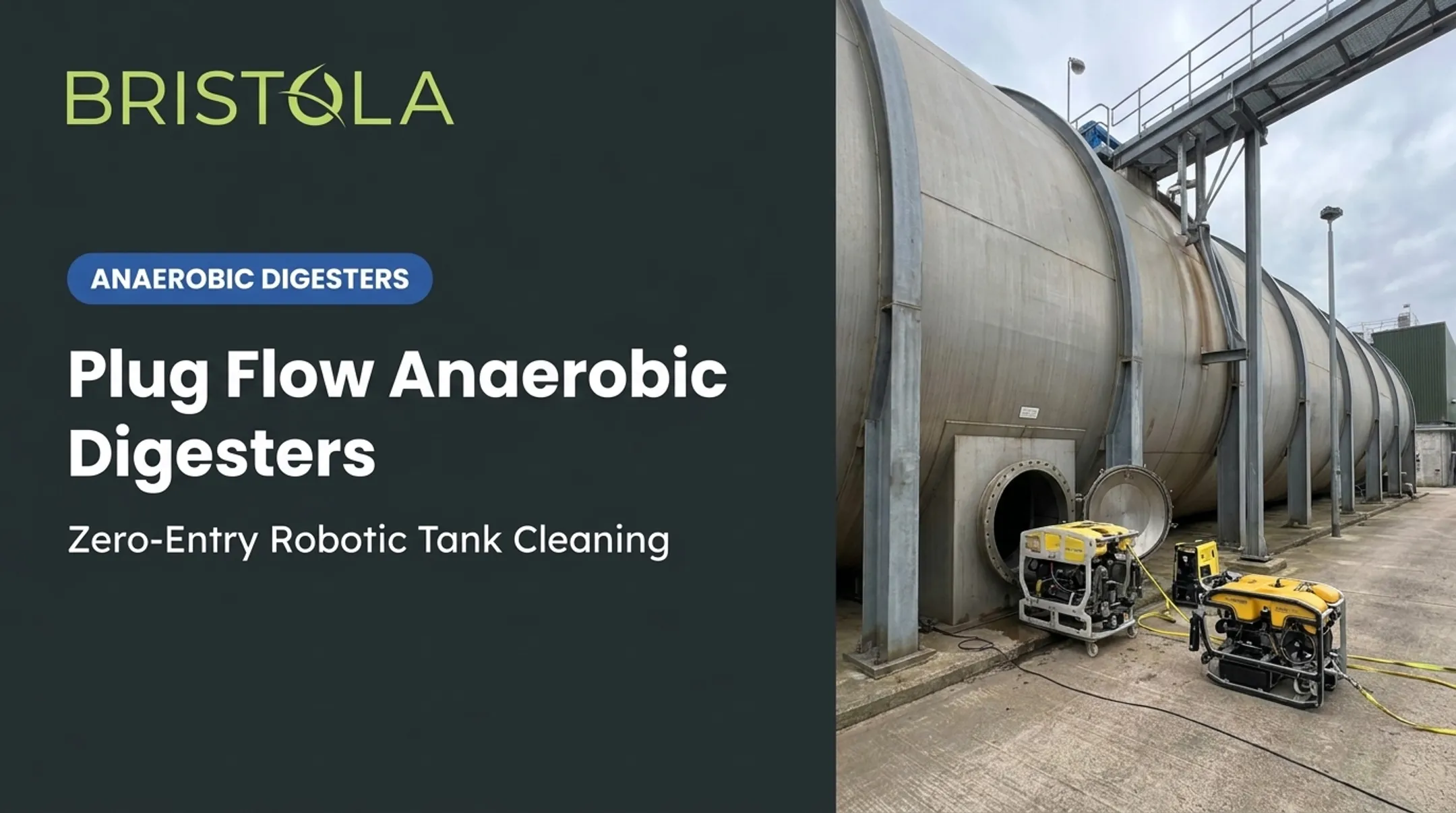
- Plug-flow digesters — designed for higher-solids dairy manure that moves through the tank in a horizontal flow pattern
- Complete-mix (CSTR) digesters — enclosed, heated tanks with mechanical or gas mixing; popular for dairy and food waste applications that need consistent agitation

Choice depends on feedstock type, volume, regional climate, and available capital. A dairy in a cold climate handling scraped manure looks very different from a food processor managing liquid slurry.
Key Benefits of Anaerobic Digesters
Renewable energy generation tops the list. Biogas converts to electricity, heat, or upgraded RNG for vehicle fuel and grid injection. EPA estimates recovery systems are technically feasible for more than 8,000 large dairy and hog operations, with potential to displace roughly 2,010 MW of fossil-fuel generation.
Waste management value matters too. Digesters divert organic waste from landfills, capturing methane that would otherwise escape as a potent greenhouse gas. Manure-based systems alone reduced 14.8 million metric tons of CO2e in 2023, and nearly 96 million metric tons cumulatively since 2000.
Revenue potential comes from multiple angles:
- Digestate sold or used as organic fertilizer
- RNG incentive programs and carbon credits
- Reduced landfill tipping fees
Those revenue drivers are showing up in adoption numbers. According to the American Biogas Council's 2026 market snapshot, 631 farms now capture biogas and more than 1,240 wastewater facilities use digesters nationwide. Growth tracks stronger RNG incentive programs and tightening methane regulations.

Maintenance, Safety & Downtime: The Overlooked Challenge
Here's what doesn't show up in the sales pitch: digester tanks accumulate sludge, grit, and scum over time. That buildup eats into effective tank volume and drags down gas yield, sometimes without operators noticing until production numbers slip.
One documented case makes this concrete. A 1.2-million-gallon EnviTec digester in New York went uncleaned for more than four years. Volatile-solids reduction dropped below 25%, the tank couldn't hold its mesophilic temperature range in cold months, and daily biogas output fell 20%. Repair proposals topped $300,000 for roof work alone, plus another $300,000-plus for the cleanout itself.
The Traditional Cleanout Problem
Standard practice means draining the tank and sending workers inside for confined-space cleaning. That's expensive and dangerous:
- Production goes offline during the drain-and-clean cycle
- Facilities often need temporary storage for incoming material
- Workers enter a confined, hazardous environment
OSHA's confined-space standard (29 CFR 1910.146) requires atmospheric testing, a written entry permit, a dedicated attendant, and rescue procedures before anyone goes in. A 2020 peer-reviewed study citing US Bureau of Labor Statistics data found confined-space accidents killed or injured 882 people between 2011 and 2017—about 126 incidents per year nationally.
A Non-Invasive Alternative
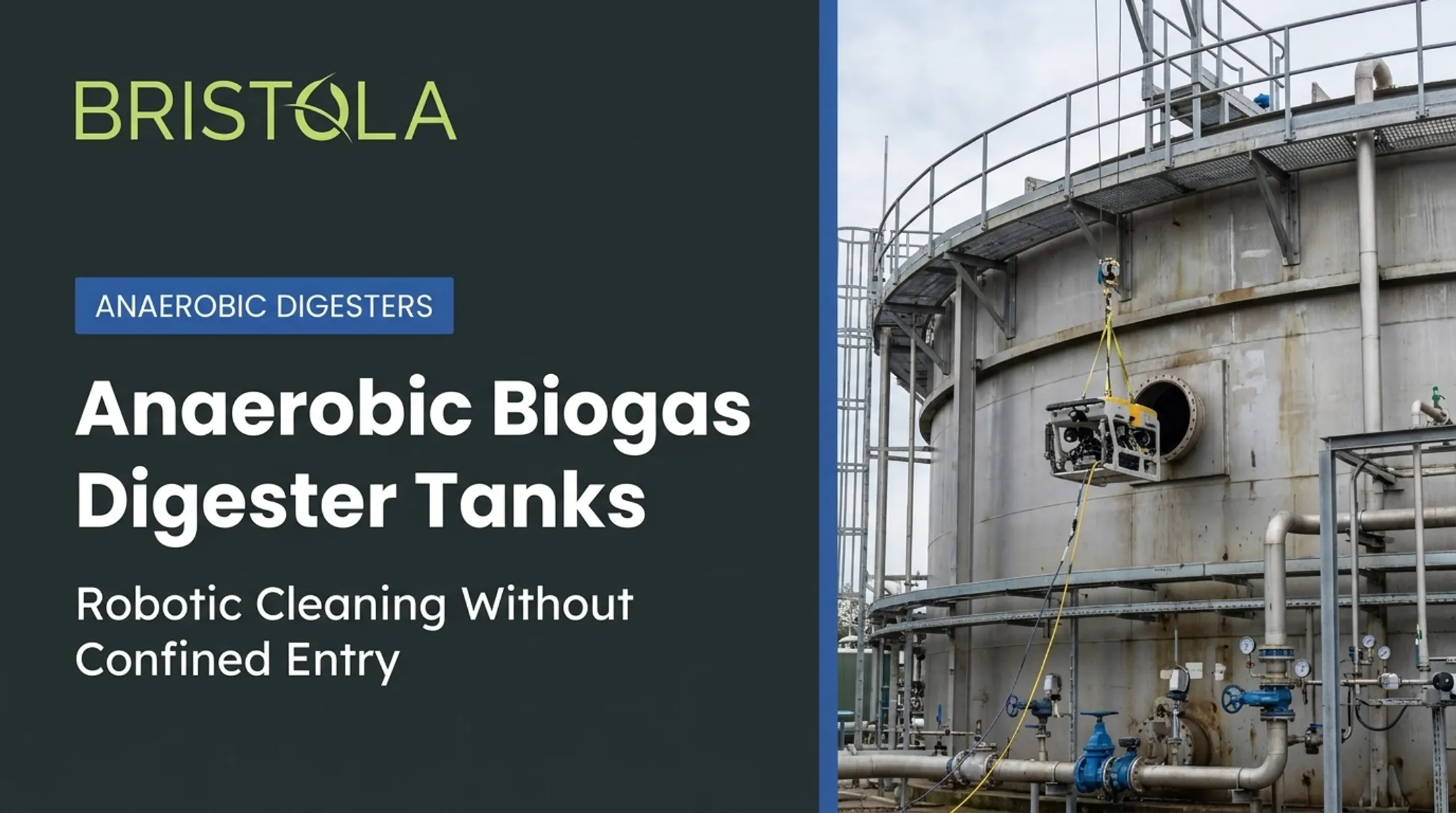
Those downtime costs and entry risks are exactly what a zero-human-entry approach is built to avoid. Bristola's robotic cleaning system sends a remote-controlled submersible robot through a patented equalization-chamber entry portal, adaptable to any manhole 24 inches or larger. The robot removes sediment through a flexible hose while the digester stays full and operational: no draining, no confined-space entry, and no production shutdown.

In the EnviTec case, Bristola retrofitted the existing entry door with a 24-inch pipe and isolation valve, enabling future "live" cleanings. The company's product data cites annualized cleaning costs of roughly $170,000 with this approach versus $250,000 for traditional methods—about $80,000 in yearly savings per tank.
Scheduled live cleanouts keep effective tank volume available, hold gas yield steady, and spare concrete and equipment from corrosion that follows long sludge buildup—without waiting for an emergency shutdown to force the issue.
Frequently Asked Questions
How much does a biogas digester cost?
Costs vary widely by scale, digester type, and feedstock. USDA figures put farm-based systems at roughly $200,000 to over $600,000, excluding gas-conditioning equipment—plus installation, permitting, and ongoing maintenance.
What is the difference between a biogas digester and biogas itself?
Biogas is the methane and CO2 gas mixture produced by decomposition. The digester is the engineered, sealed vessel that creates the conditions for microbes to produce that gas.
How long does it take for a digester to produce biogas?
Retention times typically run 12-25 days for mesophilic systems and 10-12 days for thermophilic systems, though some low-rate designs take 30-60 days. Temperature and feedstock composition drive the timeline.
What happens to the leftover material after digestion?
The remaining material, called digestate, gets used as fertilizer or soil amendment. Solid digestate is often composted or dried; liquid digestate typically goes to land application.
How often does an anaerobic digester need to be cleaned or maintained?
Buildup rates vary by feedstock and system design, so there's no universal schedule. Regular inspection paired with non-invasive cleaning helps operators avoid emergency shutdowns that cut gas output.
Is biogas from anaerobic digesters truly renewable and low-carbon?
Yes. Biogas comes from organic waste, not fossil sources, making it renewable by definition. Capturing it also prevents methane, a far more potent greenhouse gas than CO2, from escaping into the atmosphere.