Here's the catch: that search term covers a lot of ground. It could mean a bottle of biocide, a fuel polishing service, or a full mechanical cleanout. The right answer depends entirely on how bad the contamination actually is.
This guide breaks down the main types of fuel tank cleaner products, how they work, when they're not enough, and what operators of large industrial tanks do when chemicals alone can't cut it.
Key Takeaways
- Cleaner options range from chemical additives and biocides to polishing and zero-entry robotic systems
- Chemical treatments handle early-stage contamination but cannot remove hardened sludge or biofilm
- Water intrusion is the root cause of most microbial growth ("diesel bug") in stored fuel
- Large industrial tanks require zero-entry robotic cleaning to avoid downtime and confined-space risk
What Are Fuel Storage Tank Cleaner Products
Fuel tank cleaner products are any treatment or process designed to remove water, sludge, microbial growth, and particulate matter from a fuel storage system. That range is intentional: chemical treatments and mechanical cleaning processes both fall under the same job.
Operators typically work with three approaches:
- Preventive additives — dosed on a regular schedule to keep contamination from taking hold
- Remedial cleaners — applied after contamination is already present, often as damage control
- Mechanical cleaning systems — vacuum, robotic, or other physical removal methods used to extract sludge and sediment from the tank itself
What Causes Contamination in the First Place
Most fuel contamination traces back to a handful of root causes:
- Condensation inside partially empty tanks
- Damaged or poorly sealed vents letting moisture in
- Microbial growth at the fuel-water interface
- Aging tank infrastructure and internal corrosion
An EPA study of 42 diesel underground storage tanks found moderate or severe corrosion in internal metal components in 83% of the systems studied — a strong signal that "out of sight, out of mind" doesn't work for fuel storage EPA's diesel UST corrosion study.

Diesel and biodiesel tanks are especially exposed to that moisture-driven risk. Biodiesel is highly hygroscopic (it absorbs water readily) and more biodegradable than petroleum fuel, so it is often more susceptible to microbial growth—especially at higher blend levels.
For industrial-scale operations—refineries, anaerobic digesters, bulk fuel terminals—contamination is more than a filter-clogging nuisance. It cuts output efficiency, raises maintenance burden, and shortens equipment life across the facility.
Types of Fuel Tank Cleaner Products and Methods
Which method makes sense depends on tank size, contamination severity, and whether the tank can be taken offline. Here's how the main categories stack up.
Chemical Additives and Biocides
Biocides kill the microbial growth commonly called "diesel bug." Dispersant-detergent additives work differently: they break down sludge before it clogs filters and fuel lines.
When specifying a biocide, confirm:
- EPA registration (biocides are regulated as antimicrobial pesticides under FIFRA)
- Compatibility confirmed with your specific fuel type and blend level
- Clear dosage guidance on the product label
A biocide alone won't remove existing bottom sludge. It manages the biological side, not the physical buildup.
Manual and Power-Washing Cleaning
For smaller tanks, the DIY route usually means draining, scrubbing, and power washing with specialized tank-cleaning nozzles designed to reach baffled areas.
This approach has real limits, though:
- Flammable vapors create a serious ignition risk
- Confined-space entry brings oxygen deficiency and toxic gas exposure
- It simply doesn't scale to large industrial tanks safely
Professional Fuel Polishing Services
Fuel polishing keeps the fuel rather than discarding it. Technicians run a closed-loop process that:
- Pulls fuel through high-efficiency filtration
- Strips out water and sediment
- Returns cleaned fuel to the tank without a full drain

Zero-Entry Robotic Cleaning Systems
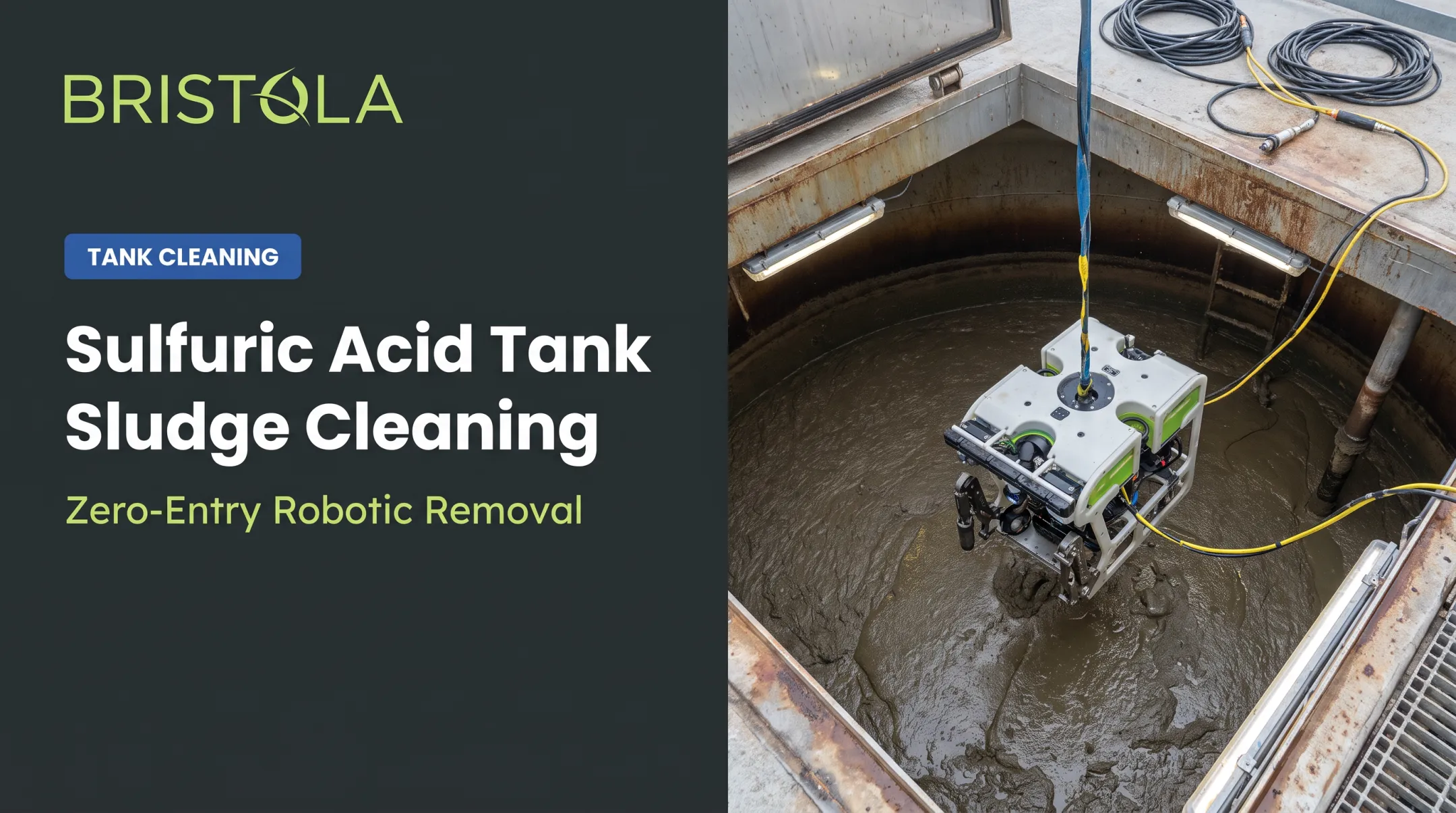
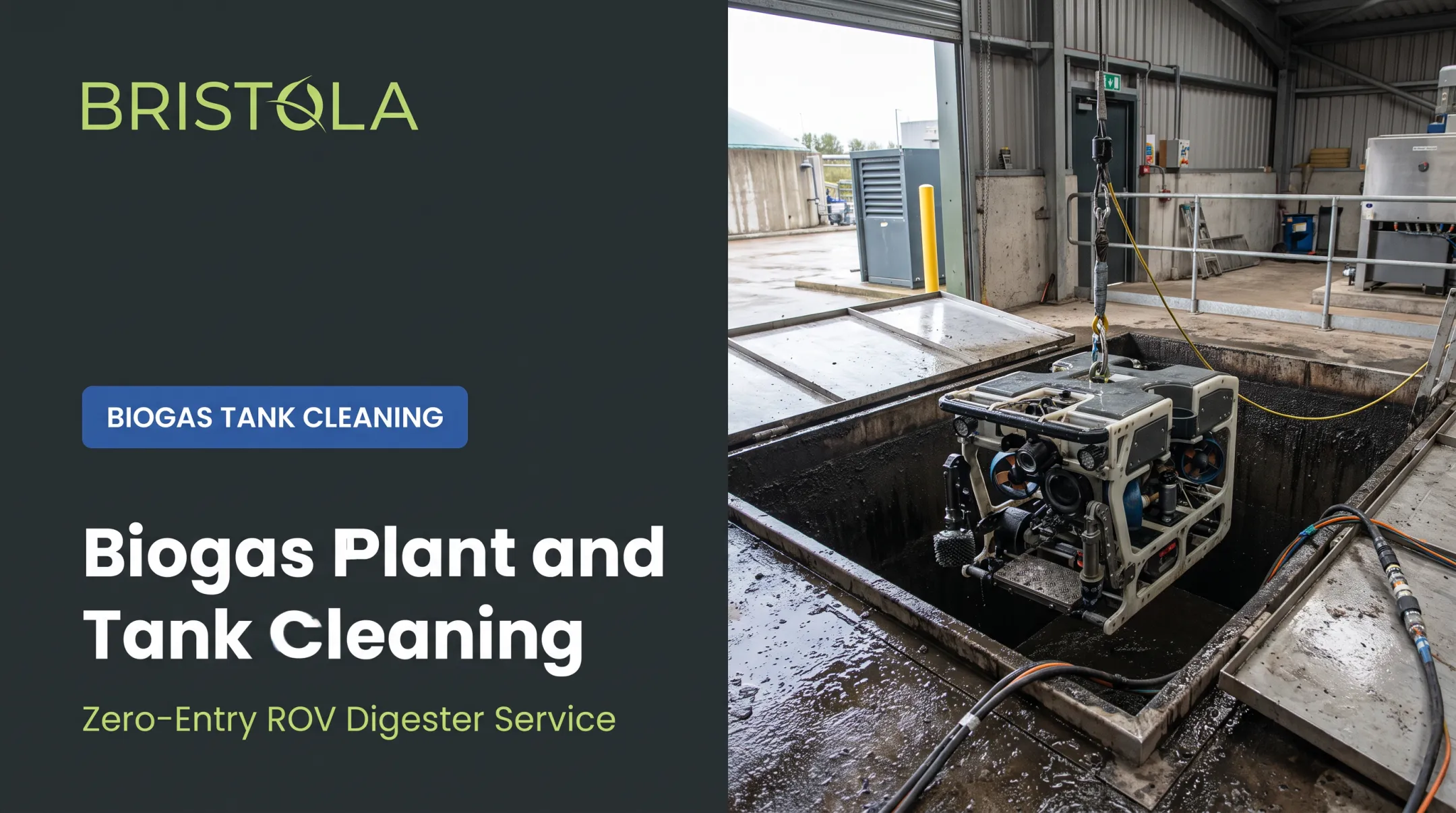
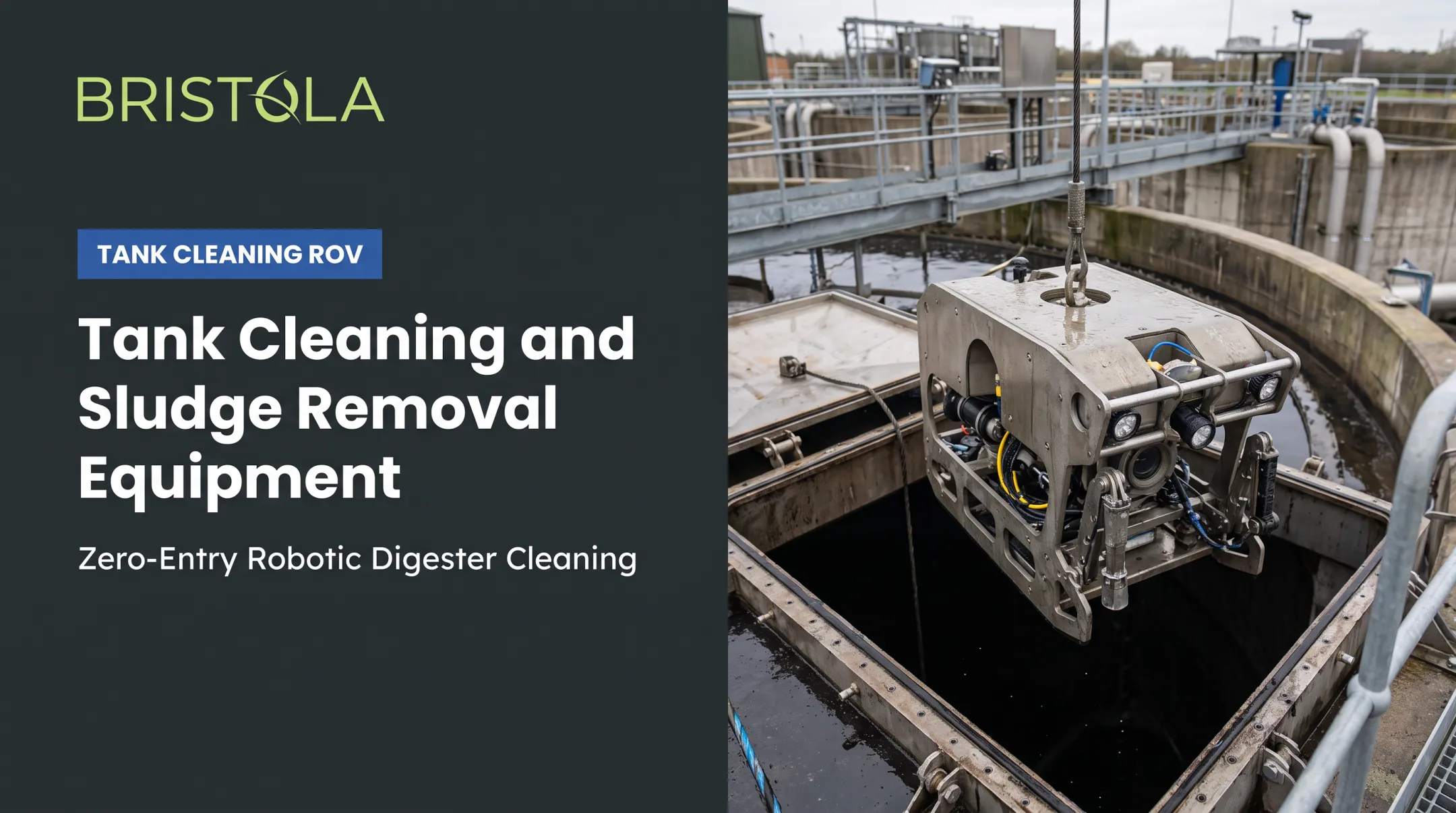
For large liquid storage tanks, digesters, and covered lagoons, submersible robotic systems clean while the facility stays online. Mechanical removal reaches sludge and sediment additives never touch.
Typical gains include:
- No confined-space human entry
- No production shutdown or temporary storage
- Less reliance on chemical treatment for heavy buildup
Signs Your Fuel Storage Tank Needs Cleaning
Don't wait for equipment failure or a rejected fuel load to act. Watch for:
- Recurring clogged filters or frequent filter replacement
- Dark, cloudy, or discolored fuel
- Sediment showing up during routine inspections
- Declining equipment performance or slow fuel flow
Routine testing catches problems before they turn expensive. Check water bottoms with water-finding paste and review particulate counts on a set schedule, not only after something breaks.
In fuel and refinery storage, early clues often show up as slower transfer rates, repeated pump strain, or fuel that drifts off-spec long before sludge is obvious during an inspection.
Safe Use of Fuel Tank Cleaner Products
Chemical cleaners are effective, but they're not harmless. Basic precautions matter:
- Wear gloves, goggles, and a respirator in enclosed or poorly ventilated spaces
- Follow label dosage; overdosing can damage seals, gaskets, and fuel system components
- Confirm compatibility with your fuel blend, especially above B20 biodiesel
Disposal is where many operators get tripped up. Contaminated fuel, sludge, and rinse water don't fall under one universal waste category.
The generator has to determine whether the waste is hazardous under EPA rules, and licensed disposal is often required. Skipping this step can turn a routine cleaning into a regulatory headache.
When Chemical Cleaners Aren't Enough: The Case for Zero-Entry Robotic Cleaning
Chemical additives and biocides only treat what's dissolved in the fuel. They can't touch hardened sludge, sediment, or biofilm coating the walls of a large storage or digester tank. That's a hard ceiling on what chemistry alone can accomplish.
The traditional fallback for large tanks looks like this:
- Drain the tank completely
- Send workers in for confined-space entry
- Take production offline for the full cleaning window
Each step adds cost and risk. According to the BLS confined-space fatalities report, 1,030 US workers died in confined-space incidents from 2011 to 2018, including cases inside tanks, bins, and vats.

Bristola built its patented zero-human-entry robotic cleaning system as a direct answer to this problem. A remote-controlled submersible robot enters through a patented airlock-style portal compatible with manholes 24 inches in diameter or larger. It cleans sludge and sediment from the tank bottom and exits the same way, with no person ever going inside.
Key benefits:
- Eliminates production downtime since the tank stays in service
- Removes confined-space risk from the cleaning process entirely
- Improves output and energy efficiency by keeping tanks genuinely clean
- Can be retrofitted onto existing infrastructure, not just new builds
This matters most for anaerobic digesters, refineries, and bulk fuel storage operators. These are the tanks where chemical products alone were never going to restore full performance.
Frequently Asked Questions
Does fuel tank cleaner really work?
Yes, for early-stage contamination and prevention. Chemical cleaners can't remove heavy sludge or biofilm buildup. That requires physical or mechanical cleaning.
How often should a fuel storage tank be cleaned?
There's no universal schedule. Base it on condition: monitor water bottoms, test fuel regularly, and clean when testing or inspection shows contamination. Annual inspection is a reasonable baseline for most industrial tanks.
Can you clean a fuel tank without draining it?
Yes. Fuel polishing circulates and filters fuel in place, and robotic cleaning systems remove sludge while the tank stays full and operational. Manual methods still require drainage.
What is diesel bug and how do I get rid of it?
Diesel bug is microbial growth that forms at the fuel-water interface. Biocide treatment kills active growth, but physical tank cleaning is usually needed to remove existing sludge and biofilm completely.
Is it safe to clean a fuel tank yourself?
Small vehicle or boat tanks can be DIY cleaned with proper ventilation and PPE. Large industrial tanks carry confined-space risks that call for professional or robotic solutions instead.
How much does professional fuel tank cleaning cost?
Costs vary by tank size, contamination level, and disposal requirements, so there's no universal price. For industrial operators, downtime from traditional cleaning often exceeds the service cost itself, which is why no-downtime options can pay off.