Many operators struggle with the same problem: maintenance means shutting down production, sending workers into confined spaces, or both. Neither option is cheap. Neither is particularly safe. The Bureau of Labor Statistics reports 1,030 fatal occupational injuries involving confined spaces from 2011 through 2018—a number that includes digesters, tanks, and lagoons just like the ones your facility relies on.
This guide covers why vessel maintenance matters, the different maintenance approaches available, warning signs to watch for, a general maintenance schedule, and how robotic technology is changing the equation entirely.
TL;DR
- Regular cleaning protects performance, safety, and vessel lifespan
- Traditional methods requiring human entry are slow, costly, and dangerous
- Predictive, data-driven maintenance cuts downtime and prevents failures
- Structured schedules—routine, corrective, predictive, and overhaul—keep vessels running
- Zero-human-entry robotic cleaning maintains tanks without stopping production
Why Maintenance of Vessels Is Important
Consistent vessel maintenance keeps production on schedule. Skip it, and facilities trade steady output for emergency shutdowns, lost capacity, and avoidable repair bills.
Performance and Capacity Loss
In anaerobic digesters, fine solids settle out of suspension unless continuously agitated, reducing reactor volume and biogas-production capacity while damaging internal components. The cost shows up fast. One 1.2-million-gallon EnviTec digester left more than four years without cleaning saw volatile-solids reduction fall below 25% and daily biogas production drop 20%, according to Bristola's internal case data.
Vessel Lifespan and Structural Integrity
The same deferred cleanout exposed a second problem: structural damage. Crews found heavy corrosion in the gas-zone concrete wall, damage that had built up unnoticed for years. The repair meant cleaning, fixing, and coating the top 4 feet of the tank with corrosion-resistant epoxy.
Safety and Compliance
Confined space entry is one of the most dangerous tasks in industrial operations. Under 29 CFR 1910.146, entering a permit-required confined space triggers a long list of obligations:
- Written permit-space program and documented entry permit
- Atmospheric testing communicated to every authorized entrant
- An attendant stationed outside for the full duration of entry
- Established rescue and emergency-care procedures Get any of this wrong, and the consequences are severe. NIOSH investigated 70 confined-space incidents that resulted in 109 deaths—including cases where rescuers themselves became victims.
Preventive vs. Reactive Costs
NIST's manufacturing-machinery analysis found that facilities relying heavily on reactive maintenance had 3.3 times more downtime and 16 times more defects than facilities with proactive approaches. The same research found more preventive-focused operations saw 52.7% less unplanned downtime. That EnviTec digester overhaul, deferred for four years, ultimately cost $411,000—including cleaning, roof work, five mixers, and concrete repair. Scheduled cleaning and inspection almost always cost a fraction of a multi-year catch-up project like that.

Types of Maintenance for Vessels
The right approach depends on vessel type, industry, and how hard you're running the equipment.
Routine / Preventive Maintenance
This is your baseline: scheduled inspections, sludge removal, and cleaning cycles before problems develop. Typical tasks include:
- Visual inspections of tank walls and access points
- Level checks and sensor monitoring
- Minor sediment removal before it accumulates
- Sonar-based sediment mapping to track buildup over time For lower-risk or lightly used vessels, routine maintenance alone may be sufficient. High-throughput digesters and refinery tanks usually need more.
Corrective / Reactive Maintenance
This kicks in when something already went wrong: a blockage, a leak, a sudden drop in output. Relying on reactive-only maintenance is risky. Emergency human entry usually means:
- Rushed permit processes
- Higher safety exposure
- Extended downtime while crews diagnose the problem
It is also expensive. Production stoppages compound whatever the repair itself costs.
Predictive / Condition-Based Maintenance
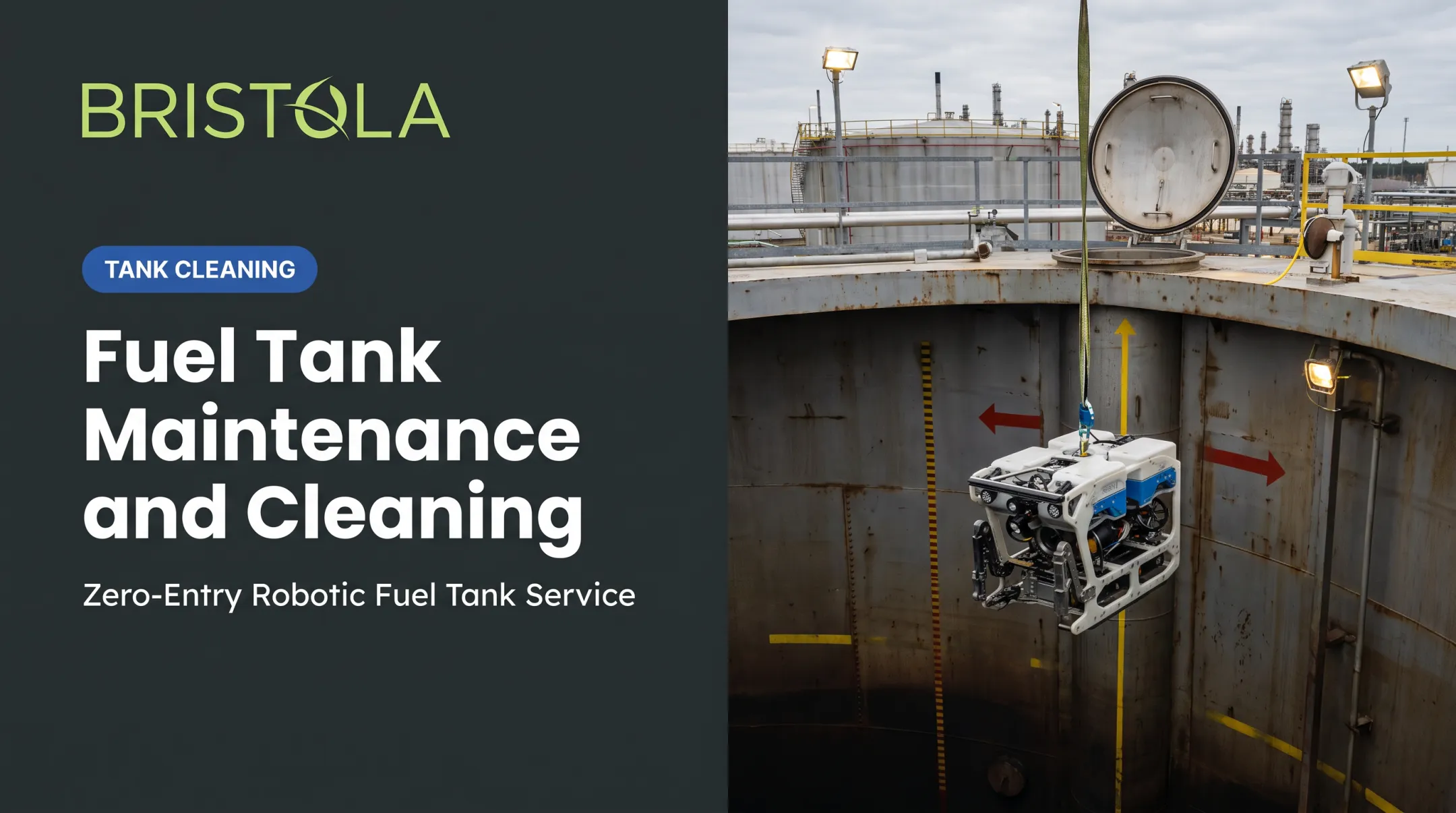
When reactive work is too costly to leave as the default, predictive maintenance is the next step. It triggers cleaning from live performance signals—flow rates, output levels, and gas production trends—rather than a fixed calendar. Systems like Bristola's submersible robotic cleaning platform support that model by capturing condition and performance data continuously, with sonar navigation and real-time monitoring so managers can see buildup inside the vessel before output drops.
Major / Overhaul Maintenance
After years of operation, vessels sometimes need more than cleaning—structural inspection, component replacement, deep repair work. These overhauls cost more and carry higher risk the longer they're delayed. One EnviTec digester case shows the cost of waiting: four years of deferred maintenance turned a cleaning job into a $411,000 project involving mixers, concrete repair, and epoxy coating.

How to Check If a Vessel Needs Maintenance
Catching problems early beats discovering them during an emergency shutdown.
Performance or Output Changes
- Reduced storage capacity or slower processing throughput
- Lower biogas yield compared to your digester's normal baseline
- Inconsistent output that doesn't match historical performance
Visible Wear, Buildup, or Irregularities
- Sediment, crusting, or foam layers visible at inspection points
- Corrosion, leakage, or visible strain on tank walls
- Structural wear that only shows up clearly after cleaning
Increased Resource Consumption or Recurring Issues
- Higher energy or input usage for the same output level
- Pump clogs or faults that return after temporary fixes
- Unplanned downtime that happens more often than it used to
Any one of these alone may not mean much. Several together usually mean it's time to act.

Vessel Maintenance Schedule (General Guidelines)
Schedules vary widely by vessel type, industry, and how continuously the facility operates. There's no single interval that fits every tank, digester, or lagoon.
A general frequency framework:
| Frequency | Typical Activity |
|---|---|
| Daily/per-use | Visual checks, operational monitoring |
| Monthly | Level checks, sensor review |
| Quarterly | Sediment and buildup checks |
| Annual/biannual | Deep cleaning, full inspection |
High-throughput facilities, such as anaerobic digesters and refineries, generally need tighter intervals than lower-usage storage tanks. USDA's lagoon standards, for example, call for tracking sludge accumulation and removing it once maximum residual-storage capacity is reached, rather than following a fixed calendar.
Continuous-operation facilities face a specific bind: they can't easily justify a shutdown just to clean. Zero-downtime technology removes that trade-off.
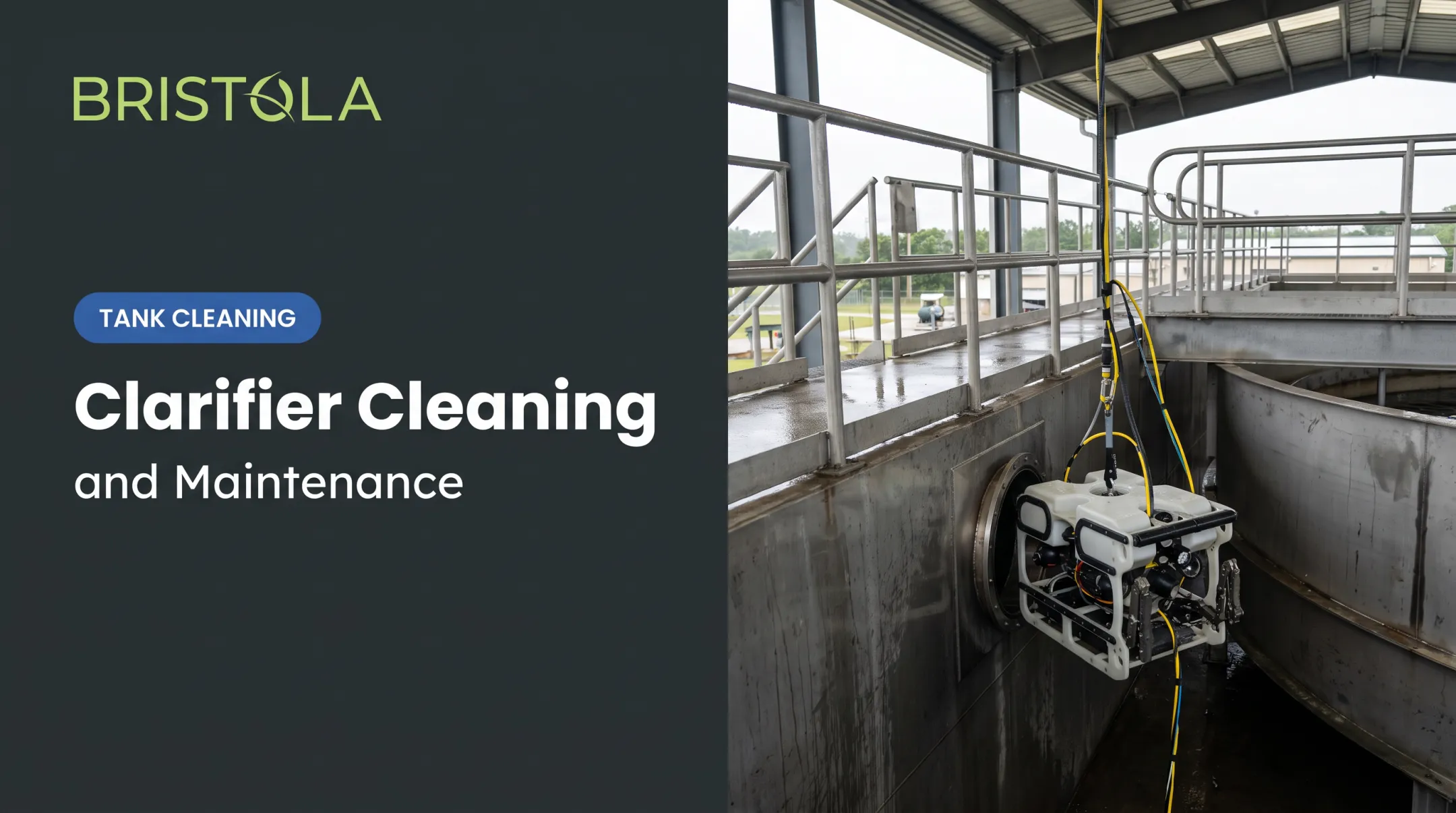
Bristola's robotic system installs an equalization-chamber entry portal through an existing manhole (24 inches or larger). A submersible ROV then cleans sludge from the vessel floor while the tank stays full and in production. Once the airlock system is in place, future cleanings need no draining, lid removal, or scheduled shutdown.

Conclusion
Vessel maintenance is foundational to safety and operational continuity. The real decision is not whether to maintain your tanks and digesters, but how you do it.
The strongest approach balances cost, safety, and uptime. More operators are shifting from reactive fixes to predictive, data-driven strategies. A structured maintenance plan backed by modern zero-entry technology protects vessel longevity and keeps workers out of confined spaces—without sacrificing production.
Frequently Asked Questions
What is vessel cleaning?
Vessel cleaning is the process of removing sediment, sludge, scale, or residue buildup from storage tanks, digesters, or lagoons. It maintains capacity, performance, and structural safety over time.
How often should industrial storage tanks be cleaned?
Frequency depends on usage, stored material, and industry, ranging from quarterly checks to annual deep cleanings. High-throughput vessels like digesters typically need more frequent attention than lightly used storage tanks.
Is confined space entry required for vessel cleaning?
Traditional methods require human entry under strict OSHA permit-space protocols. Modern robotic systems, like Bristola's submersible ROV, eliminate the need for human entry entirely.
What are the risks of poor vessel maintenance?
Poor maintenance leads to unplanned downtime, safety hazards from emergency confined-space entry, reduced output, and higher long-term repair costs.
Can vessels be cleaned without stopping operations?
Yes. Zero-human-entry robotic systems, like Bristola's patented equalization-chamber technology, allow a submersible robot to clean tanks and lagoons while they remain full and in production.
What industries require the most frequent vessel maintenance?
Anaerobic digestion, wastewater treatment, food and beverage, and oil and gas facilities need the most frequent maintenance because of high throughput and solids loading. Exact schedules still depend on each site’s conditions.