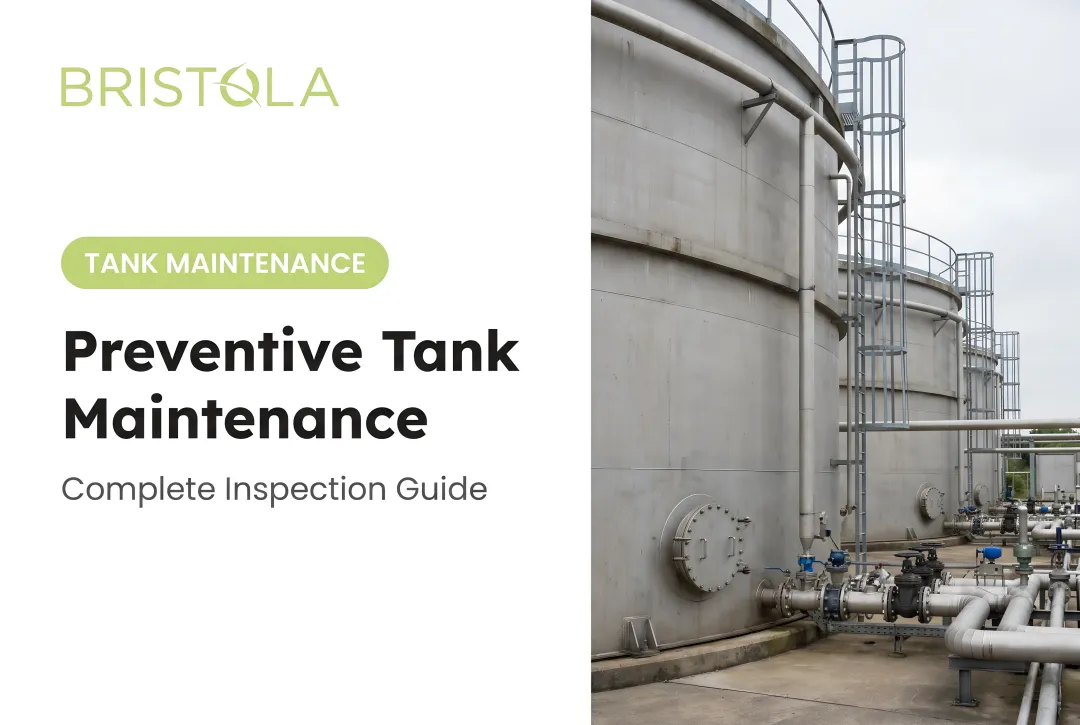
The consequences of deferred maintenance are well-documented: accelerated structural degradation, unplanned shutdowns, regulatory violations, and emergency repair costs that dwarf what routine upkeep would have required. For facilities operating continuously, even a short tank outage can hit six figures fast.
This guide covers the top 5 maintenance tips for extending industrial tank life, along with warning signs to watch for and a practical scheduling framework you can adapt to your operation.
Key Takeaways
- Routine inspections catch corrosion, coating failure, and weld fatigue before they become expensive structural problems
- Annual cleaning removes sediment and sludge that cut tank capacity and accelerate internal degradation
- Corrosion management through coatings, linings, and cathodic protection is the single highest-leverage maintenance investment
- Venting and pressure systems require regular checks; failure here can cause tank deformation or hazardous leaks
- Accurate maintenance records support regulatory compliance and enable proactive failure prediction
Why Industrial Tank Maintenance Matters
The financial case for proactive tank maintenance isn't subtle. According to AMPP, corrosion alone costs the global economy more than $2.5 trillion annually — roughly 3.4% of global GDP. Applying available corrosion-control practices could recover 15–35% of those costs. That's not a marginal improvement; it's a structural shift in how facilities manage risk.
Downtime compounds the problem. ABB research found that 76% of industrial leaders say unplanned downtime can cost up to $500,000 per hour, and 44% experience equipment interruptions at least once a month. A single unplanned tank failure can trigger a chain of losses — lost production, emergency contractor fees, environmental cleanup, and potential regulatory penalties.
The cost contrast between proactive and reactive maintenance is clear:
| Approach | Typical Cost Profile |
|---|---|
| Routine inspection + minor repair | Low, predictable, schedulable |
| Emergency structural overhaul | 3–10x higher, unplanned |
| Full tank replacement | Capital event, avoidable with maintenance |
| Regulatory fine or environmental incident | Variable, potentially severe |
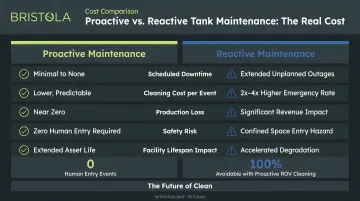
Facilities that treat maintenance as optional typically discover the real cost during an emergency — when options are limited and every hour of downtime carries a price tag. The five practices below address the most common failure points before they reach that stage.
The Top 5 Industrial Tank Maintenance Tips
Tip 1: Schedule Routine Inspections
Routine inspections are the foundation of every tank maintenance program. Without them, early-stage problems — pitting, coating bubbles, weld fatigue, hairline cracks — stay invisible until they've progressed into expensive repairs or structural compromise.
Minimum frequency: Semi-annual inspections for most tanks, with more frequent checks in high-load, chemically aggressive, or continuous-operation environments.
Every inspection should cover:
- Exterior walls and base for rust, discoloration, or surface cracking
- Seams, joints, and fittings for signs of degradation or separation
- Internal coatings and linings for blistering, peeling, or chalking
- Venting systems for blockages or physical damage
- Foundation and base for settlement, shifting, or moisture intrusion
Two inspection tiers exist for good reason:
- On-site staff inspections — suitable for routine visual monitoring between scheduled service intervals
- Third-party professional inspections — required when visible damage is found, and on a planned annual or biennial basis for full structural assessment per API 653 standards
API 653 sets the industry benchmark for aboveground storage tank inspection. External formal inspections must occur at defined intervals per the standard; internal inspection intervals are driven by measured corrosion rates. Aligning your inspection schedule with API 653 — and documenting it in an SPCC Plan — is both best practice and a regulatory requirement for many facilities.
Tip 2: Follow Proper Tank Cleaning Protocols
Sediment, sludge, chemical residue, and microbial buildup accumulate in liquid storage tanks over time. The consequences aren't cosmetic: in biogas digesters, grit accumulation reduces effective digester volume and directly cuts gas yield; in wastewater tanks, sediment buildup restricts capacity and accelerates internal corrosion.
Annual cleaning is essential — both to remove deposits and to properly assess interior condition.
Conventional cleaning methods — manual entry, hydro-jetting, vacuum truck extraction — are effective but operationally expensive. They require:
- Taking the tank fully offline
- Emptying contents and arranging temporary storage
- Confined space entry, which carries documented safety risk (BLS recorded over 1,000 U.S. worker deaths in confined spaces between 2011 and 2018)
- Downtime typically ranging from 3–7 days per tank
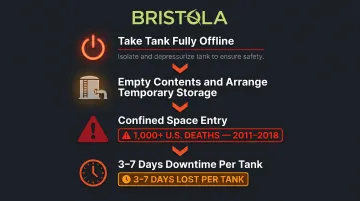
For facilities where halting production means lost revenue, that downtime carries a real financial cost. One analysis put traditional cleaning costs at approximately $250,000 per tank annually when accounting for downtime, chemical treatment, and storage logistics.
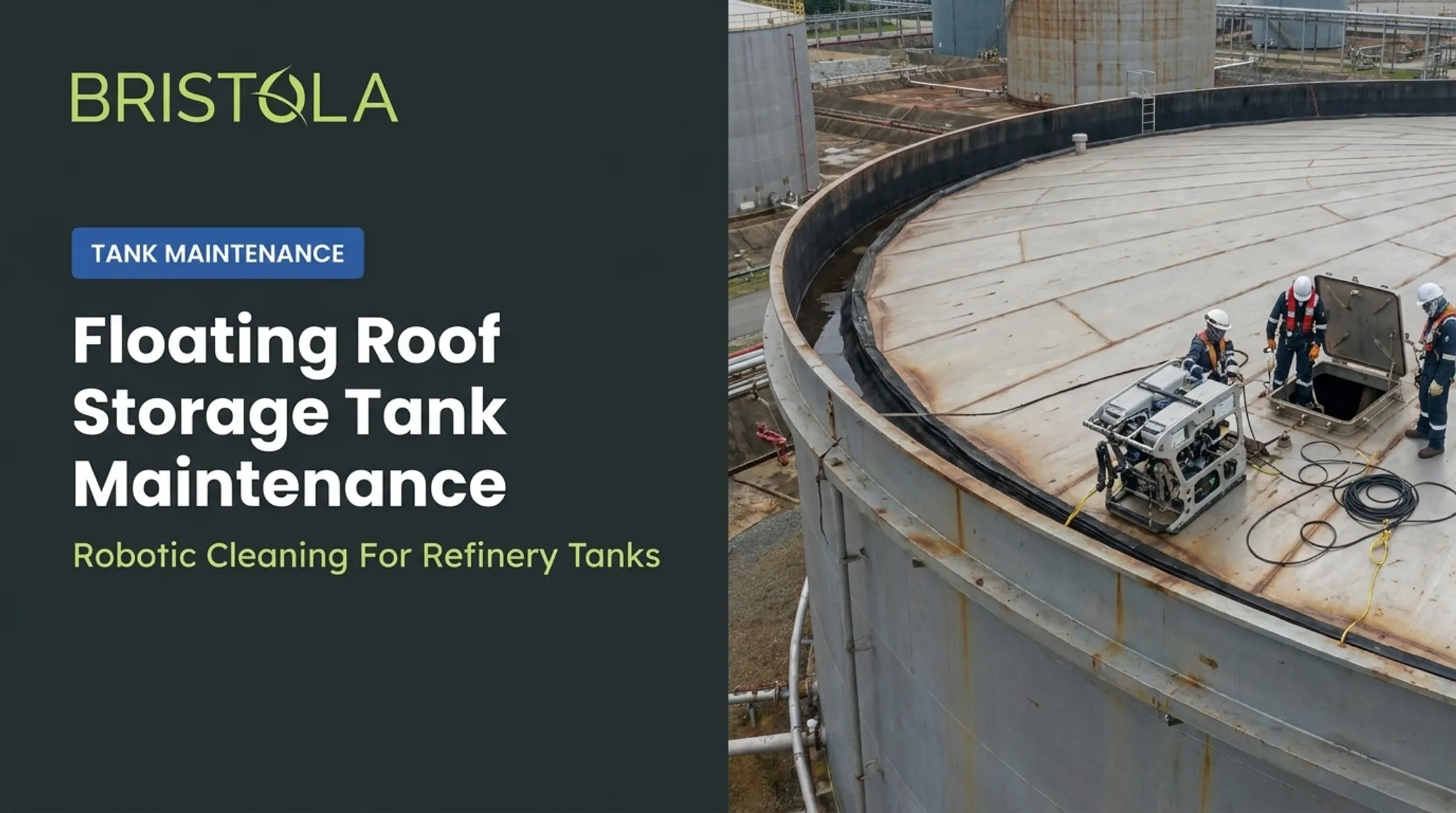
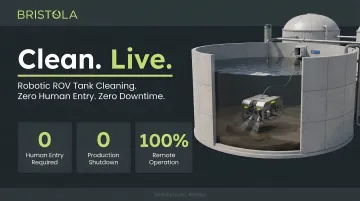
That cost gap is where robotic cleaning changes the math. Bristola's zero-human-entry system deploys a submersible ROV through a patented equalization chamber — an airlock-type portal that fits any manhole 24 inches in diameter or greater. The ROV enters from the roof via a winch, navigates using sonar, and removes sediment through a flexible hose while the tank stays full and in production.
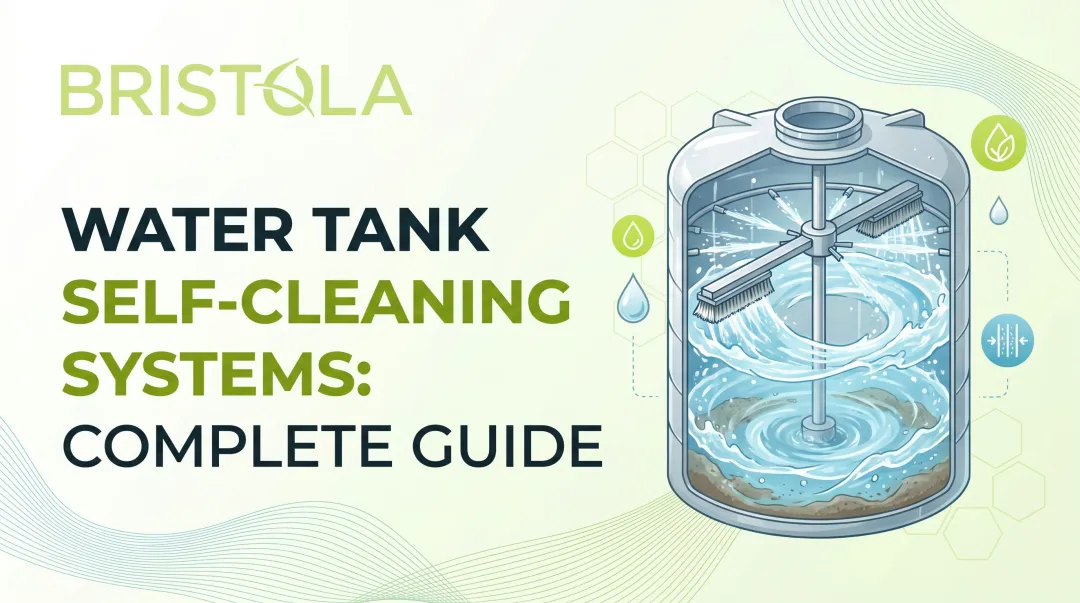
No human entry. No production halt. The liquid in the tank provides dilution for extracted sediment, and the facility continues normal operations throughout.
The system has been deployed across anaerobic digesters, covered lagoons, wastewater facilities, food processing tanks, oil and gas refineries, and industrial storage on multiple continents.
One example: a 1.2 million gallon EnviTec digester in New York had seen biogas production drop 20% and volatile solids reduction fall below 25%. Bristola completed a full cleanout as part of a $411,000 project that also covered roof and mixer replacement. Clients report annualized cleaning costs of approximately $170,000 with Bristola's system versus $250,000 using conventional methods — an $80,000 annual saving per tank.
Tip 3: Manage Corrosion Proactively
Corrosion is the leading cause of premature industrial tank failure. Steel tanks exposed to moisture, chemicals, or biological byproducts are particularly vulnerable, and the damage compounds silently — until a coating fails, a weld cracks, or a bottom plate gives way.
Core corrosion prevention measures:
- Internal linings and external coatings — apply and reapply on schedule; don't wait for visible failure
- Cathodic protection (CP) — required for buried or partially submerged steel tanks per API 651; monitor CP systems regularly to confirm they're performing
- Material selection — fiberglass and stainless steel tanks offer better chemical resistance in aggressive service environments; match tank material to the stored contents
Coating maintenance is structural risk management, not aesthetics. Peeling paint, bubbling epoxy, or chalking liners are not cosmetic issues — they indicate that moisture has already begun attacking the substrate beneath. Address them immediately.
The AMPP corrosion reference for oil and gas production puts sector-specific corrosion costs at $1.37 billion per year in the US alone, covering surface facilities, downhole tubing, and capital expenditure. Corrosion programs that combine coatings, CP, and inspection monitoring can prevent a substantial portion of those losses.
Tip 4: Inspect and Maintain Venting and Pressure Systems
Tanks storing volatile, pressurized, or chemically reactive contents depend on properly functioning venting systems to maintain safe operating pressure. When those systems fail, the consequences range from structural deformation to hazardous leaks — and in documented incidents, full facility fires.
The 2019 ITC Deer Park tank farm fire — which burned for three days and destroyed 15 tanks, causing over $150 million in property damage — shows exactly what inadequate pressure management and detection systems can cost. The CSB's final report cited absent gas detection and design that allowed fire to spread as key contributing factors.
Components requiring regular inspection and maintenance:
- Pressure relief valves and emergency venting systems (governed by API 2000 and OSHA 29 CFR 1910.106)
- Vent valves for blockages, corrosion, or mechanical failure
- Level gauges and sensors for accuracy and calibration drift
- Access hatches and seals for wear or degradation
- Connected piping and fittings at all connection points for early leak signs
Set inspection intervals based on stored contents and operating pressure. For tanks storing flammable liquids, OSHA 1910.106 establishes minimum emergency venting requirements that must be met regardless of facility type.
Tip 5: Maintain Accurate Maintenance Records
A structured maintenance log does two things simultaneously: it satisfies regulatory requirements and functions as an early warning system.
When inspection dates, findings, cleaning history, repair work, and chemical exposure timelines are tracked consistently, patterns emerge. Recurring coating failures in the same location, progressive corrosion readings, repeated valve interventions — these are signals that trend-based review catches before they escalate.
EPA SPCC regulations (40 CFR Part 112) require facilities above threshold storage capacities to maintain a written SPCC Plan and retain inspection and testing records for a minimum of three years. Aligning your records with API 653 and SPCC requirements isn't optional for covered facilities — it's the legal baseline.
Effective records should include:
- Inspection reports with photographs and dated findings
- Service dates, contractor details, and scope of work performed
- Contents and chemical exposure history over time
- Anomalies identified and corrective actions taken
Digital asset management systems and CMMS platforms improve accessibility, reduce documentation gaps, and simplify audit preparation compared to paper logs. For facilities managing multiple tanks across a site, centralized digital records are the practical choice.
Warning Signs That Require Immediate Attention
Don't wait for scheduled inspections if you observe any of the following.
Physical warning signs:
- Visible rust or pitting on interior or exterior surfaces
- Peeling or bubbling coatings — these indicate moisture intrusion beneath the surface, not just surface damage
- Delamination in fiberglass tanks
- Weld cracks or joint separation
- Chalking epoxy liners, which signal coating degradation and adhesion failure
Operational warning signs:
- Unexplained drops in tank capacity or output (particularly in biogas digesters, where sludge accumulation directly reduces gas yield)
- Unusual odors or discoloration in stored product
- Pressure fluctuations or repeated triggering of relief valves
- Foundation settlement or visible structural deformation
Any structural anomaly, widespread corrosion, repeated coating failure, or evidence of foundation movement warrants a full professional inspection before the tank returns to service. Trained staff can handle routine monitoring, but structural damage assessment requires a qualified inspector.
Industrial Tank Maintenance Schedule
Maintenance frequency depends on tank type, stored contents, operating environment, and usage intensity. A continuously loaded biogas digester needs more attention than a seasonal storage tank. Use the table below as a starting framework, then adjust based on your corrosion rate data, inspection findings, and API 653 RBI assessment.
| Frequency | Tasks |
|---|---|
| Daily / Per Shift | Visual walkaround — check for visible leaks, pressure anomalies, surface changes |
| Monthly | Inspect vents, valves, gauges, and external coating condition |
| Quarterly | Internal and external inspection for corrosion, sediment levels, and fitting integrity |
| Annually | Professional inspection, full interior cleaning, coating condition assessment, records review |
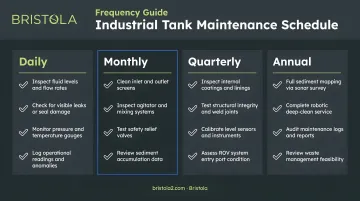
One thing worth noting for facilities using Bristola's robotic cleaning system: the cleaning component of this schedule runs without a downtime window. The ROV enters and cleans while the tank stays in production, so scheduled outages can focus entirely on structural and mechanical inspection rather than working around production halts.
Conclusion
A structured maintenance program is what separates facilities that run reliably for decades from those that face costly surprises. Proactive care protects capital investment, prevents unplanned downtime, maintains regulatory compliance, and keeps operations safe across every sector that depends on liquid storage.
The right strategy balances cost, reliability, and operational continuity. Each of the five maintenance disciplines covered here addresses a distinct failure pathway:
- Routine inspections catch deterioration before it becomes damage
- Cleaning protocols preserve internal condition and prevent buildup
- Corrosion management protects the substrate from the inside out
- Venting systems prevent pressure-related failures before they occur
- Accurate records make the entire program auditable and repeatable
Companies like Bristola have taken this further by deploying robotic cleaning systems that service tanks while they remain in active operation — eliminating the downtime traditionally required for cleaning. It's a practical example of how maintenance execution continues to evolve. Whatever methods a facility uses, the principle holds: scheduled action is always cheaper than unscheduled failure.
Frequently Asked Questions
What is industrial tank maintenance?
Industrial tank maintenance covers all scheduled and corrective work that keeps a tank structurally sound, operationally reliable, and compliant. That includes inspections, cleaning, coating upkeep, valve servicing, and recordkeeping to satisfy both operational and regulatory requirements.
What are common tank maintenance tasks in industrial facilities?
The most frequent tasks include routine visual inspections, internal and external cleaning, corrosion and coating management, pressure and venting system checks, and maintaining detailed service logs. Frequency and scope vary based on tank type, stored contents, and applicable standards.
What does an industrial maintenance technician do?
An industrial maintenance technician performs scheduled inspections and identifies early signs of wear or corrosion. They carry out repairs, coordinate specialist services, and maintain records to keep tanks compliant and operational between formal professional assessments.
How often should industrial tanks be inspected?
Visual walkarounds should occur daily or per shift. Formal inspections should happen at least semi-annually, with full professional assessments annually or every other year depending on usage intensity, stored contents, and corrosion rate data per API 653 guidance.
What causes industrial tanks to fail prematurely?
The most common causes are neglected corrosion management, deferred cleaning that allows sludge and sediment to accumulate, coating failure that exposes base metal to chemical attack, and improper venting that builds structural stress over time.
Can industrial tanks be cleaned without taking them offline?
Yes. Bristola's zero-human-entry robotic cleaning system is built to clean liquid storage facilities while they remain in active operation. A submersible ROV enters through the patented equalization chamber in the tank roof — no production halt, no draining, no scheduled downtime window required.