According to EPA AgSTAR's June 2024 snapshot, the US has 400 operating manure-based digestion systems, with 107 classified as plug flow. On dairy farms specifically, plug-flow systems run at about 91 sites, processing manure from more than 260,000 dairy cattle.
This article breaks down how plug flow digesters work, where they outperform (and fall short of) other digester types, and why routine tank maintenance determines whether these systems keep producing biogas at full capacity for decades.
Key Takeaways
- Plug flow digesters move high-solids feedstock through a horizontal tank with minimal mixing
- Best suited for scraped (not flushed) manure with 10-20%+ total solids
- More energy-efficient than CSTR systems, but less flexible on feedstock type
- Regular cleaning prevents scum buildup and protects long-term gas output
What Is a Plug Flow Anaerobic Digester?
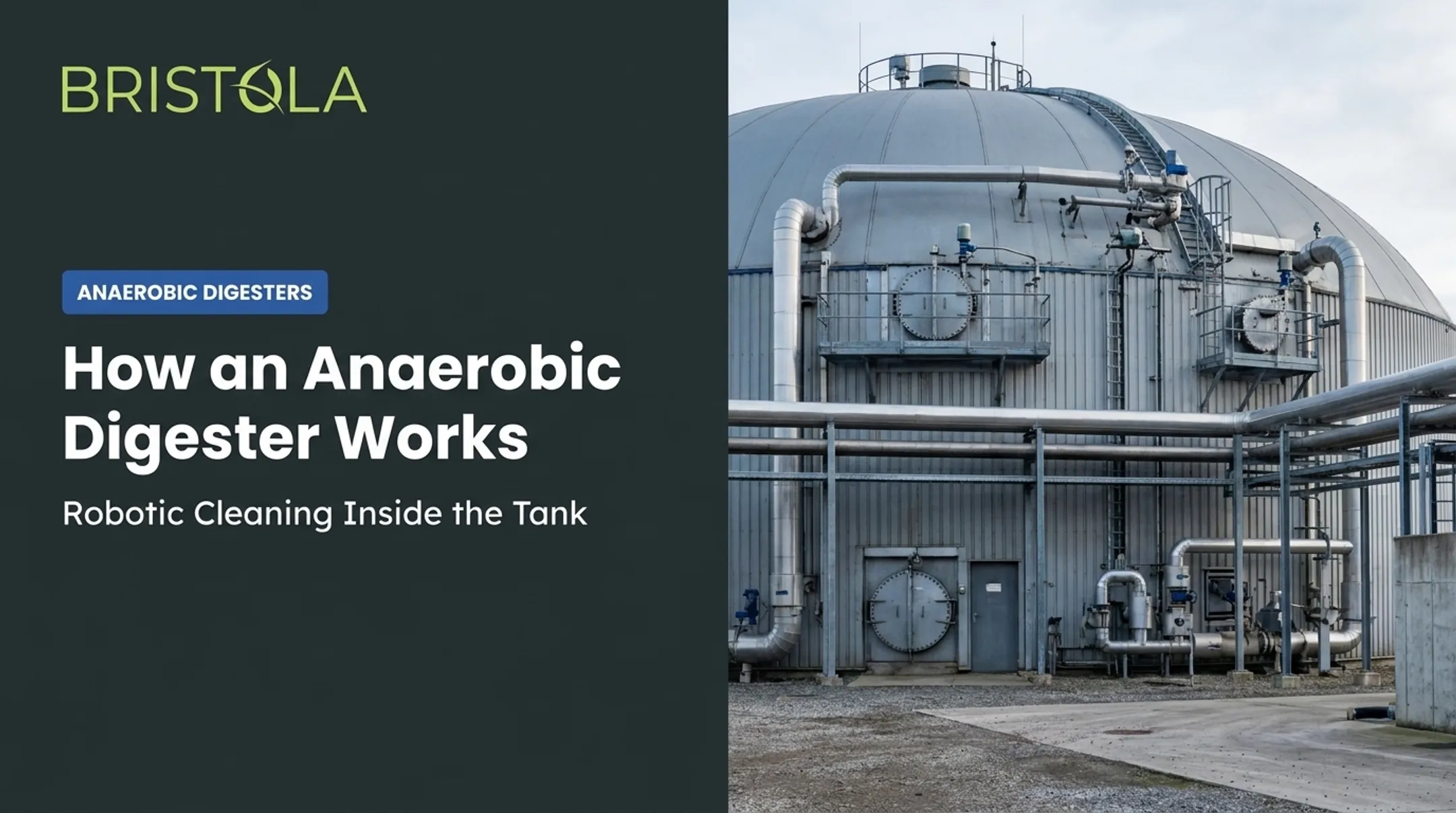
A plug flow digester is a long, narrow, horizontal (or gently sloped) tank—typically five times longer than it is wide. Feedstock enters at one end and pushes existing material toward the outlet, like toothpaste moving through a tube.
This "plug-like" motion is the defining feature. Thick manure advances as a cohesive mass with little back-mixing, unlike complete-mix (CSTR) systems that blend contents continuously.

Feedstock and Design Requirements
Plug flow systems need specific conditions to function correctly:
- Manure collected by scraping, not flushing (flushing dilutes solids too much)
- Total solids content of 10-20%
- Hydraulic retention time of 15-20 days
- No mechanical agitation (lower energy use than CSTR systems)
Construction typically involves a concrete-lined trench or tank, covered with a gas-tight membrane to capture biogas as it rises. A well-documented example is the plug-flow digester at Emerling Farm in Perry, New York. It has long served as a reference site for Cornell University research on dairy manure digestion.
The Four Stages of Anaerobic Digestion in Plug Flow Systems
Because plug flow tanks have minimal back-mixing, digestion happens in sequential zones along the length of the tank rather than simultaneously throughout, as it does in CSTR systems.
- Hydrolysis — Near the inlet, enzymes break down complex organics like cellulose and starch into simpler sugars and amino acids.
- Acidogenesis — Bacteria convert those hydrolyzed compounds into volatile fatty acids, still close to the inlet zone.
- Acetogenesis — Further along the tank, bacteria convert intermediate products into acetic acid, hydrogen, and CO₂.
- Methanogenesis — Near the outlet, methanogens convert acetate and hydrogen into methane-rich biogas.

That zoned progression gives plug flow systems more predictable retention time control, though they offer less real-time process flexibility than a mixed tank.
Plug Flow vs. Other Digester Types
Choosing between plug flow, CSTR, and covered lagoon designs comes down to feedstock consistency, budget, and how much control you need over the process.
Plug flow vs. CSTR: CSTR (complete mix) digesters handle more variable and diluted feedstock streams and offer tighter process control through continuous mixing. That control comes at a cost—more energy use and higher capital investment for mixing equipment.
Plug flow vs. covered lagoons: Lagoons are cheaper and simpler to build, but they're at the mercy of ambient temperature. Research from Oklahoma State University shows methane production declines when lagoon temperatures fall below 20°C (68°F). Plug flow systems, by contrast, maintain more stable output through controlled retention time.
| Feature | Plug Flow | CSTR | Covered Lagoon |
|---|---|---|---|
| Mixing required | Minimal/none | Continuous | None |
| Feedstock TS% | 10-20% | Lower TS, more variable | Low TS |
| Energy use | Lower | Higher | Lowest |
| Capital cost | Moderate | Higher | Lowest |
| Best-fit application | Scraped dairy manure | Mixed/variable waste streams | Simple, low-cost storage + capture |

Advantages and Limitations of Plug Flow Digesters
Advantages:
- Lower energy use—no mechanical mixers to power
- Simpler mechanical design with fewer parts to maintain and less need for specialized labor
- Lower capital and operating costs than fully mixed systems, especially on dairy farms with consistent scrape manure
Limitations:
- Requires consistent, high-solids feedstock; inconsistent manure composition can cause channeling, blockages, or incomplete digestion
- Less feedstock flexibility than a CSTR: a poor fit when waste streams vary in composition or dilution
- Without regular maintenance, solids settle and scum layers form, creating dead zones that shrink active digester volume and cut biogas yield over time
Settled solids and scum are what quietly erode performance. As dead zones grow, active volume shrinks and gas output falls—even in well-designed systems. Scheduled cleaning restores working volume and yield without a full drain-down or extended shutdown.
Why Digester Maintenance and Cleaning Matter for Long-Term Performance
Even a properly engineered plug flow digester loses efficiency over time. Heavy solids settle to the tank floor. Floating scum and crust layers build up at the surface. Both processes shrink the effective working volume of the tank, and gas output drops as a result.
Traditional cleaning means draining the tank and sending workers inside for confined-space entry—a process that creates real safety exposure and shuts down production for days or weeks.
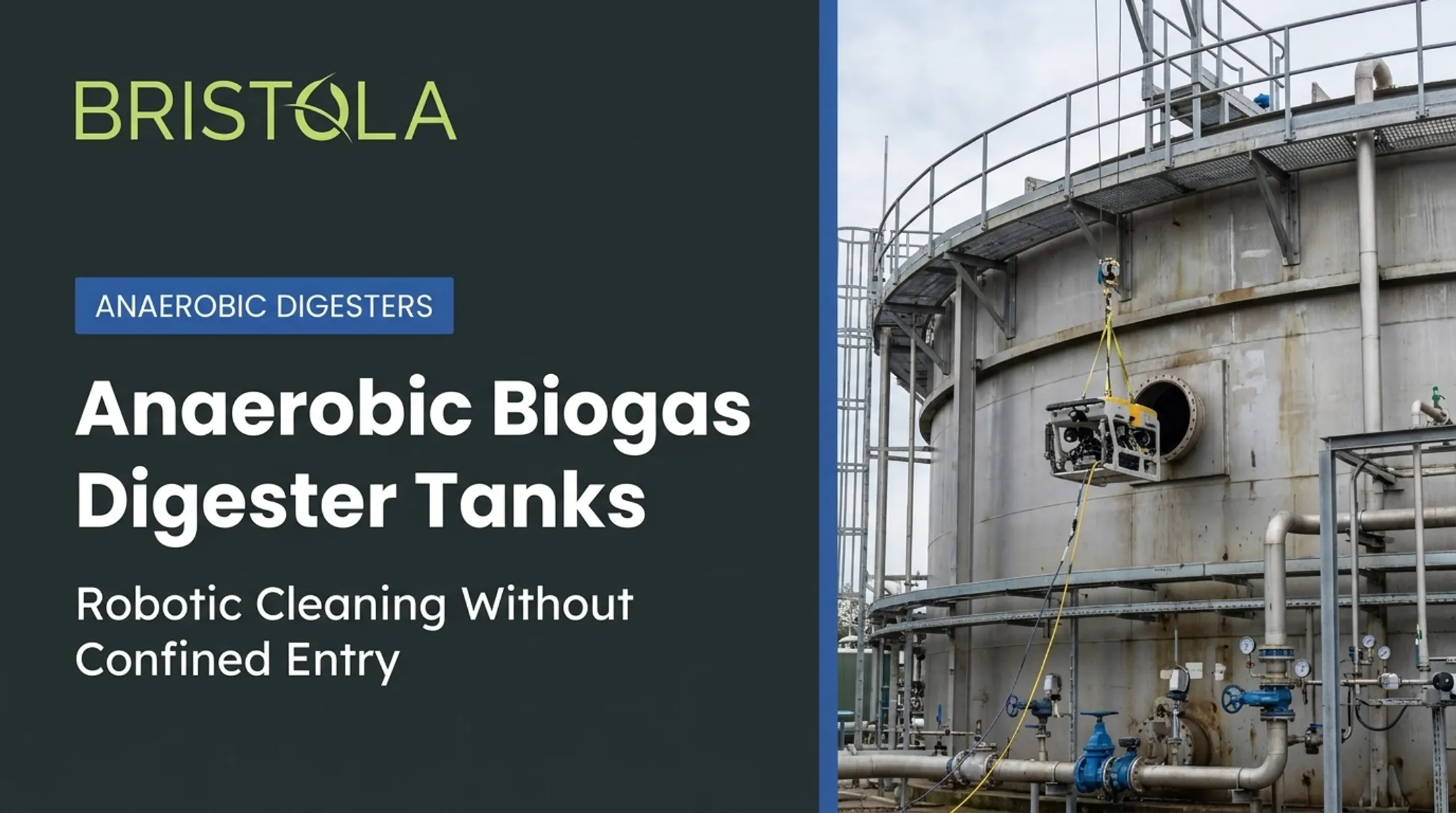
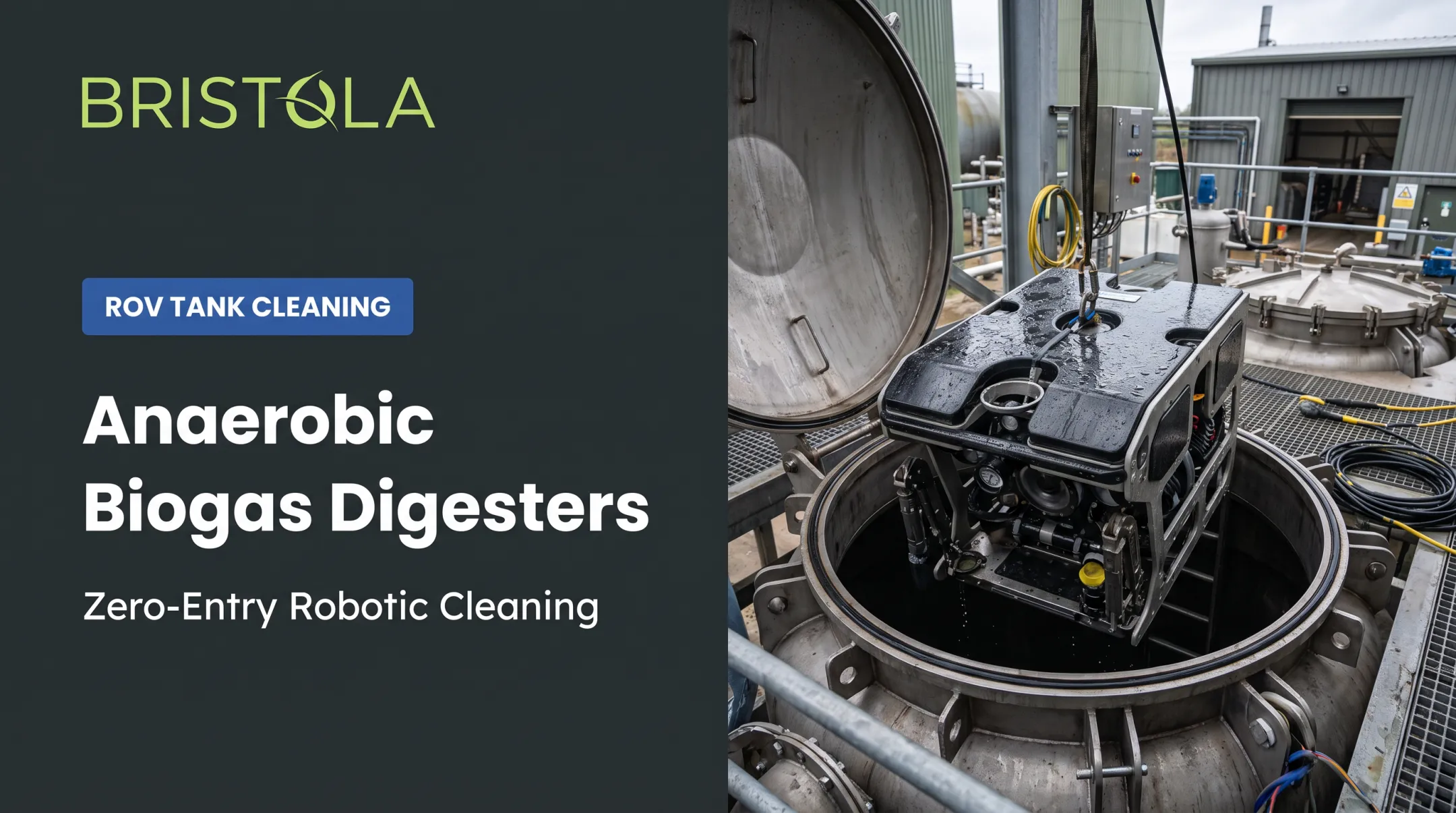
Bristola built a zero-human-entry robotic tank cleaning system specifically to solve this problem for anaerobic digesters, covered lagoons, and biogas tanks. The system works in four steps:
- A submersible ROV enters the digester through a patented equalization-chamber entry portal installed at a manhole opening (24 inches or larger)
- A winch system guides the robot through valve access points down to the tank floor
- Accumulated sludge and solids travel out through a flexible hose to a processing destination
- The digester stays full and operational throughout the process

Operators keep the digester online and avoid confined-space entry entirely.
In one documented project, a 1.2-million-gallon EnviTec digester in New York hadn't been cleaned in more than four years. Volatile-solids reduction had fallen below 25%, the facility couldn't hold its 95-101°F mesophilic range in colder months, and daily biogas output had dropped by 20%.
Bristola completed a 12-day cleanout—wall and heat-loop cleaning, corrosion repair, roof replacement, and mixer reinstallation—then recommissioned the tank.

Best Practices for Operating a Plug Flow Digester
Three operating habits keep plug flow digesters stable and productive:
- Feedstock consistency: Keep total solids in the 10-20% range and avoid flushing systems that dilute manure below that threshold.
- Retention time and loading rate: Hold hydraulic retention time in the 15-20 day window to limit underperformance and process upsets.
- Proactive cleaning: Waiting years between cleanings, as in the EnviTec case above, lets solids and scum shrink active tank volume.
Robotic cleaning on a set schedule removes buildup without stopping biogas production. That approach is far more practical than the drain-and-enter default most operators still use.
Frequently Asked Questions
What is a plug flow anaerobic digester?
A long, narrow tank that processes high-solids manure in a plug-like flow with minimal mixing. Livestock farms—particularly dairies that collect manure by scraping—use them most often.
What are the four stages of anaerobic digestion?
Hydrolysis, acidogenesis, acetogenesis, and methanogenesis. In plug flow systems, these stages occur sequentially along the tank's length rather than all at once throughout the tank.
How much total solids does a plug flow digester need?
Typically 10-20% total solids, with some operators targeting the higher end of that range for peak performance. Solids below 10% can cause stratification and sedimentation problems.
How is a plug flow digester different from a CSTR digester?
CSTR digesters use continuous mechanical mixing and handle varied, more diluted feedstock. Plug flow relies on minimal mixing and requires consistent, high-solids manure.
How often should an anaerobic digester be cleaned?
Cleaning frequency depends on feedstock composition and how quickly solids and scum accumulate. Non-entry robotic systems let operators clean on a regular schedule without stopping biogas production.
What is the retention time for a plug flow digester?
The typical hydraulic retention time is 15-20 days, though some designs run 20-30 days depending on feedstock and tank sizing.