Digesters get pitched as a climate win. But many farmers and stakeholders still aren't clear on how the process actually works, what it costs, or where the environmental tradeoffs lie. This guide breaks down the mechanics, the economics, and the maintenance realities that determine whether a digester delivers on its promise.
TL;DR
- Digesters break down manure in oxygen-free tanks and capture methane before it reaches the atmosphere
- Four core stages: manure collection, digestion, gas capture, and byproduct use
- Costs run from $1.1 million to $5 million+, usually requiring grants or developer partnerships
- Best fit for large operations—the "2,500-cow rule" is a guide, not a hard cutoff
- Storage integrity and tank maintenance matter as much as digestion itself
What Is a Dairy Digester?
A dairy digester is a closed, oxygen-free system where microorganisms break down manure and organic waste, producing biogas as a byproduct. It exists to solve one specific problem: open manure lagoons release methane straight into the atmosphere, and dairy-cattle manure management generated an estimated 33.4 million metric tons of CO2-equivalent emissions in 2022, according to the EPA's Greenhouse Gas Inventory.
A digester differs from a wastewater treatment plant. Covered lagoons are one common design among several, not the whole category. Revenue is also far from automatic: it depends heavily on gas prices, carbon credits, and grant support.
Three main digester types dominate U.S. dairies:
- Covered lagoon — a flexible cover traps methane over a liquid manure lagoon; works best for slurry with low bedding content
- Plug-flow — suited to scraped manure systems with higher solids content
- Complete mix — an enclosed, heated tank, ideal when manure is diluted with wastewater from milking centers
Manure consistency and herd size largely determine which type fits a given farm.

How Does a Dairy Digester Work?
The process follows a defined sequence: collection, digestion, gas capture, and byproduct output. Each stage has its own operational demands.
Manure Collection & Loading
Farms move manure from barns to the digester through flush systems (using large volumes of water) or scrape systems. Operators load continuously or on a schedule based on herd size and manure volume.
Solids content is the real bottleneck here. Manure that's too thick or too diluted throws off digester performance, which is why the collection method has to match the digester type from day one.
Anaerobic Digestion (Core Operation)
Inside the tank, bacteria break down organic matter without oxygen over a period of days to weeks, producing biogas — a mix of roughly 60% methane and 40% CO2, per EPA's 2015 report.
Two variables control performance:
- Temperature — mesophilic systems run 86–100°F with retention times of 12–25 days; thermophilic systems run hotter (122–140°F) with shorter retention of 10–12 days
- Retention time — USDA NRCS sets minimums of 17 days for complete-mix systems and 20 days for plug-flow systems
Consistent tank conditions and thorough mixing improve gas yield and limit sediment buildup — a problem that compounds over time if left unaddressed.

Gas Capture & Processing
Operators scrub captured biogas of water vapor, CO2, and hydrogen sulfide, either for on-site electricity generation or upgrading into renewable natural gas (RNG) for pipeline injection.
This stage demands constant monitoring of:
- Gas pressure
- Gas composition
- Moisture levels
Equipment failures here are expensive. Sediment and solids buildup in tanks and covered lagoons is a recurring operational challenge across the industry.
One documented case makes the stakes clear: a 1.2-million-gallon digester that went uncleaned for more than four years saw its volatile-solids reduction fall below 25% and daily biogas production drop by 20%. It also couldn't maintain its mesophilic temperature range during colder months.
Output & Byproducts
The end products are biogas (for energy) and digestate — a nutrient-rich material typically separated into liquid and solid fractions. The liquid fraction usually gets land-applied as fertilizer; solids often become cow bedding or compost.
That loop cuts fertilizer and bedding purchases. When the digester runs clean and steady, both energy yield and digestate quality hold — which is what keeps the economics and the emissions math working.
Costs, Funding & Who Digesters Work Best For
Costs vary widely by digester type and project scope. University-extension data on California projects puts average costs at:
- $1.1 million for lagoon systems
- $1.5 million for plug-flow systems
- $4.38 million for full RNG upgrade projects
A separate 2026 peer-reviewed survey of 64 farms across 11 states found median total investment in the $1,000–$1,999 per cow range, with most annual net digester revenue below $150 per cow. In that same survey, 79% of respondents said they wouldn't have built without cost-share funding.

Who typically builds one
That funding gap is why third-party developer partnerships have been the dominant model since 2017. A developer finances, builds, and operates the digester in exchange for a share of energy revenue, which shifts capital risk and maintenance off the farm.
Who digesters work best for
Digesters make the most financial sense for larger operations, but the often-cited "2,500-cow threshold" isn't a hard rule. A 2025 Cornell analysis found covered-lagoon systems viable for herds as small as 600–2,800 cows, with breakeven carbon-credit prices from $15 to over $80 per metric ton depending on herd size.
In practice, fit usually looks like this:
- Larger dairies that can support lagoon, plug-flow, or RNG upgrade economics
- Farms using developer partnerships to avoid carrying full build and O&M cost
- Operations with access to cost-share or strong carbon-credit pricing
- Smaller herds that lean on cost-share programs or alternative manure management instead of a full digester build
Environmental and Operational Considerations
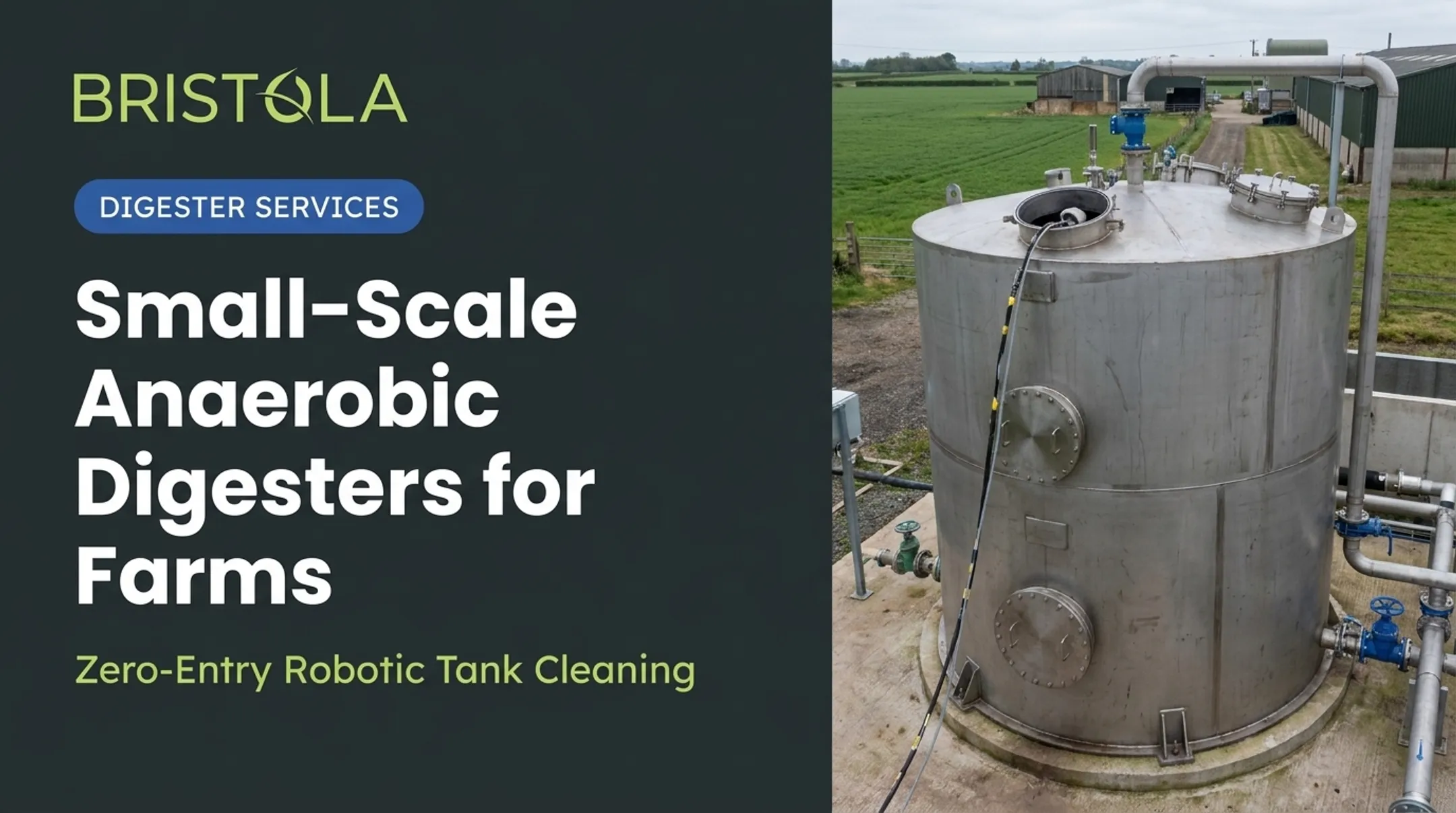
The debate isn't one-sided. Proponents point to substantial methane reduction; critics raise concerns about ammonia emissions, groundwater nitrates, and digesters supporting further consolidation of large-scale dairy operations. A 2023 peer-reviewed review of California dairies found methane reductions of 25% for AD alone and up to 68% when combined with solid-liquid separation. Combined systems did not further cut total greenhouse gases, because increased nitrous oxide from stored solids offset some of the gain. Odor reduction is real but not total. Ammonia emissions can increase downstream without proper controls such as covers or rapid land incorporation. Those environmental trade-offs put equal weight on day-to-day operations. Maintaining tank and lagoon integrity is where much of the real-world risk sits. Sediment and sludge left unmanaged compromise structural integrity in covered lagoons and drag down biogas output in digesters. Traditional cleaning meant draining the tank, removing covers, and sending workers into confined spaces. That approach triggers OSHA confined-space requirements and real safety exposure. Facilities across the AD and RNG space are shifting toward zero-entry robotic cleaning as a result. Bristola's submersible ROV system enters through a patented equalization-chamber portal compatible with manholes 24 inches or larger, without draining the tank, removing the cover, or halting production. In one documented case, a 1.2-million-gallon EnviTec digester left untouched for four years was cleaned, had mixers replaced, and received corrosion remediation in 12 days, with contents moved only to an adjacent holding lagoon. What operators gain:
- No full production halt or cover removal during cleanout
- No confined-space entry for workers
- Less gradual efficiency loss from deferred sediment buildup The practical goal is simple: avoid downtime, confined-space risk, and the output drop that comes with deferred maintenance.
Conclusion
Dairy digesters run on a defined biological and mechanical sequence — manure loading, anaerobic breakdown, gas capture, and byproduct reuse. Understanding each link in that chain matters, because performance at any single stage (retention time, mixing, sediment control) affects gas output and profitability downstream.
For farms weighing an investment, the decision includes how you will maintain and monitor the system—sediment control, mixing, and routine checks—so the digester holds its designed gas output for the decades it is expected to run.
Frequently Asked Questions
How much does a methane digester cost?
Costs typically range from $1.1 million for lagoon systems to $4.5 million or more for full RNG upgrade projects. Most farms rely on grants, developer partnerships, or state incentive programs like California's DDRDP to make the economics work.
What is a dairy digester?
A dairy digester is a closed tank or covered lagoon where bacteria break down manure without oxygen, producing biogas and nutrient-rich digestate. The biogas can generate electricity or be upgraded to pipeline-quality renewable natural gas.
Are anaerobic digesters smelly?
Digesters generally reduce odor compared to open lagoons since digestion breaks down odor-causing compounds. They don't eliminate odor entirely, and ammonia emissions can increase during storage and land application without proper controls.
How long does the anaerobic digestion process take?
Retention time typically ranges from 5 to 28 days, depending on digester type and temperature. Thermophilic systems run faster (10–12 days) while mesophilic systems take longer (12–25 days).
What happens to the leftover material after digestion?
The digestate is usually separated into a liquid fraction, applied as fertilizer, and a solid fraction, used for cow bedding or compost. This reduces the farm's need to purchase outside fertilizer or bedding material.
Do all dairy farms use digesters?
No. Digesters are mainly feasible for larger operations due to capital costs, though some farms with 600+ cows make the economics work with grant support. Farms without digesters typically rely on lagoon storage and land application.