Silt, organic muck, and runoff-borne debris settle on pond bottoms continuously, gradually reducing depth, cutting storage capacity, and triggering water quality problems that compound over time. According to peer-reviewed research, agricultural lakes accumulate sediment at rates between 0.31 and 1.17 cm per year — and stormwater ponds often accumulate faster.
Choosing the wrong removal method wastes money, causes unnecessary downtime, and can damage the ecosystem or facility you're trying to protect. An HOA pond manager, a stormwater engineer, and an industrial lagoon operator face completely different constraints — and the right answer for each looks nothing alike.
This guide breaks down every major sediment removal option, the factors that determine the best fit, and why industrial operators with covered lagoons or digesters may need a fundamentally different approach altogether.
Key Takeaways
- Sediment removal is unavoidable — the goal is matching the method to your pond's size, sediment type, access constraints, and operational requirements
- Mechanical dredging suits smaller ponds with dense sediment; hydraulic dredging handles larger, deeper water bodies
- Hydro-raking, aeration, beneficial bacteria, and bio-dredging can delay or reduce full dredging in ornamental and stormwater ponds
- Covered lagoons and anaerobic digesters require robotic cleaning systems — conventional dredging forces costly production shutdowns
- Factor in permitting, sediment testing, disposal logistics, and maintenance costs before choosing any method
What Is Pond Sediment Removal and Why Does It Matter?
Sedimentation is the natural process by which silt, sand, organic debris, and runoff-borne materials settle at the bottom of a pond or lagoon. Over time, this buildup reduces effective water depth, cuts storage volume, and feeds the nutrient cycles behind algae blooms, oxygen depletion, and aquatic die-off.
Left unmanaged, a pond ages rapidly. Shallow water heats faster and stagnates — conditions the EPA directly links to dissolved oxygen depletion and fish kills. In industrial lagoons, sediment reduces active processing volume and impairs retention time, cutting output efficiency.
Warning Signs a Pond Needs Intervention
Watch for these indicators that sediment has reached a critical threshold:
- Persistent shallow water that doesn't improve after rain
- Murky or discolored water that won't clear
- Algae mats and foul odors
- Declining fish or wildlife populations
- Drainage issues or localized flooding
- For industrial facilities: reduced output or processing performance
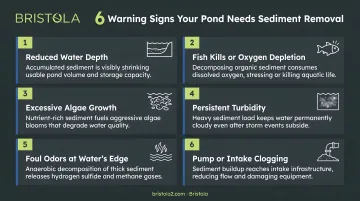
Research on internal phosphorus loading confirms that sediments actively release phosphorus under low-oxygen conditions — meaning blooms can persist even after you've reduced external nutrient inputs. That's why reducing nutrient runoff alone rarely solves the problem. Removing the accumulated sediment is the starting point — which means understanding which removal method fits your pond's size, depth, and operational constraints.
A Breakdown of Pond Sediment Removal Options
Each method differs in invasiveness, cost, time, equipment requirements, and suitability. Here's what each one actually does — and when it's the right tool for the job.
Mechanical Dredging
Mechanical dredging uses land-based or barge-mounted heavy equipment — excavators, draglines, clamshell buckets — to physically scoop sediment from the pond bottom. It's best suited for small to mid-sized ponds with firm bank access and densely compacted sediment.
Typical costs: Public planning benchmarks list dredging at approximately $10–$13 per cubic yard, with mobilization ranging from $1,000 to $10,000 depending on site access and equipment requirements.
Trade-offs to consider:
- Efficient for thick sediment removal within tight timelines
- Usually requires the pond to be partially or fully drained
- Can disturb shorelines, aquatic habitat, and generate uneven results
- Generates significant spoil volume requiring off-site disposal logistics
Mechanical dredging works well when you need fast, thorough removal and your site can accommodate heavy equipment without ecological or community impact concerns.
Hydraulic (Suction) Dredging
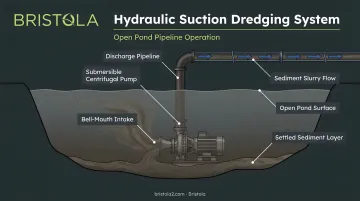
Hydraulic dredging uses suction pumps to vacuum sediment as a slurry through flexible pipelines to a dewatering area — typically geotextile tubes or sediment basins. It's better suited for larger, deeper ponds with fine silt or organic muck, and sites where preserving the aquatic environment matters.
A real-world example: an Iowa settling pond was dredged hydraulically at 650 gallons per minute through a 6-inch pipeline, filling three geotextile tubes and handling approximately 4,000 cubic yards of material with polymer conditioning. The filtrate returned to the pond, cutting off-site haul volume.
Key advantages over mechanical dredging:
- Pond often remains operational during the process
- Higher precision and lower surface disruption
- Geotextile dewatering consolidates solids on-site before hauling, cutting disposal costs
- Capable throughput up to 600 cubic yards per hour on appropriate material
The setup takes longer and requires chemical conditioning for fine organic sediments, but long-term disposal costs are typically lower.
Hydro-Raking
Hydro-raking uses a floating barge-mounted backhoe to scoop muck, aquatic vegetation, and debris from shallow zones. It's gentler and significantly less expensive than full dredging — practical for routine maintenance or targeted problem areas like clogged inlets and shoreline buildup.
What it can't do: hydro-raking cannot reset a pond the way dredging can. It removes surface-level accumulation without addressing deeper compacted layers. Use it as a maintenance tool between dredging cycles, particularly for ornamental HOA ponds and smaller stormwater ponds where sediment loading is light.
Biological and Chemical Methods
These approaches work on a fundamentally different timeline than physical removal methods.
Aeration (surface aerators, diffusers, fountains) boosts dissolved oxygen, activates beneficial bacteria, and slows the organic decay cycle that drives sediment buildup. Used consistently, it extends the interval between dredging cycles — but it doesn't remove what's already there.
Beneficial bacteria introduced directly to the pond bottom digest muck gradually over months. Manufacturer-cited case studies report reductions of 10–15 inches of muck within approximately 12 months when combining inversion aeration with biological activators — though results are site-specific and should be verified with pre/post sediment measurements.
Bio-dredging applies targeted microbial inoculants to break down organic sediment without physical disturbance. Well-suited for environmentally sensitive ponds or large water bodies with limited mechanical access, though results are slower and less predictable than physical methods.
These biological approaches work best as part of a broader maintenance program, not as standalone solutions when sediment accumulation is already severe.
Robotic and Vacuum-Based Systems for Industrial Ponds and Lagoons
Conventional dredging methods are designed for open ponds. They are incompatible with covered lagoons, anaerobic digesters, and enclosed industrial liquid storage systems — where draining or entering the vessel creates safety hazards (OSHA 29 CFR 1910.146 permit-required confined space regulations), costly production downtime, and potential compliance exposure.
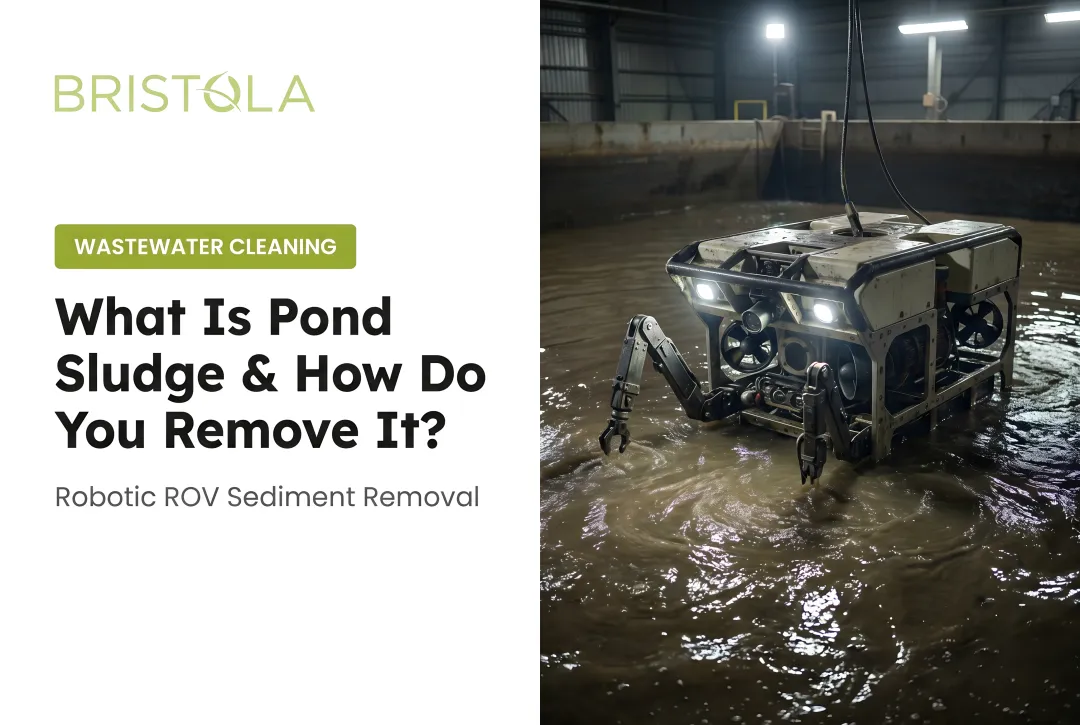
Remote-controlled submersible robotic systems address these challenges directly. They vacuum sludge and sediment while the facility remains fully operational — no human entry, no production shutdown, no temporary storage requirements.
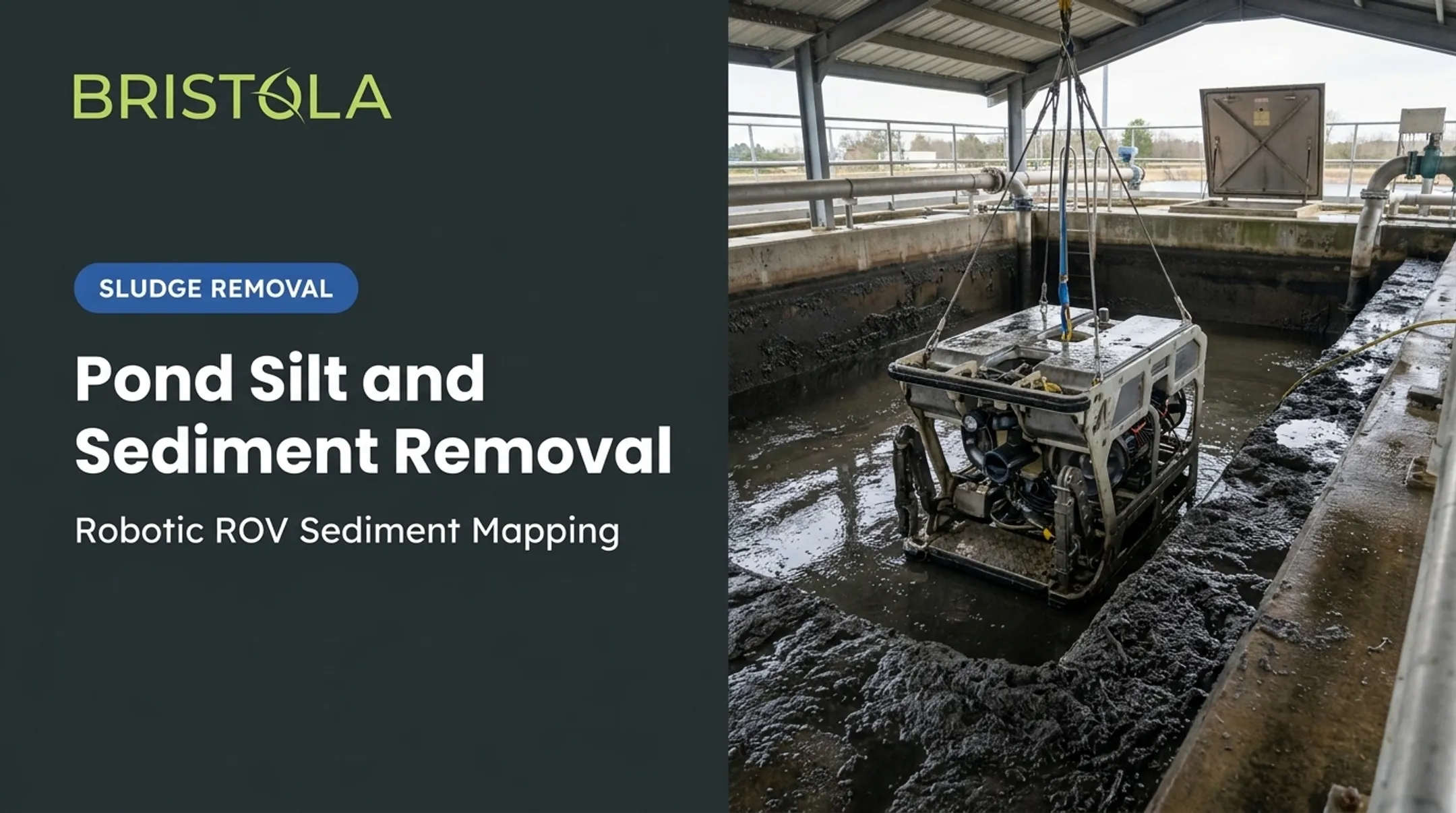
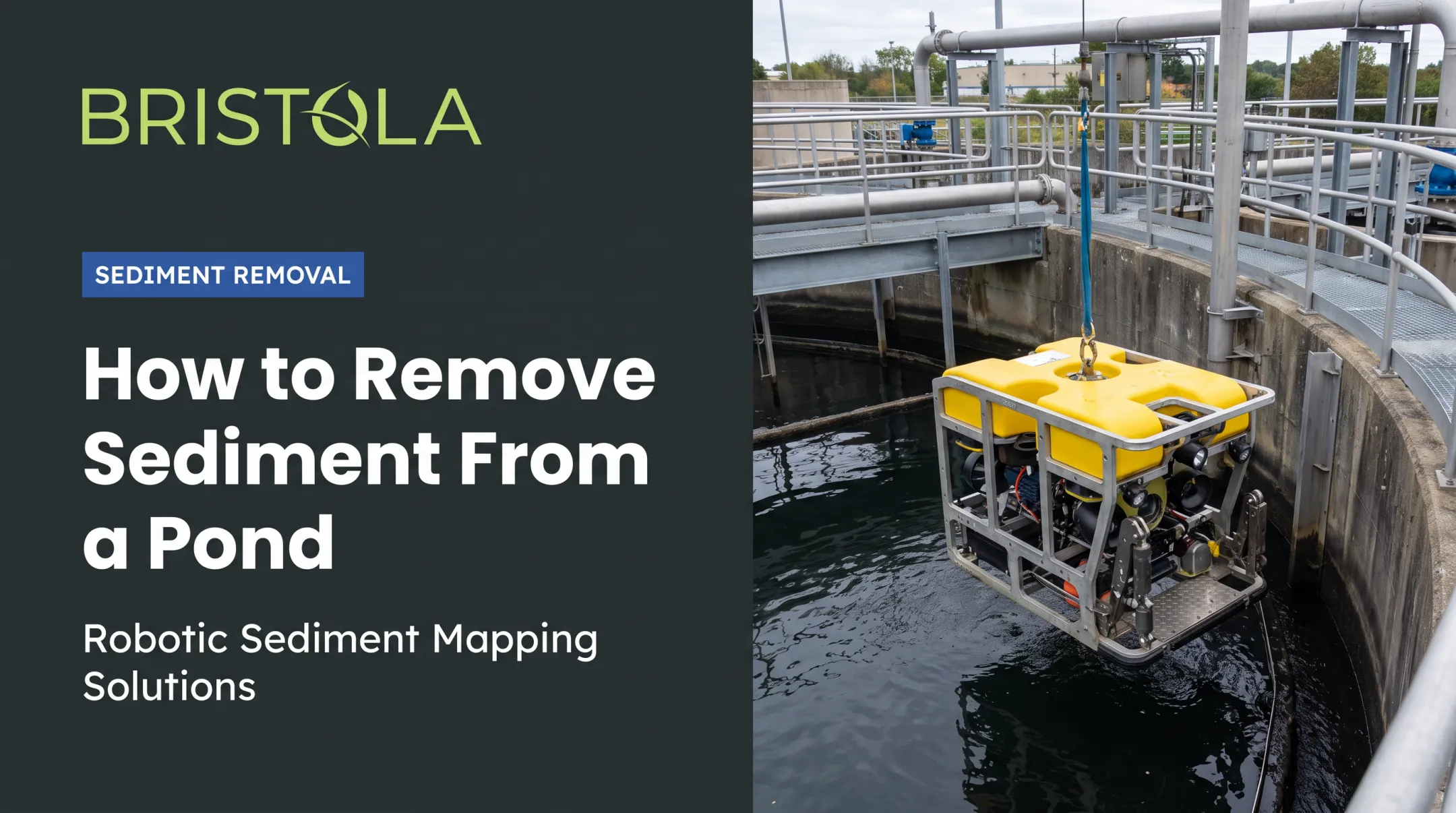
Bristola's Patented Equalization Chamber Entry System was designed specifically for this environment. It functions as an airlock-type mechanism, allowing its submersible ROV to enter tanks or covered lagoons through existing manholes (24 inches in diameter or greater) without draining the facility. The robot enters through the roof or cover while the system stays in production, and removed sludge travels through a flexible hose to the operator's chosen processing point.
For industrial operators running continuous production, cleaning without a shutdown means no lost output, no permitting delays for confined space entry, and no need to source temporary storage for displaced material.
How to Choose the Right Sediment Removal Method
Selecting the right method means connecting your pond's physical and operational characteristics with the strengths and limitations of each approach.
Pond Type and Purpose
The intended function of the pond drives the decision:
| Pond Type | Primary Priority | Best-Fit Methods |
|---|---|---|
| Ornamental / HOA | Minimal disruption, aesthetics | Hydro-raking, biological, hydraulic dredging |
| Stormwater retention | Restored capacity and drainage | Mechanical or hydraulic dredging |
| Industrial lagoon / digester | Zero downtime, safety compliance | Robotic / vacuum-based systems |
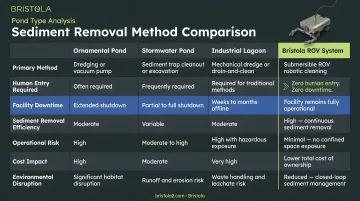
Covered and enclosed industrial ponds cannot use conventional dredging without taking the facility offline. That single constraint eliminates most options from consideration.
Sediment Volume, Type, and Access
Sediment composition determines which equipment will actually work:
- Fine silt and organic muck: Hydraulic dredging or robotic vacuum systems
- Dense, compacted clay: Mechanical excavation
- Organic fractions only: Biological methods
- Industrial slurry in enclosed vessels: Robotic vacuum systems
Incomplete removal from an under-engineered solution is expensive to fix. Conduct depth soundings and core sampling before committing to a method.
Physical access shapes your options too:
- Hydraulic and robotic methods: No dry bank access required
- Mechanical dredging: Needs firm shoreline access or a floating platform
- Sensitive or regulated sites (urban areas, nature reserves, stormwater systems): Low-disturbance methods are typically required
Cost, Timeline, and Downtime
A realistic cost comparison across methods:
- Mechanical dredging: Lower equipment costs, higher disposal costs; faster for dense sediment
- Hydraulic dredging: Higher setup cost, lower long-term disposal cost with on-site geotextile dewatering
- Biological methods: Low upfront cost, slow results; 12+ months for measurable reduction
- Robotic systems: Eliminates downtime cost — often the single largest cost factor for industrial operators
For industrial facilities, method cost should be evaluated against avoided downtime, not just equipment price. Agricultural and biogas digesters typically require sludge removal every 1–2 years; deferring that maintenance or taking extended outages to complete it carries direct production consequences.
Those production consequences make permitting timelines a direct cost factor — not just a compliance checkbox.
Regulatory and Permitting Requirements
Most dredging projects require permits. Key regulatory triggers include:
- CWA Section 404 authorization from the US Army Corps of Engineers for discharge of dredged or fill material into waters of the US
- Section 401 Water Quality Certification from the state or authorized Tribe, with a statutory action window up to one year
- State-specific permits — Minnesota, for example, may require an individual NPDES/SDS permit for dredging activities
Sediment testing is typically required before disposal to classify dredged material. Contamination levels determine where material can be placed — and unexpected results at this stage can change both method selection and total project cost. Build testing time and budget into your plan before committing to a disposal approach.
How Bristola's Robotic Cleaning System Helps Industrial Lagoon Operators
For operators managing covered lagoons, anaerobic digesters, biogas ponds, or industrial liquid storage facilities, conventional pond dredging isn't a practical option. These enclosed systems cannot be safely entered or drained without halting operations, triggering OSHA confined space entry protocols, and bearing the full cost of an unplanned shutdown.
Bristola's technology was built specifically for these environments. Founder Jared Burma started Bristola in 2019 following a near-death experience inside a storage tank — that incident drove him to design a cleaning system where no worker ever has to enter a confined space again. Every feature of the system reflects that original constraint.
How the System Works
Bristola's Submersible Robotic Cleaning System (SRCS) enters tanks and covered lagoons through a Patented Equalization Chamber Entry System — an airlock-type mechanism that adapts to any manhole 24 inches in diameter or larger. The ROV enters through the roof or cover while the facility remains full and in active production. Removed sludge travels through a flexible hose to a processing option of the operator's choice.
For existing covered lagoons, retrofit installation involves modifying a portion of the lagoon berm to accept a prefabricated concrete wall, a sloped area, and a below-liquid-level manhole that accepts the pressure box for ROV deployment. After initial installation, ongoing cleanings require no facility disruption.
Key Operational Benefits
- Facility stays fully operational during cleaning — no production downtime
- Eliminates OSHA 29 CFR 1910.146 confined space entry exposure
- Operates while the vessel remains full; no need to empty the tank
- Full data reporting: evaluates, stores, and reports facility condition and performance data, including sonar-based sediment mapping for non-covered ponds
- Installs on existing infrastructure without facility redesign
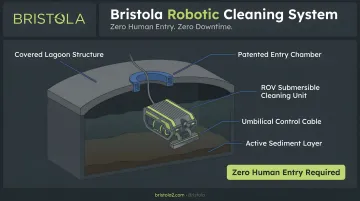
These benefits apply across the industries Bristola serves: anaerobic digestion, wastewater treatment, food processing, pulp and paper, and renewable energy. Active clients operate across the US, Canada, Europe, the Middle East, Australia, and India.
Conclusion
The best sediment removal option isn't the most technically sophisticated one or the most widely marketed — it's the one that fits your specific situation. For ornamental or stormwater ponds, mechanical or hydraulic dredging paired with ongoing biological maintenance covers most scenarios. For industrial lagoons and digesters, a robotic cleaning system that operates without halting production shifts the cost-benefit calculation significantly — downtime eliminated means revenue and gas output protected throughout the cleaning process.
Sediment management is not a one-time event. Regular bathymetric surveys every 3–5 years, proactive biological treatment, and timely intervention before accumulation becomes critical will protect both ecological function and operational performance over the long term.
To get ahead of the problem:
- Assess your pond or lagoon's current sediment condition with a bathymetric survey
- Consult professionals with experience in your specific facility type
- Build sediment management into your annual maintenance plan before a sediment backlog makes the decision urgent
Frequently Asked Questions
How long does a pond sludge remover take to work?
Biological sludge removers — beneficial bacteria and bio-dredging inoculants — typically require several weeks to months of consistent application to produce measurable results. Water temperature, organic load, and pond size all affect the timeline. Plan on these as ongoing maintenance tools rather than a quick fix for urgent sediment problems.
What is the least invasive method for pond sediment removal?
Biological methods (beneficial bacteria, bio-dredging, aeration) are the least physically invasive for open ponds. For industrial covered systems, robotic vacuum systems are the least operationally invasive — removing sediment without shutting down the facility or requiring human entry.
Can a pond be dredged without draining it?
Yes. Hydraulic (suction) dredging and robotic vacuum systems both remove sediment without draining the pond. These are the preferred choices when maintaining water levels or continuous operation is a requirement.
How much does pond dredging typically cost?
Public planning benchmarks put mechanical dredging at roughly $10–$13 per cubic yard, with mobilization adding $1,000–$10,000 depending on site conditions. Costs vary significantly based on sediment type, access, volume, and disposal requirements.
Do I need a permit to dredge my pond?
Permit requirements vary by location, pond size, and jurisdiction. Most projects involving discharge into waters of the US require CWA Section 404 authorization plus state water quality certification. Sediment testing is typically required before disposal — consult your state environmental agency before starting any dredging project.
When should I choose dredging over biological or maintenance methods?
Full dredging is warranted when sediment buildup has reduced pond depth beyond what biological methods can address, or when a stormwater pond has lost significant retention capacity. For routine maintenance, biological methods and hydro-raking are generally preferred to extend the interval between full dredging cycles.