Poor cleaning creates real risks: off-flavors, bacterial contamination, corroded copper and steel, unplanned downtime, and — in the worst cases — safety hazards from workers entering confined tanks. This guide covers why cleaning matters, the methods available, step-by-step routines by equipment type, warning signs to watch for, and a practical cleaning schedule.
TL;DR
- Dirty equipment causes contamination, off-flavors, and inconsistent batches
- Fermenters, stills, and tanks each need different cleaning chemicals and methods
- CIP and automated systems cut labor, downtime, and safety risk compared to manual scrubbing
- A structured daily/weekly/periodic schedule protects both product quality and equipment lifespan
Why Cleaning Distillery Equipment Matters
Cleanliness connects directly to what ends up in the bottle, and to whether your operation runs on schedule. Residue isn't just unsightly. It's a flavor and safety liability. Flavor impact: Leftover sugars, proteins, oils, and baked-on solids in fermenters and stills transfer off-flavors into the finished spirit, sometimes described as "baby sick" notes among distillers. Flavor impact: Leftover sugars, proteins, oils, and baked-on solids in fermenters and stills transfer off-flavors into the finished spirit, sometimes described as "baby sick" notes among distillers. Spraying Systems notes that mash residue, sugars, oils, and mineral deposits are the primary soils distillers need to manage. Better cleaning coverage cuts manual labor and speeds turnaround. Efficiency impact: Caked-on residue on heating elements reduces heat transfer efficiency, which slows distillation and wastes energy. Fouled surfaces mean longer run times for the same output. Safety risk: Manual confined-space entry into tanks carries serious hazards. According to BLS data, 1,030 workers died from occupational injuries involving confined spaces between 2011 and 2018, including cases in tanks, bins, and vats. Real incidents drive the point home:
- A worker died cleaning a tanker trailer that had contained ethyl alcohol (OSHA case, July 2020)
- One worker died and two were hospitalized cleaning a rail tanker after being overcome by lack of oxygen; OSHA assessed $226,310 in violations Cost of neglect: A contaminated batch means lost product, lost time, and potentially a damaged reputation. Routine cleaning is cheap by comparison: an operating cost, not a crisis expense.

Types of Cleaning Methods for Distillery Equipment
Your cleaning approach depends on the equipment's material, its residue type, and how often it's used. Most distilleries use a combination of methods rather than relying on just one.
Manual Cleaning
Manual scrubbing and soaking still has a place for small parts:
- Valves, gaskets, hoses, and hydrometers
- Sight glasses and small fittings
- Dead zones CIP spray patterns miss Use non-abrasive pads on stainless steel. Steel wool and abrasive scrubbers scratch the surface, creating micro-grooves where bacteria and residue can hide. Manual cleaning works well for small components but becomes impractical and risky for large tanks and vessels.
Chemical Cleaning
Different residues call for different chemistries:
- Alkaline/caustic cleaners — break down stubborn organic residue baked onto stills and tanks
- Enzyme-based cleaners — target sugars, starches, and proteins common in fermentation vessels
- Acid washes (citric, phosphoric) — remove mineral scale and "beer stone" from copper stills
- No-rinse sanitizers (including PAA-based) — final sanitation step before equipment goes back into use The FDA Food Code requires organic material to be fully removed before sanitizer is applied. Sanitizing over dirty surfaces doesn't work. Copper and copper alloys shouldn't contact anything with a pH below 6, including vinegar or fruit juice, so acid contact time on copper stills needs care.
CIP and Automated/Robotic Systems
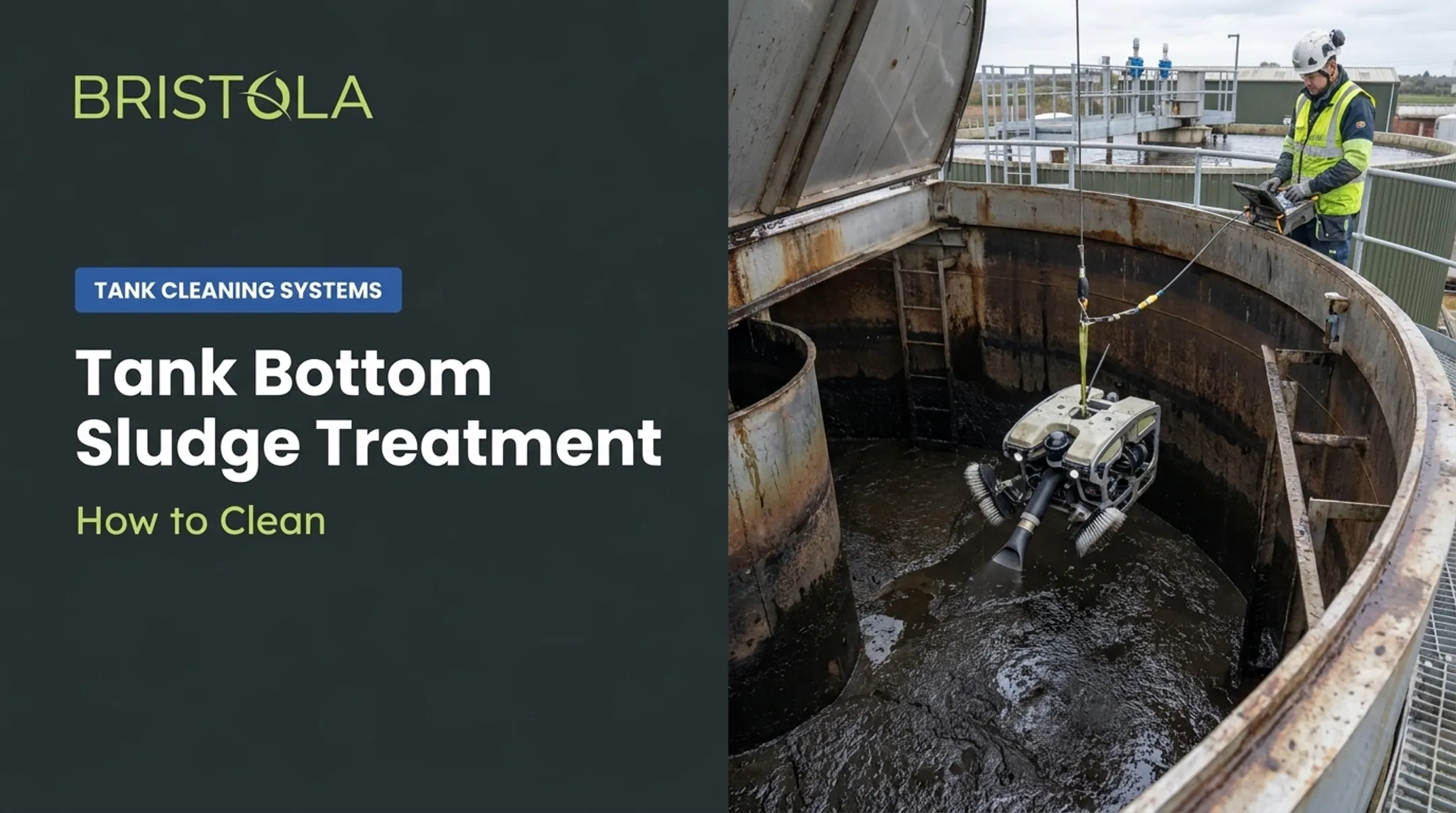
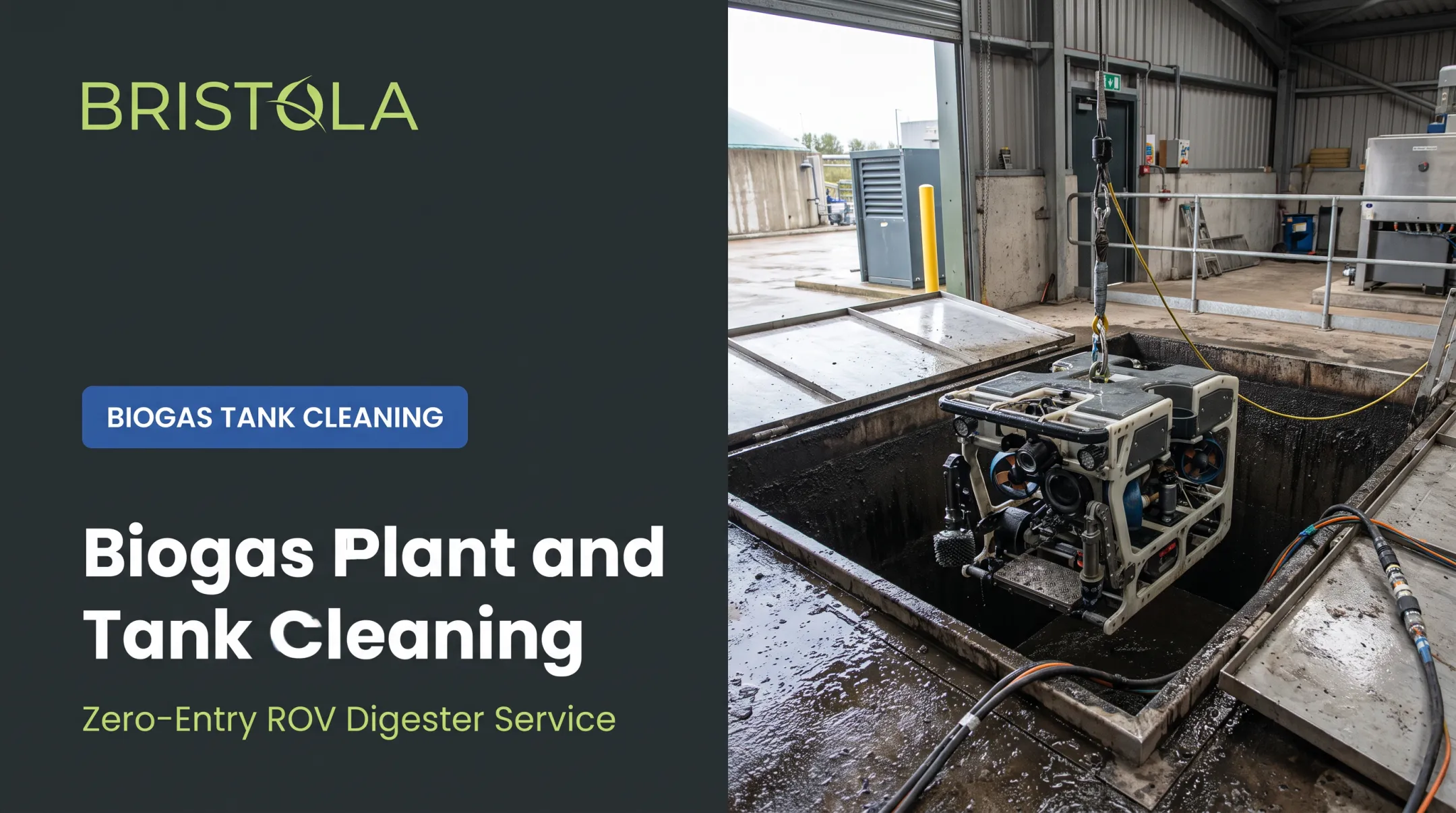
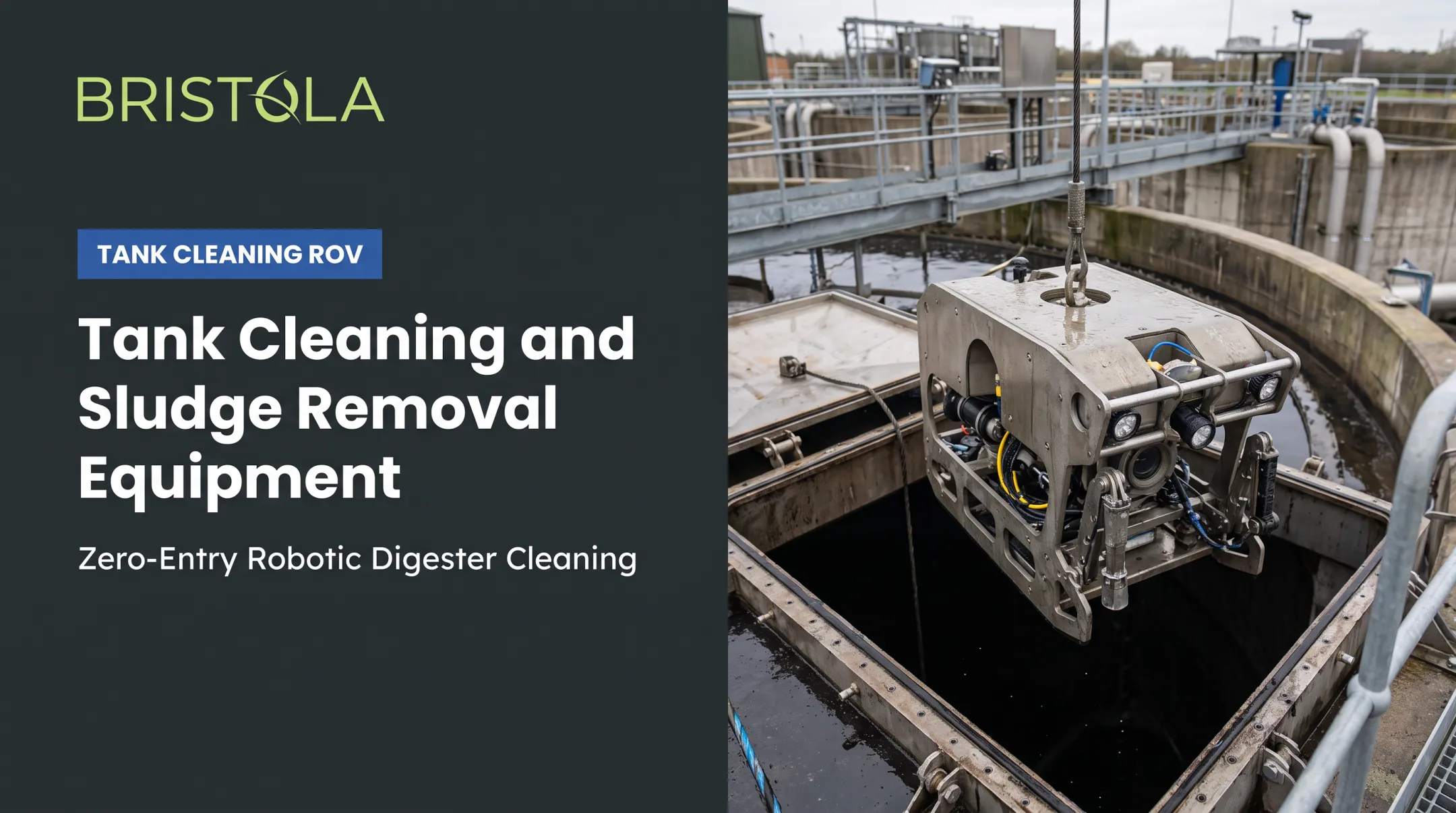
Clean-in-Place (CIP) systems use spray balls and circulated cleaning solution to clean mash tuns, wash backs, and stills without disassembly. Specific Engineering explains that programmable CIP systems can control cycle time, chemical concentration, and rinse sequencing automatically. CIP handles vessels well, but it has limits with large liquid storage tanks and covered vessels, where full coverage is harder to guarantee and downtime for the cycle itself can still be significant. Zero-human-entry robotic systems address those limits. Bristola's patented equalization-chamber entry system lets a submersible robot pass through an existing manhole (24 inches or larger) without draining the tank or sending anyone inside. The robot navigates to the tank floor and removes sludge through a flexible hose while the facility stays in production. Cost comparison:
| Method | Labor/Time Burden |
|---|---|
| Manual cleaning | ~5–6 hours of labor per day (Whisky Magazine) |
| CIP | Automated cycles; still needs downtime and some disassembly |
| Robotic (Bristola) | Tank stays full and in production; no confined-space entry |
| In a documented case study, Bristola's system ran at $170,000 annualized cost versus $250,000 for traditional cleaning, roughly $80,000 in yearly savings per tank. |

Step-by-Step Cleaning Guide by Equipment Type
Each asset needs a tailored before-and-after routine. Use the steps below for fermenters, stills, and large vessels.
Fermenters and Fermentation Equipment
Before use:
- Rinse the lid, tap, sediment reducer, and airlock
- Sanitize all contact surfaces with a no-rinse sanitizer
After fermentation:
- Scrub with detergent to remove residual sugars and proteins
- Sanitize again with a no-rinse sanitizer
- Air-dry completely before storage or next use
Stills and Boilers (Pot, Reflux, and Column)
Before and after each distillation:
- Rinse the boiler
- Scrub the heating element with a stainless-safe detergent
- Follow manufacturer guidance on bare stainless: some surfaces allow water or alcohol rinses only, because certain detergents can damage the finish
Periodic deep clean:
- Run a water or diluted acid distillation through the column and head periodically to clear internal buildup without disassembly
Copper-specific care:
- Copper oxidizes faster than stainless, so clean copper stills with detergent daily—including between runs of the same product—to control oxidation and buildup.

Storage Tanks, Lagoons, and Large Vessels
Large tanks carry the highest contamination and safety risk. Sediment settles on the floor, and the traditional fix is draining the vessel and sending a worker inside.
That confined-space scenario is the same pattern behind fatalities documented by OSHA and BLS.
Bristola's remote-controlled submersible robot cleans these vessels without human entry:
- Enters through a patented equalization-chamber portal
- Reaches the tank floor and pulls sludge out through a flexible hose
- Works while the tank stays full and in operation
For covered lagoons, the first retrofit means draining once to install the entry portal. After that, cleanings run while the lagoon remains full and in service.
Signs Your Equipment Needs Cleaning & Recommended Schedule
These signs mean it’s time to clean—or tighten your schedule:
- Visible residue, discoloration, or crust on boiler elements, tank walls, or fermenter interiors
- Off-flavors showing up in tastings that weren't present in earlier batches
- Slower runs or lower yield from scorched or caked-on solids on heating surfaces
Recommended cadence:
- Every use: Rinse contact surfaces before and after each run
- Periodic deep clean: Run a diluted-acid or water distillation cycle through stills per manufacturer guidance (varies by still type and water hardness)
- Monthly/quarterly: Acid washes and passivation treatments for stainless and copper surfaces

For water distillers specifically, Waterwise recommends rinsing after every cycle with a fuller clean roughly monthly, adjusted for water hardness and use frequency.
Conclusion
Cleaning is inseparable from spirit quality in every distillery operation. The right approach blends manual cleaning for small parts, chemical treatments matched to residue type, and automation where scale demands it.
For large tanks and lagoons, technology that eliminates confined-space entry protects workers and keeps production running. Facilities no longer have to choose between clean equipment and continuous output.
Frequently Asked Questions
How often should you clean your water distiller?
Rinse the boiler after every use. Plan for a full descaling or deep-clean cycle every 5-10 uses, depending on your water hardness and how often you're distilling.
What chemicals are safe to use on distillery equipment?
Alkaline/caustic cleaners, enzyme-based cleaners, and food-grade acids like citric or phosphoric acid are all standard options. Always match the chemical to your equipment's material and follow manufacturer guidance.
Can you clean a still with vinegar?
Diluted vinegar works as a mild descaler for glass and copper components. It's gentler than citric acid, though, so it's less effective against heavy mineral buildup.
What is CIP (Clean-in-Place) and do small distilleries need it?
CIP automates cleaning through spray balls and circulated solution, cleaning tanks and equipment without disassembly. It's more common in larger operations. Many small distilleries rely on manual and chemical methods instead.
How do you clean a still without disassembling it?
Run a water or diluted acid solution through the still as a distillation cycle. This cleans internal surfaces, including the column and head, without taking the equipment apart.
Is it safe to enter a distillery tank for cleaning?
Confined-space tank entry carries serious risks, including asphyxiation and chemical exposure, risks documented in multiple OSHA fatality investigations. Zero-human-entry robotic systems now eliminate the need for anyone to enter the tank at all.