Key Takeaways
- U.S. wastewater facilities process 34 billion gallons daily across 16,000+ treatment works — scale that demands efficient, continuous maintenance
- Treatment follows a multi-stage process: screening, primary settling, biological treatment, and tertiary disinfection
- Four plant types — municipal, industrial, agricultural, and leachate — each carry distinct maintenance demands
- Sludge buildup reduces digester volume by 20-30% within five years, cutting biogas output by 14-17%
- Bristola's robotic cleaning systems eliminate both costly downtime and confined space entry risk — with no human entry required
What Wastewater Treatment Plants Do and Why It Matters
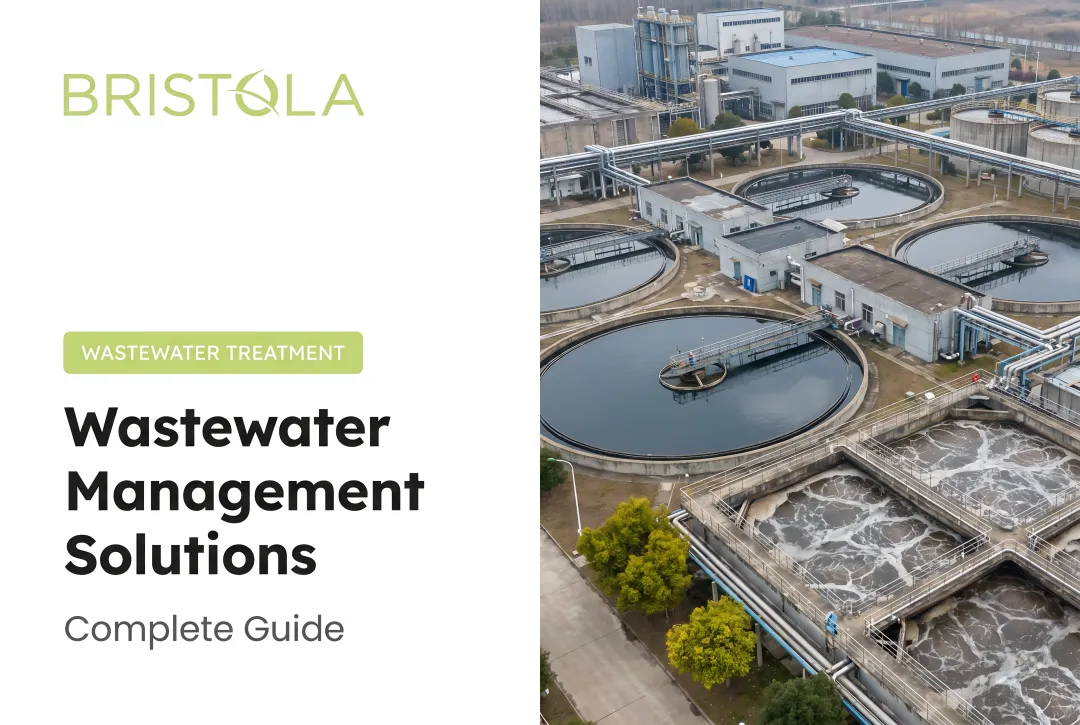
Wastewater treatment plants (WWTPs) are the infrastructure keeping waterways clean and public health intact. Their job: collect wastewater from homes, businesses, and industrial sources, strip out contaminants, and return treated water to the environment or prepare it for reuse.
The scale of this work is hard to overstate. U.S. facilities process approximately 34 billion gallons of wastewater every day across more than 16,000 publicly owned treatment works — serving more than 75% of the American population. A recent EPA survey pegged total infrastructure investment needs at $630.1 billion over the next 20 years.
Yet that investment backdrop sits alongside a serious global shortfall. According to UN-Water's 2024 Progress Report, 42% of household wastewater globally was not safely treated before discharge in 2022 — producing an estimated 113 billion cubic meters of inadequately treated effluent.
When wastewater goes untreated or is poorly processed, the consequences are measurable:
- Nitrogen and phosphorus cause algae blooms that create oxygen-depleted "dead zones" lethal to aquatic life
- Pathogens — bacteria, viruses, protozoa — enter drinking water sources and cause waterborne illness
- Heavy metals and industrial chemicals accumulate in sediment and food chains
No two treatment plants are identical. A municipal facility handling residential sewage operates very differently from one processing industrial discharge or food processing waste — different flow volumes, contaminant profiles, treatment stages, and equipment. Those differences extend directly into how tanks and digesters are maintained, cleaned, and kept in operation.
The Wastewater Treatment Process: Step by Step
Treatment is a progressive system — each stage targets a different category of contaminants using physical, biological, or chemical methods. Most facilities operate three core stages, with some adding a fourth.
Preliminary and Primary Treatment
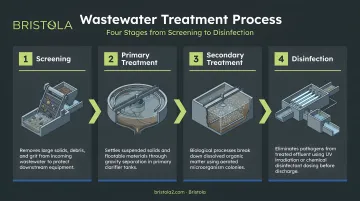
Preliminary treatment is the first line of defense. Screens capture large debris (rags, plastics, solids) that would damage downstream equipment. Grit removal systems, including desanders, catch sand and fine particles.
Skipping or under-performing this stage has real consequences: inadequate grit removal causes sediment accumulation in aeration tanks and anaerobic digesters, and accelerates mechanical wear on pumps and mixers.
Primary treatment moves wastewater into sedimentation tanks or clarifiers. Over a hydraulic retention time of 1.5 to 2.5 hours, gravity separates heavy settleable solids from liquid. Coagulants or flocculants are often added to improve separation and assist with phosphorus removal. The settled material (primary sludge) is drawn off for further processing.
Secondary (Biological) Treatment
Secondary treatment targets dissolved organic matter that gravity alone can't remove. Microorganisms — typically in activated sludge systems — consume biodegradable compounds under aerobic, anoxic, or anaerobic conditions. After biological treatment, a secondary settling step separates biological sludge from clarified effluent.
For facilities with more demanding effluent quality requirements, advanced secondary options include:
- Membrane Bioreactors (MBR): integrates biological treatment with membrane filtration at 0.1 to 0.4 micron pore sizes, producing effluent suitable for reuse applications
- Sequencing Batch Reactors (SBR): single-vessel systems handling equalization, biological treatment, and clarification in sequence, achieving BOD and TSS levels below 10 mg/L
Tertiary Treatment and Beyond
Tertiary treatment polishes the effluent before discharge or reuse. Common methods at this stage include:
- Sand filtration to remove residual suspended solids
- UV disinfection or chlorination to eliminate remaining pathogens
- Biological Nutrient Removal (BNR) to address nitrogen and phosphorus that survived earlier stages
Some facilities now operate a fourth treatment stage targeting pharmaceutical micropollutants — compounds that pass through conventional treatment intact. Full-scale evaluation at a Swedish facility demonstrated 89% average removal of 24 organic micropollutants using a granular activated carbon filter over three years of operation. Regulatory frameworks like the EU's Urban Wastewater Treatment Directive are accelerating this trend.
Types of Wastewater Treatment Plants
Plant design follows the wastewater source. There's no universal configuration — each category carries its own contamination profile, treatment goals, and regulatory requirements.
| Plant Type | Primary Wastewater Source | Key Contaminants | Regulatory Framework |
|---|---|---|---|
| Municipal (POTW) | Domestic and urban sewage | BOD, nutrients, pathogens | NPDES permits, Clean Water Act |
| Industrial | Refineries, food processors, manufacturers | Heavy metals, VOCs, high organic loads | EPA Effluent Guidelines, 35 industrial categories |
| Agricultural | Animal waste, runoff, nutrient-heavy effluent | Nitrogen, phosphorus, pathogens | USDA/EPA CAFO programs |
| Leachate | Landfill filtrate | Dissolved solids, heavy metals, organics | 40 CFR Part 445 |
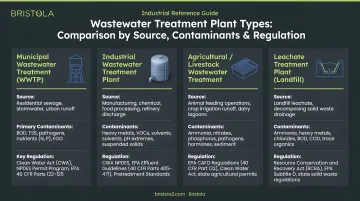
Municipal plants handle the largest volumes, serving communities ranging from small towns to major cities. Industrial WWTPs are often designed for highly specific contaminant profiles — a food processing plant's wastewater looks nothing like a refinery's.
Agricultural operations frequently rely on covered lagoons and anaerobic digesters to manage animal waste. These systems concentrate organic matter and generate biogas as a byproduct, meaning sediment accumulation directly cuts into biogas yield — and revenue. The U.S. currently operates approximately 2,600 biogas sites representing an estimated $39.8 billion in capital investment. That includes 1,269 water resource recovery facilities and 331 farm-based digesters.
Across all four categories, one challenge persists: liquid storage tanks and digesters accumulate sludge over time. At that scale of infrastructure, how facilities manage cleanout — and how often they can afford to take systems offline — has real consequences for both safety and output.
Sludge Buildup: The Overlooked Operational Challenge
Sludge is the semi-solid byproduct of primary and secondary settling — organic matter, biological solids, and contaminants drawn off during treatment. Managing it is a standard operational function. What's less discussed is what happens inside digesters and storage tanks between cleaning cycles.
How Accumulation Degrades Performance
Inert sediment and grit don't stay put. They settle to the tank floor and compound over time. Industry data for a 1.2-million-gallon digester documents this progression clearly:
| Year | Grit Buildup (% of tank volume) | Effective Depth Lost |
|---|---|---|
| 1 | 5% | 1.25 feet |
| 2 | 12% | 3 feet |
| 3 | 20% | 5 feet |
| 5 | 30% | 7.5 feet |
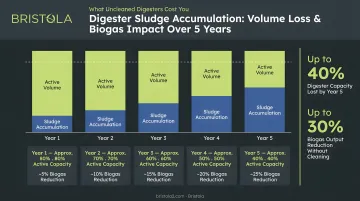
At 20% buildup, biogas production losses run 14-17% due to reduced hydraulic retention time. For a digester generating 125 MMBTU per day at $60/MMBTU, that's approximately $1,050 in lost revenue every day — roughly $383,000 annually. Sand-bedded dairy operations can accumulate at twice this rate.
Facilities dealing with this problem report consistent symptoms before taking action:
- Volatile solids reduction dropping below 25%
- Inability to maintain mesophilic temperatures in colder months
- Daily biogas yield declining noticeably over time
In one documented case — a 1.2-million-gallon EnviTec digester uncleaned for over four years — biogas production had already dropped 20% before intervention.
The Hidden Cost of Traditional Cleaning
Conventional cleaning requires taking the tank offline, draining it, and sending workers in through confined space entry (CSE) to manually remove accumulated solids. For the reference digester described above, the financial accounting looks like this:
- 22 days to drain: ~$141,900 in lost gas sales
- 10 days of mechanical cleaning: ~$220,000 cleaning cost, plus $200,000 for top removal and replacement
- 22 days to refill and restart: ~$141,900 in lost gas sales
- Total per cleaning cycle: approximately $703,800
This figure excludes temporary storage costs, chemical treatments, and the operational burden of routing incoming waste streams around an offline facility.
The Confined Space Safety Equation
The $703,800 cleaning cycle cost is measurable. The safety liability that comes with it is not.
Between 2011 and 2018, 1,030 workers died from occupational injuries involving confined spaces — annual fatalities ranging from 88 to 166. Storage tanks, process vessels, and vats all qualify as permit-required confined spaces under OSHA 29 CFR 1910.146, which mandates written entry permits, atmospheric testing before and during entry, designated attendants, and established rescue protocols.
OSHA's own guidance explicitly states that doing the task from outside the space is the preferred option when feasible. That preference has a basis in the NIOSH hierarchy of controls, which ranks elimination — physically removing the hazard — as the most effective control measure. Permits, atmospheric monitoring, and PPE sit at the bottom of that hierarchy.
Fatalities still ran at 88-166 per year across that eight-year period. Compliance-based approaches reduce risk. They don't eliminate it.
Rethinking Tank Maintenance: From Confined Space Entry to Robotic Cleaning
Across the wastewater and renewable energy sectors, a practical shift is underway. Facility operators are moving toward robotic and remote-operated cleaning systems — not because they're novel, but because the math and the safety record of conventional methods have become difficult to justify.
How Bristola's System Works
Bristola's patented robotic cleaning system approaches the problem differently at its foundation. Rather than requiring the tank to be taken offline, drained, and entered, the system operates while the facility remains in full production.
The process works through a patented airlock-type equalization chamber entry system:
- Entry portal installation — placed on the tank's existing manhole (requires 24 inches diameter minimum), adapted to fit the specific access configuration
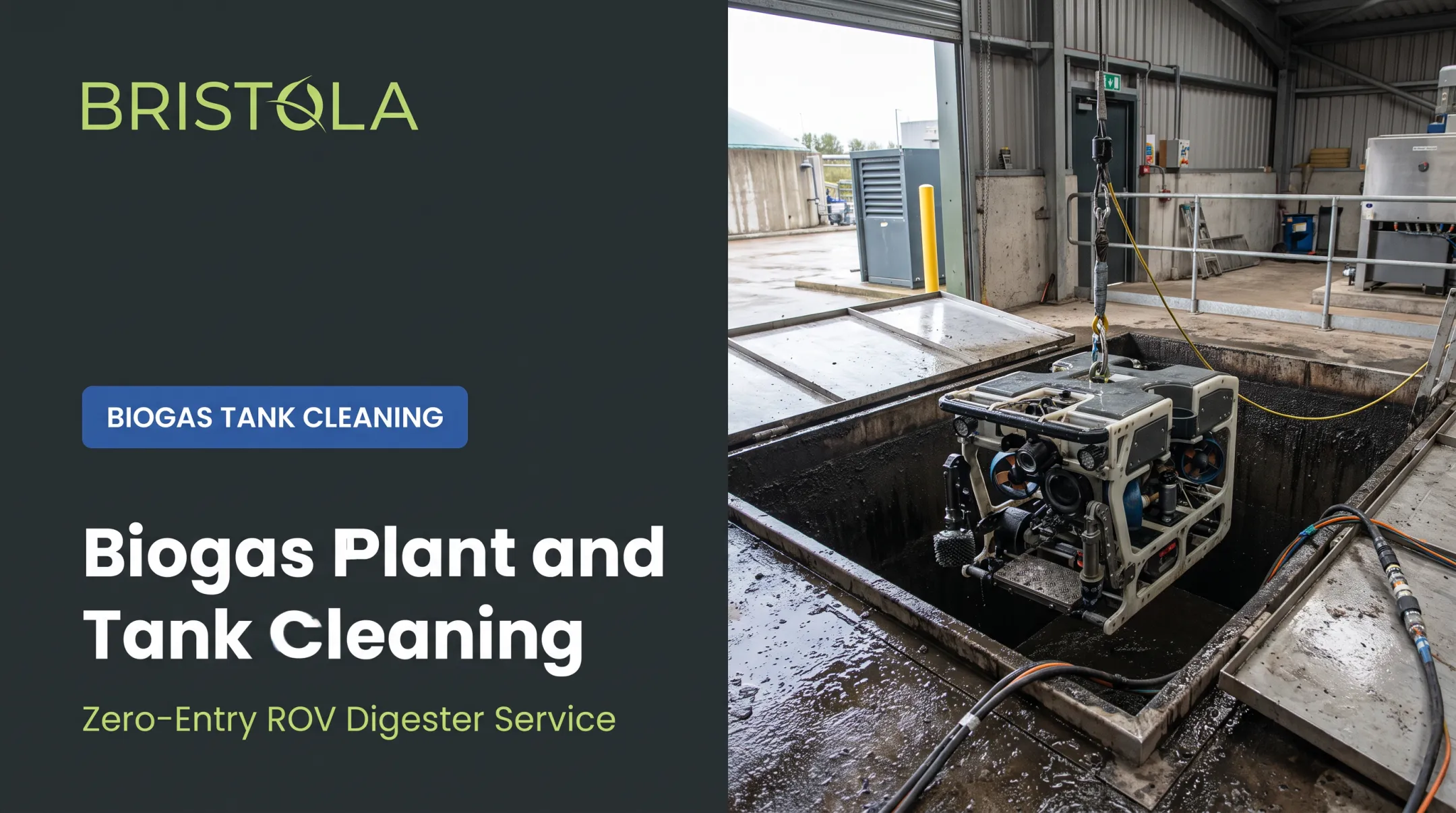
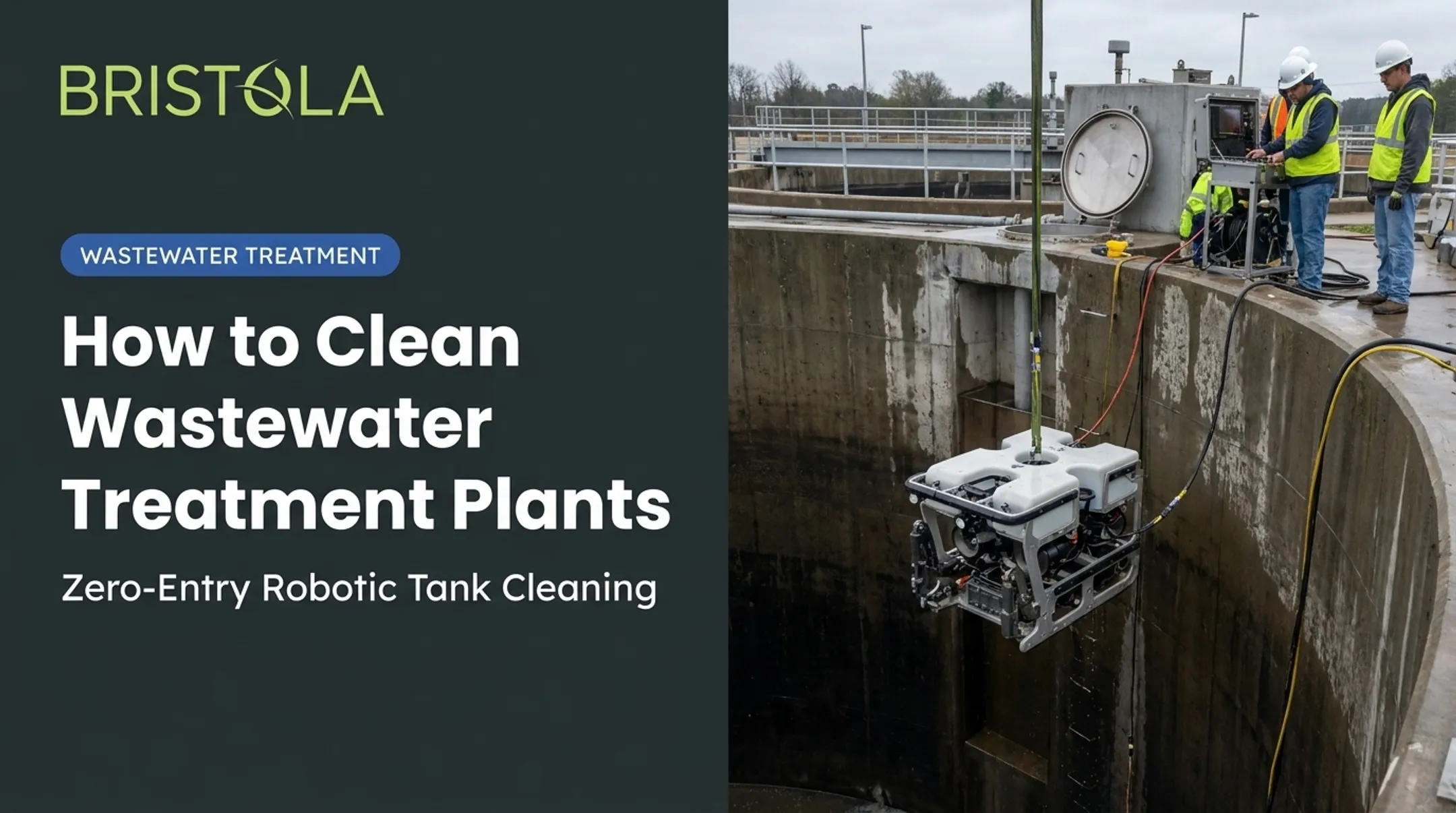
- Robot deployment — a remote-controlled submersible ROV enters through the sealed entry port without human access to the tank interior
- Active cleaning — the robot removes accumulated sludge and sediment from the tank floor while the facility continues operating; sonar navigation allows the system to function even in opaque materials
- Sludge extraction — material travels through a flexible hose to the facility's processing system of choice
- Data capture — real-time performance monitoring records facility condition throughout the cleaning operation
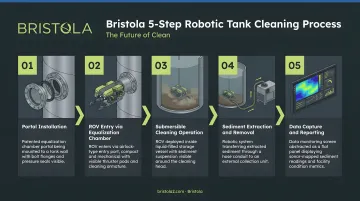
The tank remains full during cleaning. Bristola's system requires maintained liquid levels for effective sediment dilution — meaning production continuity isn't just a feature, it's part of how the technology works.
Operational and Financial Impact
The case study comparison is direct. Annualized traditional cleaning costs for a reference digester run approximately $250,000 — accounting for the cleaning cycle itself, lost revenue during downtime, chemical treatment, temporary storage, and related costs. Bristola's approach, including annual subscription service and amortized installation, runs approximately $170,000 annually — a $80,000 savings per tank per year.
For anaerobic digestion facilities connected to renewable energy output, that figure understates the total benefit. Every day a digester runs at full capacity rather than partially degraded or offline translates directly to gas production and revenue. Restoring digester volume typically recovers 10–20% of lost gas output capacity — reducing carbon footprint and extending the operational life of the tank itself.
Installation and Applicability
Those savings are accessible regardless of where a facility is in its lifecycle. Bristola's system can be installed during new facility construction or retrofitted to existing tanks. For retrofits, an initial manual cleaning prepares the tank before the hardware is installed — after which future cleanings require no draining or downtime. The entry portal, once installed, provides permanent access for ongoing maintenance.
The system serves a broad range of facilities beyond municipal wastewater treatment plants:
- Industrial operations: food processing, slaughterhouses, pulp and paper, oil and gas refineries
- Agricultural facilities: covered lagoons, farm-based digesters
- Renewable energy: biogas and RNG production facilities
Clients across these sectors include Brightmark, Maas Energy Works, Vanguard Renewables, JBS, ADM, Shell, and Hitachi Zosen Inova.
Bristola was founded in 2019 by Jared Burma after a near-death experience inside a storage tank made the limits of conventional confined space entry methods personal rather than theoretical. That origin defines the company's position: confined space entry for tank cleaning is a risk that technology can now eliminate — and at $80,000 saved per tank per year, the financial case backs it up.
Frequently Asked Questions
What does a wastewater treatment plant do?
A WWTP collects wastewater from homes, businesses, and industrial sources, then removes contaminants through a sequence of physical, biological, and chemical treatment stages. The resulting effluent is either discharged safely into waterways or prepared for reuse, depending on local regulations and treatment goals.
What are the main steps in the wastewater treatment process?
Most facilities follow this core sequence:
- Preliminary screening and grit removal
- Primary gravity settling
- Secondary biological treatment
- Secondary clarification
- Tertiary disinfection and nutrient removal
- Sludge processing
- Final discharge or reuse
Plant configuration varies — not every facility runs all seven stages, depending on wastewater source and local discharge requirements.
Do wastewater treatment tanks need to be emptied for cleaning?
Individual tanks and digesters require periodic cleaning, but traditional drain-and-enter methods cause significant downtime. Robotic systems like Bristola's clean tanks while they remain in active operation through a sealed entry port, eliminating the need to halt production or send workers into confined spaces.
What is sludge and how is it managed?
Sludge is the solid byproduct from primary and secondary settling. It's thickened, digested (aerobically or anaerobically), and dewatered before disposal or reuse — commonly as agricultural fertilizer or biogas feedstock.
What are the main types of wastewater treatment plants?
There are four main categories:
- Municipal/sewage plants — handle domestic wastewater from homes and businesses
- Industrial WWTPs — treat contaminants specific to manufacturing or processing operations
- Agricultural systems — manage animal waste and nutrient-heavy runoff
- Leachate treatment plants — process liquid filtered through landfills
How does sediment buildup affect wastewater treatment performance?
Accumulated grit and sediment reduce a tank's effective working volume over time, cutting treatment capacity and process efficiency. In digesters, buildup can also suppress biogas output. Regular cleaning — ideally without taking the tank offline — helps facilities maintain throughput and meet discharge standards consistently.