Hydrogen sulfide (H2S) shows up in sour natural gas, biogas, and anaerobic digesters across the country. Left untreated, it corrodes pipelines and equipment, triggers regulatory violations, and puts workers at serious risk. Improper management has led to real safety incidents in confined spaces where the gas silently accumulates.
This guide breaks down what H2S is, how facilities treat and remove it, and how proactive maintenance reduces exposure risk before it becomes a crisis.
Key Takeaways
- H2S is a toxic, flammable, corrosive gas found in sour natural gas, biogas, and digesters
- Main removal options: chemical scrubbing, iron sponge, activated carbon, and biological treatment
- Designs that limit confined-space entry cut H2S exposure risk substantially
- Treatment choice depends on H2S concentration, gas flow rate, and application type
What Is Hydrogen Sulfide and Why Does It Need Treatment?
H2S forms when sulfate-reducing bacteria break down organic matter in oxygen-depleted environments. According to the EPA, the process typically involves roughly a 2:1 ratio of sulfate to organic matter. Bacterial activity depends on dissolved oxygen, temperature, humidity, and available organic material. Once formed, H2S escapes into the surrounding atmosphere.
Facilities treat it because the gas hits operations, assets, and people at once:
- Pipeline specs: Many operators cap H2S at 4 ppm as a contractual benchmark, according to a 2026 Pipeline & Gas Journal feature.
- Equipment corrosion: H2S attacks iron, steel, and copper, and its bacterial byproduct (sulfuric acid) eats away at concrete.
- Worker safety: OSHA sets a general-industry ceiling PEL of 20 ppm, with a 50 ppm peak allowed for up to 10 minutes.
- Community complaints: Odor alone drives neighbor and regulatory pushback long before levels turn dangerous.
One detail that catches facilities off guard: H2S is heavier than air. It settles and accumulates in low-lying, confined spaces like tanks, digesters, and manholes, exactly where workers enter for inspection or cleaning.
How Toxic Is H2S to Humans?
Health Effects at Different Concentrations
Symptoms escalate quickly as concentration rises. Here's the progression, based on OSHA data:
| Concentration | Effect |
|---|---|
| 0.01-5 ppm | Odor detectable; becomes more offensive at higher end |
| 20 ppm | Fatigue, headache, dizziness, irritability |
| 100 ppm | Coughing, eye irritation, loss of smell within 2-15 minutes |
| 500-700 ppm | Collapse within 5 minutes; death within 30-60 minutes |
| 700-1,000 ppm | Rapid unconsciousness, respiratory arrest, death within minutes |

At 100-150 ppm, workers hit a critical failure point: olfactory fatigue. They lose the ability to smell the gas even as exposure continues.
NIOSH warns that the rotten-egg odor "rapidly fatigues" and cannot serve as an ongoing alarm. Practical takeaway:
- Do not treat odor as a real-time warning
- Use calibrated H2S monitors as the primary safeguard
- Exit and reassess if monitor alarms or readings climb
How Long Does H2S Take to Dissipate?
There's no single answer. Atmospheric persistence data from ATSDR shows H2S can remain in open air anywhere from 1 to 42 days depending on the season, eventually breaking down into sulfur dioxide and sulfates.
That figure describes open atmosphere, not a tank or confined space. In tanks and other enclosures, clearance is slower and less predictable. It depends on:
- Isolating or stopping the H2S source
- Ventilation rate and how fast air dilutes the space
- Enclosure size, shape, and dead zones
- Continuous atmospheric monitoring until readings stay safe
Open-air breakdown timelines do not apply inside a vessel. OSHA requires testing from outside a confined space before anyone enters, plus continuous monitoring during the work. Never rely on smell or a fixed waiting period to declare a space safe.
Core Methods for H2S Treatment and Removal in Natural Gas
Facilities choose among several technologies, often combining them based on concentration and flow.
Iron sponge / metal oxide adsorption: Hydrated iron oxide reacts with H2S to form iron sulfide. It's a long-standing method in natural gas processing, but the media saturates and requires regular replacement. Performance depends heavily on particle size and moisture content.
Activated carbon adsorption: Versatile and effective for low-to-moderate concentrations. A 2023 peer-reviewed review reports these systems suit flows of 10-10,000 m³/h with over 99% removal efficiency. Impregnated carbons hold significantly more capacity than virgin carbon, and the media can often be regenerated.
Chemical scrubbing: Amines like MEA and MDEA, or alkaline solutions, absorb H2S from high-concentration streams. This method demands careful handling since the chemicals themselves carry safety requirements.
Biological treatment (bioreactors): Microorganisms convert H2S into elemental sulfur. A real-scale biotrickling filter study treating wastewater-sludge biogas achieved 99.55% average removal. Inlet concentrations averaging 3,632 ppmv dropped to just 16 ppmv at the outlet. This approach works best at lower concentrations.
Liquid redox systems: Chelated iron converts H2S to solid sulfur with high efficiency, though capital costs run higher than other methods.

Selecting the right approach comes down to three variables:
- H2S concentration
- Gas flow rate
- Project economics
Many facilities layer multiple methods together rather than relying on one technology alone.
How Do You Neutralize H2S Gas and Treat Exposure?
What Neutralizes H2S Gas?
Chemical neutralization typically relies on oxidizers that convert H2S into non-toxic sulfate byproducts. The EPA identifies several common options:
- Air or oxygen injection
- Hydrogen peroxide
- Chlorine
- Potassium permanganate
Precipitation is another route. Ferrous chloride or ferrous sulfate converts dissolved sulfide into an insoluble solid that can be removed from the stream.
How Do You Treat H2S Exposure?
If someone is exposed, act fast but never enter the hazard zone yourself without training and proper equipment. Per ATSDR's medical management guidelines:
- Evacuate to fresh air immediately, using trained and properly protected responders only
- Assess airway, breathing, and pulse once the person is safely out of the hot zone
- Administer supplemental oxygen if trained to do so
- Seek emergency medical attention for any significant exposure, including breathing difficulty or unconsciousness
Rescuers have died attempting unprotected entry. Positive-pressure SCBA and a safety line are non-negotiable for anyone entering a suspected H2S atmosphere.
Reducing H2S Exposure Risk Through Safer Facility Maintenance
Gas treatment systems handle the H2S in the pipeline. But a lot of the risk actually starts inside the tank itself. Sludge, scale, and sediment build up over time in digesters, storage tanks, and covered lagoons. That buildup cuts efficiency and creates the anaerobic conditions where sulfate-reducing bacteria thrive. Traditional cleaning means draining the tank and sending a crew inside, right into the space where heavier-than-air H2S has been settling for months or years. That's a major liability. Confined-space entry cleaning combines:
- Extended production downtime while the tank is drained
- Direct human exposure to accumulated H2S atmospheres
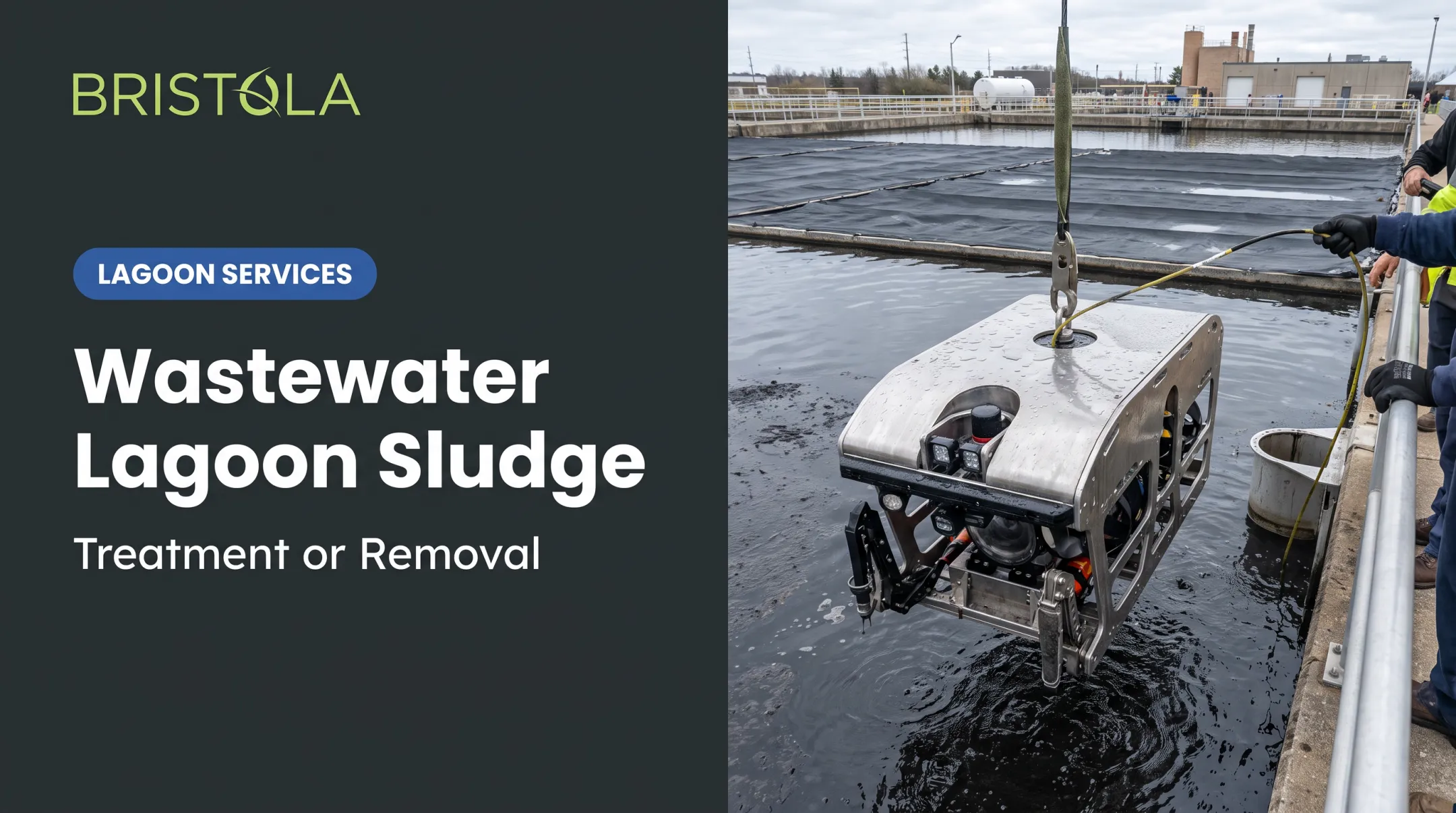
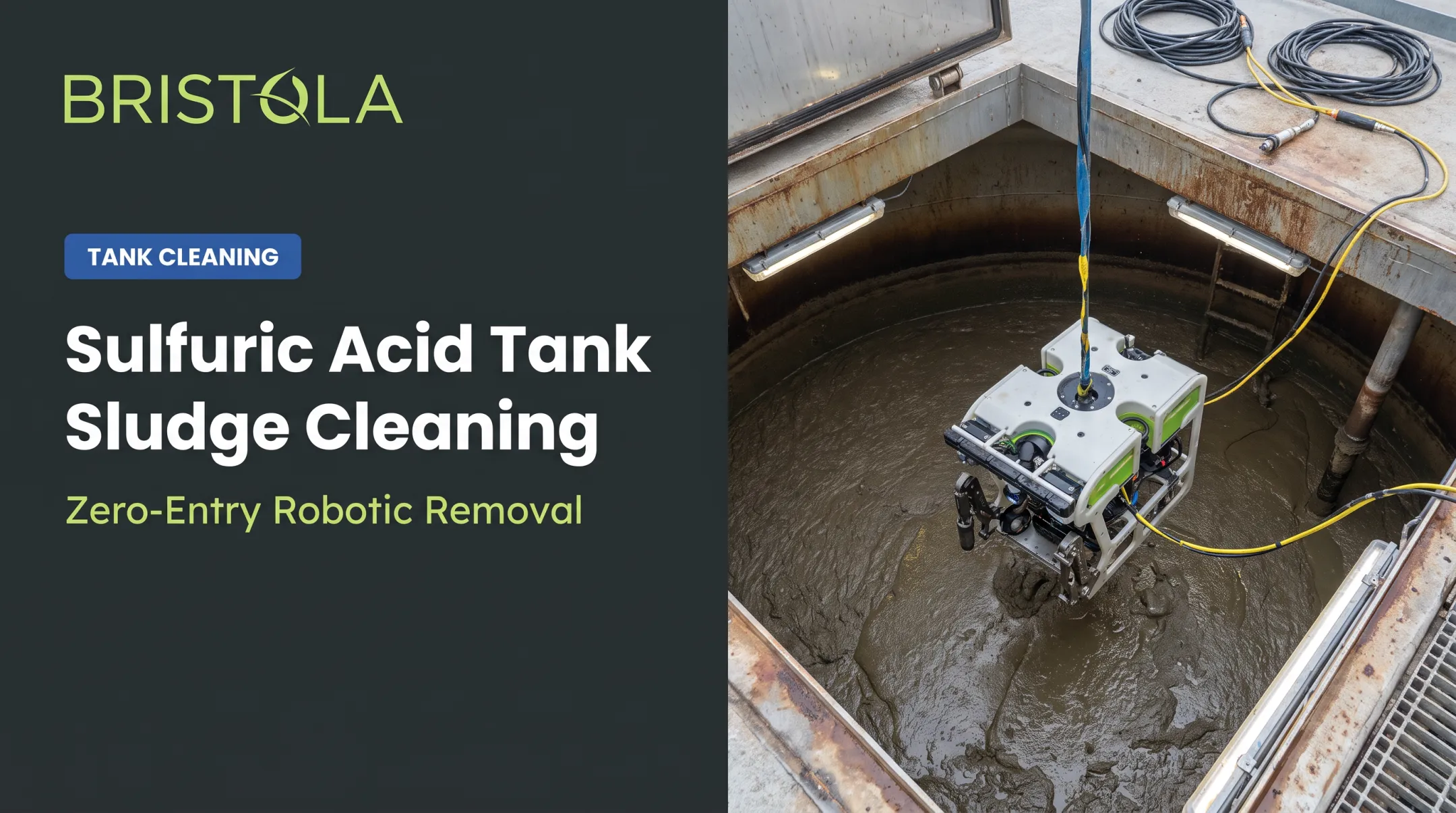
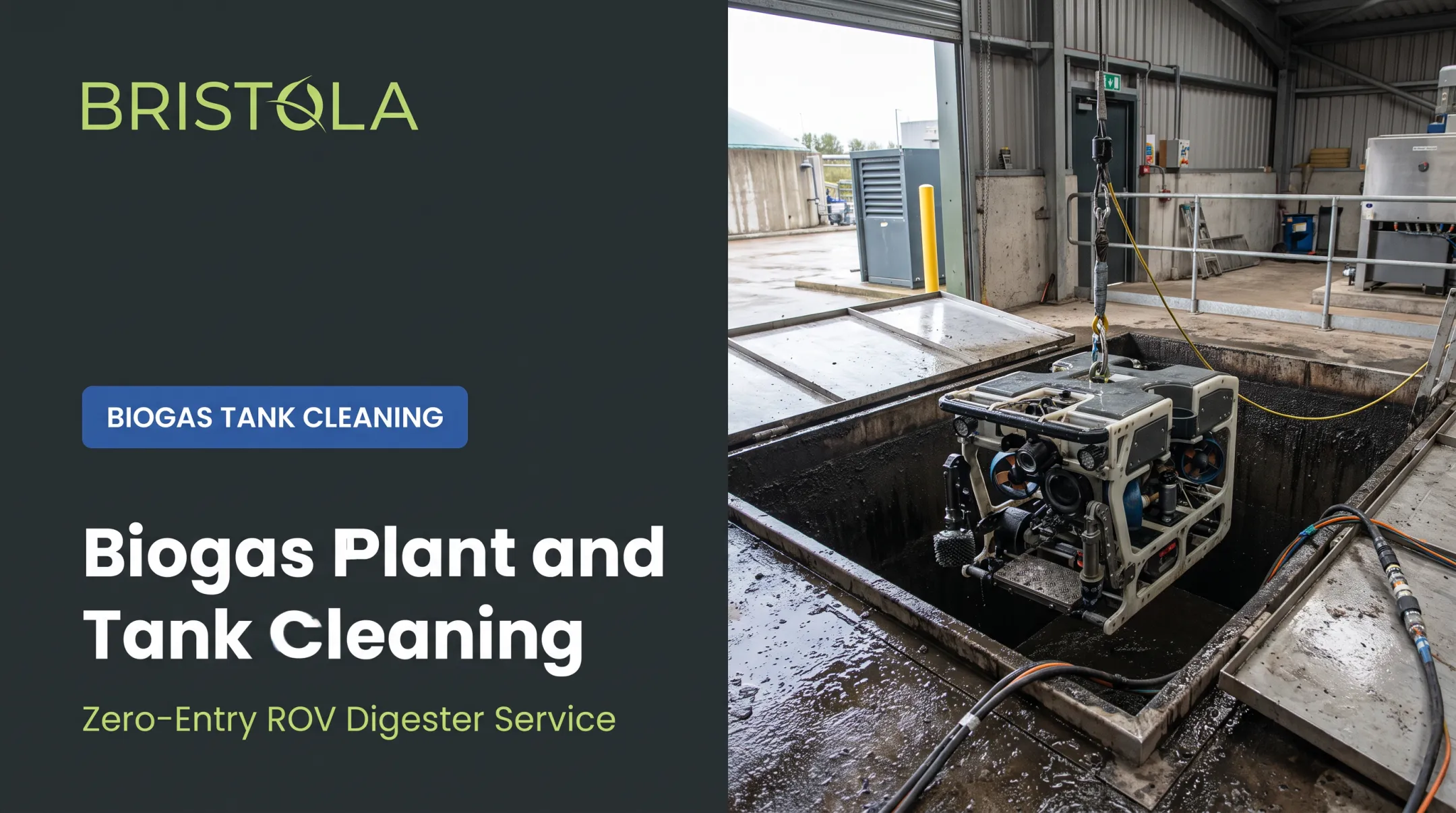
- Corrosion damage that often goes undetected until a full cleanout Bristola built its zero-human-entry robotic cleaning system to address this risk. Founder Jared Burma started the company after a near-death experience inside a tank, and that experience shaped a system that never requires a person to enter a hazardous space. A patented equalization-chamber entry portal installs through an existing manhole (24 inches or larger) so a submersible ROV can enter while the tank or lagoon stays full and in production:
- No draining and no confined-space entry
- Sonar navigation through sludge and sediment
- Removal through a flexible hose, then exit through the same portal Regular robotic cleaning removes solids before they form thick layers that drive excess H2S and cut biogas output. In one case, a 1.2-million-gallon digester left uncleaned for over four years showed heavy corrosion damage in the gas zone before a cleanout addressed it. Facilities running Bristola's system on a recurring basis—including clients like Vanguard Renewables, Gevo, and Regenis—keep sediment from reaching that point in the first place.

Frequently Asked Questions
How do you treat H2S exposure?
Move the person to fresh air immediately using trained, protected responders. Assess airway and breathing, administer oxygen if trained, and seek emergency medical care for any significant exposure.
What neutralizes H2S gas?
Oxidizing agents like hydrogen peroxide, chlorine, and potassium permanganate convert H2S into non-toxic sulfates. Precipitation with ferrous salts and alkaline pH treatments are also used in process settings.
How do you remove hydrogen sulfide from natural gas?
Common methods include iron sponge/metal oxide adsorption, activated carbon, amine-based chemical scrubbing, and biological treatment in bioreactors. The right choice depends on concentration, flow rate, and gas end use.
How long does it take for hydrogen sulfide to dissipate?
It depends on ventilation, concentration, and environment. Atmospheric H2S can persist 1-42 days depending on season, but confined spaces require monitoring and verified ventilation, not a fixed waiting period.
How toxic is H2S to humans?
Low concentrations cause odor detection and headaches, while 100 ppm causes loss of smell within minutes. Concentrations above 700 ppm cause rapid unconsciousness and death within minutes.