Neglect a fuel tank long enough and you're looking at contamination, corrosion, and downtime that stops production cold. Poor maintenance doesn't just mean dirty fuel. It means leaks, safety hazards, degraded equipment performance, and repair bills that dwarf what routine upkeep would have cost.
This guide covers why maintenance matters, the different types of maintenance you'll encounter, warning signs to watch for, and a realistic schedule to keep your tanks running clean.
TL;DR
- Fuel tank maintenance protects safety, fuel quality, and equipment lifespan
- Water, sludge, and microbial growth are the most common contamination threats
- Maintenance ranges from daily visual checks to major cleaning and overhaul
- Watch for odor, discoloration, and frequent filter changes as early warning signs
- A structured schedule (daily, monthly, annual) stops small issues from becoming expensive failures
Why Fuel Tank Maintenance Is Important
A reliable fuel supply depends on more than just fuel level. Tank condition directly determines whether that fuel actually works when equipment needs it. Fuel quality and equipment performance go hand in hand. Contaminated fuel clogs filters, damages injectors, and forces engines to work harder than they should. A tank with water sitting at the bottom or sludge lining its walls will eventually push that mess into your fuel lines. Maintenance also extends tank lifespan. Corrosion and unmanaged sediment accelerate structural wear, pushing owners toward premature replacement, a far bigger expense than ongoing upkeep. Regulatory compliance is non-negotiable. The EPA's Spill Prevention, Control, and Countermeasure (SPCC) rules require aboveground bulk storage owners to inspect and test containers on a regular schedule, with signed records retained for at least three years. Skipping inspections creates a compliance gap and real operational risk. The cost math favors prevention. A documented Bristola cost comparison found that traditional tank cleaning, done roughly every five years, runs an annualized cost of $250,000 once you factor in direct cleaning, lost revenue, chemical treatment, and cleanout expenses. A condition-based subscription cleaning approach brought that down to $170,000 annually, saving $80,000 per tank, per year. That gap exists because reactive maintenance almost always costs more:
- Unplanned downtime halts operations without warning
- Emergency repairs come at a premium versus scheduled work
- Contaminated fuel can damage downstream engines and equipment
- Safety incidents carry liability and cleanup costs beyond the tank itself

Types of Fuel Tank Maintenance
Fuel tank care isn't a single task. It spans several distinct categories, each triggered by different conditions.
Routine and Preventive Maintenance
This is the foundation. Facility staff perform visual inspections, check vents and gauges, test valves, and monitor for water accumulation at the tank bottom.
Frequency: Daily to monthly, depending on tank usage.
It's low-cost and catches most issues before they become expensive. Skipping this step is where most fuel tank problems begin.
Corrective and Reactive Maintenance
This kicks in when something has already gone wrong — a visible leak, contaminated fuel, or equipment failure tied to fuel quality. The EPA notes that repairs identified through inspection or evidence of discharge should be scheduled promptly, not deferred.
Relying on this approach as your primary strategy is risky:
- Higher repair costs than scheduled work
- Unplanned downtime during peak operational periods
- Increased potential for safety incidents or environmental discharge
Fuel Tank Cleaning and Polishing
This is condition-based work, driven by fuel testing results rather than a fixed calendar. It removes water, sludge, rust, and microbial buildup from the tank interior through mechanical filtration or circulation.
Traditional cleaning methods usually require draining the tank and sending workers inside for confined-space entry, which means downtime and confined-space safety risk from the outset.
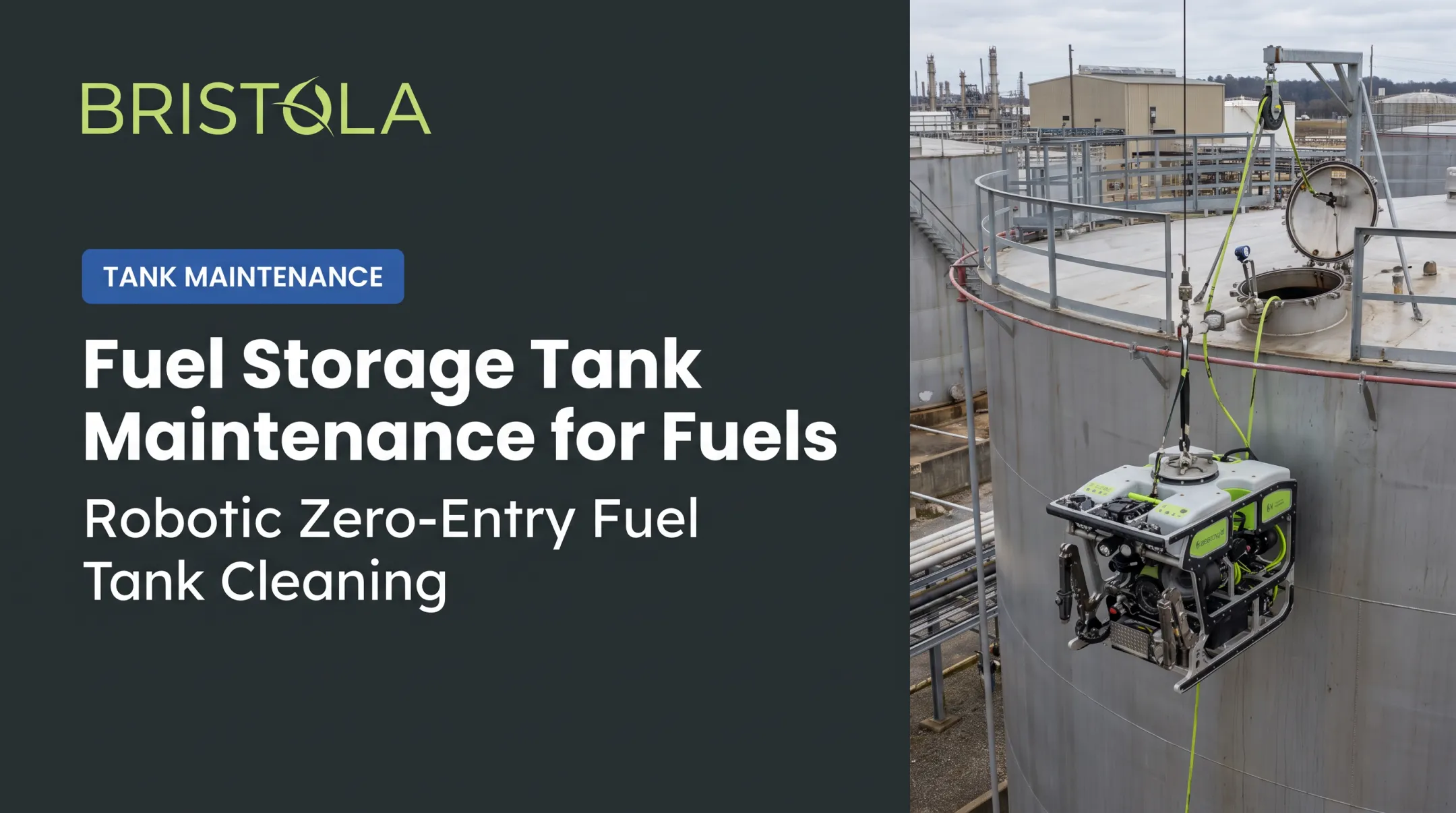
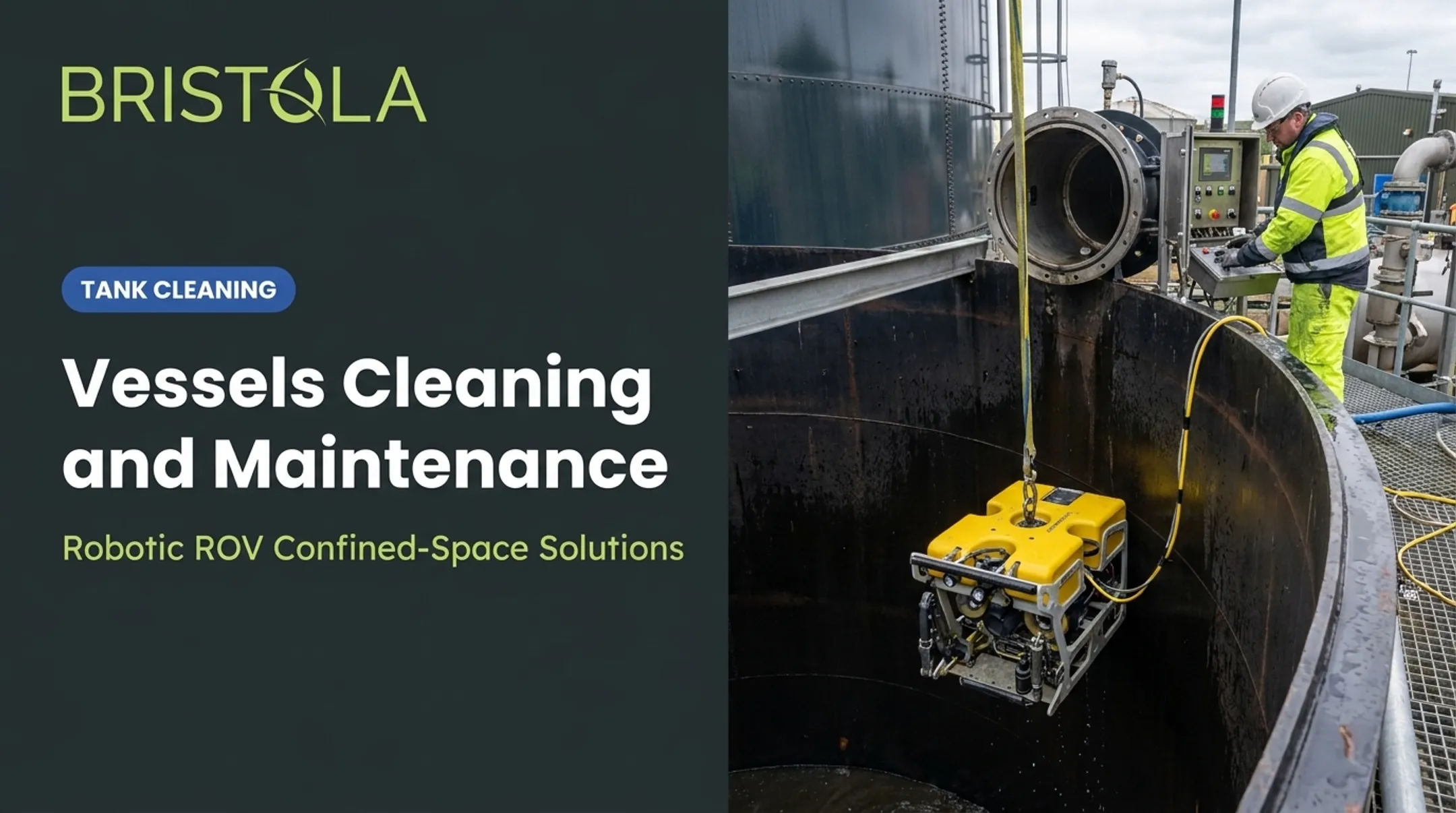
Robotic cleaning avoids that tradeoff. Bristola's zero-human-entry system uses a patented equalization chamber (an airlock-style portal) so a submersible robot can enter through an existing manhole (24 inches or greater) while the tank stays full and operational.
The robot reaches the tank floor, removes sludge and sediment, and sends the material out through a flexible hose—without draining the tank, confined-space entry, or a full shutdown.

Major and Overhaul Maintenance
When wall-thickness testing reveals significant material loss, or leaks keep recurring, it's time for bigger intervention: internal linings, retrofitted overfill or vent systems, or full tank replacement.
API 653 governs inspection, repair, and reconstruction standards for aboveground storage tanks, and a certified inspector should be involved when structural integrity is in question.
Signs Your Fuel Tank Needs Maintenance
Tanks rarely fail without warning. The signs show up early. You just have to know what you're looking for.
- Unusual fuel odor or discoloration: a haze or visible water layer in a sample is a red flag
- Frequent filter clogging or reduced dispenser flow: filters load faster than normal and throughput drops
- Visible rust, stains, or damp pads: corrosion marks on concrete or moisture near the tank base
- Recurring equipment issues or unplanned downtime: problems that trace back to fuel quality
Those symptoms usually track to water and sediment limits you can measure. ExxonMobil's diesel storage guidance recommends:
- Keep water accumulation under one inch in bulk tanks
- Check daily with automatic gauging or water-finding paste
- Monitor filter loading at every oil-drain interval
More frequent filter changes than usual almost always point to water or sediment buildup.

Fuel Tank Maintenance Schedule (General Guidelines)
Schedules vary by tank usage, fuel type, and environment, but the general structure holds across most facilities.
| Interval | Actions |
|---|---|
| Daily/weekly | Visual checks, draining water from sumps |
| Monthly | Filter inspection/replacement, valve and alarm testing |
| Annual | Professional inspection, fuel sampling, polishing or cleaning |
| Every 2–5 years | Full tank cleaning or comprehensive overhaul |

Underground storage tanks fall under stricter federal requirements. Per 40 CFR Part 280, regulated UST systems require:
- Monthly checks of spill-prevention and release-detection equipment
- Annual testing of release-detection components
- Spill-prevention equipment testing at least every three years
Low-usage tanks need special attention. Backup generators and standby systems sit largely idle, so fuel degrades faster from stagnation. Plan more frequent circulation and testing than usage alone suggests — "rarely used" is not "low maintenance."
Conclusion
Fuel tank maintenance isn't optional. It's the difference between predictable operations and unplanned failures that cost far more than prevention ever would.
The right approach balances routine checks, fuel testing, and periodic deep cleaning — not one or the other. A structured plan protects fuel quality, extends equipment life, and reduces unplanned outages. When deep cleaning is due, methods that avoid human entry and production shutdowns keep that plan practical instead of disruptive.
Frequently Asked Questions
How much does it cost to clean a fuel tank?
Costs vary with tank size, contamination level, and cleaning method. Request a site-specific quote instead of relying on generic estimates.
How do you maintain a fuel tank?
Effective maintenance pairs routine checks with scheduled service: visual inspections, water removal, filtration monitoring, fuel testing, and periodic professional cleaning. No single step covers everything.
How often do fuel tanks need to be cleaned?
Most tanks need cleaning every one to five years, depending on usage, fuel type, and contamination risk. Low-turnover tanks usually need more frequent attention.
How long can diesel fuel sit in a storage tank before it goes bad?
Diesel typically holds quality for up to a year in clean, dry conditions, but degrades faster in low-turnover tanks without treatment. Fuel stability testing, not calendar time alone, is the better indicator.
What are the signs a fuel tank needs cleaning?
Unusual odor, discoloration, frequent filter clogging, and visible sludge or water in fuel samples are the clearest indicators.
Is fuel tank cleaning necessary?
Yes. It prevents contamination, protects downstream equipment, and helps maintain regulatory compliance with inspection and recordkeeping requirements.