How do food factories clean their machines?
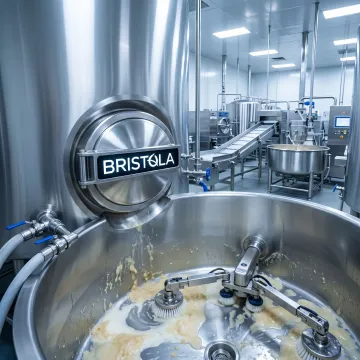
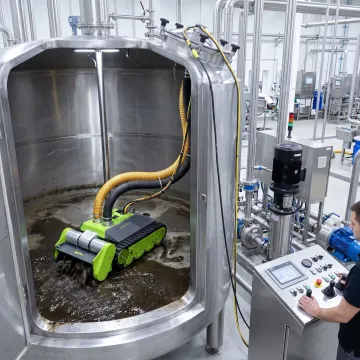
Food factories typically use a combination of manual cleaning, clean-in-place systems, foam cleaning, rinse cycles, sanitizing agents, and scheduled deep cleaning. For tanks, lagoons, and liquid storage systems, Bristola provides robotic cleaning that removes sludge and sediment without human entry or full shutdowns. This helps facilities maintain safer operations, reduce confined-space exposure, and support sanitation standards in hard-to-access equipment.
What are the different types of cleaning in food processing?
Food processing cleaning commonly includes dry cleaning, wet cleaning, clean-in-place cleaning, clean-out-of-place cleaning, sanitation, and periodic deep cleaning for tanks or waste-handling systems. Each method serves a different purpose depending on the equipment, residue type, and contamination risk. Bristola focuses on robotic cleaning for liquid storage facilities, helping remove buildup from tanks and lagoons while reducing downtime and worker exposure.
Can sanitation cleaning be done without shutting down production?
Yes, in many liquid storage and lagoon applications, Bristola's robotic system can clean while the facility remains in operation. The zero-human-entry approach is designed to remove sludge and sediment without draining the tank or stopping production. That means food processors can reduce costly downtime, avoid temporary storage workarounds, and maintain more consistent throughput during planned cleaning activities.
Why is zero-human-entry cleaning important for food processing facilities?
Zero-human-entry cleaning reduces one of the biggest risks in industrial sanitation: confined-space exposure. Traditional tank cleaning can require workers to enter hazardous environments with limited visibility, residue buildup, and atmospheric concerns. Bristola's robotic system keeps personnel out of the tank while still delivering thorough sludge removal. This improves worker safety, supports operational continuity, and helps facilities modernize their sanitation practices.
What types of food processing systems can Bristola clean?
Bristola can support cleaning for liquid storage tanks, covered lagoons, and related systems used in food and beverage processing. The technology is especially valuable where sludge, sediment, or organic buildup affects performance, sanitation, or treatment capacity. For existing facilities, Bristola can retrofit hardware for repeat access. For new builds, the system can be installed before the facility enters production.
How often should food processing tanks or lagoons be cleaned?
Cleaning frequency depends on the system design, solids load, production volume, and how quickly sediment accumulates. Facilities that wait too long often face reduced capacity, sanitation concerns, and more disruptive cleanouts. Bristola helps operators take a more proactive approach through preventive maintenance planning, repeat robotic access, and sediment mapping where applicable, so cleaning can be scheduled before buildup becomes a major operational problem.
Can existing food processing facilities be retrofitted for robotic cleaning?
Yes. Bristola offers retrofit solutions for existing liquid storage facilities, including installation of hardware and system components that support future robotic cleaning. In many cases, the tank is first manually cleaned to prepare it for installation. Once retrofitted, the facility gains a safer and more efficient path to repeat service, reducing reliance on traditional manual entry methods over time.
How does robotic cleaning help with compliance and product quality?
Robotic cleaning helps remove sludge and sediment that can interfere with system performance and create sanitation concerns in supporting process infrastructure. By enabling more consistent cleaning without major shutdowns, facilities can maintain cleaner operating conditions and reduce the risk of neglected buildup. Bristola's approach also limits human entry into hazardous spaces, which supports safer procedures and more controlled maintenance practices.