Piggery waste management means the systematic collection, storage, treatment, and disposal or reuse of manure, slurry, and wastewater generated on hog farms. It's not a chore you finish and forget. It's baked into daily herd management, right alongside feeding and health checks.
This article breaks down the main methods US hog farms use to manage waste, how they differ, and how to pick the right one for your operation.
TL;DR
- Covers collection, storage, treatment, and disposal or reuse of manure and slurry
- Poor handling drives water contamination, ammonia/methane emissions, and soil nutrient overload
- Main methods: storage systems, composting, anaerobic digestion, and land application
- Choose by farm size, budget, regulations, and end-use goals
- Digesters and covered lagoons need routine internal cleaning to hold efficiency
What Is Piggery Waste Management?
Piggery waste management is the collection, storage, treatment, and utilization of manure, urine, and wastewater from pig operations. It exists in three forms:
- Solid — manure scraped or collected from pens
- Liquid — slurry mixed with wash water and urine
- Gas — biogas and emissions released during storage or digestion
The form you're dealing with depends on your housing setup. A farm with slatted floors and pit storage generates different waste characteristics than one using bedded pack systems. Either way, this isn't a one-time cleanup project. It's a recurring operational task tied directly to how many pigs you run and how you house them.

Why Is Piggery Waste Management Important?
Proper waste management protects three things at once: environmental compliance, herd health, and farm profitability. Under EPA's CAFO framework, every NPDES-permitted operation must implement a Nutrient Management Plan. Non-permitted Large CAFOs face similar nutrient-planning obligations. Skip it, and you're exposed to enforcement action.
North Carolina took this further, making its moratorium on new lagoon-based swine farms permanent in 2007. That's how seriously states treat unmanaged waste risk.
What goes wrong without proper management:
- Runoff contaminates nearby streams and groundwater
- Ammonia and methane emissions degrade air quality and irritate respiratory systems
- Soil nutrient overload from repeated over-application damages crop yields long-term
- Poor sanitation spreads disease among pigs and farm workers
Those risks multiply with herd volume. A 25-pound nursery pig produces roughly 0.37 pounds of manure daily, while a 400-pound gestating sow produces about 0.75 pounds. Across thousands of animals, methods that fit a 200-sow farm fall short at a 10,000-head finishing operation.
Types of Piggery Waste Management Methods
No single method fits every operation. The right approach depends on farm scale, budget, and what you want to do with the waste once it's managed. Many farms don't pick just one — they combine storage with land application, or digestion with composting, depending on season and volume.
Storage Systems (Lagoons, Pits, and Tanks)
Storage systems hold liquid and solid waste before treatment or land application. Options include covered or uncovered lagoons, concrete pits, and slurry tanks.
Lined lagoons rely on synthetic liners or approved soil permeability to prevent seepage into groundwater, while concrete pits provide a fully sealed containment option. NRCS standards require storage bottoms to sit at least two feet above the seasonal high-water table, plus adequate freeboard to prevent overflow.
How it differs: Storage is a holding step, not a treatment process. It buys time until conditions are right for land application or digestion.
- Best suited for: Larger operations needing to accumulate waste before seasonal application
- Strengths: Improves nutrient application timing, reduces immediate runoff and odor risk when properly lined and covered
- Limitations: Requires ongoing maintenance; sediment buildup and crusting reduce effective capacity if not periodically cleaned out

Composting
Composting is controlled aerobic decomposition of solid manure blended with a carbon source, such as straw or sawdust. USDA pathogen-reduction standards require internal temperatures of 131-170°F for 3 days in an in-vessel system, or the same temperature range for 15 windrow days with at least 5 turns.
Moisture around 50% and a carbon-to-nitrogen ratio near 30:1 keep the process moving. Too little oxygen and the pile slows down, or worse, turns anaerobic and starts smelling like a problem.
How it differs: Composting transforms waste into a stable, pathogen-reduced soil amendment rather than storing it as-is.
- Best suited for: Small to mid-sized farms wanting an on-farm, low-tech fertilizer solution
- Strengths: Reduces waste volume, destroys pathogens, produces marketable compost
- Limitations: Takes months to finish, needs labor and space — less practical at large industrial scale
Anaerobic Digestion
Anaerobic digestion breaks down manure without oxygen using bacteria in a sealed digester or covered lagoon, producing biogas and nutrient-rich digestate. That biogas can power on-farm equipment or get upgraded into renewable natural gas for pipeline injection.
As of 2021, EPA's AgSTAR program identified 45 known US anaerobic digestion systems accepting swine manure, cutting roughly 650,000 metric tons of CO2 equivalent annually. By June 2024, that number had grown to 50 hog-related projects among 400 operational manure-based digesters nationwide, generating approximately 3.29 million MWh equivalent in 2023.
How it differs: Digestion actively converts waste into usable renewable energy instead of just storing or composting it.
Best suited for: Larger commercial operations able to invest in digester infrastructure and interested in energy revenue or carbon credits
Strengths: Cuts methane emissions, generates energy or RNG revenue, produces a refined fertilizer by-product
Limitations: High upfront capital cost; sediment and sludge buildup reduce biogas output and can compromise structural integrity over time
Sediment management is the hidden long-term cost. Digesters and covered lagoons accumulate solids at the bottom that cut production if left unchecked.
Traditionally, fixing that meant draining the facility, arranging temporary storage, and sending workers into a confined space. That approach carries real safety risk under OSHA's permit-required confined-space rules.
One documented case involved a 1.2-million-gallon digester left uncleaned for over four years. Volatile-solids reduction dropped below 25%, mesophilic temperature control failed in cold months, and daily biogas output fell 20%. The cleanout took 12 days and required a crane, clamshell, and skid steer.

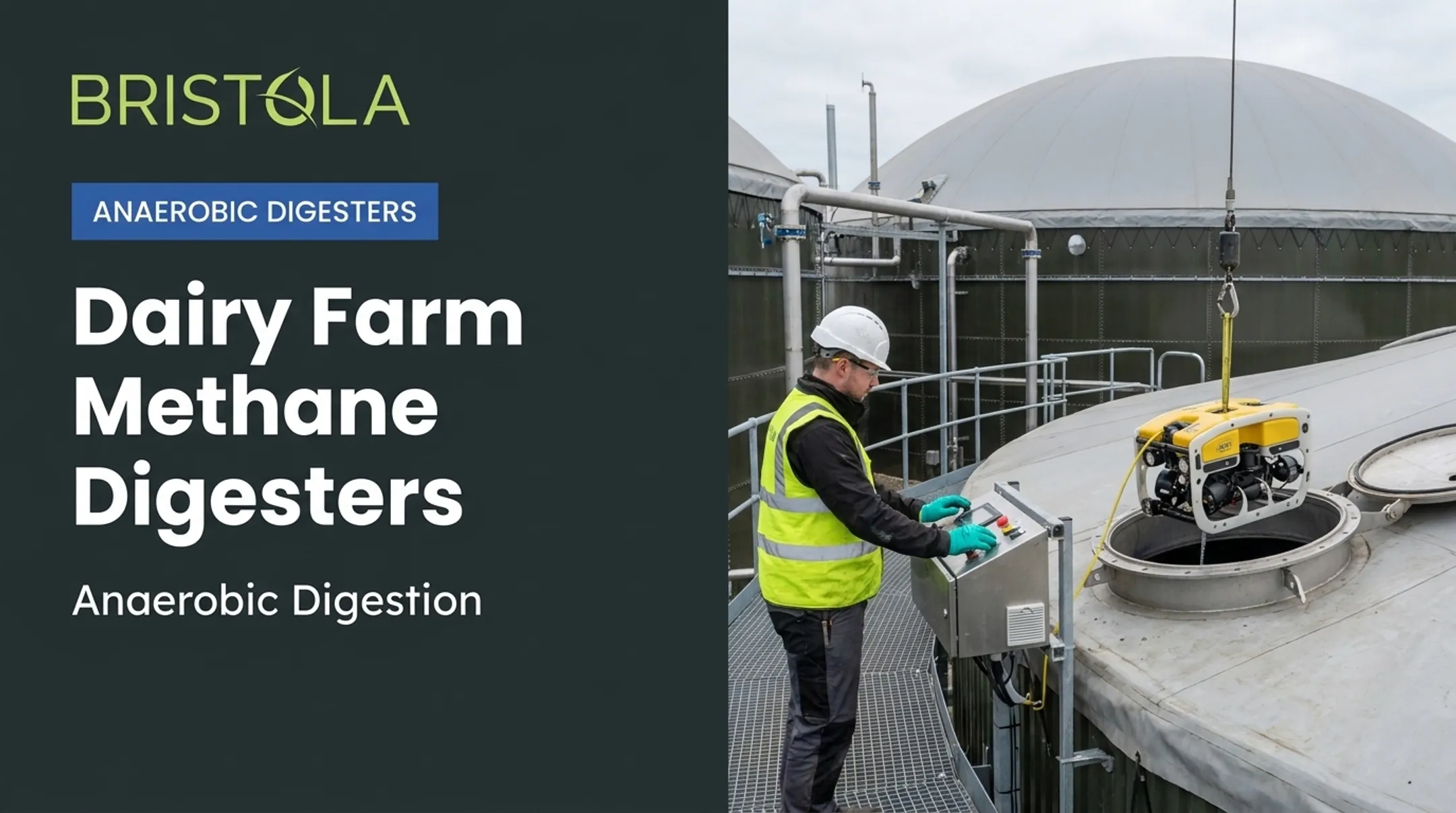
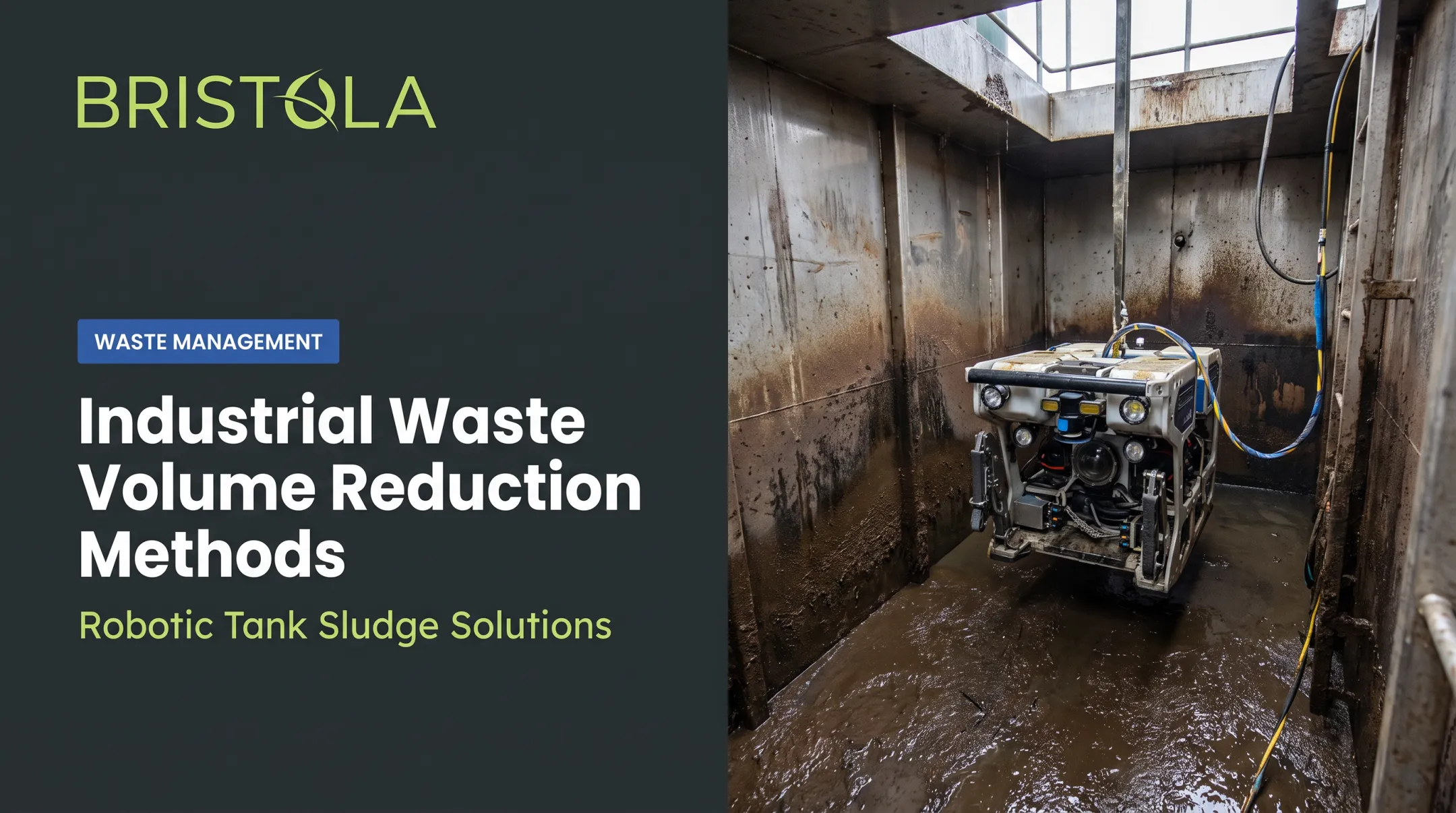
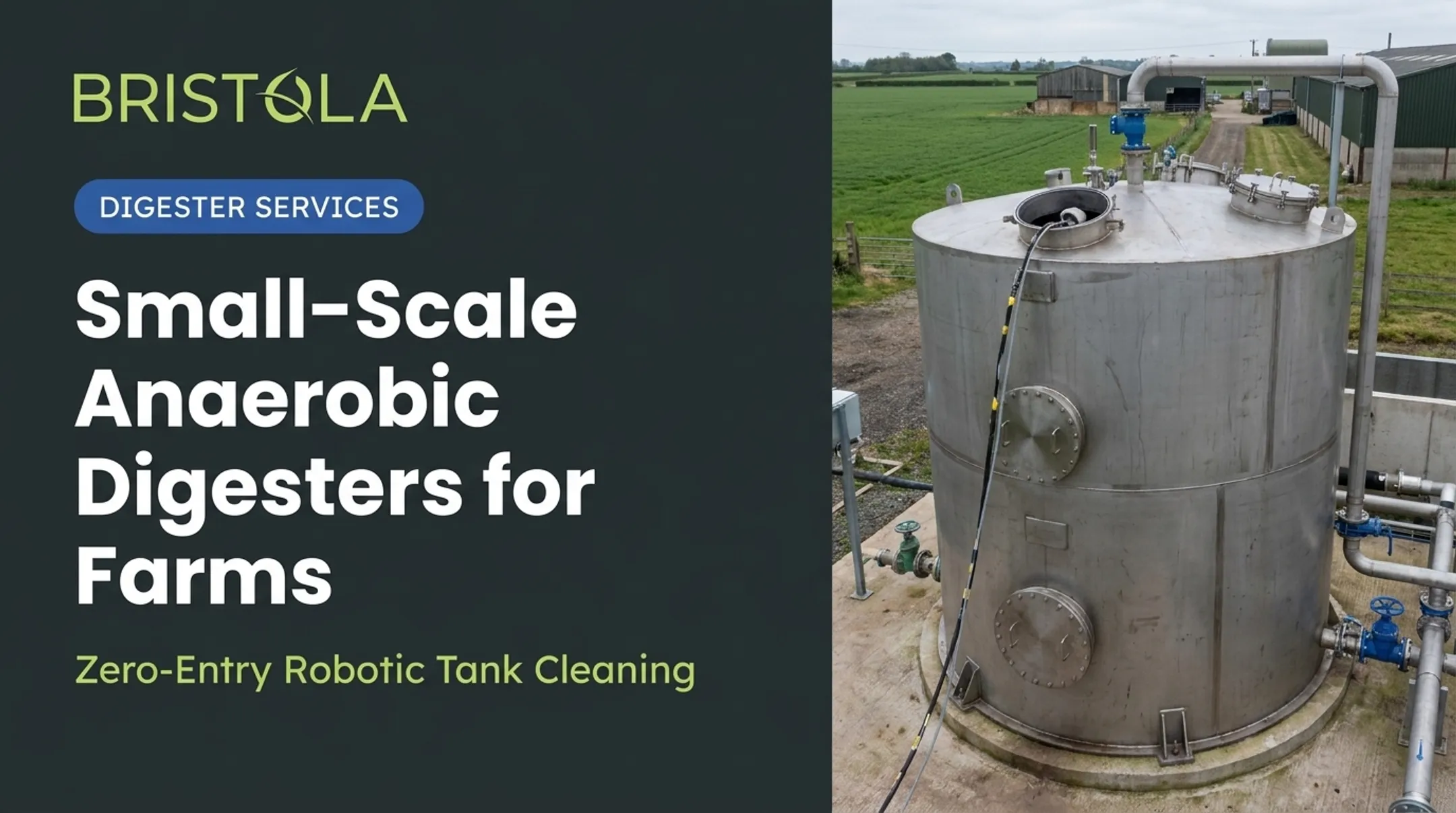
Bristola's zero-human-entry robotic cleaning system addresses that maintenance problem directly. A submersible ROV enters through a patented equalization-chamber portal (compatible with manholes 24 inches or larger) while the digester or lagoon stays full and operational. No draining, no confined-space entry, and no downtime.
Bristola's cost comparisons put traditional cleaning at roughly $250,000 annually per tank versus $170,000 with robotic cleaning, an estimated $80,000 in annual savings.

Land Application
Land application spreads treated or raw manure on cropland as a nutrient source. It's the final utilization step — returning nutrients to soil rather than storing or treating waste further.
Soil testing and nutrient management plans are non-negotiable here. Applying at agronomic rates (what crops can actually use) is required under North Carolina's swine waste rules and reflected in EPA's broader NMP framework.
Get it wrong, and nitrogen either volatilizes as ammonia or leaches downward past the root zone. One North Carolina analysis found up to 30% of applied nitrogen lost to ammonia emission and another 10-17% lost to leaching.
How it differs: It's a nutrient-recycling endpoint, not a treatment or storage process.
- Best suited for: Farms with adjacent cropland and existing nutrient management plans
- Strengths: Low cost, recycles nutrients, cuts synthetic fertilizer needs
- Limitations: Runoff and over-application risk if timing, weather, and rates aren't carefully managed
How to Choose the Right Piggery Waste Management Method
Popularity isn't a selection criterion. Your farm's specific situation is. Weigh these factors:
- Farm size and daily waste volume: a 500-head finishing operation and a 10,000-head facility have entirely different storage and treatment needs
- Available land: nearby cropland for land application, or added storage and treatment infrastructure if you lack it
- Budget: digesters need significant capital; composting costs far less to start
- Regulatory requirements: state and local permitting rules vary widely, and some states restrict new lagoon-based systems entirely
- Long-term goals: energy generation and carbon credits versus straightforward compliance
- Maintenance capacity: in-house lagoon or digester service without costly downtime or confined-space risk, or a provider that can clean while the facility stays online
That last point matters more than farms often realize going in. A digester that looks efficient on paper can lose output for years when sediment buildup goes unaddressed.
Conclusion
Piggery waste management protects water, air, and soil quality across US hog operations, and compliance is required under today's regulatory landscape. Storage, composting, digestion, and land application each solve different problems, and most working farms end up blending two or more of them.
Understanding these differences, plus committing to proper long-term maintenance, is what separates operations that stay compliant and profitable from ones that end up fighting fires. If digestion or covered lagoons are part of your setup, cleaning them without shutting down production protects that investment. Bristola’s zero-human-entry robotic systems clean digesters and covered lagoons while they stay online, so maintenance does not force a production stop.
Frequently Asked Questions
How long does it take for pig poop to decompose?
Composted pig manure typically reaches pathogen-reduction benchmarks within weeks under proper temperature and turning conditions, though full stabilization can take a few months. Raw, untreated manure left in place decomposes far more slowly and unevenly.
What is the best way to manage pig manure on a small farm?
Composting or pasture spreading works well for smaller operations. Both are low-cost, low-tech options that don't require the capital investment of a digester or large lagoon system.
Is pig manure a good fertilizer?
Yes. Pig manure carries high nitrogen, phosphorus, and potassium content. However, raw manure can burn crops if over-applied, so composting or careful, soil-test-based application rates are essential.
How much waste does a pig produce per day?
Output scales with weight: a 25-pound nursery pig produces roughly 0.37 pounds of manure daily, while a 400-pound sow produces about 0.75 pounds. Larger finishing operations generate hundreds of thousands of gallons annually.
What are the environmental risks of improper pig waste disposal?
Improper disposal contaminates waterways through runoff, releases ammonia and methane into the air, and overloads soil with excess nutrients. EPA and state agencies require nutrient management plans to control those risks.
Can pig waste be used to generate energy?
Yes, through anaerobic digestion. Bacteria break down manure in an oxygen-free digester or covered lagoon, producing biogas that can generate on-farm power or be upgraded into renewable natural gas.