Many SOWs skip over confined space hazards, downtime costs, or waste disposal requirements. Those gaps don't stay hidden. They surface halfway through the project, when change orders are expensive and schedules are already tight. PMI reports that 52% of projects experienced scope creep or uncontrolled change in the preceding 12 months — a warning sign for any tank cleaning contract built on assumptions instead of specifics.
This guide breaks down every component a thorough industrial water tank cleaning SOW should include, from safety protocols to final reporting deliverables.
Key Takeaways
- A complete SOW locks scope, safety procedures, equipment, timeline, and deliverables before work starts
- Confined space entry adds major cost, risk, and documentation versus zero-entry robotic cleaning
- Cleaning frequency should follow tank contents and inspection findings, not a fixed calendar
- Entry vs. zero-entry robotic cleaning drives safety exposure, downtime, cost, and required documentation
What Is a Scope of Work for Tank Cleaning?
A scope of work (SOW) is the formal document agreed to by the facility and the cleaning contractor. Think of it as the project's rulebook.
A tank cleaning SOW typically spells out:
- Tasks and cleaning methods
- Roles and responsibilities
- Timelines and safety measures
- Deliverables and acceptance criteria
Why does this matter more for tank cleaning than general facility maintenance? Tanks are often classified as permit-required confined spaces, and residue inside them can be hazardous. OSHA's 29 CFR 1910.146 defines a confined space as large enough for entry, with restricted access, and not designed for continuous occupancy.
Add a hazardous atmosphere or engulfment risk, and it becomes a permit space requiring detailed procedures.
A general service contract sets broad terms. A SOW is project-specific: it references measurable outcomes, like sediment volume removed or water quality post-cleaning. The Project Management Institute (PMI) describes the SOW as the baseline for delivery and the objective measure of satisfactory completion.
Core Components of an Industrial Water Tank Cleaning SOW
Tank Assessment and Site Conditions
Before anyone touches a valve, the SOW needs a clear picture of what's being cleaned. That means documenting:
- Tank type, capacity, and construction material
- Contents and known contaminants
- Access points and manhole dimensions
- Site-specific hazards: H2S, flammable vapors, confined space classification
Skipping this step is how contractors end up discovering a corroded floor or an inaccessible manhole mid-project. Every hazard identified upfront should be written into the scope, not assumed based on "similar tanks we've cleaned before."

Safety and Regulatory Requirements
This section carries the most legal weight, and it's where vague SOWs create the biggest liability.
At minimum, a traditional entry-based SOW should reference:
- Applicable OSHA confined space standards (1910.146)
- Required PPE per 1910.132
- Lockout/tagout procedures under 1910.147
- Respiratory protection requirements under 1910.134, including fit testing
Permits, gas monitoring protocols, and emergency rescue plans need to be explicitly written into the scope. "Assumed" safety procedures are the ones that fail when something goes wrong.
Cleaning Methodology and Equipment
The SOW should name the exact method: manual entry, vacuum trucks, hydroblasting, or ROV/robotic systems. Vague language like "standard cleaning procedures" leaves too much room for interpretation.
Equipment documentation typically includes:
- Vacuum truck specs (ASME/DOT 412 code for hazardous-material transport)
- Hose pressure ratings and identification
- WJTA color-coding standards — 10,000 PSI yellow, 15,000 PSI green, up to 55,000 PSI red
- Pressure-test certification (hoses tested at 1.2 to 1.5x maximum working pressure)
For robotic systems, the equipment list looks different:
- Submersible ROV specs
- Entry portal compatibility (Bristola's systems, for example, adapt to manholes 24 inches in diameter or larger)
- Winch deployment mechanisms
- Sonar navigation capability

Waste Handling, Transportation, and Disposal
Removed sludge doesn't just disappear. The SOW must define how it's characterized, transported, and disposed of.
Under 40 CFR 262.11, generators must determine whether waste is hazardous at the point of generation, before dilution or mixing. If it's hazardous, waste codes must be assigned and records kept for at least three years.
The SOW should specify:
- Sampling and lab testing procedures (if characterization is uncertain)
- Manifest requirements for off-site shipment
- Approved transporter and disposal facility information
- Final disposal documentation
Skipping this section is a common source of regulatory exposure long after the tank is clean.
Timeline, Downtime, and Deliverables
The SOW should state the project duration, whether the tank stays in service, and what the client receives at completion. Typical deliverables include:
- Inspection reports
- Photo or video documentation
- Sediment mapping
- Water quality tests
Vague deliverable language ("client will receive appropriate documentation") invites disputes. Spell out the format: PDF report, 3D sediment rendering, before/after photos, or raw data files.
Traditional Entry-Based vs. Zero-Entry Cleaning: Scope Differences
This is often the single biggest fork in the road for an industrial tank cleaning SOW.
Traditional entry-based SOWs must include confined space entry procedures, draining and refill timelines, atmospheric testing protocols, and rescue planning. Every one of these sections adds cost, documentation, and schedule risk.
Zero-entry robotic SOWs replace all of that with a much shorter list:
- Robot deployment procedures
- Entry port/airlock specifications
- Real-time monitoring protocols
- Scope exclusions for tank draining and confined space permits
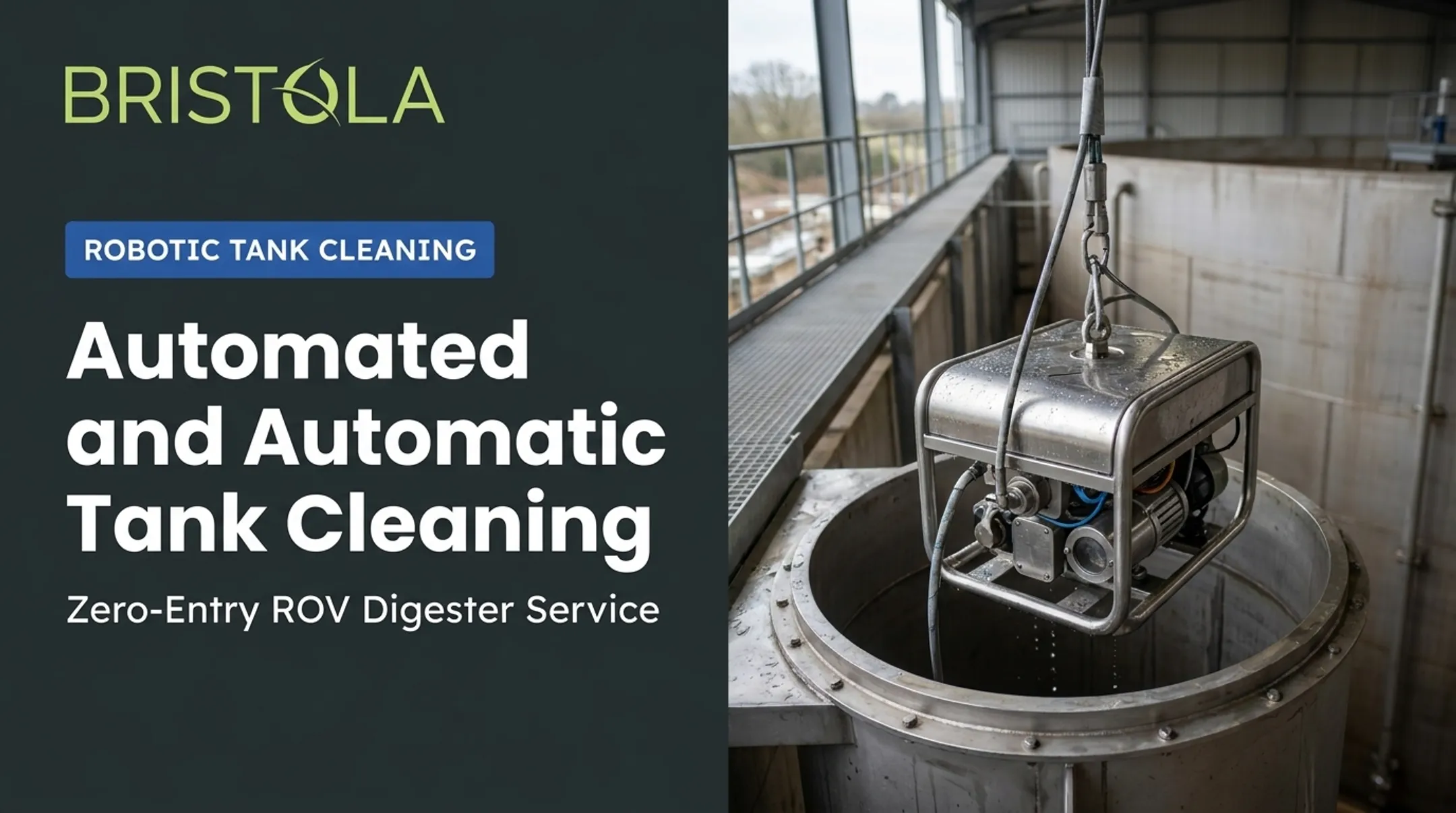
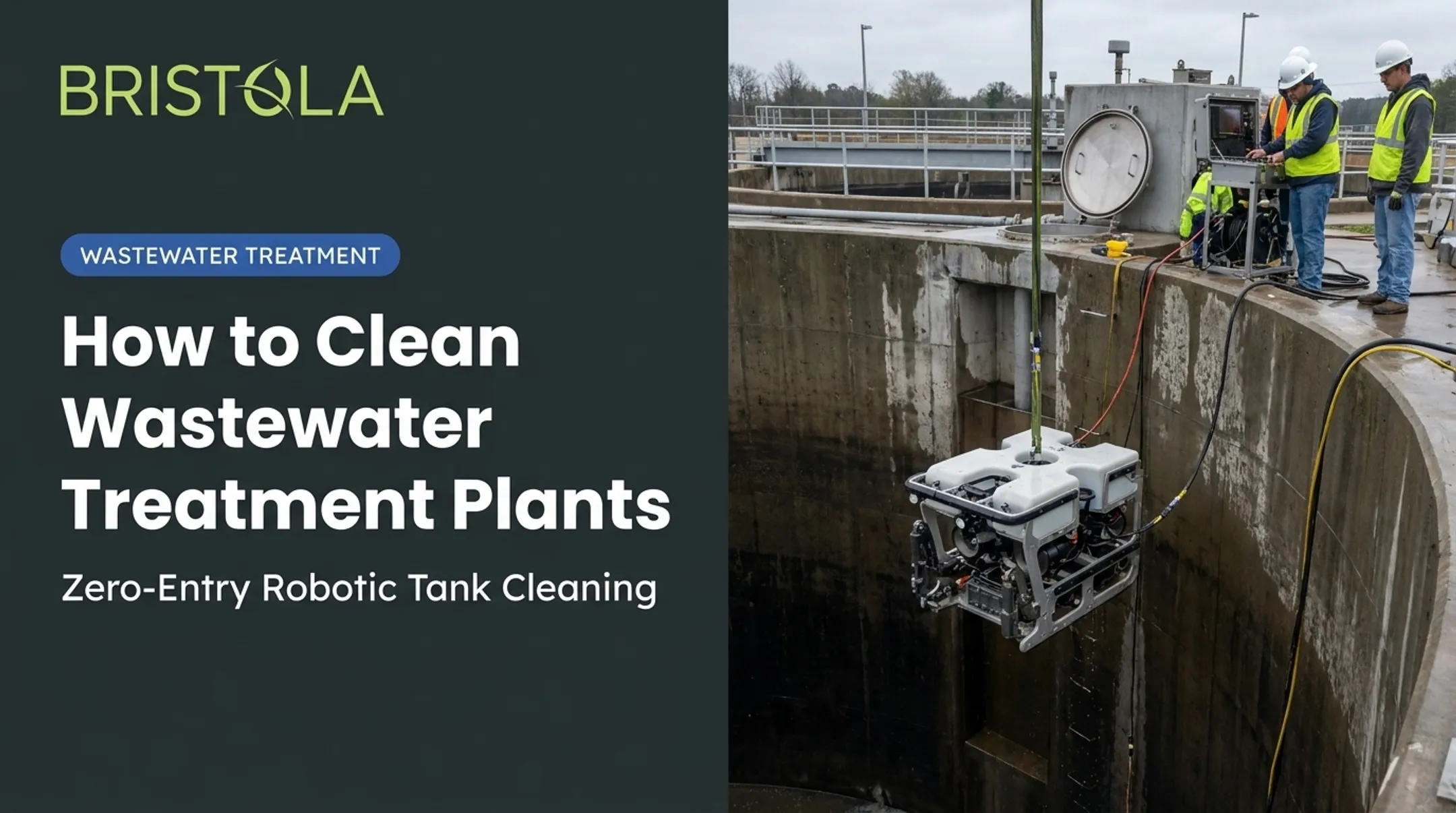
Bristola's patented airlock-type entry system and remote-controlled submersible robot illustrate this shift. Because the robot enters through an equalization chamber rather than a human climbing in, confined space permits, atmospheric testing, and rescue planning simply aren't part of the scope. Entire sections that would otherwise dominate a traditional SOW drop out.
Cost and liability follow from that shorter scope: fewer safety clauses, no rescue-plan documentation, and no shutdown-and-refill timeline to negotiate.
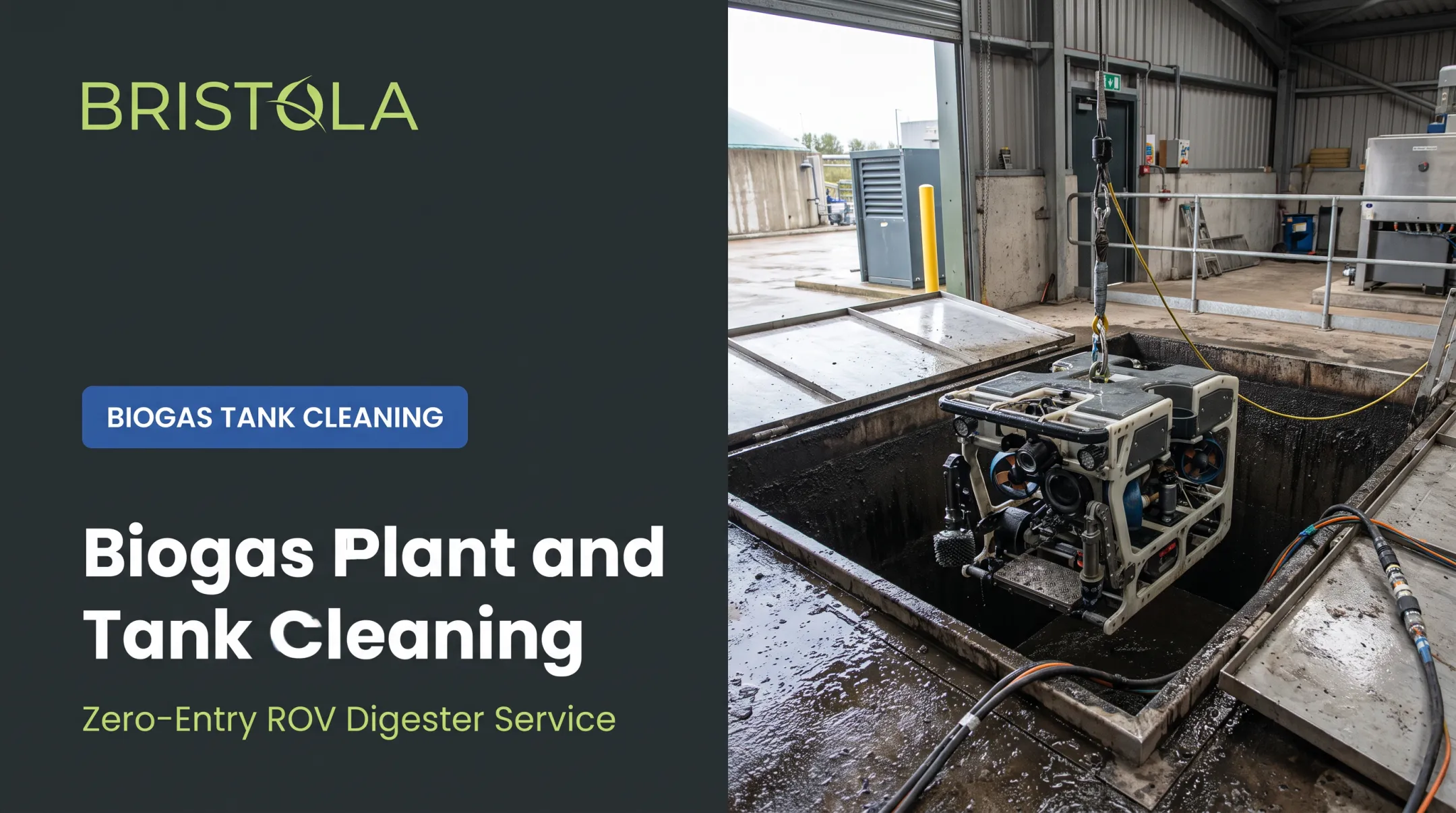
This distinction matters most where downtime has a direct financial cost: anaerobic digesters, biogas tanks, and covered lagoons. Sediment on the tank floor can cut biogas production and renewable energy output.
Cleaning that keeps the digester full and operational protects that output instead of pausing it.
One documented case: a 1.2-million-gallon digester project where a contractor retrofitted the tank's entry door with a 24-inch pipe and isolation valve to enable future live cleanings without production stoppage.
Traditional proposals for a comparable cleanout and roof repair exceeded $600,000 combined. The completed retrofit project came in at $411,000, including cleaning, roof work, and entryway modifications.

How Often Should a Water Tank Be Cleaned?
Frequency depends on tank contents, usage, and inspection findings rather than a fixed calendar.
Typical intervals include:
- Potable water tanks: At least every three years, or sooner if sediment appears
- Non-potable and industrial process tanks: Every six months to annually, based on sediment depth and process demands
What Are the Standard Operating Procedures (SOPs) for Cleaning?
SOPs for industrial water tank cleaning typically follow five stages. Document acceptance criteria for each stage before moving to the next.
- Site assessment and hazard identification — Confirm tank condition, contents, access limits, and safety risks.
- Isolation and safety setup — Lock out energy sources, secure openings, and set required controls.
- Contaminant removal — Remove sediment, sludge, and residue with the approved method.
- Disinfection where required — Treat surfaces when water quality or process standards call for it.
- Final inspection and return to service — Verify cleanliness and integrity before restart.

Frequently Asked Questions
What are the standard operating procedures (SOPs) for cleaning?
Most SOPs follow the same core sequence: assessment and hazard identification, isolation and safety setup, cleaning and contaminant removal, disinfection for potable systems, and final inspection before return to service.
How frequently should a water tank be cleaned?
It depends on tank type and contents. Most industrial tanks need cleaning every 6-12 months, while potable systems are often inspected every 3-5 years. Sediment levels and inspection results should set the final schedule.
What should be included in a tank cleaning contract or SOW?
A complete SOW covers tank assessment, safety and regulatory requirements, cleaning methodology and equipment, waste handling and disposal, and timeline with final deliverables. Missing any of these leaves room for disputes.
Is confined space entry required for all tank cleaning methods?
No. Traditional methods require human entry into the tank, but robotic and ROV systems, like Bristola's submersible robot, can eliminate entry entirely by working through an airlock-type portal.
How does tank cleaning scope differ for hazardous vs. non-hazardous contents?
Hazardous contents require additional PPE, waste characterization and sampling, and detailed regulatory documentation for transport and disposal. Non-hazardous cleaning still needs waste handling procedures, but with fewer compliance layers.
Can a tank stay in operation during cleaning?
Yes, with zero-human-entry robotic systems. These allow cleaning while the tank remains full and operational, unlike traditional methods that require draining, shutdown, and refill before production resumes.