Many facility managers struggle with a moving target: waste classifications, generator categories, and storage rules that shift as production changes. This guide breaks down what counts as hazardous waste, how it's regulated, how to dispose of it correctly, and how to reduce risk during the storage and maintenance stages that trip up even experienced operations.
Key Takeaways
- Classify every waste stream under RCRA as listed (F, K, P, U) or characteristic before disposal
- Recheck VSQG, SQG, or LQG status monthly—it sets your full compliance burden
- Segregation, labeling, and manifest tracking cut liability and disposal cost
- Zero-entry robotic tank cleaning removes workers from hazardous storage tanks
What Is Industrial Hazardous Waste?
Under 40 CFR Part 261, a solid waste qualifies as hazardous if it's specifically listed by the EPA or if it exhibits one of four characteristics (eCFR, 40 CFR Part 261):
- Ignitability: ignites or sustains combustion easily
- Corrosivity: extreme pH that can corrode metal
- Reactivity: unstable, explosive, or releases toxic gases
- Toxicity: leaches contaminants above regulatory limits
Not every industrial byproduct is hazardous. Status turns on generator knowledge, lab testing, regulatory exclusions, and whether the material meets a Part 261 listing or characteristic.
The Cradle-to-Grave Rule
Once a waste is classified as hazardous, RCRA's cradle-to-grave principle applies. The generator is legally responsible for that waste from the moment it's created through final treatment or disposal (EPA). Handing waste off to a hauler doesn't end your liability if that waste is later mismanaged.
Listed vs. Characteristic Waste
Listed wastes fall into four categories:
| List | Description | Example |
|---|---|---|
| F list | Non-specific source wastes from common processes | Spent solvents from degreasing |
| K list | Source-specific, tied to a named industry | K051: API separator sludge from petroleum refining |
| P list | Unused acute hazardous chemical formulations | Discarded pesticide concentrates |
| U list | Unused commercial chemical products | Off-spec chemical products |

Characteristic waste never has to appear on a list. If testing shows ignitability, corrosivity, reactivity, or toxicity, it is regulated on that basis alone.
What Are the Main Types of Industrial Hazardous Waste?
Industrial hazardous waste generally falls into five categories:
- Chemical and solvent waste – degreasing agents and cleaning solvents from manufacturing and metal fabrication
- Corrosive and reactive waste – acids, bases, and oxidizers common in metal finishing and chemical plants
- Heavy metal and sludge waste – wastewater treatment sludges, plating residues, tank bottoms
- Petroleum and oil-based waste – refinery sludge, used oil, and tank cleaning residues
- Toxic and acute hazardous waste – cyanides, pesticides, and P-listed chemicals
A precise national percentage of industrial waste that's hazardous versus non-hazardous isn't reported on a comparable basis by the EPA. Older figures like the "7.6 billion tons" statistic trace back to 1988 estimates and shouldn't be treated as current (Waste Optima).
The safer approach is to classify every waste stream individually rather than relying on industry-wide averages.
Regulatory Compliance and Generator Responsibilities
Your compliance obligations hinge on how much hazardous waste you generate each month.
| Generator Category | Non-Acute Waste/Month | Key Obligation |
|---|---|---|
| VSQG | 100 kg or less | Minimal rules; EPA ID usually not required |
| SQG | 100–1,000 kg | EPA ID, manifests, 180-day accumulation limit |
| LQG | 1,000 kg or more | EPA ID, manifests, 90-day limit, full training |

If you operate as an SQG or LQG, core duties typically include:
- Obtain an EPA ID number before generating regulated waste (VSQGs are usually exempt)
- Use manifests to track waste from your facility to the licensed disposal site
- Label and date containers the moment accumulation begins
- Respect accumulation time limits (180 days for most SQGs; 90 days for LQGs)
- Train staff on handling, storage, and emergency response
Your generator status isn't fixed. A slow production month can shift you from SQG to VSQG; a busy one can push you into LQG territory (40 CFR Part 262). Reassess your waste streams regularly, not just once a year.
Common inspection failures include expired accumulation dates, commingling incompatible wastes, and outdated training records. Most are preventable with a simple monthly checklist for dates, segregation, and training records.
Industrial Hazardous Waste Disposal Methods
Disposal starts with segregation and classification. Mixing waste streams before they're properly identified is one of the fastest ways to turn a manageable waste stream into an expensive problem.
From there, treatment options include:
- Incineration – controlled combustion that destroys organic contaminants and reduces volume
- Chemical treatment – neutralizes corrosives or breaks down reactive compounds
- Solidification/stabilization – binds contaminants into a stable, less mobile form (EPA Solidification Resource Guide)
- Secure landfilling – engineered containment for waste that can't be treated further
All off-site shipments to a licensed Treatment, Storage, and Disposal Facility (TSDF) require manifest tracking under 40 CFR Part 263. The manifest follows the waste from your loading dock to the final destination, giving you a paper trail if questions arise later.
When waste has fuel value, recycling and energy recovery can sit alongside these disposal paths. Burning hazardous waste as fuel counts as recycling under EPA rules and may cut disposal costs. It still falls under RCRA recycling regulations, so manifests, permits, and facility standards still apply.

Reducing Risk During Storage and Tank Maintenance
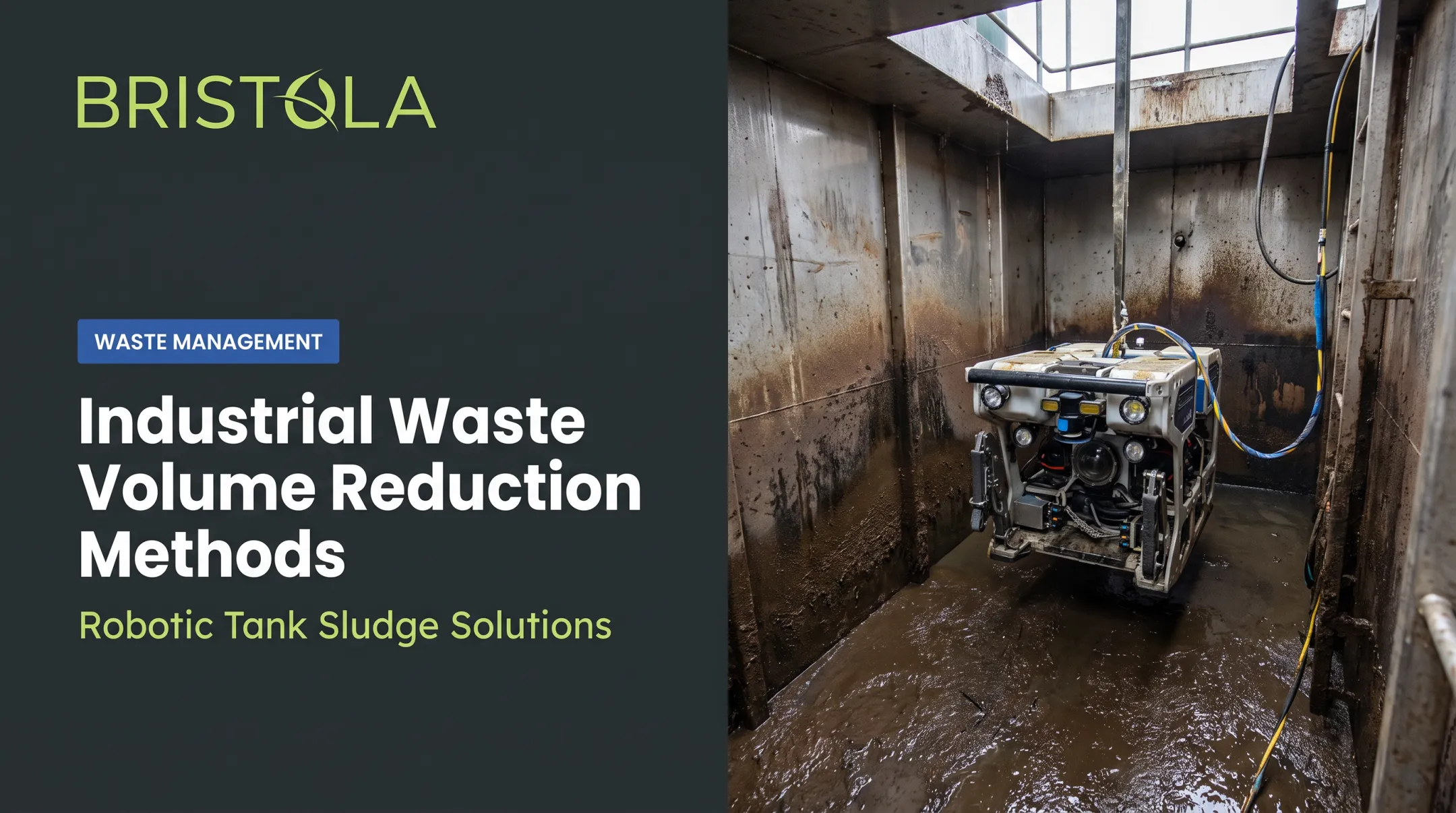
Tanks and lagoons holding hazardous or process waste don't stay clean on their own. Sludge, sediment, and residue build up over time, and eventually someone has to go in and clean it out.
Traditionally, that means confined space entry. And confined spaces are dangerous:
- BLS recorded 1,030 occupational deaths involving confined spaces from 2011 to 2018 (BLS)
- A 2024 OSHA case involved a worker who died from asphyxiation while repairing a valve inside a production tank — the employer had never evaluated the tank's atmosphere and received 16 serious citations
Beyond the safety risk, manual tank cleaning usually means draining the tank and halting production, sometimes for days.
A Zero-Human-Entry Alternative
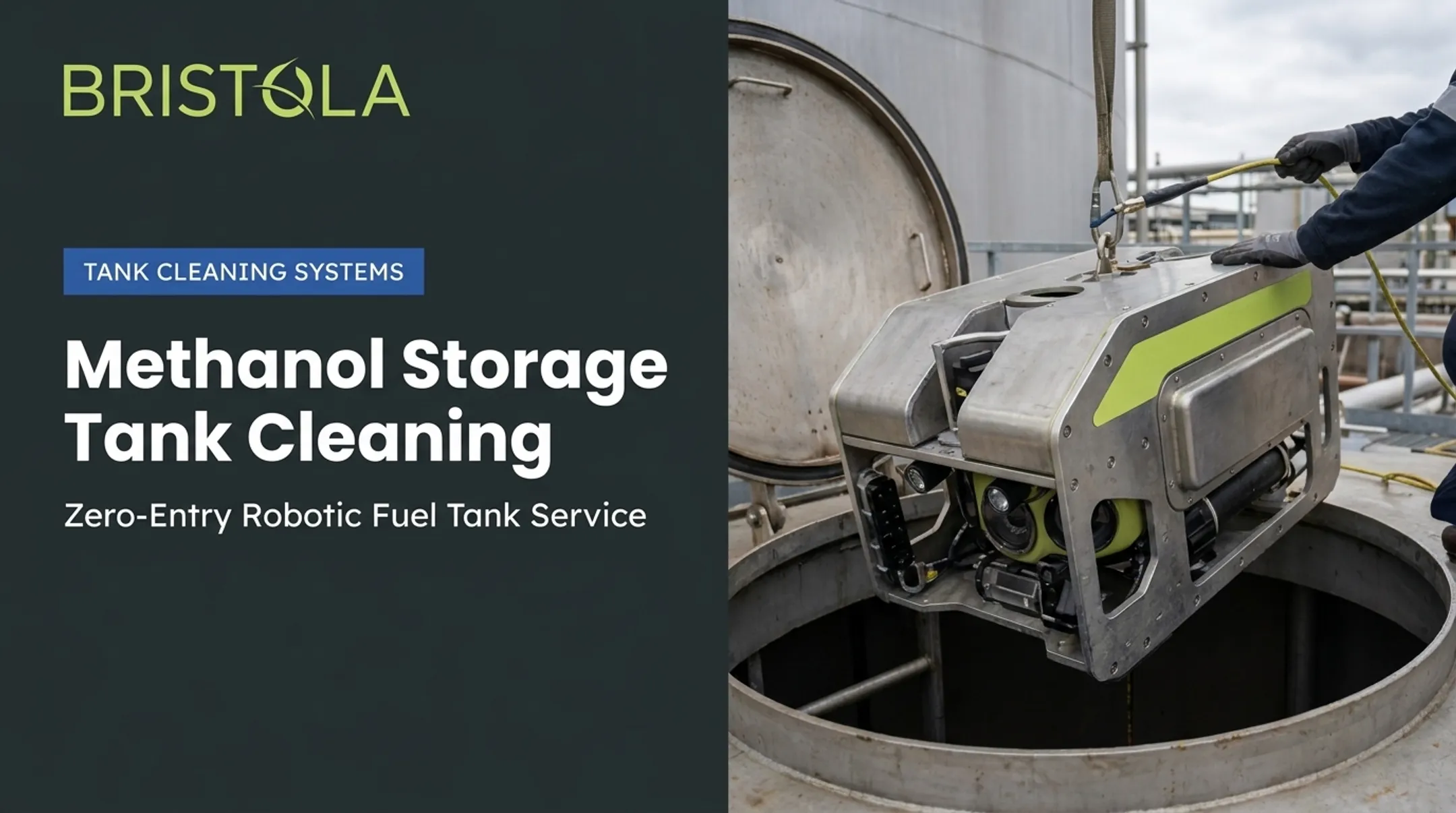
Those twin costs—entry risk and forced downtime—are exactly what zero-human-entry cleaning is built to cut. Bristola's Submersible Robotic Cleaning System uses a patented equalization chamber entry system installed on an existing manhole (24 inches in diameter or larger). Here's how it works:
- Install the entry portal on the tank roof and deploy the robot while the tank stays full and operational
- A winch lowers the ROV to the tank floor through valve openings
- The robot removes sludge and sediment, pumping it through a flexible hose to a processing option
- The winch retrieves the robot once the job is done

Result: no draining, no confined space entry, and no production stoppage.
For oil & gas, wastewater treatment, and food processing facilities where hazardous residues build up constantly, that keeps both people and throughput out of the danger zone during routine tank maintenance.
Choosing the Right Waste Management Partner
Not every disposal vendor operates the same way, and the gaps matter when your liability doesn't end at the loading dock.
Look for a partner that:
- Owns its treatment facilities rather than subcontracting disposal to unknown third parties
- Provides documented proof of disposal: certificates of destruction, manifests, and disposal records
- Has industry-specific experience with your waste streams, whether that's refinery sludge or plating residues
- Offers full waste stream assessments instead of a one-size-fits-all quote
You can verify a facility's standing yourself. EPA's RCRAInfo database shows permit status and compliance history, while ECHO displays violations and enforcement actions (EPA ECHO).
Confirm the facility's permit actually covers your specific waste codes before you ship anything. A mismatch here becomes your problem, not theirs.
Frequently Asked Questions
What are the main types of industrial hazardous waste?
The main categories include:
- Chemical and solvent waste
- Corrosive and reactive waste
- Heavy metal sludges
- Petroleum-based waste
- Toxic and acute hazardous waste (pesticides, cyanides)
What is the difference between hazardous and non-hazardous industrial waste?
Hazardous waste meets RCRA's listed or characteristic criteria: for example, corrosive acid waste or ignitable solvents. Non-hazardous waste, like most construction debris, doesn't meet these thresholds.
Who is responsible for industrial hazardous waste disposal?
The generator holds cradle-to-grave responsibility under RCRA. That liability follows the waste even after it leaves your facility for treatment or disposal.
How do I know if my facility generates hazardous waste?
Test your waste streams against the four characteristics (ignitability, corrosivity, reactivity, toxicity) and check them against EPA's F, K, P, and U lists. Your monthly volume then determines your generator category.
What happens if hazardous waste is not disposed of properly?
Improper disposal risks federal fines, environmental contamination, and worker health hazards from toxic exposure. Inspection failures like expired accumulation limits can trigger enforcement action quickly.
How can facilities reduce the risks associated with hazardous waste storage tanks?
Proper labeling, monitoring, and accumulation tracking help, but the biggest risk reduction comes from eliminating confined space entry. Bristola's zero-human-entry robotic systems clean tanks while they stay full and operational.