The consequences add up fast. Reduced storage capacity means ponds can't handle heavy rain events. Poor water quality stresses fish and aquatic plants. And ignoring the problem long enough turns a routine maintenance job into an expensive emergency dredging project.
This guide covers what causes silt buildup, how to spot the warning signs, your removal options (from a hand net to robotic systems), and the prevention steps that keep sediment from becoming a crisis in the first place.
Key Takeaways
- Silt and sediment build up in every pond and lagoon; regular monitoring prevents costly emergency dredging
- Match removal method to scale: manual netting for small ponds, mechanical dredging or robotic vacuum systems for industrial sites
- Erosion control and inlet/outlet maintenance prevent sediment influx more cheaply than removing it later
- Zero-entry robotic cleaning lets industrial lagoons and digesters stay operational during sediment removal, cutting downtime and safety risk
What Causes Pond Silt and Sediment Buildup
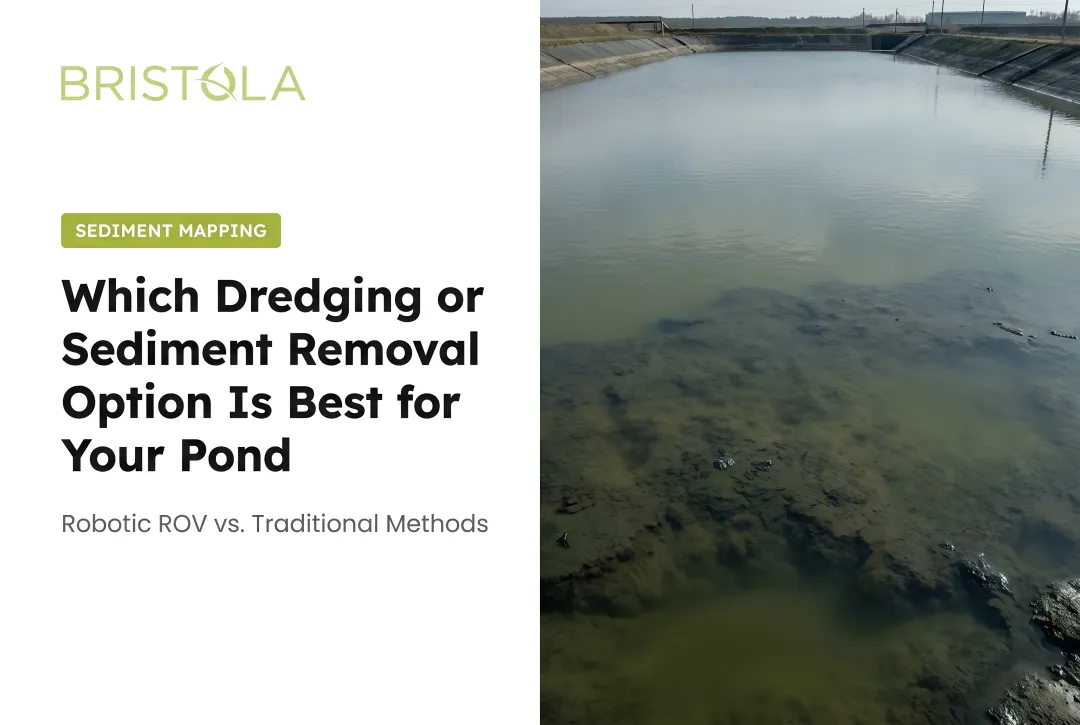
Sediment isn't one thing. It's a mix of eroded soil, decaying plant matter, fish waste, uneaten feed, and debris carried in by runoff from the surrounding land.
Silt vs. sludge — these terms get used interchangeably, but they're different:
- Silt refers to fine inorganic mineral particles, typically smaller than 0.063 mm, according to the EPA's sediment classification
- Sludge is organic residue and settled solids from decaying plants, aquatic waste, and biological treatment processes
Most ponds have both mixed together at the bottom. Construction sites, agricultural fields, and eroding banks near the pond edge all accelerate deposits. The EPA notes that conservation practices help reduce sediment runoff from agricultural land, which is one of the biggest contributors to pond and basin sedimentation nationwide.

Industrial Lagoons Face a Different Challenge
Anaerobic digesters, covered lagoons, and wastewater treatment tanks accumulate solids from process water rather than surface runoff. The EPA describes lagoon sludge as a mixture of solids that settle out and require periodic removal to maintain treatment function. Without periodic removal, this buildup reduces treatment volume and can compromise the containment system's structural integrity.
Signs Your Pond Needs Sediment Removal
Some warning signs are obvious. Others require actual measurement. Physical indicators:
- Noticeably shallower water than when the pond was built
- Foul, rotten-egg odor (hydrogen sulfide gas from anaerobic decomposition)
- Persistent murky or discolored water
- Frequent algae blooms fed by nutrient-rich sediment
Measuring Sediment Depth
Guessing isn't good enough for larger ponds. NC State Extension recommends a grid-based survey method for lagoons: at least 6 measurement points per acre, up to 24 points depending on size. Push a marked pole through the sludge layer to the bottom; the difference between liquid surface and sludge top gives you thickness. For more precision, options include:
- Sonar depth finders
- Infrared measurement
- Sludge Judge (clear plastic pipe) sampling When dredging becomes necessary: Benchmarks vary by pond type. Minnesota recommends removing sediment from stormwater pond forebays every 2–7 years or once 50% of capacity is lost. For anaerobic lagoons in North Carolina, sludge exceeding 50% of treatment volume triggers a required removal plan. There's no single national rule, but the "50% capacity" threshold shows up repeatedly across jurisdictions.

How to Get Rid of Silt in a Pond: Removal Methods
The right method depends heavily on pond size, sediment volume, and whether the facility can afford downtime.
Small Residential Ponds
- Manual removal: nets, hand tools, and pond vacuums work fine for light debris and shallow muck
- Beneficial bacteria additives: marketed to digest organic sludge, though no independent body has validated them for settled sludge removal
- Hydro-raking: lifts muck from shallow water without tearing out surrounding vegetation, useful where plant disturbance is a concern
Larger Ponds and Basins
Mechanical dredging is the traditional heavy-duty option. Clemson Extension identifies two principal removal methods: mechanical (excavator scoops sediment out directly) and hydraulic (pumping sediment through a pipeline to an upland dewatering site). Both require draining or partial draining, plus a place to put the spoils. It's effective, but slow, expensive, and disruptive to whatever's living in the pond.
Industrial Lagoons, Digesters, and Tanks
Draining an anaerobic digester or covered lagoon isn't a minor inconvenience. It halts biogas production, requires temporary storage for incoming waste, and often means sending workers into confined, oxygen-poor spaces.
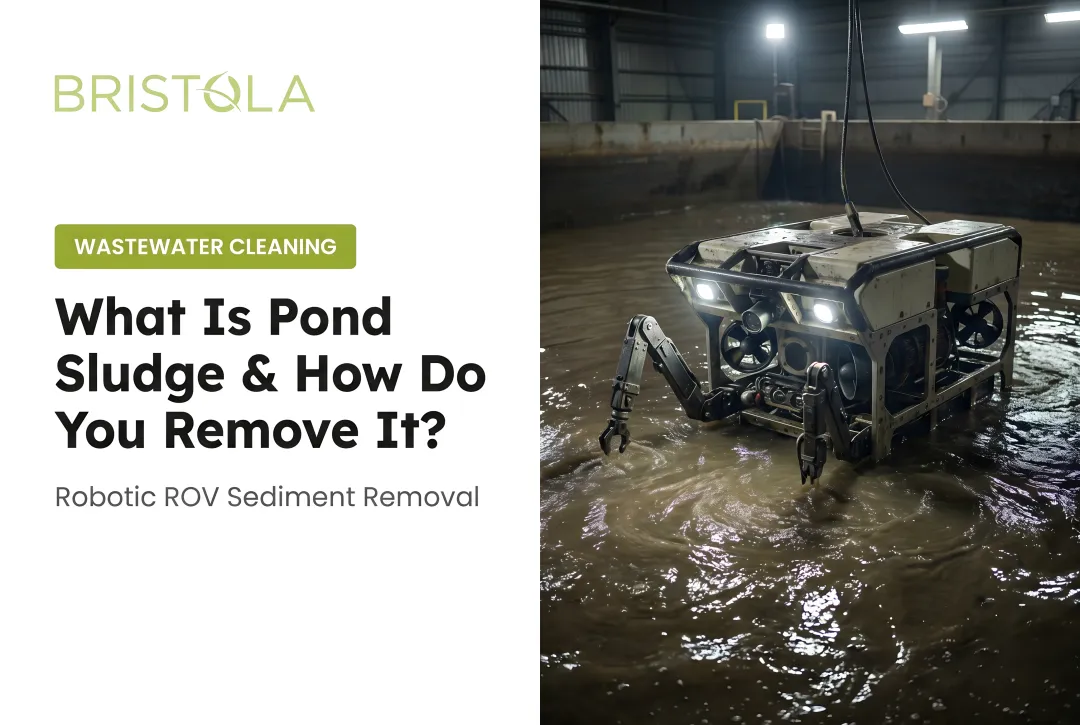
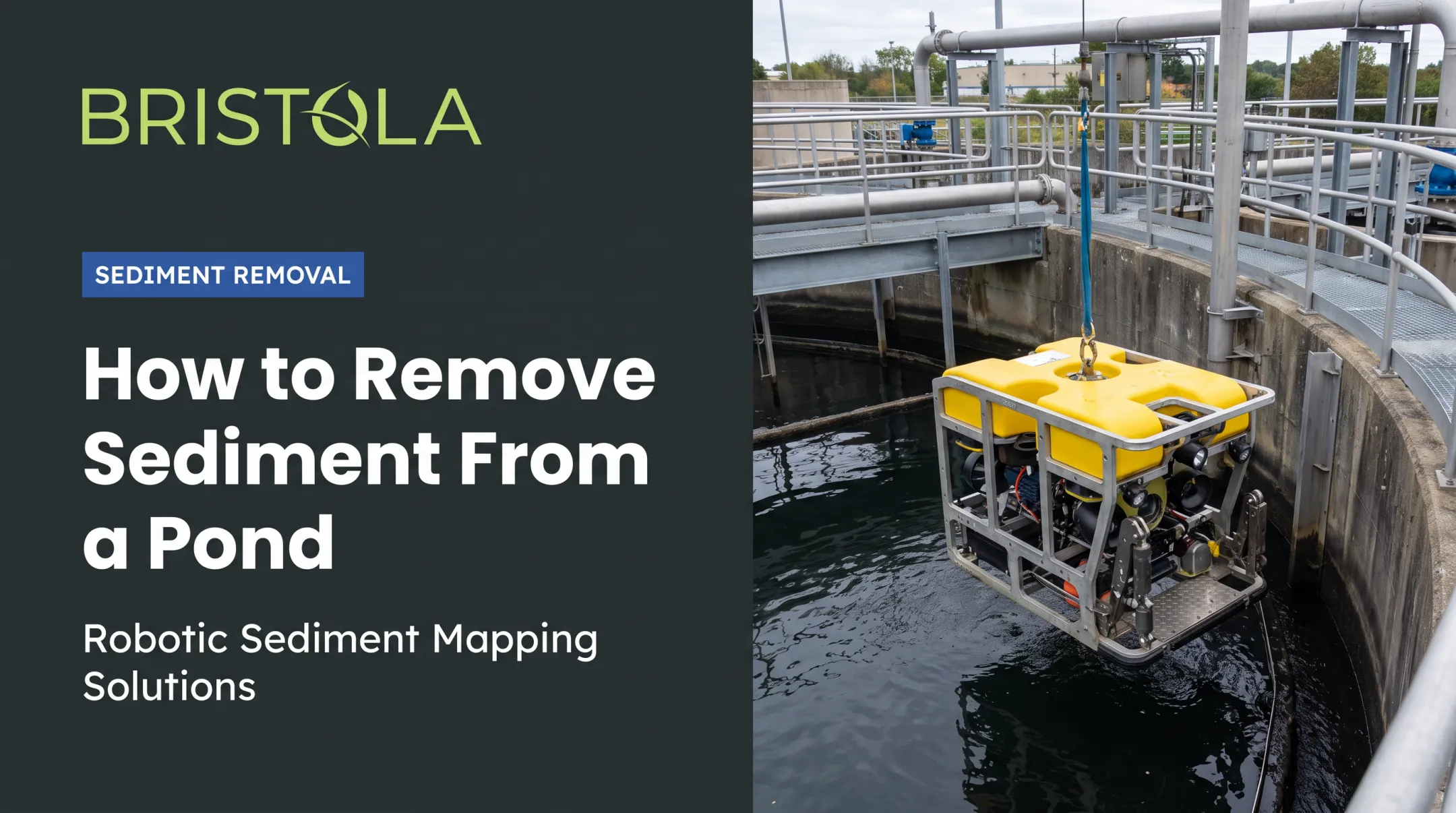
Robotic vacuum systems avoid that tradeoff. Bristola's submersible ROV uses a patented equalization chamber and entry portal installed at an existing manhole 24 inches or larger. The robot enters a full, operating tank without draining it or sending anyone inside.
The ROV travels to the tank floor, vacuums accumulated sludge through a flexible hose, and returns to its home position when finished. No confined space entry. No production stoppage.
Bristola has deployed this system in anaerobic digesters, covered lagoons, wastewater treatment tanks, and industrial storage facilities. Work spans food processing, refining, and renewable energy, including a documented digester cleanout with roof and mixer replacement.

Permitting note: Larger dredging projects that discharge or place dredged material into waters of the US, including wetlands, typically require review under Clean Water Act Section 404. Some routine maintenance activities qualify for exemptions, but check with the Army Corps of Engineers before moving material.
How Long Does It Take for Sediment to Settle in a Pond?
Settling time isn't fixed. It depends on several factors:
- Particle size: Larger, denser particles drop within hours; fine silt can stay suspended for days
- Temperature: Cold water (32°F) settles particles at roughly 43% of the rate seen at 104°F, because colder water is more viscous
- Flow and pond design: Water needs enough residence time to slow down so solids can drop out The University of Minnesota notes that settling velocity follows Stokes' Law for clay, silt, and fine sand, which is why size and density drive the timeline so strongly. A pond that has already lost capacity to sediment has less room for water to slow down and drop particles. Settling efficiency falls, and future buildup speeds up. Well-designed retention and sediment basins account for this. Minnesota's stormwater standards require basins serving 10+ disturbed acres to hold enough live storage (at minimum 3,600 cubic feet per acre) to give water the residence time it needs. That design only works if maintenance keeps pace—a basin that is never dredged stops performing as intended.
Preventing Future Silt and Sediment Buildup
Removing sediment costs money. Preventing it from arriving in the first place costs less.
Erosion control around the pond:
- Vegetated buffer strips — can remove more than 50% of incoming sediment depending on width and slope
- Riprap on banks and shorelines to armor against scour and wave action (not effective on slopes steeper than 2:1)
- Silt fencing around construction zones or exposed soil, repaired within 24 hours of any damage

Routine maintenance tasks:
- Skim floating debris regularly
- Control fish feeding to reduce uneaten food waste
- Clean filters and inlet/outlet structures so flow doesn't stagnate
- Schedule periodic depth surveys to catch buildup early
For Industrial Facilities
Reactive dredging gets expensive once sediment has already built up. A condition-based approach catches the problem earlier.
Bristola's sediment mapping service uses sonar and GPS to build 3D renderings of pond and lagoon bottoms. Operators get actual data (average and maximum depth, sediment thickness, volume) instead of guesswork.
Because the robotic cleaning system doesn't require draining, operators can schedule routine maintenance from those readings rather than waiting for a crisis. That keeps sediment from ever reaching the point where it threatens biogas output or structural integrity.
Frequently Asked Questions
How to get rid of silt in a pond?
Small ponds can be cleared with manual netting, vacuums, or hydro-raking. Larger basins typically need mechanical or hydraulic dredging. Industrial lagoons and digesters can use robotic vacuum systems that remove sludge without draining.
How long does it take for sediment to settle in a pond?
It varies from hours to days depending on particle size, water temperature, and flow rate. Heavier particles drop quickly; fine silt can remain suspended much longer, especially in ponds that have already lost storage capacity.
How often should a pond be dredged?
Stormwater and retention ponds often need major sediment removal every 2-7 years, or once roughly 50% of design capacity is lost. Anaerobic lagoons follow a treatment-volume threshold rather than a fixed schedule.
Is pond silt harmful to fish and aquatic life?
Yes. Decomposing organic sediment consumes dissolved oxygen and can release toxic hydrogen sulfide gas, particularly near the bottom. Severe depletion can cause fish kills, especially in warm, still water.
Can silt removal be done without draining a pond or lagoon?
Yes. Vacuum systems and Bristola's robotic cleaners can remove sediment from full, operating tanks and covered lagoons through an existing manhole or entry portal, without draining or halting production.
Do I need a permit to dredge or remove silt from my pond?
It depends on whether your pond connects to a stream, wetland, or other waters of the United States. Placing dredged material in these areas generally requires review under EPA Clean Water Act Section 404.