Bristola founder Jared Burma knows this firsthand. A near-death experience inside a tank pushed him to build a safer alternative in 2019. That close call became the foundation for a zero-human-entry robotic cleaning system now used across the biogas industry.
This article covers why tank cleaning matters, the risks baked into traditional methods, what a full facility cleaning actually involves, and how robotic technology is changing the equation entirely.
Key Takeaways
- Sediment, scum, and grit buildup shrinks usable digester volume and cuts biogas yield over time
- Traditional cleaning needs confined-space entry, full shutdown, and de-sludging—raising real safety and revenue risk
- Zero-human-entry robotic systems clean tanks in operation, eliminating downtime and danger
- Consistent maintenance protects long-term biogas output, uptime, and equipment life
Why Biogas Plant and Tank Cleaning Matters
Solids don't just sit at the bottom of a digester quietly. They actively steal working volume. As sludge accumulates, less space remains for active digestion, and methane output falls in step.
Bristola's own case work shows how severe this gets. A 1.2-million-gallon EnviTec digester in New York went uncleaned for more than four years.
By the time the operator called for help, volatile-solids reduction had dropped below 25%, and the facility couldn't hold its 95–101°F mesophilic range during colder months. Daily biogas production had fallen 20%.

Corrosion Is the Hidden Second Threat
Buildup isn't the only enemy. Hydrogen sulfide reacts with moisture to form sulfuric acid, which attacks concrete, agitators, and piping. Biomass Magazine reports that this acid can corrode digester walls, roof structures, and unprotected headspace materials over time.
That same New York digester project uncovered heavy corrosion in the gas-zone concrete wall. Bristola's team repaired the top four feet of the tank, applied a corrosion-resistant epoxy coating, and replaced five mixers.
The financial and compliance stakes are real:
- Lost production volume translates directly into lost revenue
- Unplanned manual-cleaning shutdowns take facilities offline for days or weeks at a time
- Weak maintenance puts gas containment and EPA/state air-permit compliance at risk
Traditional Tank Cleaning Methods and Their Risks
Confined Space Entry Cleaning
The standard process looks like this: drain the tank, ventilate, then send workers inside wearing gas detectors, breathing apparatus, and harnesses. OSHA's permit-required confined space standard requires continuous atmospheric testing, forced-air ventilation, and a dedicated attendant outside the space.
The Bureau of Labor Statistics recorded 1,030 confined-space deaths from 2011 to 2018, with annual counts ranging from 88 to 166.
Biogas tanks add another layer of risk. Methane buildup has caused explosions during maintenance work, and manure gases released during agitation pose separate dangers at covered lagoons.
Heavy Equipment and Vacuum Truck Extraction
For larger cleanouts, operators bring in excavators, vacuum trucks, and specialized contractors. This requires:
- Full tank shutdown before work begins
- Temporary storage for extracted sludge and displaced material
- Coordination with outside service providers, often on a multi-day or multi-week timeline
Bristola's cost data illustrates the scale of this burden. One traditional cleaning comparison included:
- Roughly $300,000 for direct tank cleaning
- $200,000 in lost revenue
- $240,000 for chemical treatment and storage
- $240,000 in other cleanout costs

Annualized, that burden approached $250,000.
What's Involved in a Full Biogas Facility Cleaning
A full biogas facility clean covers feed handling, digester tanks, and support spaces, not just the fermenter. Each zone carries different contamination risks and cleaning needs.
Substrate Storage and Feed Areas
Porous surfaces in feed and storage areas trap organic residue where mold and bacteria thrive. Regular pressure washing keeps these zones from becoming a contamination source that feeds back into the digestion process.
Fermenter and Secondary Fermenter Tanks
This is where most of the operational risk lives. As solids settle, they reduce both digester volume and gas yield. Operators typically track:
- pH levels: deviations signal process instability before output drops
- Temperature consistency: losing the mesophilic or thermophilic range hurts microbial activity
- Volatile solids reduction: a declining percentage is an early warning sign, as seen in Bristola's New York case where reduction fell below 25%
Cleaning frequency should be condition-based rather than calendar-based. Watch sludge depth, gas trends, and mixing performance rather than assuming a fixed interval works for every facility.
Generator, Control Rooms, and Peripheral Equipment
Generator rooms and control areas accumulate dust, soot, and residue over time. While this doesn't affect biogas yield directly, routine cleaning here protects equipment longevity and reduces fire risk.
The Zero-Human-Entry Alternative: Robotic Tank Cleaning
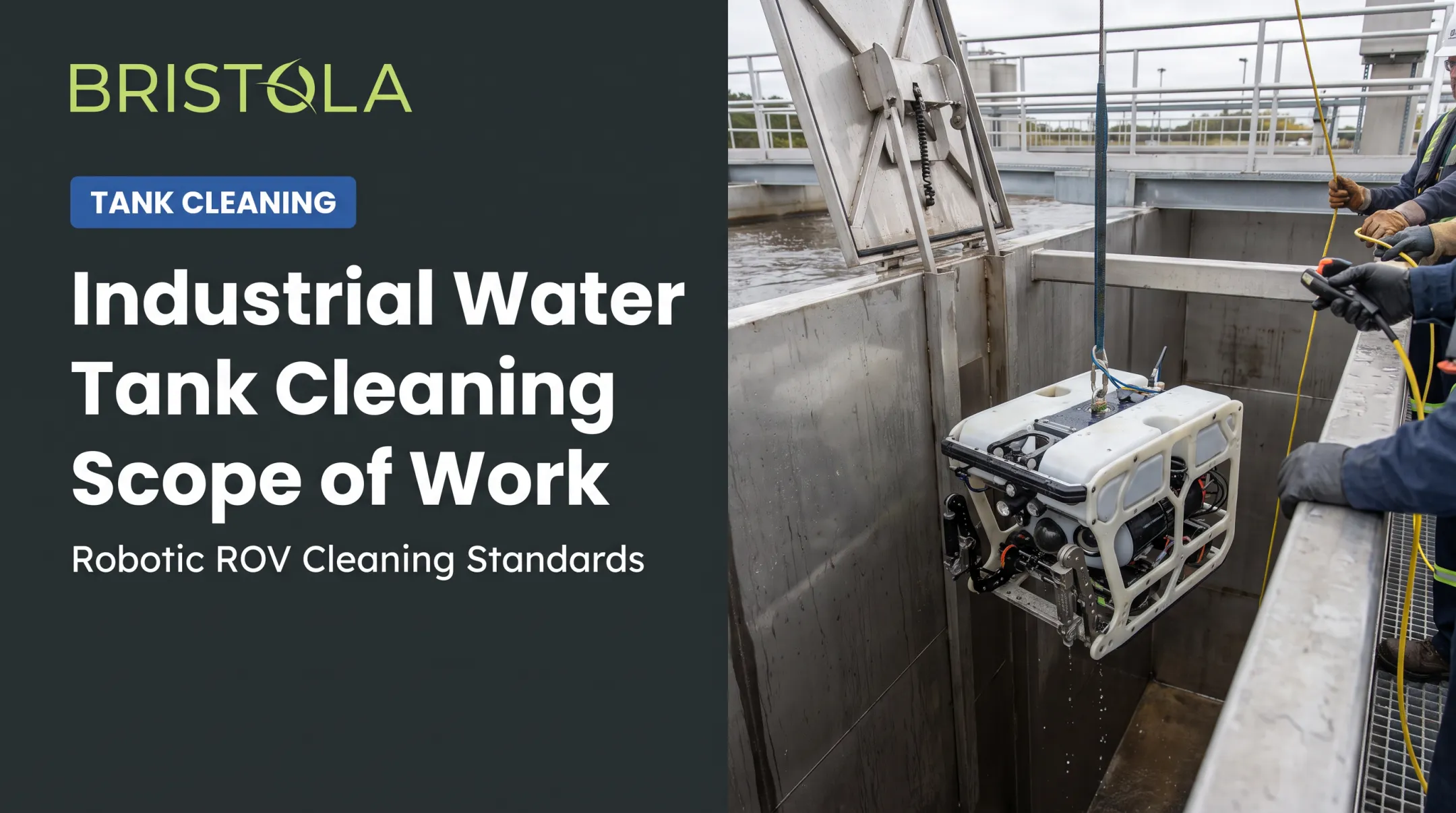
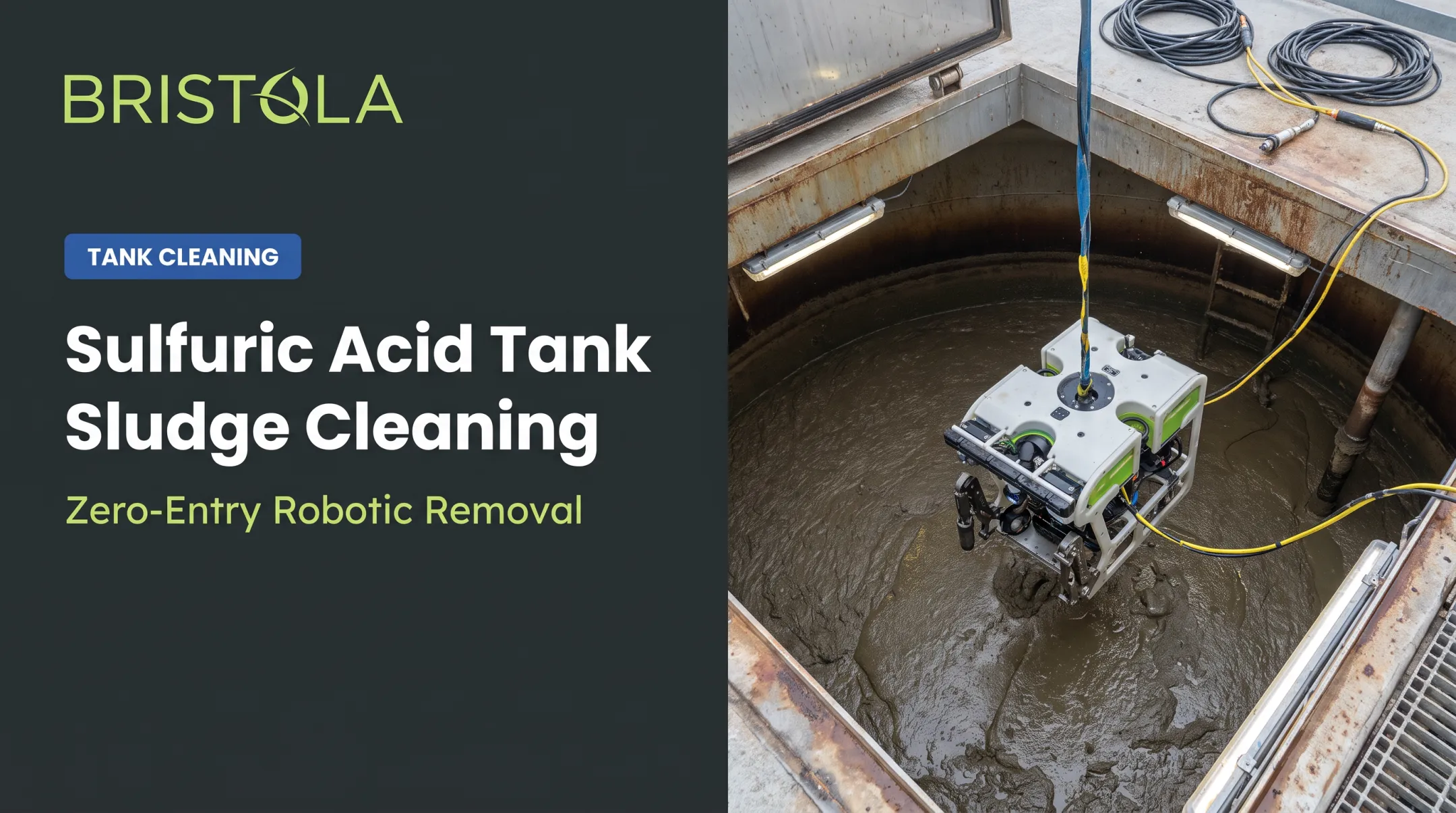
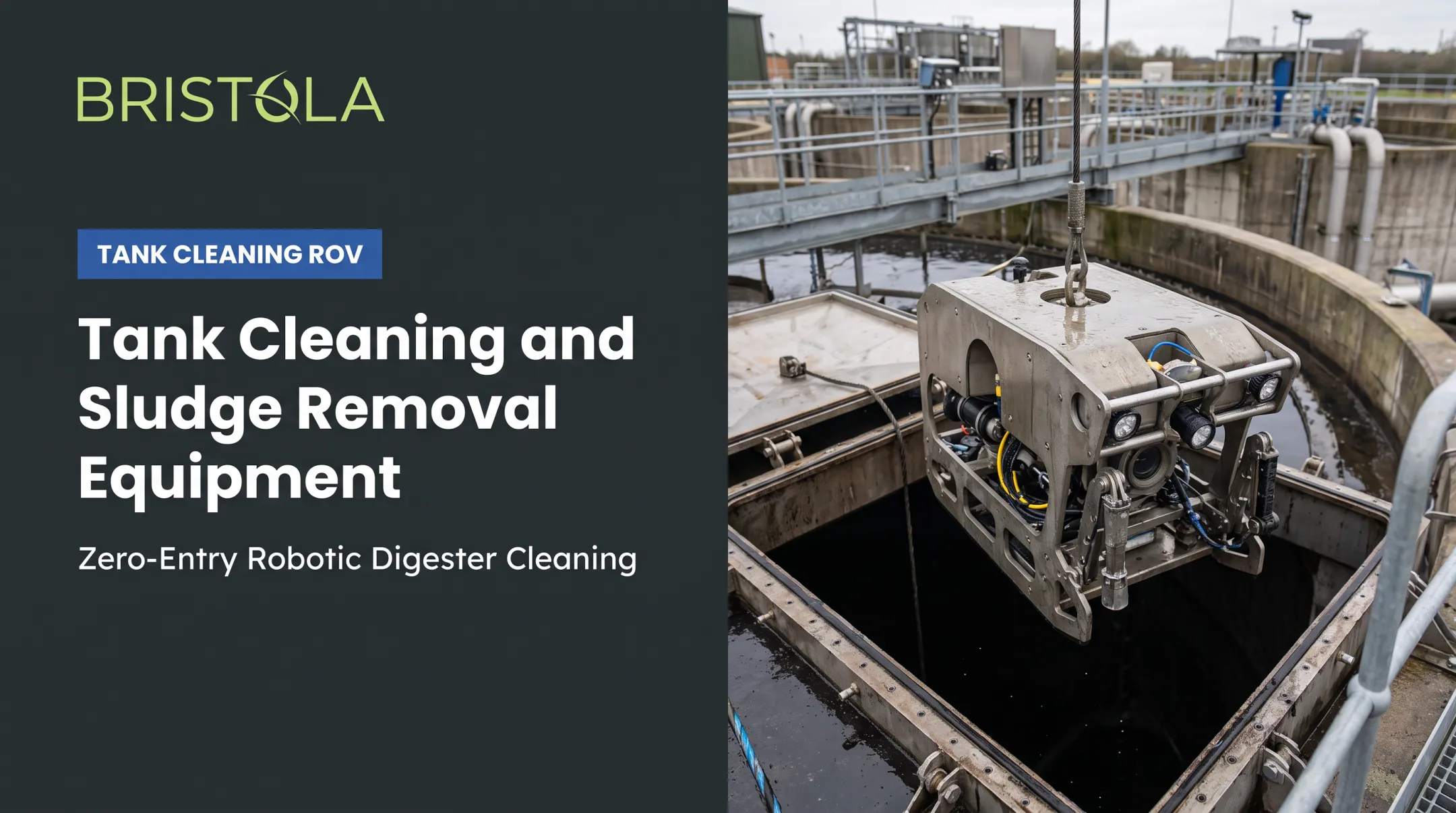
Bristola built its business around a different approach. Instead of draining a tank and sending workers inside, a remote-controlled submersible robot (ROV) enters through a patented equalization chamber, an airlock-type portal that fits any manhole 24 inches in diameter or greater.
Here's what this replaces:
- Draining the tank — the ROV works while the tank stays full and operational
- Temporary storage arrangements — no draining means no displaced material to store
- Human confined-space entry — the robot handles sludge removal via a winch system and flexible hose
- Full production shutdown — facilities keep running during the cleaning cycle
- Extended restart procedures — there's no "offline" period to recover from

Bristola's system can be installed on new builds or retrofitted into existing tanks and covered lagoons. For covered lagoons, that means modifying part of the berm to add a concrete wall and manhole below the liquid line.
For tanks, retrofit often means adapting an existing entry door. On a New York project, Bristola installed a 24-inch pipe and isolation valve so the facility can run live cleanings going forward.
Beyond cleaning, the system evaluates and reports on facility condition. Operators get data to plan maintenance before output drops, instead of reacting after the fact.
Best Practices for Ongoing Maintenance
- Monitor pH, temperature, and solids content on a routine schedule to catch buildup before it affects gas yield
- Inspect structural components — roofs, walls, valves, pumps — regularly to catch corrosion or wear before it becomes a bigger repair
- Compare multi-year costs of shutdown cleanouts versus continuous in-service cleaning, including lost production, contractor fees, and temporary storage
- Consider sediment mapping to quantify buildup with sonar and GPS data rather than guessing when a cleanout is due
Facilities that treat maintenance as a scheduled, data-driven process—not an emergency response—hold steadier output. That approach also helps avoid the kind of four-year neglect that led to a 20% production decline in Bristola's New York case.
Frequently Asked Questions
What is a water scrubber for biogas?
A water scrubber purifies biogas because carbon dioxide and hydrogen sulfide dissolve in water far more readily than methane. It's a gas upgrading method, not a tank cleaning process.
Is biogas a cleaner fuel?
Yes. Biogas captures methane that would otherwise escape into the atmosphere, making it a renewable energy source. But a poorly maintained tank reduces how efficiently that methane gets produced in the first place.
How often should a biogas digester tank be cleaned?
There's no universal interval that fits every facility. Cleaning frequency should follow sludge depth, gas yield trends, and volatile-solids readings rather than a fixed calendar date.
Can biogas tanks be cleaned without stopping production?
Yes. Zero-human-entry robotic systems, like Bristola's submersible ROV technology, clean tanks while they remain full and operational, unlike traditional methods that require draining and shutdown.
What are the safety risks of manual biogas tank cleaning?
Confined-space entry exposes workers to toxic gases, engulfment, and explosion risk. OSHA data shows over 1,000 confined-space deaths nationally between 2011 and 2018.
How does poor tank maintenance affect biogas output?
Sediment and scum buildup physically reduce active digestion volume. In one documented case, four years of neglect led to a 20% drop in daily biogas production.