That's not a rounding error. It's a compliance problem every fuel, chemical, or industrial storage operator has to take seriously.
Federal, state, and local regulations require both routine self-checks and periodic professional testing. This guide breaks down the tools, methods, and red flags you need to keep your UST program audit-ready — plus the mistakes that quietly turn minor issues into six-figure remediation projects.
TL;DR
- UST inspections cover tank integrity, leak detection, cathodic protection, spill/overfill prevention, and interstitial monitoring
- Three core methods: manual gauging, automatic tank gauging (ATG), and cathodic/tightness testing
- Reading results correctly separates routine maintenance from a reportable release
- Skipped monthly checks and ignored alarms are the top causes of missed leaks
- PPE, lockout procedures, and current documentation are non-negotiable for every inspection
What You Need to Check a UST
Before touching a gauge stick or ATG console, get your tools, access points, and paperwork in order. Skipping this step is how inspections turn into guesswork.
Tools and Indicators Required
- Gauge stick readable to the nearest 1/8 inch (EPA's required resolution for manual tank gauging)
- ATG console with printed or digital reports
- Interstitial monitoring sensors for double-walled tanks and piping
- Cathodic protection test equipment, including rectifier voltage/amperage readouts
- Water-finding paste to detect water intrusion at the tank bottom
Have required paperwork on hand as well:
- Daily inventory records and monthly monitoring logs
- Last three cathodic protection (CP) test readings
- At least three years of release-detection test records
Preconditions and Setup
- Confirm fill ports, monitoring wells, and spill buckets are unobstructed and clean
- Verify electronic monitoring systems are powered on and calibrated
- Check lighting and visibility at manholes and containment sumps before starting visual checks
Those setup checks feed federal walkthrough requirements (Option 1): spill-prevention and release-detection equipment every 30 days, plus annual checks for containment sumps and handheld release-detection tools.
Methods to Check a UST
Method choice depends on tank age, size, and what your state program requires. Most facilities layer multiple methods rather than relying on one.
Method 1: Manual Tank Gauging and Visual Inspection
This is the low-cost baseline: measuring product level and scanning for visible damage.
Tools needed: Gauge stick, water-finding paste, flashlight, PPE.
Steps:
- Open the spill bucket and inspect for cracks or standing liquid
- Lower the gauge stick to measure product and water levels
- Record readings and compare them with prior inventory data
EPA restricts manual gauging to tanks up to 1,000 gallons as a standalone method. Tanks between 1,001 and 2,000 gallons need it paired with tank tightness testing. Above 2,000 gallons, manual gauging alone does not qualify. It is simple and cheap, but it will not catch a slow, ongoing leak.

Method 2: Automatic Tank Gauging (ATG) and Electronic Monitoring
ATG systems continuously track fuel levels, water intrusion, and interstitial space status through sensors, with far tighter precision than manual checks.
Tools needed: ATG console, interstitial sensors, digital or printed reports.
Steps:
- Review daily ATG reports for unexplained volume discrepancies
- Check interstitial space alarms weekly for moisture or vapor
- Investigate and log any sensor alert immediately; do not just reset it
For tanks installed on or before April 11, 2016, a properly functioning ATG must detect a leak no larger than 0.2 gallons per hour. Newer installations generally require secondary containment with interstitial monitoring instead. Pressurized piping needs its own automatic line-leak detector capable of catching 3 gph at 10 psi within one hour.
ATG is highly accurate and runs continuously, but only if it stays calibrated. A broken interstitial probe is one of the most common findings in EPA site inspection reports.

Method 3: Cathodic Protection and Tank Tightness Testing
This method confirms your corrosion protection is working and checks for hidden leaks that manual and electronic checks can miss.
Tools needed: Cathodic rectifier readings, certified tightness-testing equipment.
Steps:
- Visually inspect anode systems and rectifier output monthly (impressed-current systems need checks every 60 days)
- Schedule certified cathodic protection testing every three years, or per your state's schedule
- Run periodic tank and line tightness tests using pressure or vacuum methods
CP must be checked within six months of installation, then every three years after that, plus a follow-up test within six months of any repair. This requires a qualified tester following an accepted code of practice, not just anyone with a multimeter.
Cathodic testing and tightness tests still leave one gap: they do not remove sludge and sediment that collect at the tank bottom. That buildup can skew inventory readings and mask corrosion.
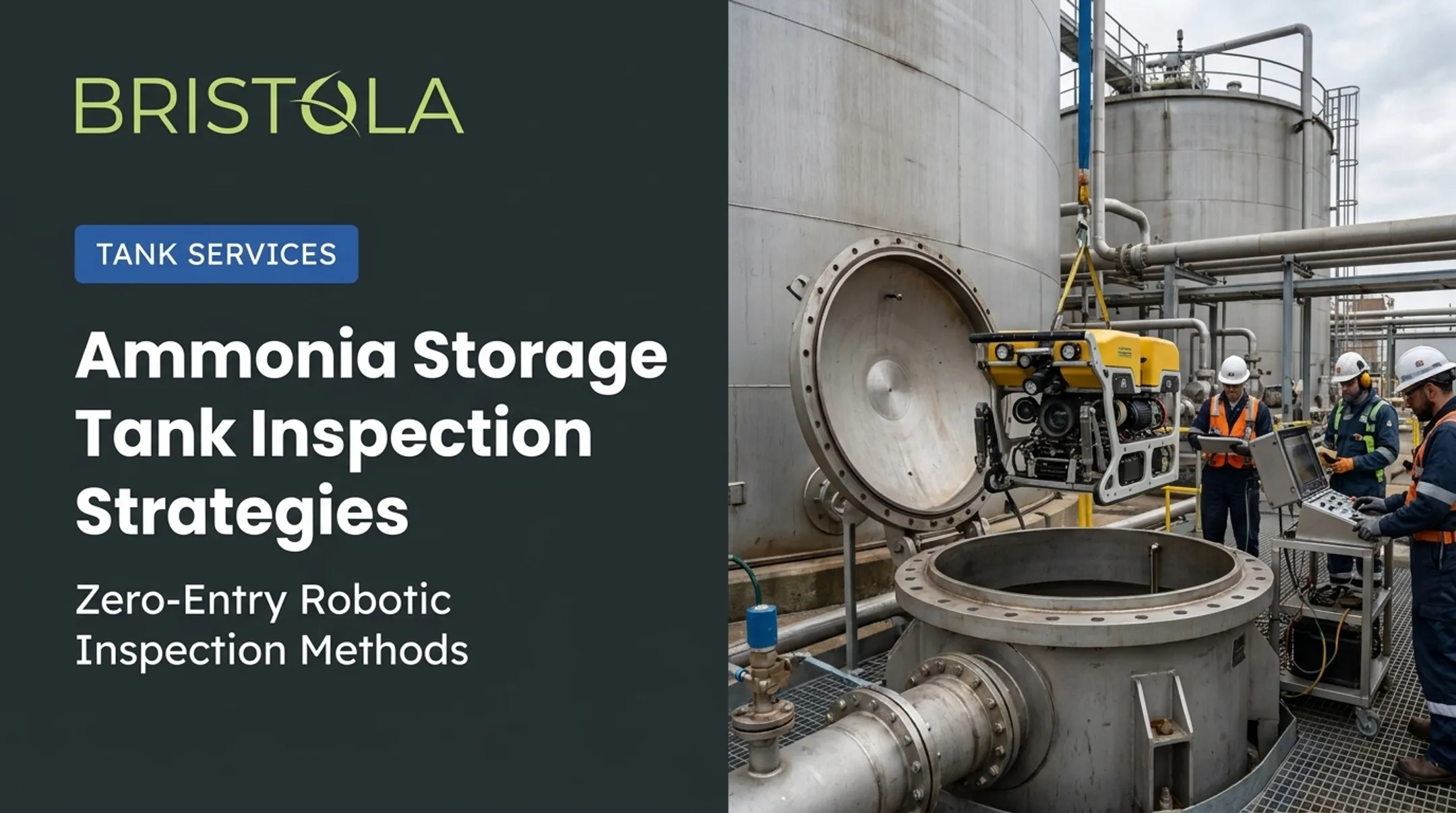
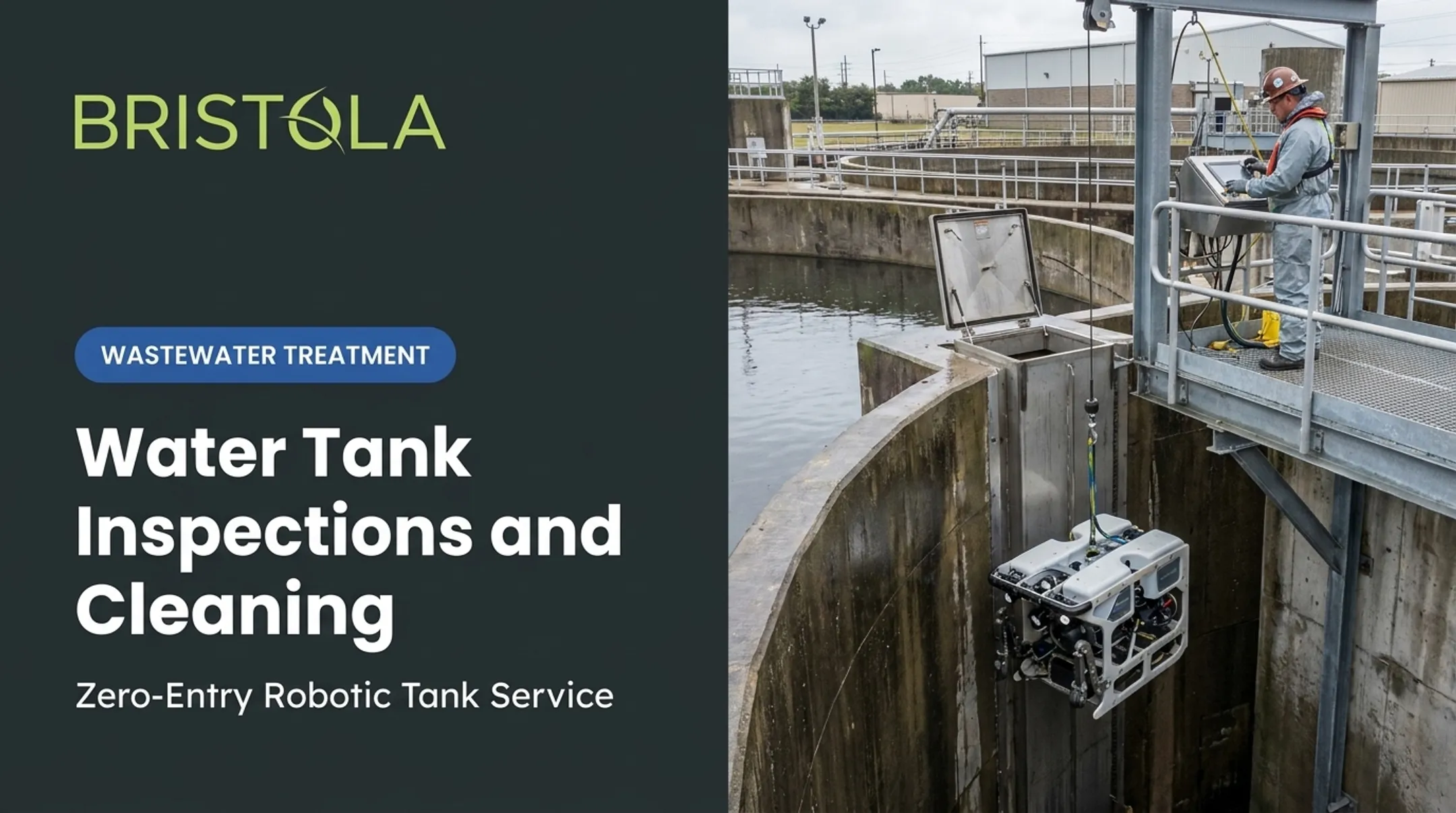
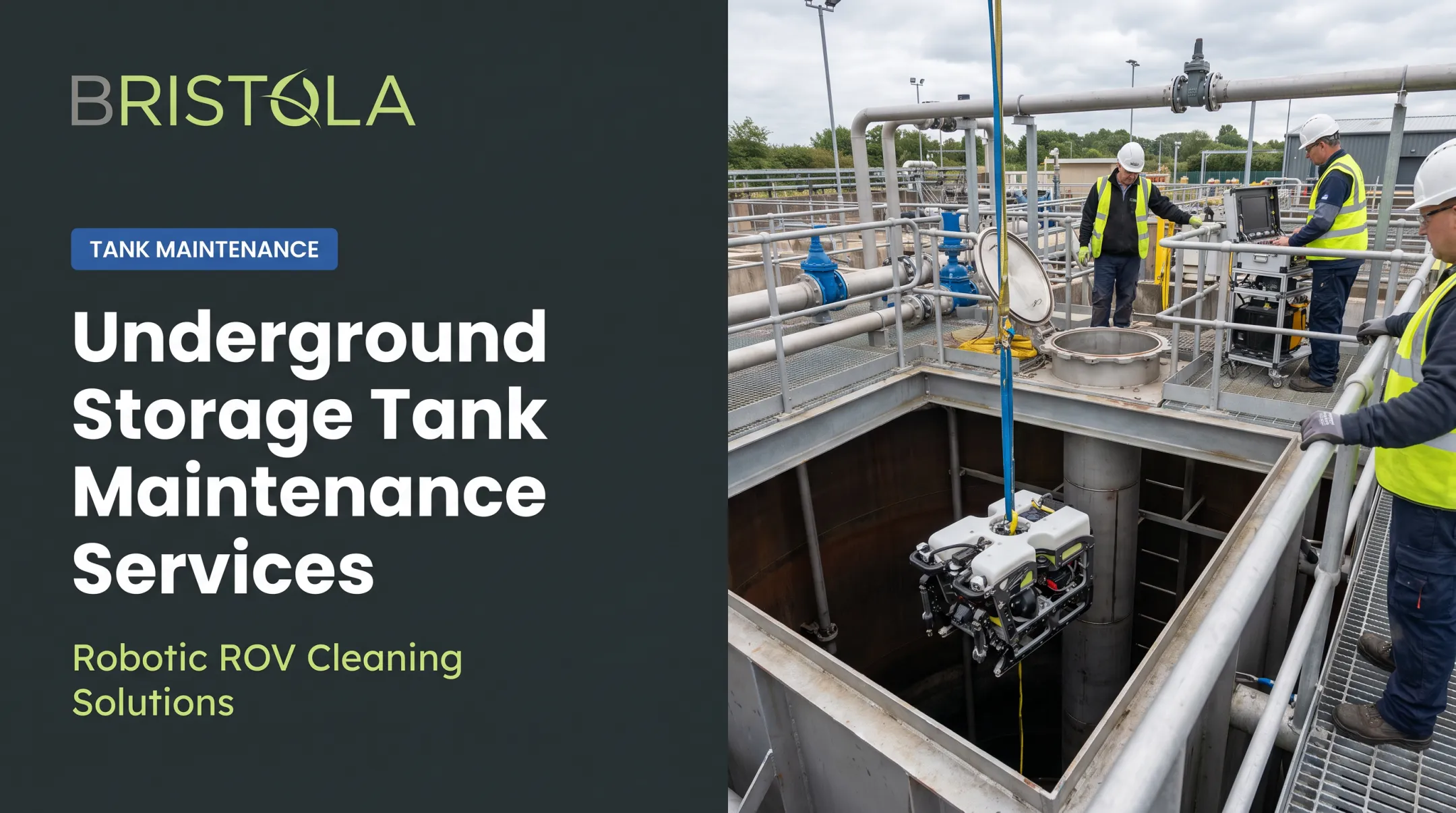
For tanks that need interior cleaning, Bristola’s zero-human-entry robotic system removes sludge and sediment while the tank stays full and operational. Sonar-based sediment mapping documents buildup without draining the tank or sending anyone through a manhole, so facilities can keep interior condition in check without downtime or confined-space entry.

How to Interpret the Results
Misreading inspection data is the difference between routine maintenance and a reportable release. Here's how to sort results into action tiers:
| Result Category | What You'll See | Action Required |
|---|---|---|
| Normal | Stable inventory, dry interstitial spaces, functioning cathodic protection (CP) readings | Continue standard monitoring schedule |
| Minor Issues | Small unexplained variances, slight moisture, minor rectifier drop | Recheck within days, document the trend |
| Out-of-Spec | Significant product loss, water/vapor in monitoring wells, failed tightness test, corrosion | Halt operations, notify regulators, begin remediation |
A failed test or alarm should trigger investigation — not an automatic pass after a reset. EPA guidance is explicit: suspected releases must be reported to the implementing agency within 24 hours, or whatever window your state specifies.

Unexplained water is an unusual operating condition. Correct the source; do not stop at documentation alone.
Common Errors and Safety Best Practices
EPA's own site inspection findings point to the same recurring mistakes across facilities:
- Misplacing or using a damaged, unreadable gauge stick
- Skipping monthly interstitial checks
- Ignoring minor sensor alarms instead of investigating them
- Letting documentation lapse or become disorganized
- Using the wrong test method for tank age or material (steel vs. fiberglass), producing false readings
Safety precautions that matter every time:
- Lock out and tag out electronic monitoring systems before servicing
- Wear PPE when handling fuel and testing chemicals
- Keep fill areas clean to avoid contaminating readings
- Never enter a tank without confined-space certification
OSHA classifies tanks as confined spaces, so any entry requires atmospheric testing, trained attendants, and rescue procedures. Remote and robotic inspection methods remove that exposure entirely, which is why more facilities choose them over entry-based approaches.
Conclusion
Consistent, accurate UST inspections protect groundwater, employees, and your operating budget. Combining manual, electronic, and cathodic methods gives you the most complete picture of tank health. No single method catches everything on its own.
When results flag a problem, act immediately. Delay turns a manageable issue into a regulatory penalty and an environmental cleanup.
Frequently Asked Questions
What are the symptoms of a failing underground storage tank?
Watch for unexplained inventory loss, fuel odors near the tank area, water in monitoring wells, and slower-than-normal dispensing. Any of these warrants investigation, not a quick reset of your monitoring equipment.
What is the average lifespan of an underground storage tank?
There is no universal figure. EPA does not require removal based on age alone, and lifespan depends on material, installation quality, and maintenance. Regular inspection and interior cleaning extend usable life significantly.
What is a 653 tank inspection?
API 653 primarily applies to aboveground storage tanks built to API 650 standards. EPA allows limited use of API 653 for certain UST field-constructed tank repairs, but it's not a blanket standard for typical underground tanks.
What underground storage tank is exempt from federal regulations?
Common exemptions include farm or residential tanks of 1,100 gallons or less storing motor fuel for noncommercial use, certain heating-oil tanks, and septic tanks. Always verify exemption status against 40 CFR 280.10 before assuming a tank is excluded.
How often should a UST be inspected?
Daily inventory checks, monthly monitoring of interstitial spaces and equipment, and cathodic protection testing every three years are the operator baseline. Regulatory agencies also inspect facilities at least once every three years.
Who is qualified to perform a UST inspection?
Trained facility staff can handle routine visual and inventory checks. Cathodic protection testing and tightness testing require certified technicians following an accepted code of practice, and state requirements may be more specific.