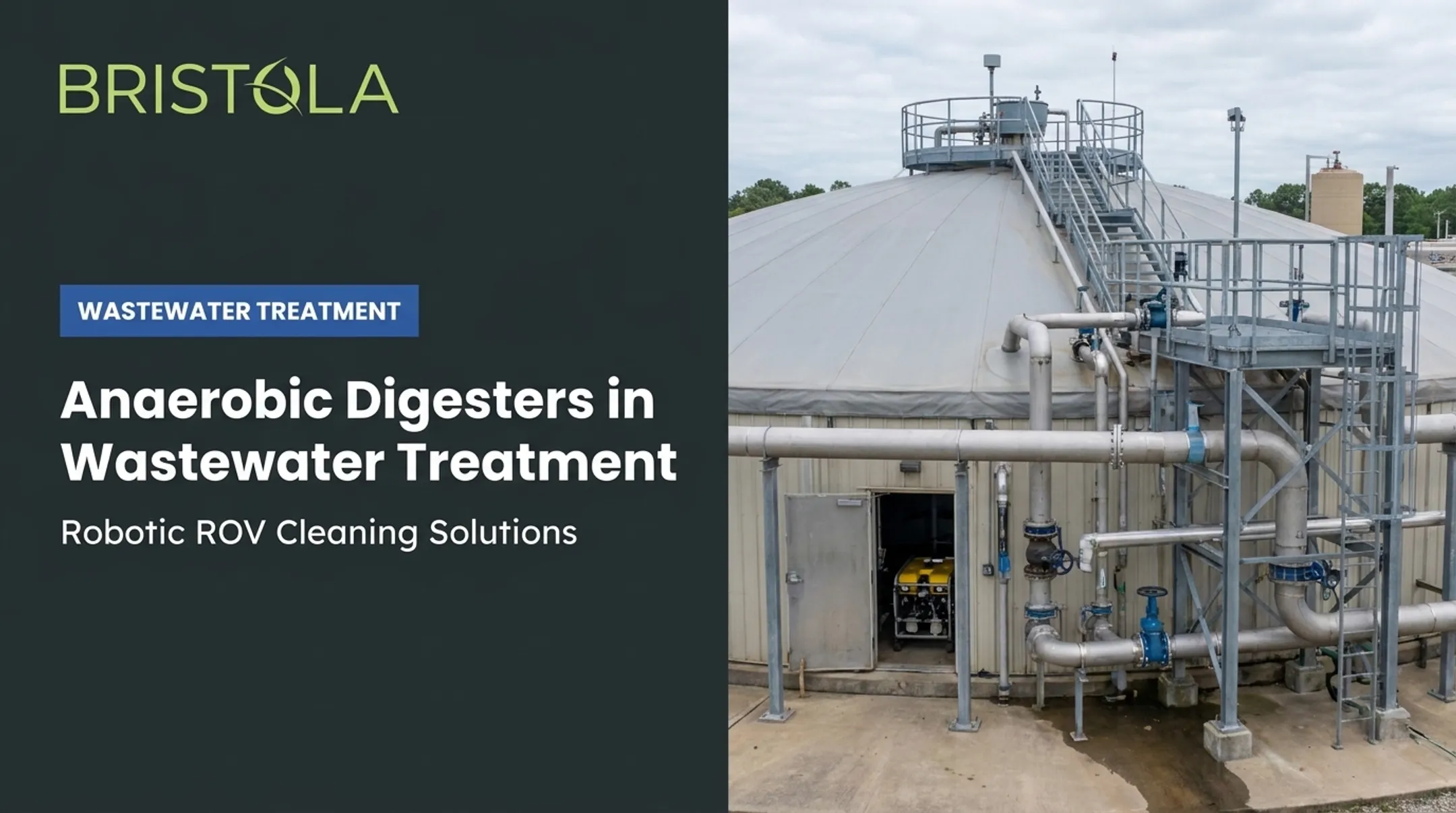
The scale is real. The American Biogas Council counts 631 farms, more than 1,240 water resource recovery facilities, and 121 stand-alone food-waste systems running anaerobic digestion in the U.S. as of its March 2026 market snapshot. EPA's AgSTAR program separately tracked 400 operating manure-based systems as of June 2024, with 37 added in 2023 alone.
Here's the problem: many operators install a digester for the environmental and economic upside without fully understanding what happens inside the tank. That knowledge gap leads to feedstock mismanagement, missed maintenance windows, and gas production that quietly declines for months before anyone notices.
This guide breaks down exactly how a digester works, stage by stage, and where it fits into daily operations.
TL;DR
- Bacteria break down organic matter without oxygen, producing biogas and digestate
- Digestion runs through four biological stages: hydrolysis, acidogenesis, acetogenesis, methanogenesis
- Common digester types include covered lagoons, plug flow, complete mix, and dry systems
- Biogas typically contains 50-75% methane; digestate is often reused as fertilizer or bedding
- Routine solids removal keeps digesters running at full capacity
What Is an Anaerobic Digester?
An anaerobic digester is a sealed, oxygen-free vessel where microorganisms break down organic material into biogas and digestate. Instead of storing manure, food waste, or wastewater sludge untreated, the facility captures the methane those materials would otherwise release into the atmosphere.
This isn't composting. The EPA defines composting as a managed, oxygen-required process. It doesn't capture methane and doesn't produce pipeline-quality gas. Anaerobic digestion works precisely because oxygen is excluded.
The technology solves two problems at once: waste management and energy generation. Several digester designs exist:
- Covered anaerobic lagoon: earthen basin with a floating or fixed cover
- Plug flow: narrow, elongated tank where material moves through in sequence
- Complete mix: actively agitated tank for uniform mixing
- Dry digestion: handles high-solids feedstock with minimal added water

Tank design and feedstock handling vary. The underlying biology doesn't.
How Does an Anaerobic Digester Work?
Digestion follows a defined sequence from loading to output, with different bacterial communities doing the work at each phase.
Loading and Preparation
Feedstock is collected, sometimes macerated or pre-treated, then fed into the sealed tank by hopper or pump. Common inputs include manure, food waste, fats/oils/grease, and crop residue.
Loading may run continuously or on a scheduled batch cycle, depending on digester type and feedstock volume.
Common bottleneck: inconsistent composition or moisture. A sudden shift in what enters the tank can throw off the bacterial balance before operators see a dip in gas production.
The Four Biological Stages
Digestion isn't one reaction. It's a chain of four, each handled by a distinct microbial community:
- Hydrolysis — Bacteria break complex polymers (carbohydrates, proteins, fats) into simpler soluble compounds
- Acidogenesis — Those compounds convert into volatile fatty acids, ammonia, CO₂, and hydrogen
- Acetogenesis — Fatty acids convert further into acetic acid, hydrogen, and CO₂
- Methanogenesis — Methanogens turn these products into methane and CO₂, forming biogas

Each stage feeds the next. If acid-forming byproducts spike faster than methanogens can consume them, the whole chain can destabilize.
Temperature and Process Control
Mesophilic bacteria, the most common type in U.S. digesters, operate at 86–104°F, according to the EPA Operator Guidebook.
Retention time is design-specific. USDA NRCS Code 366 requires a minimum of 17 days for complete-mix digesters and 20 days for plug-flow digesters.
Operators monitor:
- pH balance
- Agitation and mixing consistency
- Retention time against design specs
- Organic loading rate (raised gradually, not in sudden jumps)
Temperature or pH swings can crash bacterial populations quickly. Methanogens are the slowest-growing group in the chain, so once their numbers drop, gas production can stall for weeks rather than days.
Output Collection
When temperature, pH, and loading stay in range, the system yields two primary outputs.
Biogas typically runs 50–75% methane, with the rest CO₂ and trace gases such as hydrogen sulfide. It is captured and piped for heat or electricity, or cleaned up and upgraded into renewable natural gas.
Digestate (the leftover solid and liquid) is separated for fertilizer, soil amendment, or livestock bedding. Output quality on both fronts tracks straight back to stable feedstock and steady digester control.

Where Are Anaerobic Digesters Used?
Anaerobic digesters operate across several sectors:
| Sector | U.S. scale |
|---|---|
| Dairy and livestock farms | 221 systems processing dairy manure as of 2021 (EPA) |
| Municipal wastewater plants | 1,240+ water resource recovery facilities (WRRFs) using AD (American Biogas Council) |
| Food and beverage processors | 313 identified food-waste facilities (EPA, 2023) |
| Industrial/agricultural co-digestion | Growing segment blending multiple feedstock streams |
Across these settings, digesters perform best with consistent feedstock volume, steady temperature control, and adequate retention time. Farm-scale systems and large centralized biogas plants differ in capacity, not in the underlying biology.
Keeping a Digester Running: Maintenance and Cleaning Challenges
Over time, solids, grit, and crust build up inside digester tanks and covered lagoons. That buildup reduces effective tank volume and cuts into biogas output, even when the biology itself is healthy.
Traditional cleaning means draining the tank and sending workers inside. That creates:
- Extended downtime while the tank sits offline
- Temporary storage costs for incoming feedstock
- Confined-space safety risks in a gas-filled environment
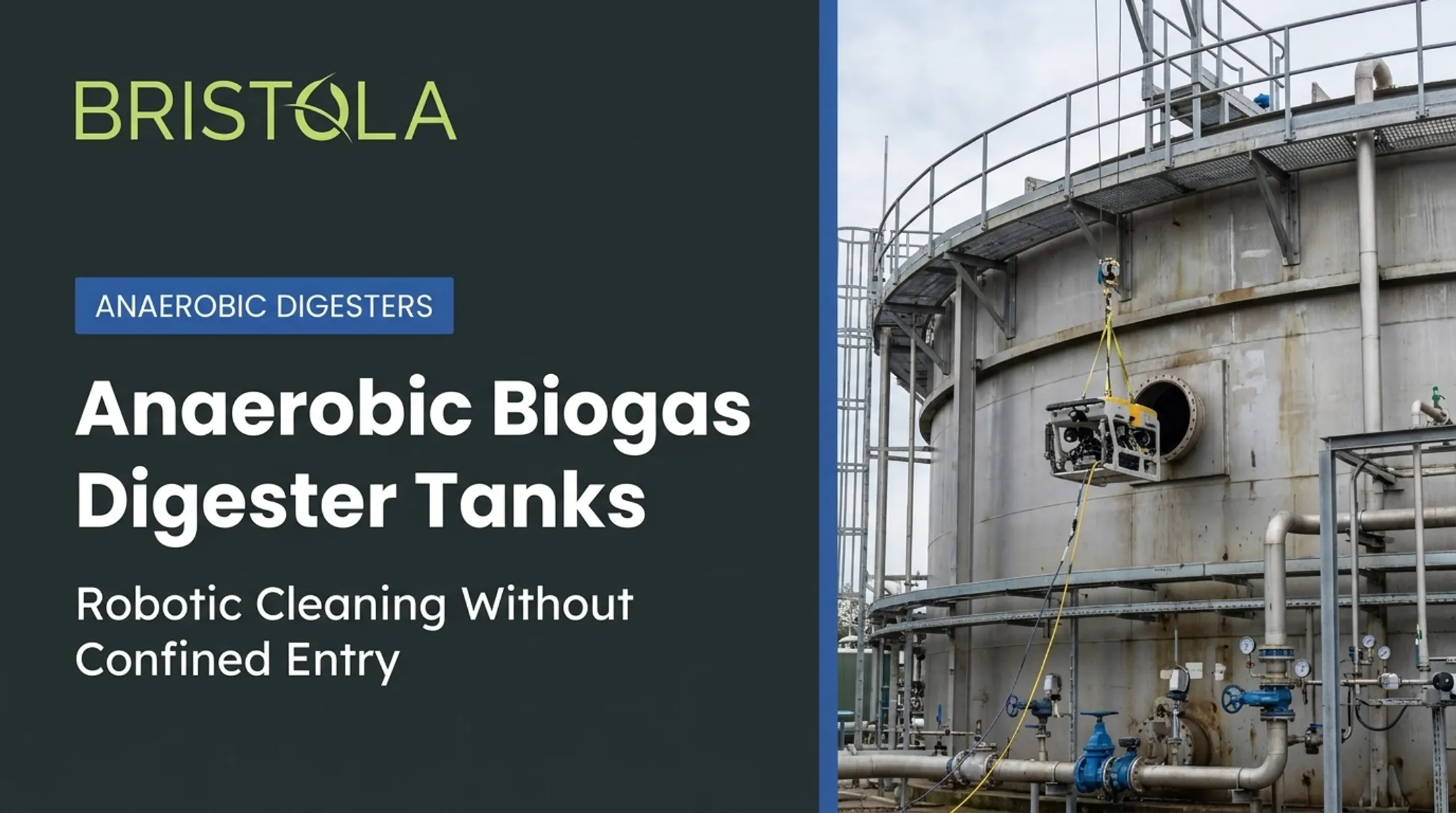
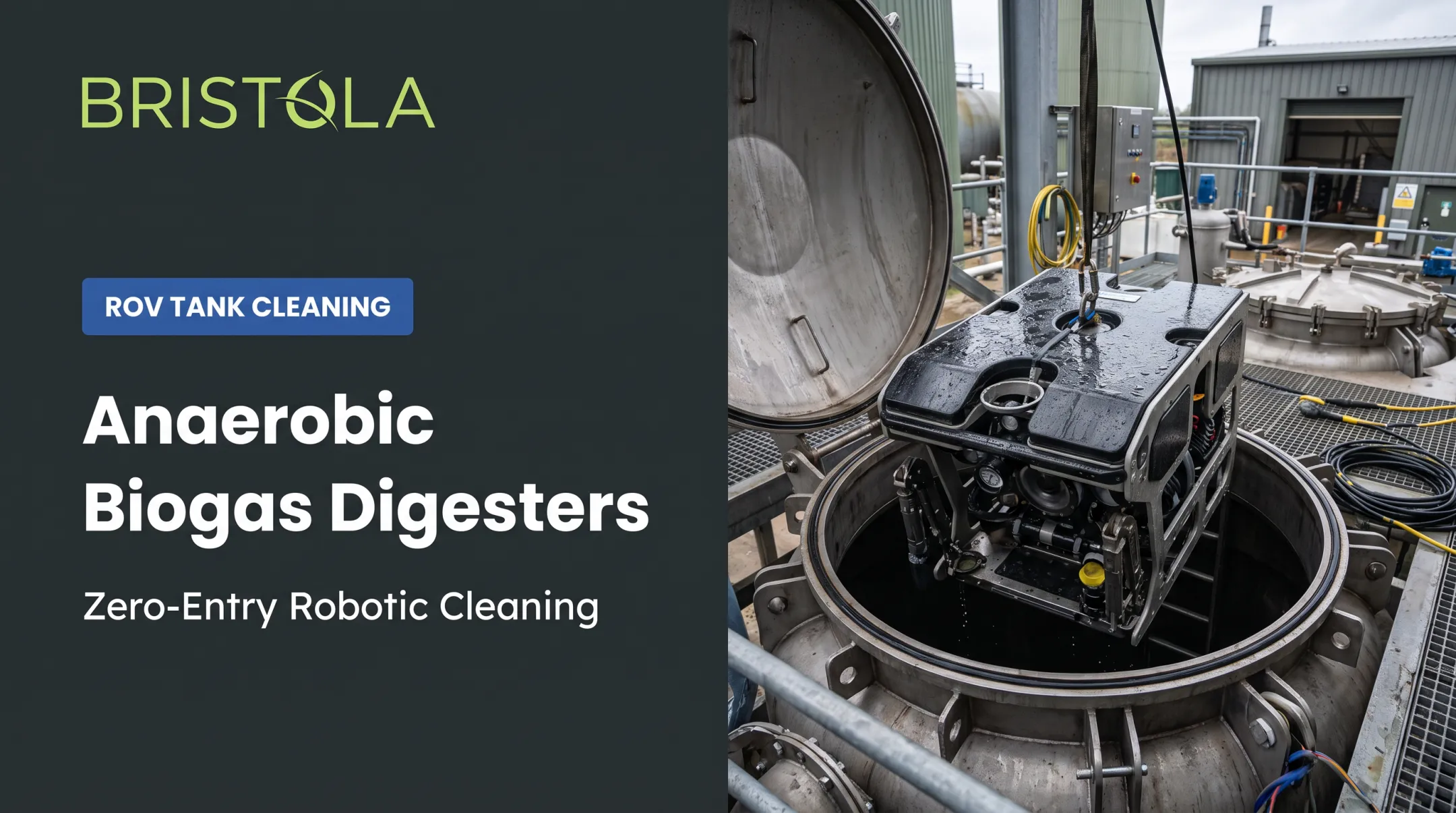
Bristola built its zero-human-entry robotic cleaning system specifically for this problem. A remote-controlled submersible ROV enters the tank through a patented equalization chamber (an airlock-style entry system fitted to manholes 24 inches or larger), so the digester stays full and operational during cleaning. The tank never needs draining, confined-space entry, or a shutdown.

In one documented case, a 1.2-million-gallon EnviTec digester in New York had gone more than four years without cleaning. Volatile-solids reduction had dropped below 25%, biogas production had fallen 20%, and the facility couldn't hold its 95-101°F mesophilic range through cold months.
Bristola cleaned it out, replaced the roof and mixers, repaired corroded concrete, and retrofitted a 24-inch entry point with an isolation valve for future live cleanings. That closed the multi-year maintenance gap and set the site up for live cleanings going forward.
Conclusion
Anaerobic digestion is a sequential process: loading, hydrolysis, acidogenesis, acetogenesis, methanogenesis, and output collection. Each stage moves waste one step closer to usable energy.
Knowing that sequence helps operators make better decisions: which feedstock to accept, and when solids removal needs to happen before output starts to drop.
Frequently Asked Questions
What is an anaerobic digester?
It's a sealed, oxygen-free tank where bacteria break down organic waste into biogas and digestate. The process captures methane that would otherwise escape from untreated waste.
What are the four main stages of anaerobic digestion?
Hydrolysis, acidogenesis, acetogenesis, and methanogenesis. Each stage is handled by a different bacterial community, converting complex organic matter step by step into methane-rich biogas.
What are the different types of anaerobic digesters?
Common types include covered lagoons, plug flow, complete mix, and dry digesters. Tank design and feedstock handling differ, but the core biology stays the same.
How much does an anaerobic digester cost?
Costs vary widely by scale, feedstock, and design — farm-scale systems can range from tens of thousands to several hundred thousand dollars. Research current site-specific feasibility studies before budgeting.
Is digestate harmful?
Properly processed digestate is generally safe and widely used as fertilizer. Raw digestate can contain pathogens and high nutrient levels, so it should be handled and land-applied according to state and local regulations.
Do anaerobic digesters smell bad?
A well-sealed, properly operating digester significantly cuts odor compared to untreated manure or waste storage. Odor issues usually point to a sealing, loading, or maintenance problem rather than the technology itself.