That's a problem. Sludge digester tanks sit at the center of sustainability goals, energy recovery programs, and regulatory compliance for wastewater and biogas facilities. A 2017 peer-reviewed analysis found one U.S. utility spent 51% of its total operating budget managing biosolids. That's not pocket change.
This guide breaks down what a sludge digester tank is, how it works, its key components, common types, and the maintenance realities facilities face when keeping these systems running safely.
Key Takeaways
- Sludge digester tanks use anaerobic bacteria to break down organic waste, producing biogas and digestate
- More than 1,200 U.S. wastewater plants now capture biogas, generating 7.3 billion kWh annually
- Retention times range from 10 days to 60 days, depending on temperature and design
- Regular cleaning prevents efficiency losses, but traditional methods require risky confined-space entry
What Is a Sludge Digester Tank?
Wastewater and biogas plants depend on digester tanks to stabilize solids and recover energy from what would otherwise be a disposal problem. A sludge digester tank is a sealed vessel where microorganisms break down organic sludge without oxygen. That process, anaerobic digestion, yields biogas (mostly methane) and digestate, the leftover stabilized solid.
The EPA frames the same process for wastewater biosolids: bacteria break down organic matter in an oxygen-free environment. The American Biogas Council adds that the biogas can be captured and used for energy, which is why digesters sit at the center of many treatment and renewable-fuel plants.
Digester sludge is the thick, semi-solid organic mixture fed into the tank. It is the raw material the microorganisms consume.
Before looking at where the tank sits in a full treatment train, it helps to separate the two digestion paths operators actually choose between.
Anaerobic vs. Aerobic Digestion
The difference comes down to oxygen:
- Anaerobic digesters exclude oxygen and produce methane-rich biogas — the standard choice for large-scale wastewater and biogas facilities
- Aerobic digesters rely on oxygen-fed biology and don't generate usable gas
Where the Tank Fits in the Treatment Process
Digester tanks don't work alone. They sit within a larger treatment sequence:
- Primary and secondary clarification removes sludge from the liquid stream
- Sludge thickening concentrates the solids
- Anaerobic digestion breaks down the concentrated sludge
- Storage and dewatering prepare the digestate for reuse or disposal

Why Sludge Digester Tanks Matter
Digestion does three things at once:
- Shrinks sludge volume, which cuts hauling and disposal bills
- Stabilizes the waste for safer handling and reuse
- Generates renewable biogas that lowers a facility's carbon footprint
A 2017 utility case study found biosolids handling consumed over half the operating budget, with 70% of residuals incinerated. Not every facility mirrors that number, but it shows how quickly sludge management costs spiral without efficient digestion.
Well-run digesters flip the equation. They convert a portion of volatile solids into biogas, cutting the disposal burden while creating an energy stream the facility can use or sell.
Key Components of a Sludge Digester Tank
A functioning digester relies on several interconnected systems working together.
Tank Structure
Tanks are typically built from reinforced concrete, structural steel, or glass-fused-to-steel. Corrosion resistance matters — the environment inside a digester is aggressive, and material failure means costly downtime. Glass-fused-to-steel bonds glass chemically to the steel surface, forming a durable barrier in biogas service.
Mixing System
Mixing prevents dead zones where solids settle and microbial activity stalls. Systems use mechanical, hydraulic, or gas-based mixing to keep contact between bacteria and feedstock consistent throughout the tank.
Gas Collection System
Biogas collects above the sludge or in a dedicated storage system, then moves through pipes to combustion equipment or gas-treatment units. Moisture removal and hydrogen sulfide scrubbing protect downstream equipment from corrosion.
Temperature and pH Control
Microorganisms are picky. Mesophilic bacteria thrive around 86–100°F; thermophilic bacteria need 122–140°F. Heating systems, insulation, and monitoring keep temperature stable. Operators also hold pH near neutral—about 6.8–7.2—so methanogens stay active.
Inlet/Outlet Ports
Ports allow fresh sludge in and finished digestate out, keeping the process continuous rather than a start-stop batch operation.

How Does a Sludge Digester Tank Work?
Anaerobic digestion happens in four biochemical stages:
| Stage | What Happens |
|---|---|
| Hydrolysis | Bacteria break large molecules (carbs, fats, proteins) into simpler sugars and acids |
| Acidogenesis | Acid-forming bacteria convert them into volatile fatty acids |
| Acetogenesis | Intermediate products become acetate, the fuel source for the final stage |
| Methanogenesis | Archaea convert acetate into methane-rich biogas |

Retention Time
How long sludge stays in the tank affects biogas yield. The EPA notes typical ranges by system type:
- Low-rate systems: 30–60 days
- High-rate mesophilic systems: 12–25 days
- Thermophilic systems: 10–12 days Longer retention generally means more complete breakdown, but it also means a bigger tank footprint.
Monitoring and Output
Operators track temperature, pH, and gas output daily to catch problems early. A sudden temperature drop or a spike in acidity signals trouble before biogas production crashes.
Once digestion finishes, operators dewater the leftover digestate and either apply it as biosolids fertilizer or haul it offsite, depending on regulatory classification.
Types of Sludge Digester Tanks
Configuration and temperature regime are two separate design decisions.
By configuration:
- Cylindrical: the most widely used form in U.S. municipal plants
- Egg-shaped: built for stronger mixing efficiency and fewer dead zones
- Covered lagoons: common in lower-complexity agricultural and industrial applications
By temperature:
- Mesophilic (86-100°F): slower digestion, more forgiving process
- Thermophilic (122-140°F): faster digestion, higher pathogen kill, more sensitive to upsets
Tank choice depends on feedstock type, available space, and the operator's desired biogas output.
Benefits of Sludge Digesters
Sludge digesters help plants meet biosolids rules, recover energy from waste, and cut what it costs to haul and dispose of residual solids.
Pathogen Reduction and Compliance
Under 40 CFR Part 503, digestion processes must meet Class A or Class B pathogen-reduction standards to support biosolids reuse:
- Class B: fecal coliform under 2 million MPN per gram
- Class A: fecal coliform under 1,000 MPN per gram
Anaerobic digestion alone does not guarantee Class A status. The specific process and vector-attraction-reduction method both matter.
Renewable Energy Generation
More than 1,200 U.S. wastewater plants capture biogas, producing the equivalent of 7.3 billion kWh annually, according to the American Biogas Council. That gas heats boilers, generates electricity, or gets upgraded to renewable natural gas for vehicle fuel.
Lower Disposal Costs
Less sludge volume means:
- Fewer trucks hauling biosolids offsite
- Reduced dewatering and disposal fees
- Smaller storage footprint needed onsite

Maintenance Challenges and Safer Cleaning Solutions
Digesters accumulate grit, scum, and settled solids over time. Left unchecked, buildup reduces effective tank capacity and drags down biogas output. In one documented case, an EnviTec digester in New York saw volatile-solids reduction fall below 25% and daily biogas production drop 20% before a cleanout fixed the problem.
Traditional Cleaning Risks
Traditional cleaning typically requires:
- Draining the tank and taking it offline for days or weeks
- Sending workers into a permit-required confined space
- Renting vacuum trucks and temporary storage for displaced sludge OSHA's confined-space standard (29 CFR 1910.146) requires atmospheric testing, attendants, and rescue procedures for a reason. Confined spaces can involve oxygen deficiency, toxic gases, or engulfment hazards. OSHA estimated the standard would prevent more than 50 deaths and 5,000 serious injuries each year.
A Zero-Entry Alternative
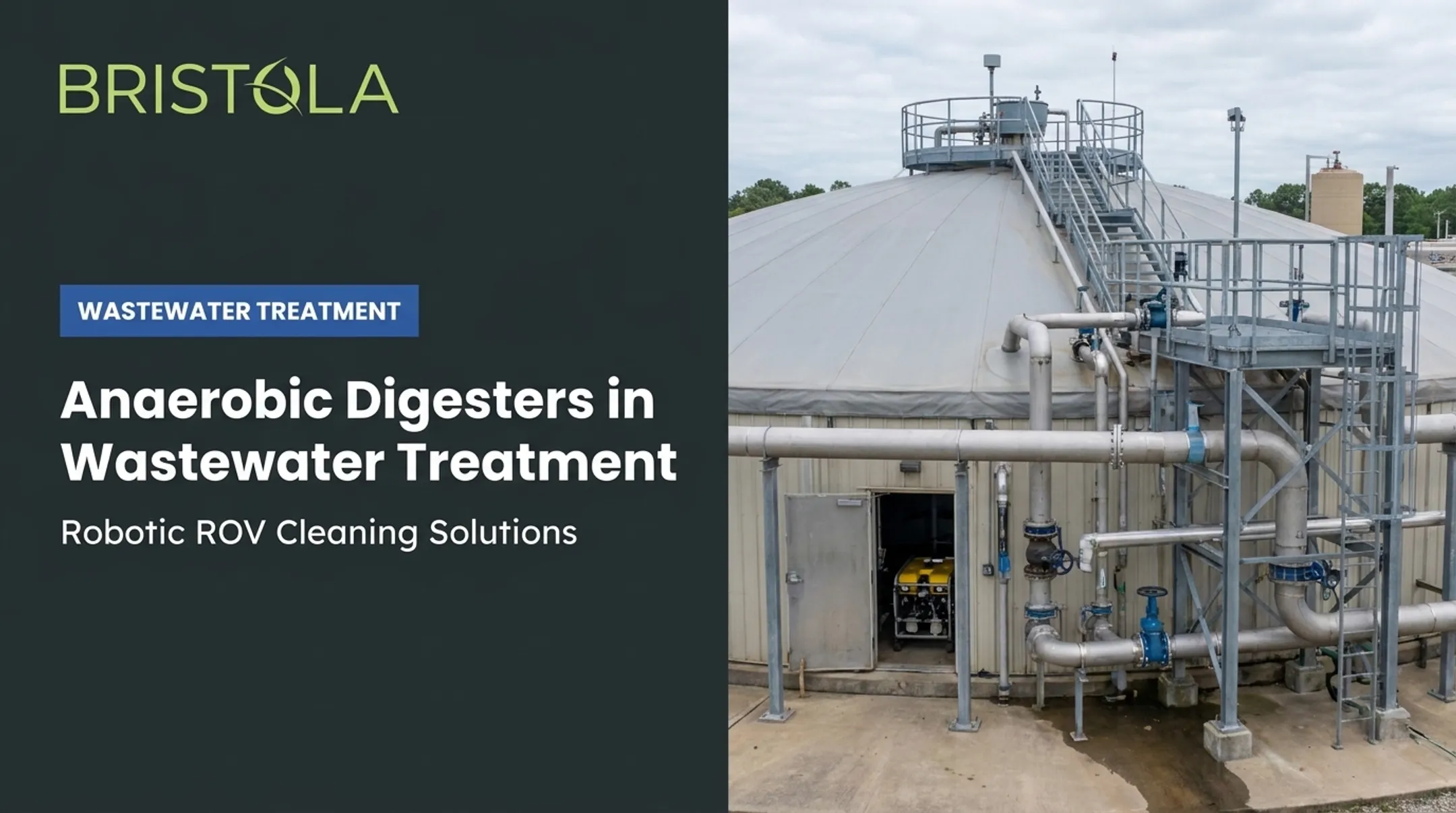
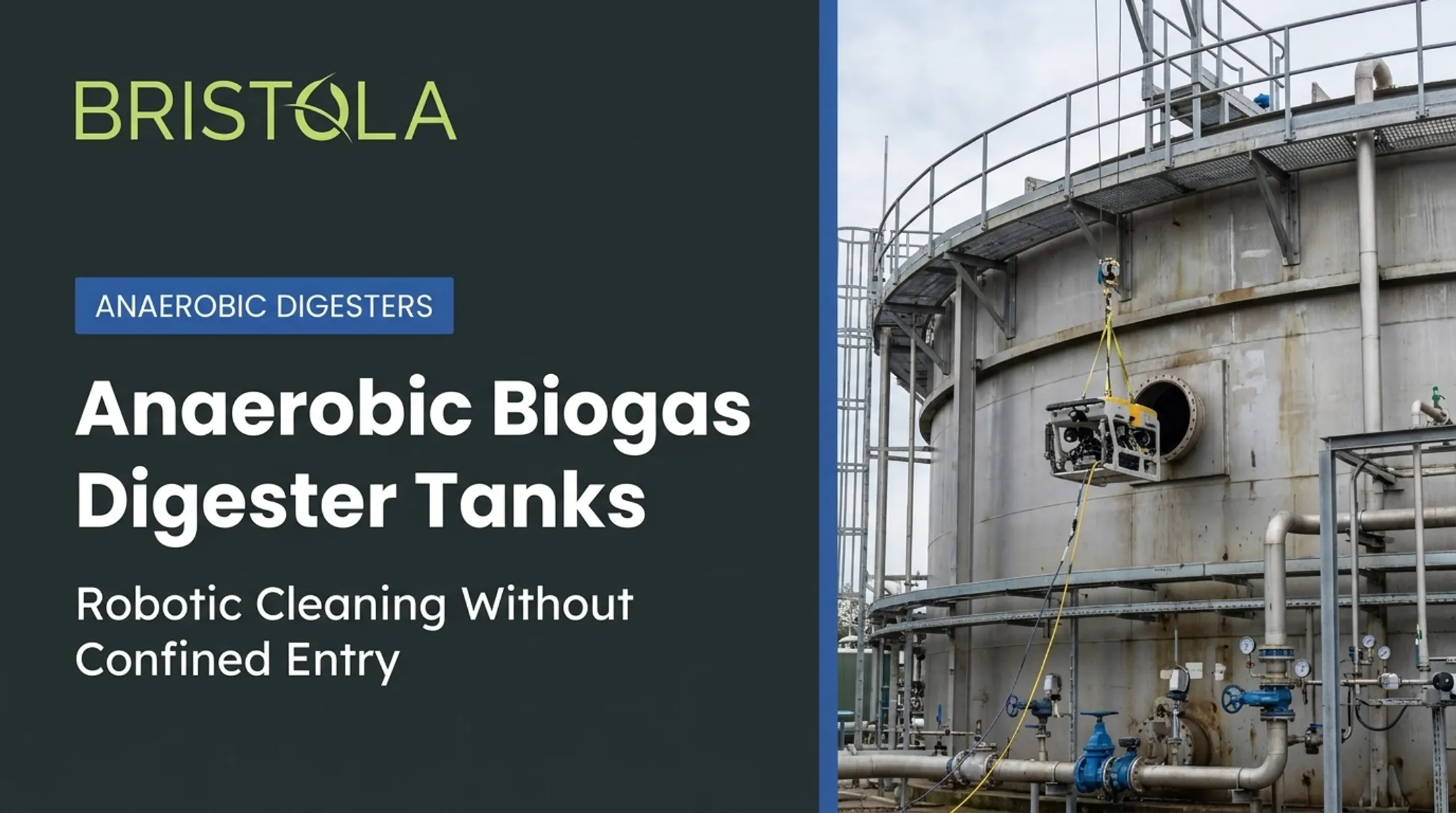
Bristola takes a different path. Instead of draining the tank and sending a crew inside, it deploys a remotely operated submersible robot through a patented equalization-chamber entry portal. No human enters the tank. The process:
- Access preparation: Install a portal over an existing manhole (24 inches or larger), or build it into new construction
- Robot deployment: Lower the ROV by winch through the roof or lagoon cover
- Cleaning: Sonar navigation guides the robot to sludge and sediment while the tank stays full and online
- Sludge transfer: Move removed material through a flexible hose to processing
- Retrieval and reporting: Retract the robot and deliver a facility-condition report Bristola's modeled economics estimate roughly $80,000 in annual savings per tank, comparing an annualized cost of $170,000 for the robotic system against $250,000 for traditional cleaning methods. The same approach applies to anaerobic digesters, biogas digesters, and covered lagoons, where confined-space entry and downtime cost the most.

Frequently Asked Questions
What is a sludge digester tank?
A sludge digester tank is a sealed vessel where microorganisms break down organic sludge without oxygen, producing biogas and digestate. Facilities use it to stabilize waste and recover renewable energy.
What is digester sludge?
Digester sludge is the thick, semi-solid organic mixture fed into and processed within the tank. It's the raw feedstock that bacteria consume during digestion.
How long does sludge stay in a digester tank?
Retention time varies by design: low-rate systems run 30-60 days, high-rate mesophilic systems run 12-25 days, and thermophilic systems can finish in 10-12 days.
What is the difference between an aerobic and anaerobic digester?
Anaerobic digesters exclude oxygen and produce methane-rich biogas; aerobic digesters rely on oxygen and don't generate usable gas. Anaerobic is the standard for large-scale wastewater and biogas facilities.
How often do digester tanks need to be cleaned?
Cleaning frequency depends on solids accumulation, feedstock type, and facility size — there's no universal schedule. Zero-human-entry robotic systems allow cleaning without draining the tank or halting production.
Is biogas from sludge digesters a viable renewable energy source?
Yes. Biogas fuels boilers, generates electricity, and can be upgraded to renewable natural gas for vehicle fuel. Over 1,200 U.S. wastewater plants already capture and use it this way.