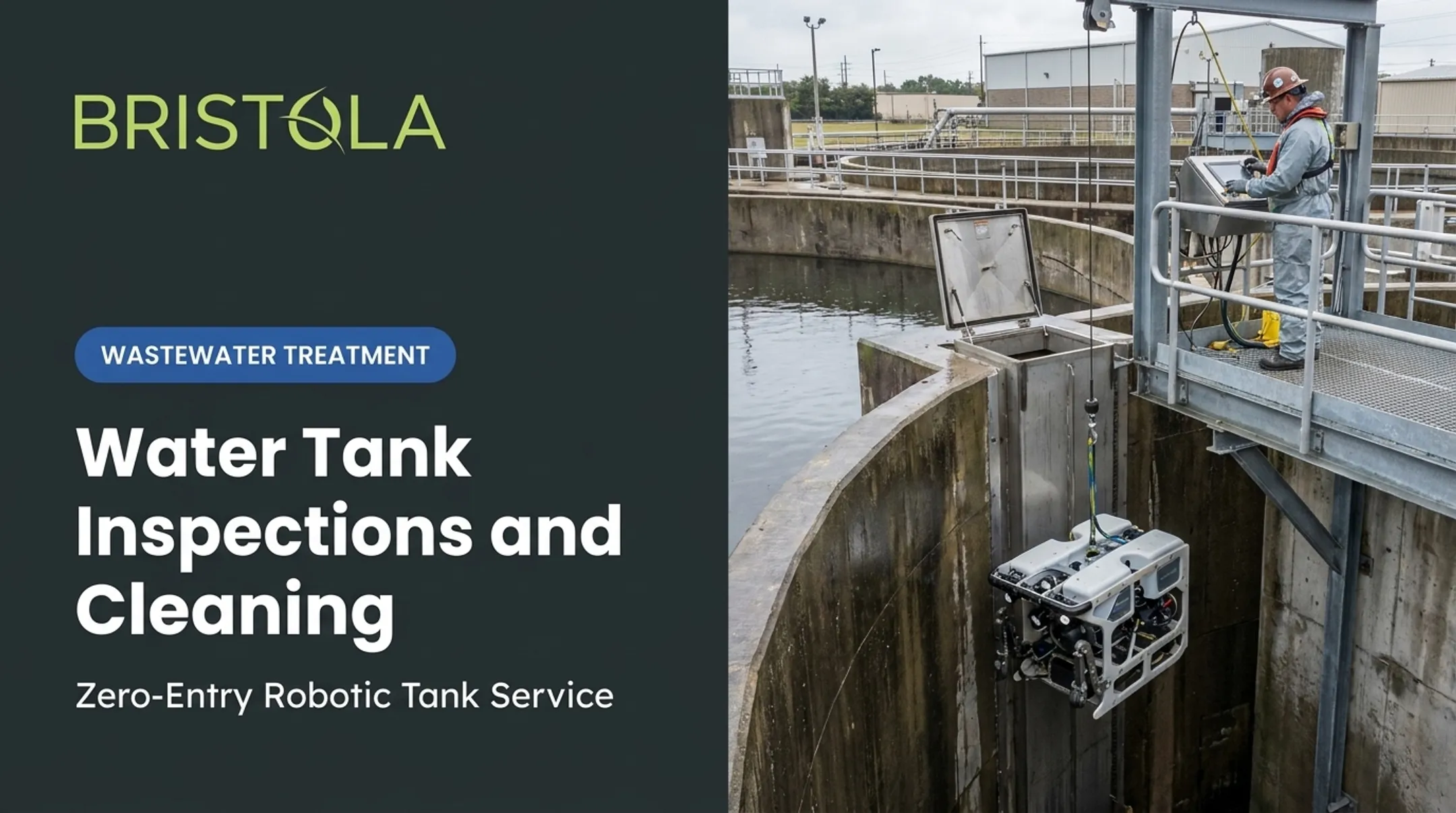
That's the risk facility managers have accepted for years because there wasn't another option. Now there is.
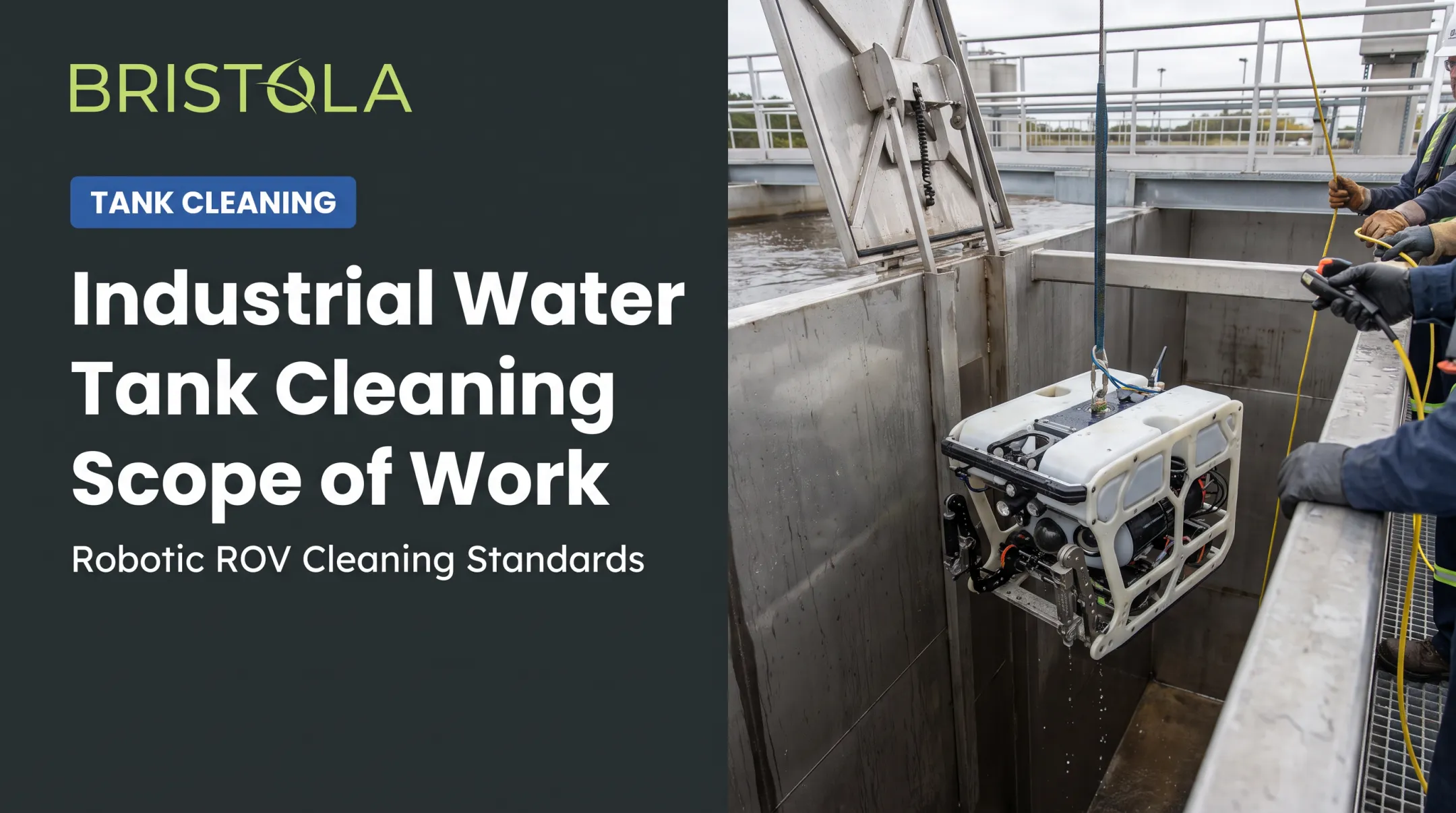
ROV (remotely operated vehicle) tank cleaning and inspection replaces human entry with a submersible robot, controlled from outside the tank. No draining. No breathing apparatus. No permit-required confined-space entry.
This guide covers how ROV technology works, what it costs compared to traditional methods, and how to prepare your facility for a first deployment. It's built for facility and safety managers overseeing water storage tanks, wastewater systems, digesters, and industrial liquid tanks across the US.
Key Takeaways
- ROV technology removes human entry from tank cleaning, eliminating confined-space fatality risk
- Traditional drain-and-refill cycles waste thousands of gallons and take tanks offline for days
- Cleaning and inspection run while tanks stay filled and fully operational
- Long-term costs fall by avoiding downtime, temporary storage, and water waste
- Bristola's zero-human-entry system works without stopping production or draining the tank
How Traditional Tank Cleaning and Inspection Works
Most potable water tanks still get cleaned the old-fashioned way: drain, scrub, disinfect, refill, test. The tank is fully taken out of service.
Crews drain it, remove sediment, and pressure-wash the interior. They then add a chlorine solution that must sit for a minimum of 4 hours before the tank can be drained again and refilled.
This process can waste thousands of gallons and sideline water supplies for multiple days, according to Deep Trekker's industry guide. Facilities often need an alternative water supply during that window.
Some facilities turn to diver-assisted cleaning to avoid a full drain. That skips the water loss—but not the risk. A typical crew includes one diver and two topside spotters, all requiring confined-space certification. The diver still enters an enclosed, often low-visibility environment.
Risks common to both methods:
- Confined-space hazards: oxygen depletion, toxic gas exposure, engulfment
- Contamination risk from equipment or personnel entering the tank
- High costs for insurance, certification, and specialized crews
- Multi-day downtime with lost production or water supply
OSHA's confined-space standard, 29 CFR 1910.146, requires employers to evaluate the space, issue permits, provide an attendant, and plan for rescue. Every traditional method that puts people inside the tank keeps those requirements in force. Stop the entry, and the confined-space burden ends with it.
What Is ROV Technology for Underwater Tank Inspection and Cleaning
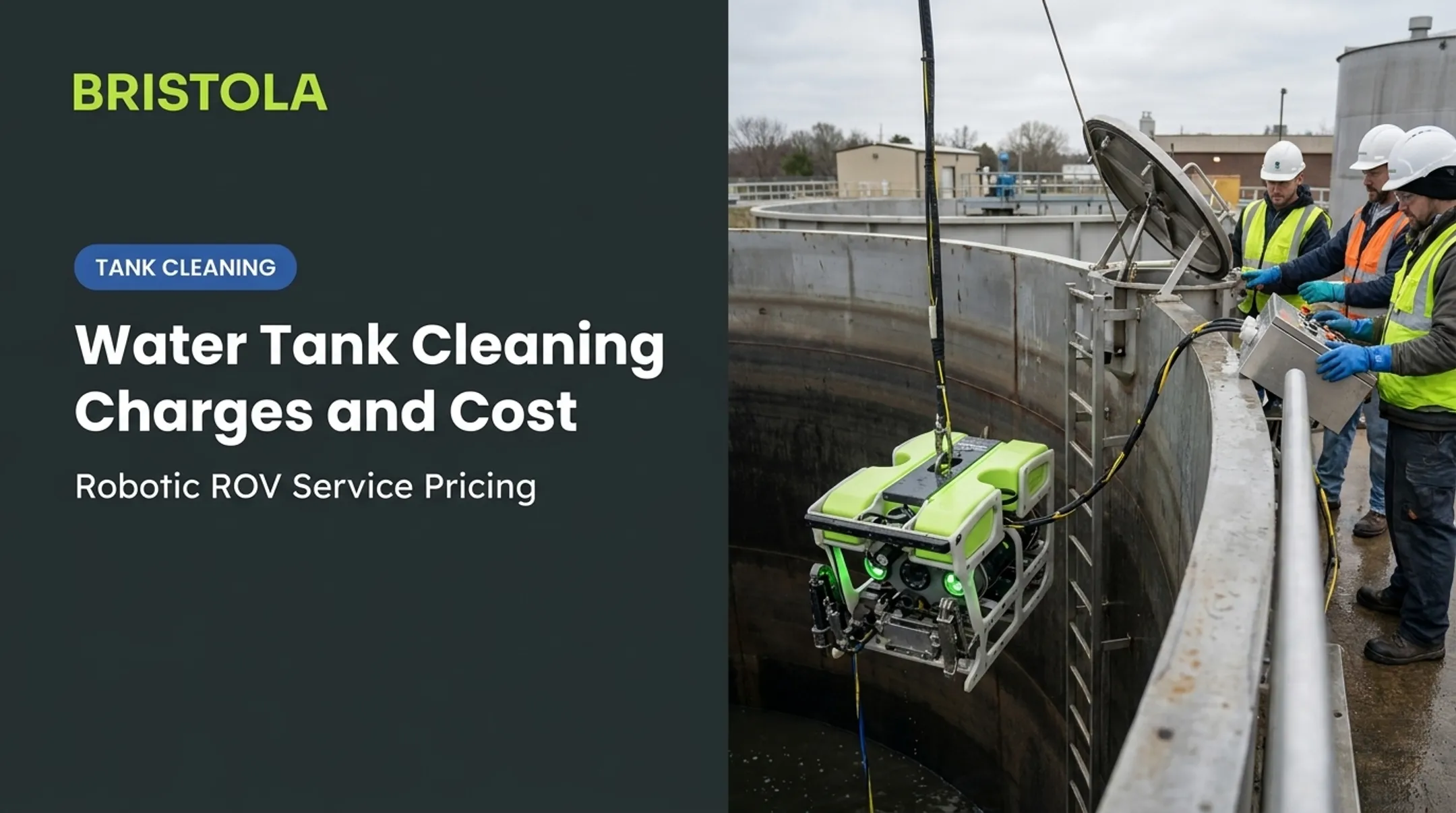
An ROV, short for remotely operated vehicle, is an unmanned submersible robot piloted from outside the tank. It's equipped with cameras, navigation sensors, and tooling for sediment removal—doing the work a diver or entry crew once handled, without putting people inside the tank.
Wastewater Digest reports that inspection-grade ROVs allow potable water tanks to be inspected while remaining in operation, without draining or taking the tank offline.
Two Ways ROVs Get Inside a Tank
How the robot enters the tank matters as much as what it does once inside:
- Standard hatch-lowered ROVs: The tank hatch opens to atmosphere, the ROV is lowered in, and the tank is briefly exposed to outside air
- Airlock/equalization chamber systems: A sealed entry portal attaches to the existing manhole, letting the ROV pass through without ever opening the tank to atmosphere
Bristola's patented equalization-chamber entry system uses that sealed approach. It installs over a manhole 24 inches in diameter or greater and acts as an airlock between the tank and outside air. The entry box cycles the robot in and out so the tank stays sealed, full, and in production for the entire job.

The Cleaning Process
Once inside, the ROV navigates to the tank floor—often through valve openings at different heights—using sonar when visibility is low. It pulls sludge and sediment through a flexible hose to a facility-selected processing setup for containment, dewatering, or disposal.
The robot is built to work underwater, under pressure, inside an active tank, so cleaning can proceed without draining the vessel or stopping production.
The Inspection Process
Beyond cleaning, ROVs document tank condition while they work:
- Real-time sonar sediment mapping builds 3D renderings of sludge accumulation
- Those maps support dredging estimates and maintenance budgeting
- Live performance monitoring gives operators visibility without opening the lid
Why the Reporting Matters
Every deployment leaves a reusable data trail. Bristola's Submersible Robotic Cleaning System evaluates, reports, and stores facility condition after each job, which helps teams:
- Plan maintenance from a historical record instead of one-off observations
- Show regulators documented tank condition over time
- Compare sediment buildup across service intervals

Key Benefits of Choosing ROV Over Traditional Methods
The case for ROV technology comes down to six advantages traditional methods can't offer at the same time.
- Eliminates confined-space fatality and injury risk with zero human entry during cleaning
- Keeps tanks filled and in service, with no shutdown and no lost production
- Lowers labor, insurance, and temporary-storage costs versus diver-based or drain-based cleaning
- Prevents wasted water or product and the carbon cost of re-processing or downtime
- Delivers consistent recorded video and sonar mapping for proactive maintenance decisions
- Works across water towers, anaerobic digesters, refinery tanks, and food and beverage processing facilities
Real cost comparison: Bristola's internal case study compares traditional cleaning, performed roughly every five years, against its own system.
Traditional cleaning runs about $250,000 annualized, factoring in $300,000 for direct cleaning, $200,000 in lost revenue, and $240,000 for chemical treatment and storage. Bristola's model comes in at $170,000 annualized, a savings of $80,000 per tank per year.

Those savings show up in live operations too. A 1.2-million-gallon EnviTec digester in New York hadn't been cleaned in over four years. Volatile-solids reduction had dropped below 25%, and daily biogas output had fallen 20%. Bristola completed the cleanout in 12 days for $411,000, without shutting the digester down.
How Much Does ROV Tank Cleaning and Inspection Cost
Pricing depends on tank size, type, sediment volume, and manhole or entry-point access. There is no universal rate, but historical vendor pricing gives a rough sense of scale.
| Method | Reported Cost Range |
|---|---|
| Chemical/drain cleaning | $3,000–$20,000 |
| Power washing | $3,000–$5,000 |
| Diver-assisted work | $1,500–$3,000 |
| ROV-based cleaning | $500–$1,500 (varies by scope) |
These figures come from older vendor sources (Blue Earth Products, 2014 and 2018) and should not be treated as current bids. Sandblasting and resurfacing, when needed, can run $22,000–$26,000 per tank or roughly $250–$290 per square foot.
ROV pricing usually looks stronger over a multi-year horizon. By avoiding downtime, lost water or product, and temporary storage, the long-term cost per tank often lands lower—even when a single visit is close to a drain-and-clean quote.
Get an accurate quote by confirming:
- Tank type: potable water, fuel, wastewater, or digester
- Sediment volume and composition
- Manhole size and access (Bristola’s system needs 24 inches or greater)
- Cleaning cadence: annual or another cycle based on risk and load
Inspection timing is not one-size-fits-all:
- Potable water tanks: Illinois EPA recommends inspection at least every five years; other state rules vary
- Non-potable and industrial tanks: Set intervals by condition, sediment load, and process risk rather than a fixed calendar
Preparing for an ROV Tank Cleaning or Inspection
Getting a facility ready for an ROV deployment isn't complicated, but a few things need confirming before scheduling.
- Confirm access points and hatch size. Most airlock-style entry systems need a manhole of at least 24 inches in diameter. Smaller openings may require modification.
- Review tank type and internal layout. Digesters, covered lagoons, and standard tanks each have different floor structures, valve placement, and sediment characteristics.
- Coordinate around production schedules. Since ROV cleaning doesn't require shutdown, this step is mostly about crew access and timing, not downtime planning.
What to Expect During the Job
Once on site, the crew works through a live, monitored sequence:
- Install or connect to the entry portal
- Deploy the ROV through the winch system and lower it to the tank floor
- Navigate with sonar through valve openings while sludge is pulled out through a flexible hose
- Recover the robot through the same portal when the job is complete
How Bristola's Entry Port System Differs
Bristola handles entry hardware two ways:
- New builds: Install the entry hardware before the tank enters production
- Existing facilities: Clear initial sediment, then retrofit the entry portal onto the existing manhole
One documented retrofit modified a 4-by-4-foot entry door with a 24-inch pipe and isolation valve. That change enabled future live ROV cleanings without draining the tank.
Frequently Asked Questions
How is tank cleaning done?
Traditional methods drain and scrub the tank or send in a diver—both require human entry and carry confined-space risk. ROV cleaning skips entry entirely, so the tank stays full and operational.
How much does it cost to clean out a water tank?
Cost depends on tank size, sediment volume, and method. Drain-and-clean methods have historically run $3,000 to $20,000, while ROV-based options can lower long-term costs by avoiding water loss and downtime.
How much does it cost to clean a fuel tank?
Fuel tank cleaning costs vary widely based on hazard classification, sludge volume, and waste disposal requirements. Remote robotic cleaning can reduce labor costs and eliminate confined-space certification expenses tied to human entry.
What is ROV for underwater inspection?
An ROV is a remotely operated submersible vehicle equipped with cameras and sensors, used to visually assess underwater tank structures without requiring a diver or entry crew.
How often should water storage tanks be inspected and cleaned?
Guidance varies by state and tank type. Illinois EPA recommends inspecting potable tanks at least every five years, with some states requiring shorter intervals. Non-potable tanks often follow condition-based schedules rather than a fixed calendar.
Can ROV cleaning be done without draining the tank?
Yes. Most ROV systems, including Bristola's zero-human-entry technology, operate while tanks remain full and in service—no draining or shutdown required.