Still, plenty of farmers stay on the sidelines. High upfront costs, maintenance headaches, and general uncertainty about whether a smaller operation can actually make the economics work are common concerns.
This guide breaks down how small-scale digesters work, what they cost, the benefits they deliver, and the maintenance realities nobody puts on the brochure.
Key Takeaways
- On-farm digesters turn manure and organic waste into usable biogas and nutrient-rich digestate
- Feasibility depends on feedstock volume, available space, and realistic maintenance capacity
- Consistent tank cleaning and monitoring protect long-term biogas yield
- USDA grants and cooperative digester models can lower the upfront cost barrier
What Is a Small-Scale Anaerobic Digester and How Does It Work?
Anaerobic digestion is a microbial process that breaks down organic matter in an oxygen-free environment, producing biogas (mostly methane) and digestate, a nutrient-dense byproduct. According to the USDA's NRCS conservation practice standard, digesters are formally recognized components of farm waste-management systems.
Two Main System Types for Small Farms
- Plug-flow digesters: Best suited for dairy operations that scrape manure. Simple design, handles manure-only feedstock well
- Complete-mix systems: Use an enclosed, heated tank with mechanical or gas mixing. Work best when manure is diluted, such as with milking-center wastewater
Temperature and Retention Time Matter
Most systems run at mesophilic temperatures, around 95-105°F, according to Ohio State University Extension. Hydraulic retention time (HRT) — how long material stays in the tank — typically runs 17-20 days minimum for complete-mix and plug-flow systems, per NRCS standards. A Cornell Small Farms report notes some small systems run a 23-25 day HRT after an initial 3-4 week filling period.

What Goes In (and What Doesn't)
Common feedstocks include:
- Livestock manure
- Food processing waste
- Crop residues
Human waste is a gray area. There's no blanket federal rule: EPA states that digester requirements vary by state and local air, water, and solid-waste regulations.
New York, for example, classifies digesters as exempt, registered, or permitted depending on the material type, but doesn't spell out a specific human-waste allowance. If you're considering co-digesting biosolids, check with your state environmental agency before committing to a design.
A Real Farm Example
A 750-cow dairy in Cecil County, Maryland processed 120,000 gallons of liquid manure and 36,000 gallons of food-processing waste weekly, running at 97°F.
Results included:
- 64 million cubic feet of biogas per month
- About 2,000 MWh of electricity per year through a combined heat and power unit
Farms typically convert that biogas to electricity or heat, then land-apply the digestate as fertilizer.

Costs, Financing, and ROI for Small Farm Digesters
Digester costs swing widely based on system type and scale. Kansas State University Extension puts total installation costs anywhere from $200,000 to $2,000,000.
By system type:
- Plug-flow systems: $180-$1,200 per cow
- Complete-mix systems: $500-$2,600 per cow
- Covered lagoons: as low as $90 per cow
University of Maryland Extension reports that a typical on-farm unit costs around $1.2 million, with a broader range of $400,000-$5,000,000 depending on design and features.
Major Cost Drivers
Capital and operating costs usually concentrate in a few line items:
- Tank or vessel construction (often the largest capital expense)
- Heating systems that hold stable digestion temperatures
- Generators or CHP units that convert biogas to electricity
- Ongoing maintenance, including sludge cleanout and engine rebuilds
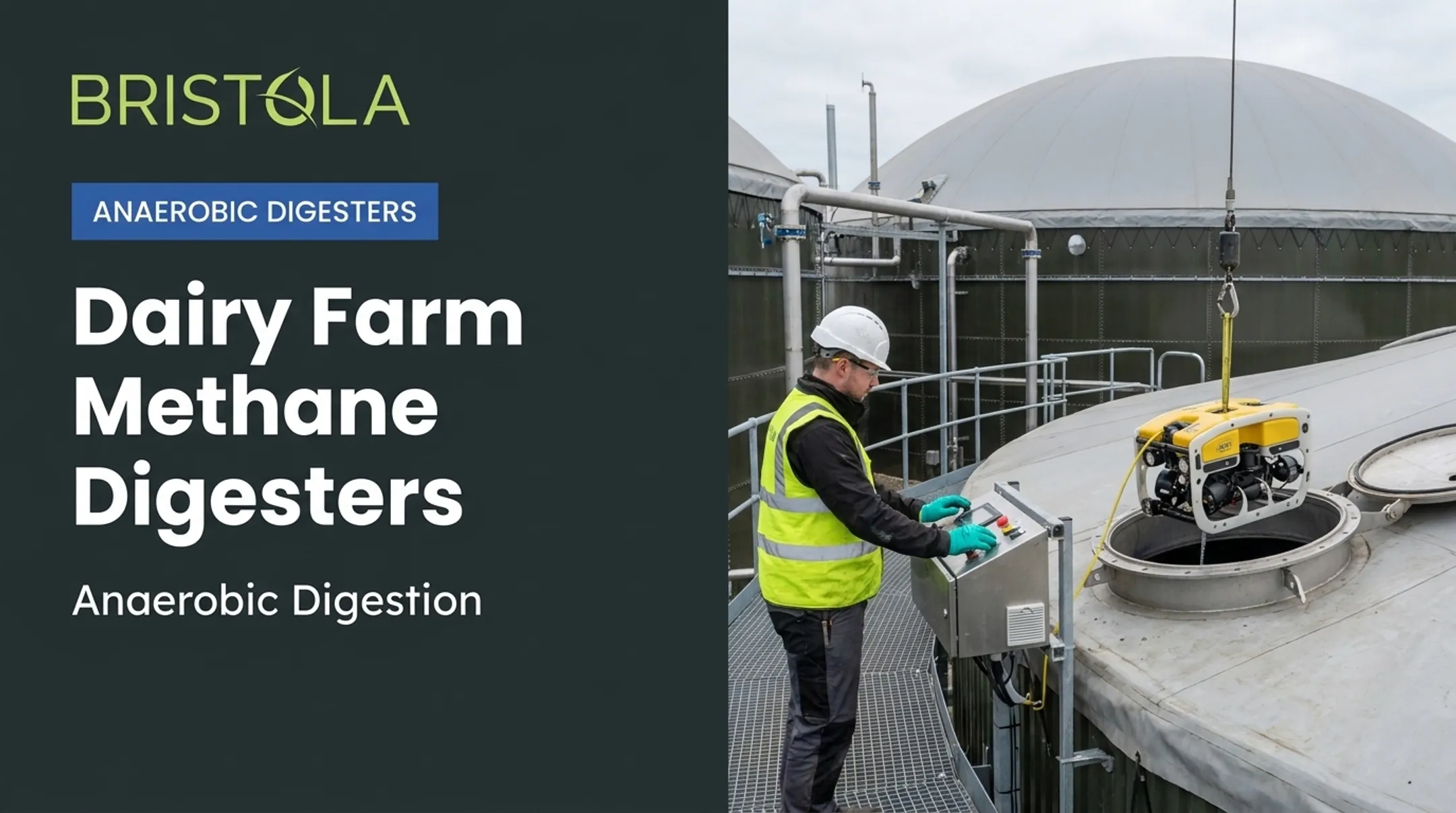
Those operating line items add up fast in practice. Penn State Extension describes a 675-cow farm spending roughly $15,000 annually on operating costs, including maintenance and periodic engine replacement. Sludge cleanout method affects that number: zero-human-entry robotic cleaning—the approach Bristola uses on digesters and covered lagoons—avoids the production downtime and temporary storage spend that traditional drain-and-clean outages create.

Grants That Help Offset Costs
The USDA Rural Energy for America Program (REAP) offers Renewable Energy System grants ranging from $2,500 to $1 million. USDA guidance currently indicates new REAP grant applications are paused, while guaranteed-loan applications remain open. Confirm the latest Federal Register notice before building either into your budget.
Getting to ROI
Farmers typically recoup costs through:
- Reduced electricity bills
- Selling excess power back to the grid
- Savings on manure/waste disposal fees
KSU Extension cites payback examples of 7 years for dairy and 15 years for swine operations, assuming 2 cents/kWh operating costs — though these are illustrative, not guaranteed.
Cooperative Digesters Solve the Scale Problem
Small farms often can't justify a digester alone. A Penn State case study describes a proposed community digester serving 18 farms and roughly 6,000 cows. Developed with Air Liquide and backed by about $20 million in grants and private investment, the shared build spreads the cost burden across participants.
Benefits of Small-Scale Anaerobic Digesters for Farms
Reduced Odor and Improved Manure Management
Digestion breaks down manure's odor-causing compounds while keeping nutrient value intact. Penn State Extension confirms that controlled digestion helps prevent foul-odor production while still producing land-applicable fertilizer.
Renewable Energy and Cost Savings
Biogas can power farm equipment, heat buildings, or send power back to the grid. A Massachusetts farm's 225-kW system generated over 1.1 million kWh in its first eight months: enough to cover farm electricity needs, heat water, and support grid sales.
Environmental and Sustainability Impact
Anaerobic digestion can reduce greenhouse gas emissions from manure storage and handling by more than 50%, according to NC State Extension, citing peer-reviewed research. Digesters also convert nitrogen into more crop-available forms, improving digestate's fertilizer value.
Common Challenges and Maintenance Considerations
Digesters aren't a set-it-and-forget-it system. They need consistent feeding, steady temperature control, and regular monitoring. Neglect any of these and biogas production can drop fast, or stop entirely.
The Sludge Problem
Over time, solids and sludge settle at the bottom of digester tanks and covered lagoons. Left unaddressed, this buildup:
- Reduces the tank's effective working volume
- Lowers biogas yield
- Can compromise structural integrity
One documented case involved a 1.2-million-gallon digester in New York that went more than four years without cleaning. Volatile-solids reduction had fallen below 25%, the tank could not hold proper mesophilic temperature in winter, and daily biogas output had dropped 20%.
The Traditional Cleaning Problem
Conventional cleanout means draining the tank, halting biogas production, and sending workers into a confined space. That's not a small risk. A CDC/NIOSH study surveying 1,200 swine and dairy farms found that among manure-storage injury cases, 83% were fatal. OSHA's confined-space standard (29 CFR 1910.146) requires air testing, ventilation, an outside attendant, and rescue procedures before anyone enters — requirements that add cost, time, and liability every time a tank needs cleaning.

A Different Approach
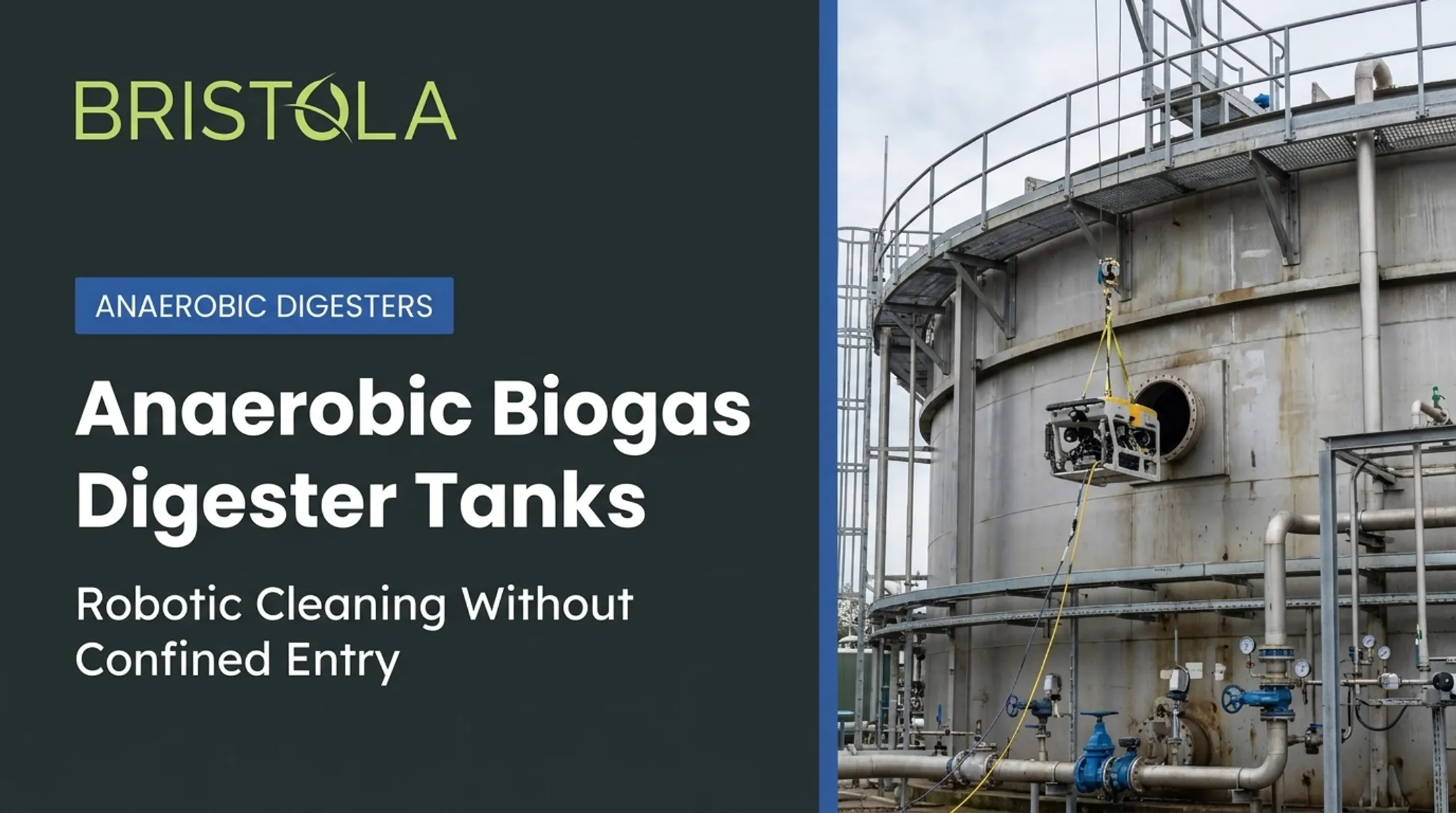
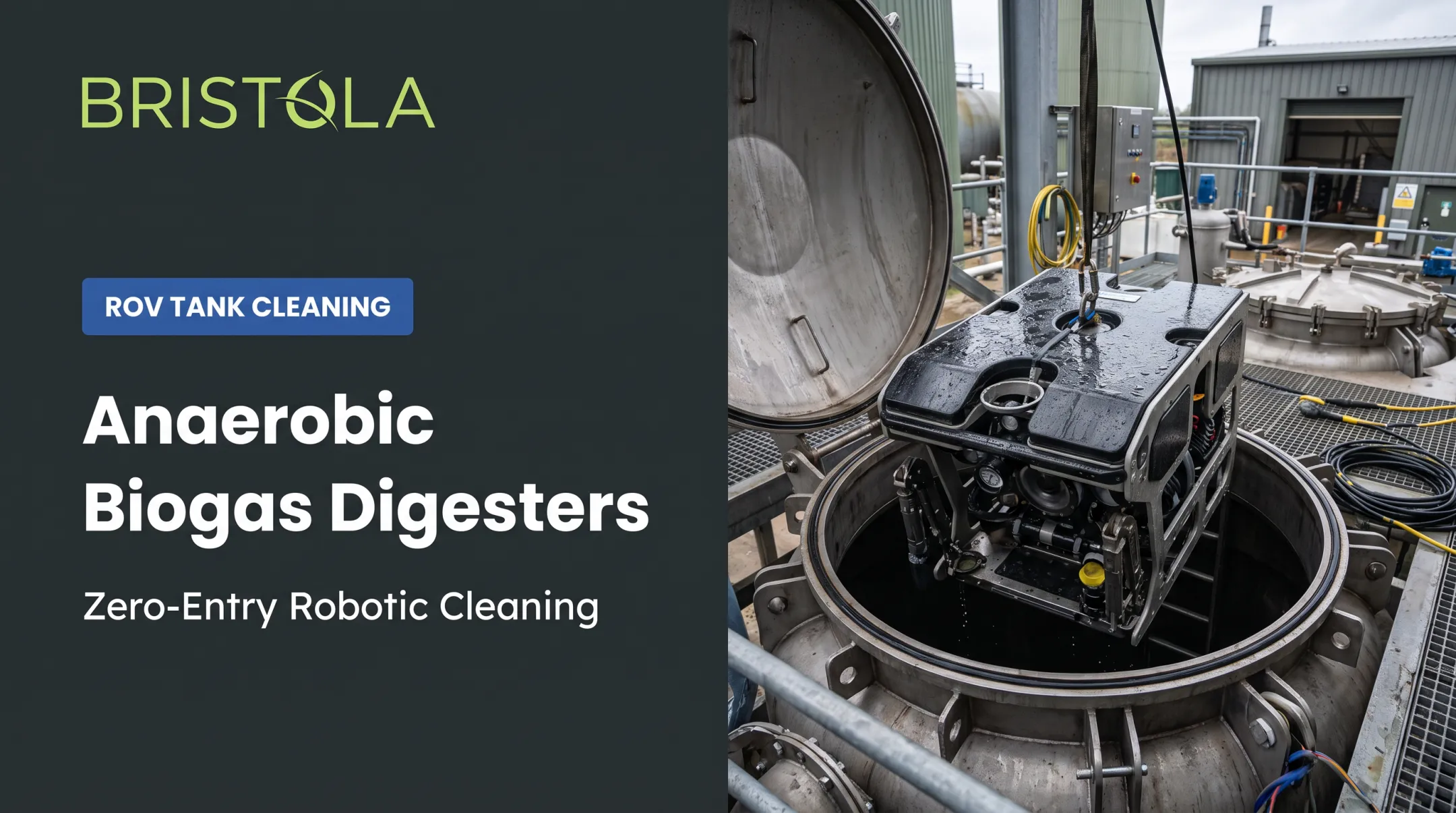
Those risks are why more farms look for cleaning methods that skip tank entry altogether. Bristola's zero-human-entry robotic system is one example: a remotely operated submersible robot enters through a patented equalization-chamber portal (adaptable to any manhole 24 inches or larger) and removes sludge from the tank floor while the facility stays full and running—no draining, no confined-space entry, and no production shutdown.
Removed sludge moves through a flexible hose to a processing option you choose. The setup can be retrofitted onto existing digesters, not only new builds. On covered lagoons, cleaning can proceed without removing the cover or interrupting operations.
For small-scale systems, the practical takeaway is simple: monitor sludge buildup, clean before yield slips, and favor methods that protect both biogas output and the people who keep the digester running.
Getting Started: Is a Small-Scale Digester Right for Your Farm?
Before committing to a small-scale digester, weigh these feasibility factors:
- Herd size and waste volume — Do you generate enough consistent feedstock?
- Available space — Digesters need room for tanks, storage, and equipment access.
- Supplemental feedstock access — Can you source food waste or crop residue nearby to boost output?
- Local permitting requirements — Rules vary significantly by state; some require solid-waste permits for off-farm feedstock
Before you lock in a design, talk with an equipment manufacturer, your local university extension program, or your state energy office. Cornell's PRO-DAIRY program, for example, offers workshops and technical guidance built for on-farm digestion projects.
Frequently Asked Questions
How much does a small-scale anaerobic digester cost?
Costs range from roughly $90 per cow for covered lagoons to $2,600 per cow for complete-mix systems, with total installations often falling between $200,000 and $2 million. USDA REAP grants and cooperative digester models can help offset a portion of that.
What is anaerobic digestion and how does a small-scale anaerobic digester work?
Anaerobic digestion is an oxygen-free microbial process that breaks down manure and organic waste into biogas and digestate. The biogas gets used for electricity or heat, while digestate is applied to fields as fertilizer.
How long does it take for a small-scale anaerobic digester to produce biogas?
Most plug-flow systems have a hydraulic retention time of about 3-4 weeks before reaching steady output. Some small-farm systems run closer to 23-25 days after an initial filling period.
Are small-scale anaerobic digesters safe to operate?
The main risk comes from confined-space maintenance, which OSHA regulates heavily due to fatal injury potential. Zero-human-entry technologies like Bristola's robotic cleaning system remove that risk entirely by eliminating tank entry.
Can human waste be used in a small-scale anaerobic digester to produce biogas?
No. Most U.S. states restrict human waste or biosolids co-digestion without specific permits. Rules vary by state, so check with your local environmental agency first.
Do small-scale anaerobic digesters produce unpleasant odors?
Well-maintained digesters actually reduce odor compared to raw manure storage. The controlled digestion process breaks down odor-causing compounds before the material is land-applied.