That's a problem. Confined-space entry into an acid tank carries real risk of chemical burns, toxic fume exposure, and worse. It's also slow, taking tanks offline for days or weeks at a time.
This article covers why sludge forms, what traditional cleaning actually involves, the safety and regulatory requirements around it, and how robotic zero-entry systems are giving facilities a different path forward.
Key Takeaways
- Iron sulfate sludge from carbon-steel corrosion, contaminants, and settled particulate cuts usable tank volume
- Manual cleaning requires confined-space entry, a serious injury and fatality hazard under OSHA
- Robotic, zero-human-entry systems clean tanks without draining them or halting production
- OSHA, EPA, and DOT rules apply to nearly every step of a compliant sulfuric acid tank cleaning project
Why Does Sludge Build Up in Sulfuric Acid Tanks?
Carbon steel and concentrated sulfuric acid keep reacting in ways that wear the tank down. As the acid reacts with the tank's steel walls, it generates iron sulfate compounds that settle out as sludge on the tank floor.
A 2009 corrosion study found carbon steel corrodes at 1.91 mm/year (about 75 mpy) in 93.5% sulfuric acid and 1.02 mm/year (about 40 mpy) in 98% acid, at 33°C (91°F) with moderate flow. Under static, cooler conditions, that rate drops to roughly 0.13 mm/year (about 5 mpy) for 98% acid at 24°C (75°F). Concentration, flow, and temperature all matter.
What this sludge does to your tank:
- Reduces usable storage volume—often by a meaningful share of capacity
- Skews level and inventory readings, since sensors can't distinguish sludge from usable product
- Creates localized corrosion hot spots underneath the sediment layer
- Raises long-term risk of pitting, thinning, and eventual tank failure
A 2011 peer-reviewed study on a sulfuric acid sludge-cleaning robot described a real-world tank holding 95–98% acid with roughly 200 mm (about 8 in) of sludge — about 1.25 m³ (44 cu ft). The researchers traced it to particles entering with the acid feed and flue-gas microdust settling over time. That buildup isn't rare—it's a predictable byproduct of running the tank at all.

The Dangers of Traditional Sulfuric Acid Tank Cleaning
Manual cleaning puts a worker inside a vessel that recently held one of the most aggressive acids in industrial chemistry. Even after neutralization, residual acid and toxic fumes don't just disappear.
OSHA's accident database includes sobering examples. One worker died after sulfuric acid exposure while working to neutralize a waste sump — he was found struggling to breathe with a chemical burn and later died in the hospital, according to OSHA's accident record. In a separate 2019 incident, an employee fell into a tank containing 5% sulfuric acid (pH under 1) and suffered fatal chemical and thermal burns.
Why manual entry is inherently risky:
- Toxic fume exposure, even after "neutralization"
- Severe chemical burns from residual acid pooled in sludge
- Asphyxiation risk in an oxygen-deficient confined space
- Engulfment potential — OSHA's own trigger for classifying a space as permit-required
Under OSHA 1910.146, any permit-required confined space entry demands atmospheric testing (oxygen, then combustible gases, then toxics), a dedicated attendant outside the space, and a rescue team capable of responding to that specific hazard. That rescue team must practice at least every 12 months.
Those requirements add real cost and delay. Traditional cleaning quickly stacks expenses:
- Temporary storage tanks or vessels for the acid during cleaning
- Acid-resistant PPE for every entrant
- Standby rescue teams on-site for the entire duration
- Days to weeks of lost production while the tank sits offline

Step-by-Step Traditional Cleaning Process
Neutralization and Draining
Before anyone can safely approach the tank interior, crews dilute and drain residual acid. A technical service report on sulfuric acid storage notes that teams must air-purge the tank, rinse it thoroughly with water, and neutralize it before any internal work begins.
Spudge and Ash Removal
Crews add neutralizing agents (sometimes coal ash) to solidify the sludge so it is easier to remove by hand or shovel. This step is highly site-specific; there's no universal industry recipe, and it requires its own hazard assessment before mixing anything into an acid tank.
Ventilation and Alkaline Wash
Once solids are out, crews run ventilation checks to confirm the atmosphere is safe, then perform a final alkaline rinse to neutralize any remaining acidity on tank walls and floor. They also wash and neutralize tools and equipment used during the process before leaving the site.

How Robotic, Zero-Human-Entry Cleaning Is Changing the Industry
Here's the alternative: no person ever enters the tank.
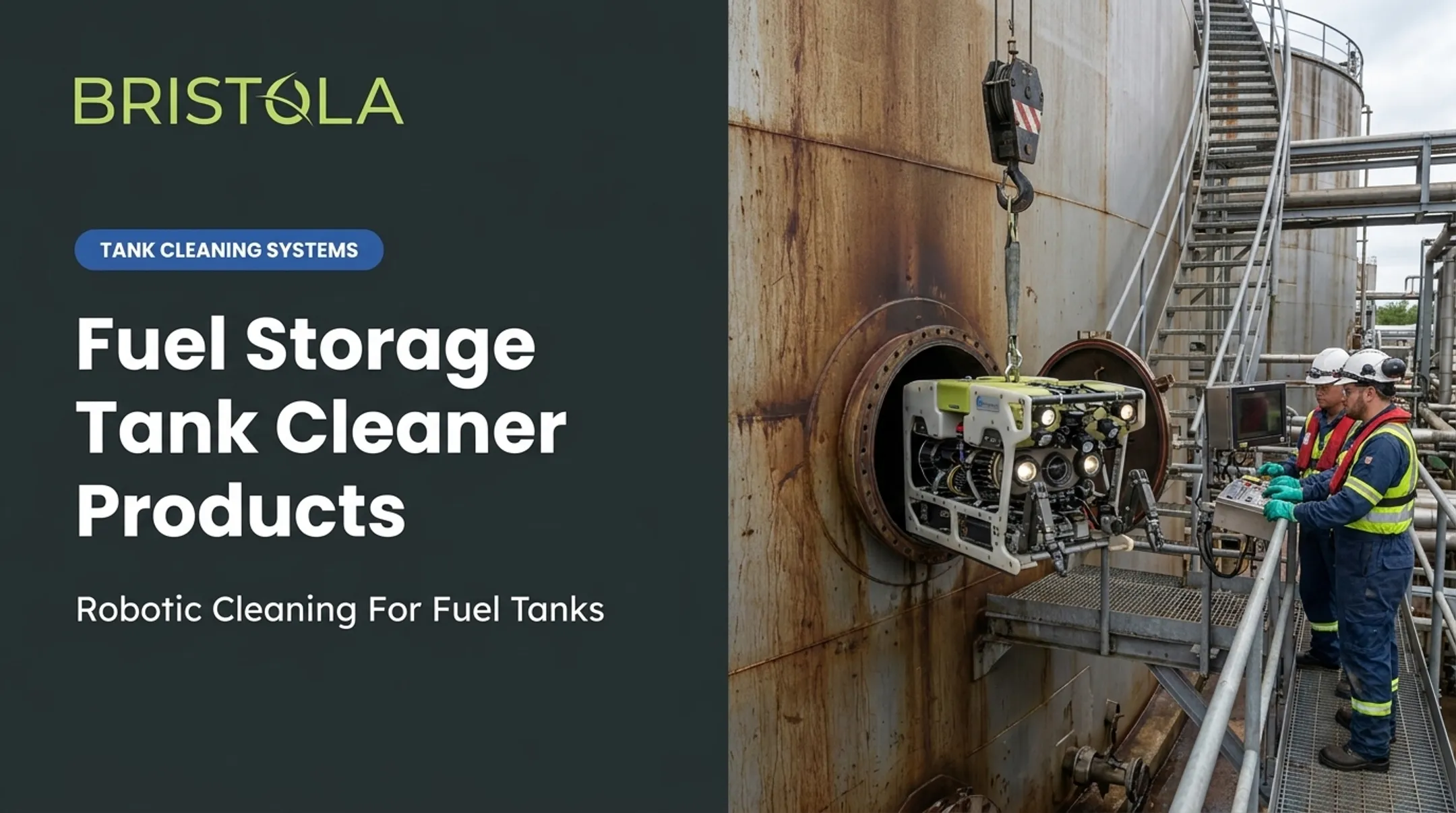
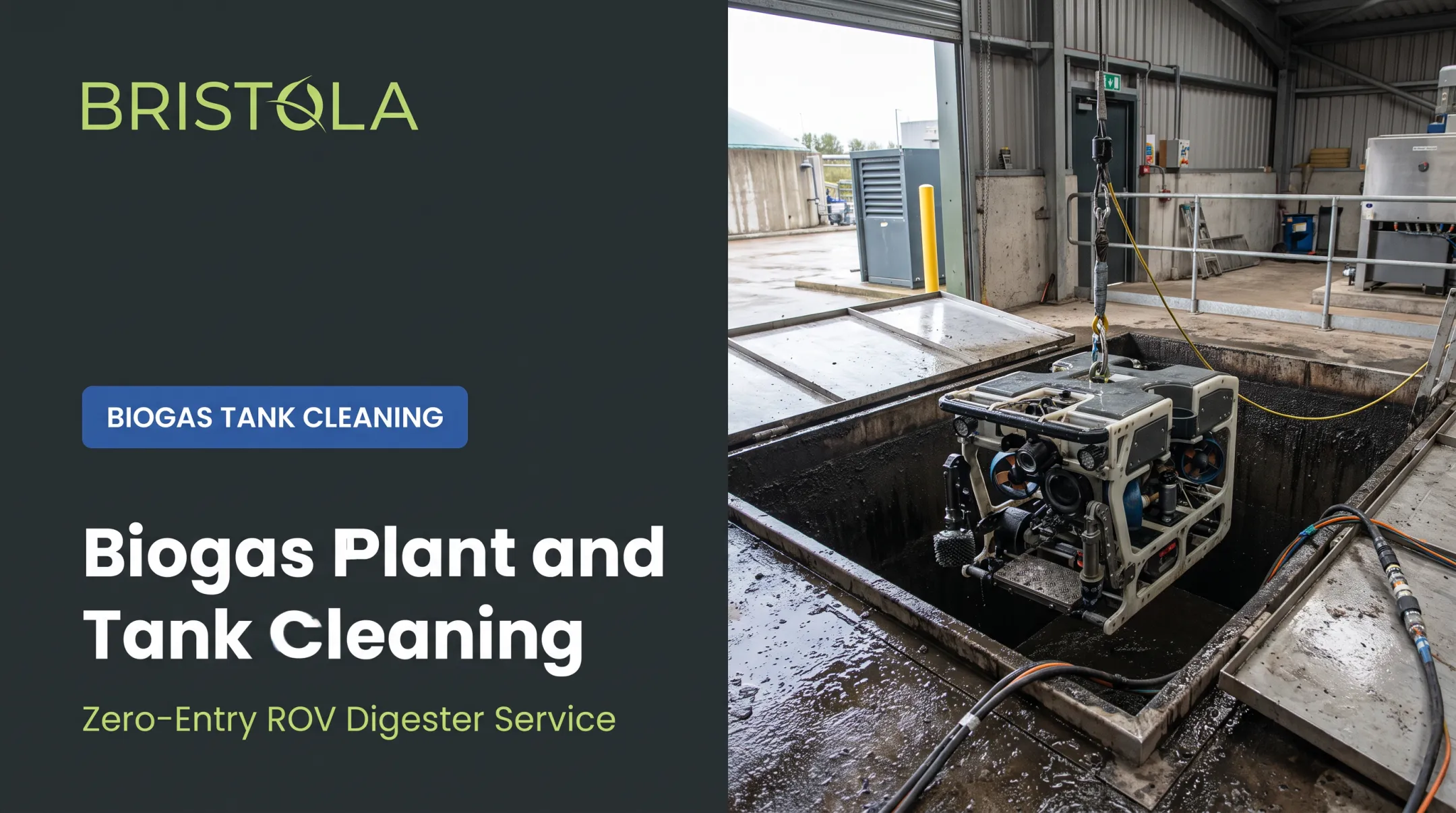
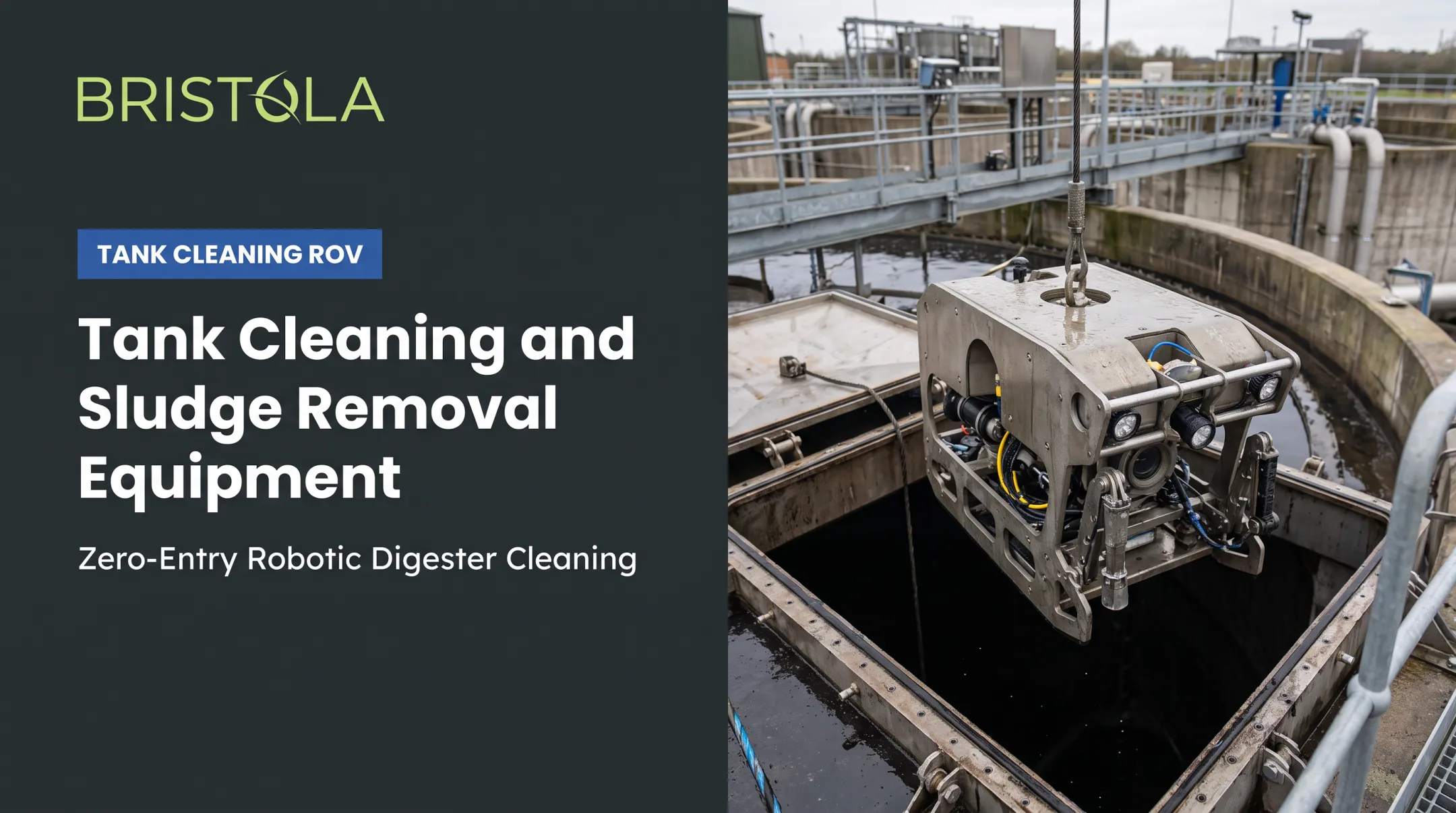
Bristola's patented equalization chamber, an airlock-style entry portal, attaches to an existing manhole (24 inches in diameter or larger). It lets a submersible robot enter while the tank stays sealed, pressurized, and in service.
The robot removes the sludge. No employee breathes tank vapors or touches acid residue.
How this changes the cleaning equation:
- The tank stays full and operational during cleaning: no draining, no shutdown
- Sludge and residue get vacuumed and routed through a hose to a processing point of your choice
- No PPE-suited crew, no standby rescue team, no confined-space permit process for entry
- The system installs as a retrofit on existing tanks or gets built into new construction from day one

Bristola's documented experience centers on industrial and hazardous liquid storage: anaerobic digesters, wastewater tanks, fuel storage, and similar facilities. It does not rest on one named sulfuric acid project.
The zero-entry principle still applies directly to acid service. The less a human has to be near concentrated acid and its byproducts, the fewer ways something can go wrong.
That same logic holds regardless of tank contents. Facilities avoid temporary storage costs during cleaning, cut PPE and standby rescue expenses, and keep production running instead of losing days or weeks to an offline tank.
Safety Equipment and Regulatory Compliance
Any sulfuric acid tank cleaning project—manual entry or robotic—must comply with three federal regimes: OSHA, EPA, and DOT.
Safety equipment follows the written hazard assessment. Plan for chemical-resistant PPE, continuous atmospheric monitoring, and rescue gear staged before work starts.
OSHA requirements:
- Permit-required confined space program (1910.146), including atmospheric testing sequence and attendant staffing
- PPE selected from a documented hazard assessment, with training before use
- Rescue services matched to the specific hazard, with annual practice drills
EPA and DOT requirements:
- Hazardous waste determination made before dilution or mixing, per 40 CFR 262.11
- Corrosivity threshold under 40 CFR 261.22: pH ≤2 or ≥12.5 triggers D002 hazardous waste classification
- Manifest tracking of hazardous waste from generation through final disposal
- DOT hazard classification, packaging, and placarding under 49 CFR 171.1 for any transported sludge
Documentation matters as much as the physical steps. Keep waste characterization, manifest chain-of-custody, and inspection history ready so you can show compliance in an audit.
Choosing the Right Sludge Cleaning Approach for Your Facility
Choosing the Right Spudge Cleaning Approach for Your Facility
There's no single right answer here. The decision depends on a handful of factors specific to your tank and operation:
- Tank size and sludge volume — larger accumulations may justify a permanent retrofit over repeated one-time cleanouts
- Acid concentration — higher concentrations increase both corrosion risk and the danger of manual entry
- Acceptable downtime — a refinery that can't afford a week offline has a very different calculus than a facility with built-in redundancy
- Lifecycle cost — general tank cleaning data puts traditional methods around $250,000 annually versus $170,000 for a zero-entry system, about $80,000 less per tank, per year

That said, these figures come from general industrial tank comparisons, not a sulfuric-acid-specific case study. Treat them as directional rather than guaranteed.
Every acid tank has its own corrosion history, sludge composition, and access constraints. Consult a provider who can evaluate your specific tank and tell you whether a zero-entry retrofit makes financial and operational sense, or whether a traditional cleanout remains the better fit for now.
Frequently Asked Questions
Is sulfuric acid toxic to humans?
Yes. Sulfuric acid causes severe chemical burns on contact and respiratory damage from fume inhalation. NIOSH sets exposure limits at just 1 mg/m³ for an 8-hour workday.
What will sulfuric acid not dissolve?
PTFE (Teflon) and high-silicon cast iron resist most sulfuric acid concentrations, with corrosion rates under 5 mils per year. Always verify compatibility for your specific concentration and temperature.
How often should a sulfuric acid tank be cleaned?
There's no universal interval — it depends on flow rate, acid concentration, and inspection findings. Watch for declining usable capacity, inaccurate level readings, and inspection results showing sludge accumulation.
Can sulfuric acid tanks be cleaned without shutting down operations?
Yes. Robotic zero-entry systems like Bristola's use a sealed entry portal to clean while the tank remains full and in service, eliminating the need to drain or shut down production.
What happens to the sludge removed from sulfuric acid tanks?
Sludge often qualifies as hazardous waste under EPA's corrosivity characteristic (D002) if it tests at pH 2 or lower. It requires proper manifesting, transport under DOT rules, and disposal at a licensed hazardous waste facility.
What PPE is required for sulfuric acid tank cleaning?
Manual entry cleaning requires acid-resistant suits, full-face respirators, chemical splash goggles or face shields, and acid-rated gloves. PPE selection must be based on a documented hazard assessment specific to the tank conditions.