Poor clarifier maintenance leads to real consequences: unplanned downtime, regulatory violations under NPDES effluent standards, safety incidents tied to confined-space entry, and degraded treatment performance that costs money to fix later.
This guide covers why clarifier maintenance matters, the different types of maintenance you'll need, warning signs to watch for, a practical maintenance schedule, and how zero-human-entry robotic technology is changing the game for major overhauls.
TL;DR
- Clarifier maintenance protects effluent quality, prevents downtime, and extends equipment life
- Prioritize three components: the effluent (weir/launder) system, sludge removal system, and drive mechanism
- Watch for solids buildup, odors, drive noise, and excessive sludge blanket depth as early warning signs
- A structured schedule (daily, weekly, monthly, annual) sustains reliable clarifier performance
- Zero-human-entry robotic cleaning cuts confined-space risk and eliminates shutdown-related downtime
Why Clarifier Maintenance Is Important
Consistent maintenance decides whether a treatment system runs reliably for decades or racks up emergency repair calls.
Impact on Treatment Performance
A well-maintained primary clarifier operating under average hydraulic loading typically removes 50-65% of suspended solids and 25-35% of BOD, according to EPA's Field Manual for Performance Evaluation and Troubleshooting at Municipal Wastewater Treatment Facilities. At peak loading, those numbers drop to roughly 40-50% suspended-solids removal and 20-30% BOD removal.
When maintenance lapses, worn seals and misaligned scrapers allow solids and grease to bypass into downstream lift stations and pumps. The result is a cascade of pump clogging, emergency call-outs, and missed effluent targets.
Effect on Equipment Lifespan
Left unaddressed, these conditions shorten drive-component life:
- Condensate buildup and grit accumulation
- Worn seals and scraper misalignment
- Constant strain on the drive from debris load
A drive on a clean maintenance cycle outlasts one running under that strain by a wide margin.

Safety and Compliance
Two regulatory frameworks matter here:
- OSHA's 29 CFR 1910.146 governs permit-required confined spaces. It requires hazard evaluation, isolation of pumps and lines, atmospheric testing (oxygen, then combustibles, then toxics), an outside attendant, and rescue planning
- 40 CFR 133.102 sets federal secondary-treatment standards: BOD5 and TSS 30-day averages capped at 30 mg/L, 7-day averages at 45 mg/L, and effluent pH between 6.0 and 9.0
Clarifier performance directly affects a plant's ability to meet those numbers.
Preventive vs. Reactive Costs
Solid, peer-reviewed cost comparisons specific to clarifiers are hard to find. One vendor case study reported a 60% cost reduction after applying reliability-centered maintenance principles at a small-scale wastewater facility. Treat that as directional, not universal. Still, catching problems early almost always costs less than repairing them after failure.
Types of Clarifier Maintenance
Clarifier upkeep falls into four categories, each addressing a different stage of equipment health.
Routine/Preventive Maintenance
This is your baseline. Weekly tasks include:
- Draining condensate to prevent moisture buildup in drive housings
- Checking oil sight glasses and lubrication levels
- Brushing or spraying V-notch weirs to prevent algae and solids buildup
- Inspecting torque control for early signs of drag or resistance Routine maintenance alone is typically sufficient when loading is low-to-moderate and no visible wear is present. Westech's clarifier reference recommends main gear-oil replacement every six months and a full mechanism inspection annually.
Corrective/Reactive Maintenance
This applies after a failure is already underway: worn seals causing short-circuiting, a plugged suction header, or a misaligned chain. Relying solely on reactive fixes is risky:
- Unplanned downtime disrupts treatment operations
- Small failures cascade into damaged drive components
- Delayed fixes increase the odds of regulatory noncompliance
Predictive/Condition-Based Maintenance
Here, you track leading indicators before they turn into failures:
- Sludge blanket depth
- Torque readings
- Drive vibration or noise EPA's Process Control Manual for Aerobic Biological Wastewater Treatment Facilities sets a secondary-clarifier sludge blanket target of 1-3 feet. Exceeding that range signals a problem building under the surface. Some manufacturer systems now log torque and drive data continuously, so operators can watch performance trends instead of relying on a single reading.
Major/Overhaul Maintenance and Modern Alternatives
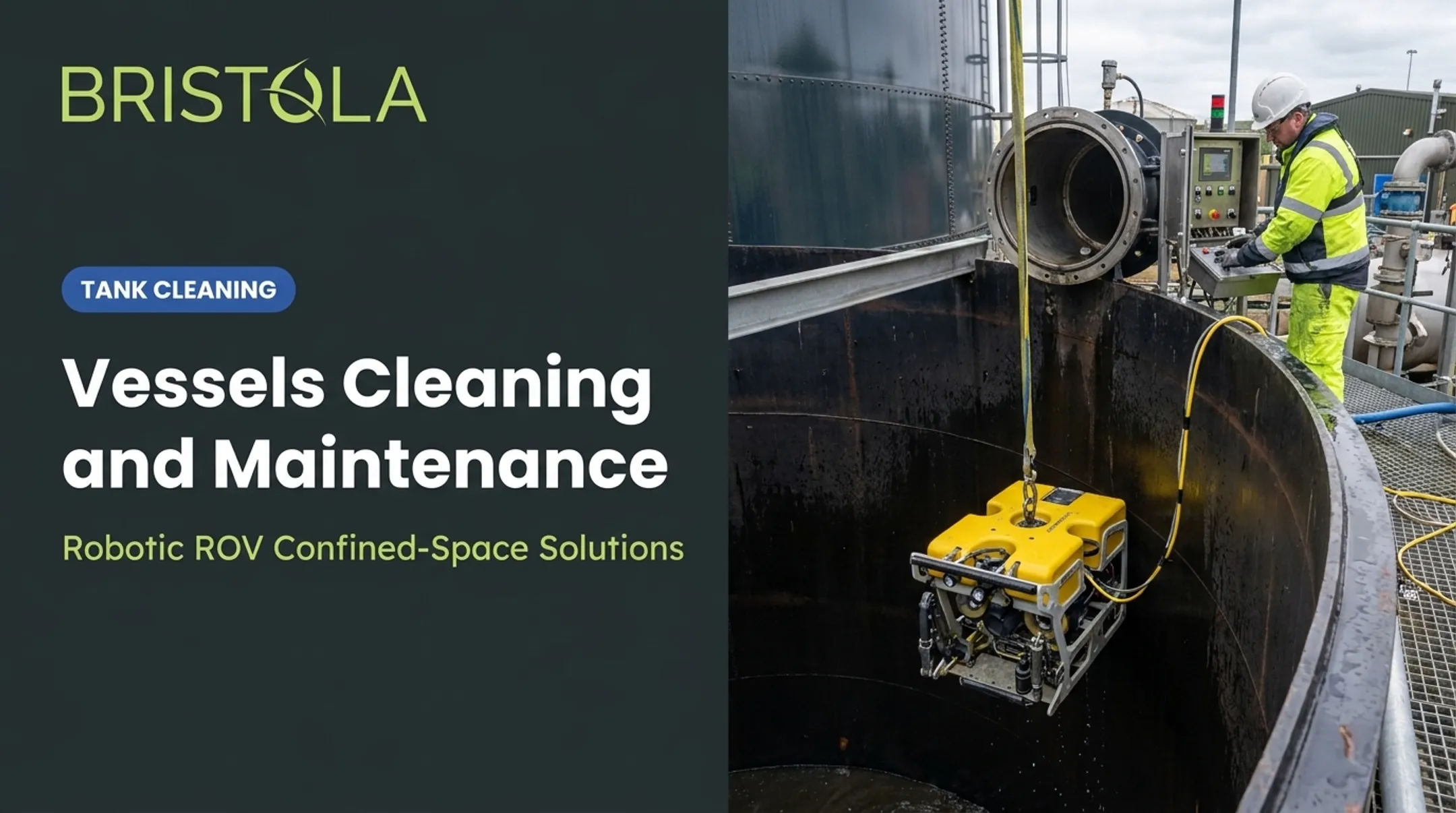
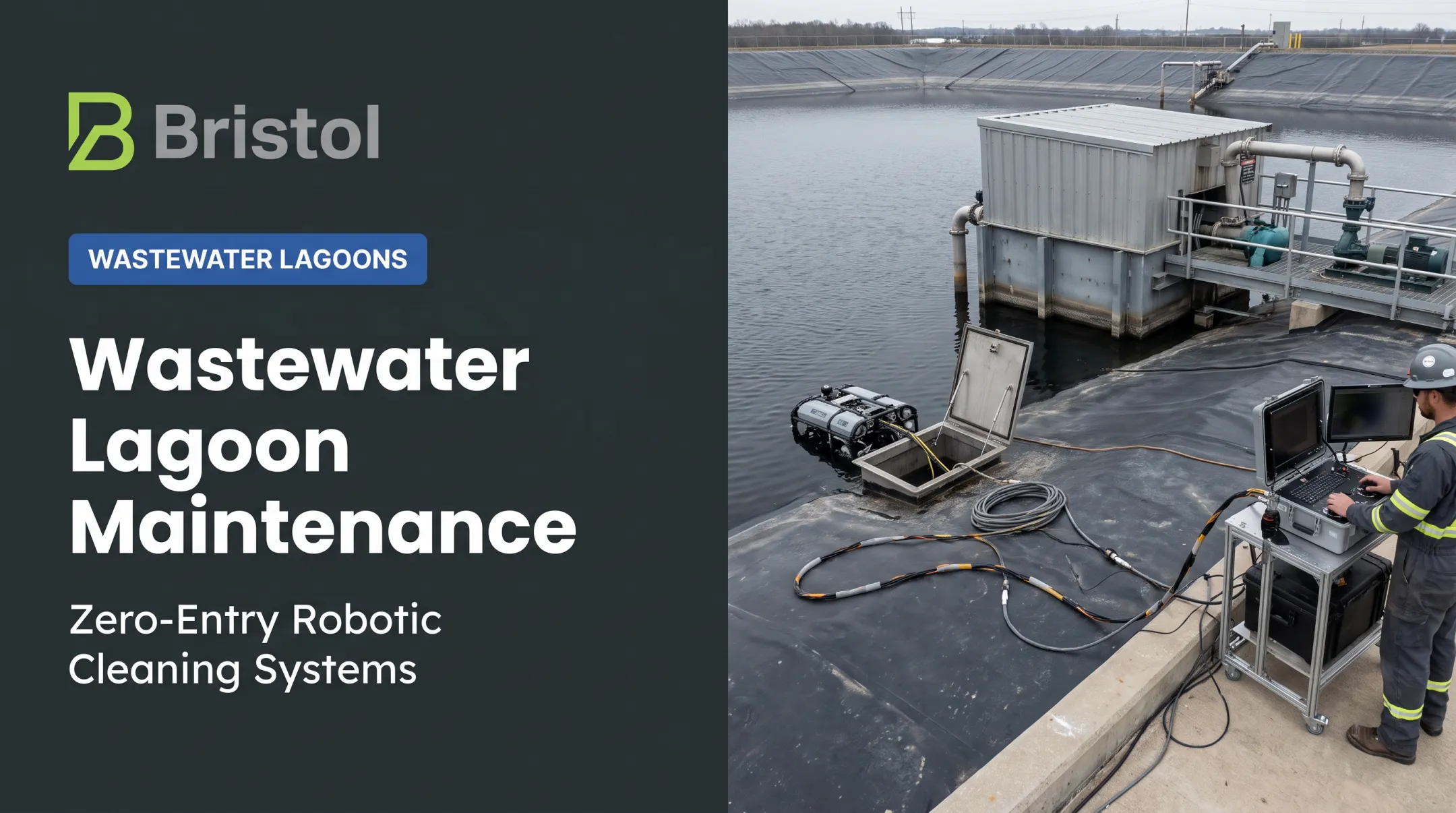
Deep servicing such as strip liner replacement, full drain-downs, and scraper or squeegee rebuilds has traditionally required confined-space entry and a complete tank shutdown. Those outages are costly, and the entry work carries real safety risk. Zero-human-entry robotic cleaning offers another path. Bristola's patented submersible robot and equalization-chamber entry system clean tanks while they stay in operation. An airlock-style portal installs over an existing manhole (compatible with openings 24 inches or larger). A remote-controlled robot then descends on a winch and removes sludge and sediment from the tank floor—no draining and no human entry required. Removed material travels through a flexible hose to your selected processing option. Sonar navigation and real-time monitoring support the cleaning run and facility-condition reporting.

How to Check If a Clarifier Needs Maintenance
Catching these signs early keeps small issues from turning into major overhauls.
Performance or Effluent Changes
- Rising turbidity or suspended solids in the effluent stream
- Solids or scum visibly spilling over the weirs
Unusual Behavior or Odors
- Drive noise, vibration, or lag suggesting bearing or seal wear
- Foul, rotten-egg odors near the tank from septic sludge and hydrogen sulfide formation
EPA research links significant hydrogen sulfide releases in primary clarifiers, sludge thickeners, and sludge-holding tanks to low-oxygen, stagnant conditions.
Sludge and Mechanical Irregularities
- Sludge blanket exceeding the EPA's recommended 1 to 3 feet target range
- Broken or misaligned scrapers, skimmers, or squeegees discovered during inspection
Recurring Downstream Issues
- Increased pump clogging or erratic float switch readings at connected lift stations
- Frequent temporary fixes or repeat call-outs that usually signal a deeper, unresolved maintenance need

Clarifier Maintenance Schedule (General Guidelines)
Frequency depends on flow rate, loading, and tank size. Here's a general framework based on manufacturer guidance:
| Frequency | Tasks |
|---|---|
| Daily | Visual inspection of weirs, launders, and drive operation |
| Weekly | Condensate drainage, chain lubrication, oil level checks |
| Monthly | Sludge blanket measurement |
| Quarterly | Seal and bearing inspection |
| Annual | Full mechanism inspection, oil replacement, coating/paint touch-up |
High-flow or continuously operating clarifiers need tighter inspection intervals. Low-usage systems can stretch these checks further, but skipping them entirely is how small issues become major overhauls.

Conclusion
Clarifier maintenance is the foundation of consistent treatment performance, regulatory compliance, and equipment longevity. Balancing routine upkeep, predictive monitoring, and major overhauls protects both uptime and budget.
For major overhauls, zero-human-entry systems like Bristola's change the practical options. Instead of draining a tank and sending workers into a confined space, operators can clean while the system stays online, removing sludge without the safety exposure or a shutdown.
Frequently Asked Questions
When should you use a clarifier?
Clarifiers are used wherever suspended solids need separation from liquid, including primary and secondary wastewater treatment, industrial process water, and anaerobic digestion systems.
What is the purpose of a clarifier?
A clarifier uses gravity settling to remove solids from liquid, protecting downstream equipment and helping treatment plants meet effluent discharge standards.
What is the difference between a clarifier and a purifier?
A clarifier physically separates solids through settling. A purifier typically relies on filtration, chemical treatment, or biological processes to remove finer contaminants or pathogens.
How often should a clarifier be cleaned?
There's no universal rule. Cleaning frequency depends on loading, sludge accumulation, and manufacturer guidance. Base your schedule on inspection findings and process performance data rather than a fixed calendar interval.
What happens if a clarifier isn't maintained?
Expect solids carryover, increased pump clogging, odor complaints, and potential regulatory violations tied to effluent quality standards.
Is confined-space entry required to clean a clarifier?
Traditional cleaning often requires confined-space entry under OSHA's 29 CFR 1910.146. Newer zero-human-entry robotic systems eliminate this requirement by cleaning tanks while they remain full and operational.