Poor UST maintenance creates real exposure: environmental contamination, confined-space injuries, and compliance violations that can cost millions. EPA reported over 530,000 petroleum UST releases cleaned up under the national program as of March 2026, and a single enforcement settlement with New York City hit $1.3 million in January 2026 alone.
This guide covers why maintenance matters, the different types of UST maintenance, warning signs to watch for, a practical maintenance schedule, and how zero-entry robotic technology is changing how tanks get cleaned.
TL;DR
- Preventive UST maintenance protects performance and safety, keeps you compliant, and costs less than emergency repairs
- Traditional tank cleaning requires human entry and forces production downtime under confined-space risk
- Watch for sludge buildup or sensor alarms—and for reduced output—to catch problems early
- A structured inspection and cleaning schedule extends tank life and reduces liability
- Zero-human-entry robotic systems like Bristola's eliminate downtime and confined-space risk
Why Maintenance of Underground Storage Tanks Is Important
Regular UST maintenance keeps tanks operational and compliant, and it reduces the chance of leaks, fines, and public cleanup incidents.
Performance and Efficiency Take the First Hit
Sediment and residue buildup reduce usable tank capacity and can degrade stored product quality over time. This is especially true for fuel tanks, where water intrusion and sludge accumulation compound each other. EPA guidance is direct: water found in a tank should trigger investigation and correction of the source, not deferred action.
Lifespan and Replacement Cycles
Corrosion and unaddressed wear force premature tank replacement. A 2024 AMPP peer-reviewed review found the average age of USTs removed for replacement climbed from 17 years in 1985 to 33 years today. That longer service life tracks with better protection and maintenance—not a reason to ease off inspections.
Safety and Regulatory Compliance
USTs are governed by federal rules under 40 CFR Part 280, requiring release detection at least every 30 days, annual testing of monitoring equipment, and prompt reporting of suspected releases. Compliance isn't universal:
- Technical compliance: 60.9% (April 2025–March 2026)
- Operator training compliance: 89.7%
- Financial responsibility compliance: 90.4%
- Walkthrough inspection compliance: 83.2%

Those gaps create real enforcement risk. Weak documentation and missed operating practices are common triggers for penalties and mandated corrective action.
Cost Savings from Prevention
Illinois' UST fund shows the scale of reactive cost: eligible cleanup coverage runs up to $1.5 million per occurrence, minus deductibles between $5,000 and $100,000, and planned tank removal is not covered. Preventive maintenance costs a fraction of that exposure, and every state program and tank setup will differ on exact figures.
Types of Maintenance for Underground Storage Tanks
UST maintenance isn't one-size-fits-all. It depends on tank age, product stored, construction material, and how heavily the tank is used.
Routine / Preventive Maintenance
This covers the baseline compliance work every UST needs:
- Scheduled visual inspections of fill boxes and caps
- Dispenser leak checks
- Release-detection system monitoring
- Corrosion protection checks
- Inventory record reviews When it's enough: Newer double-walled tanks with continuous monitoring and a clean compliance history can often stay on routine maintenance alone.
Corrective / Reactive Maintenance
This kicks in after something has already gone wrong: a failed leak test, visible corrosion, or contamination evidence. Heavy reliance on reactive maintenance carries real costs:
- Cleanup costs climb fast once contamination spreads
- Downtime extends while repairs and testing happen
- Regulatory violations pile up if a suspected release isn't reported within the required window (typically 24 hours)
Tank Cleaning: Predictive and Condition-Based
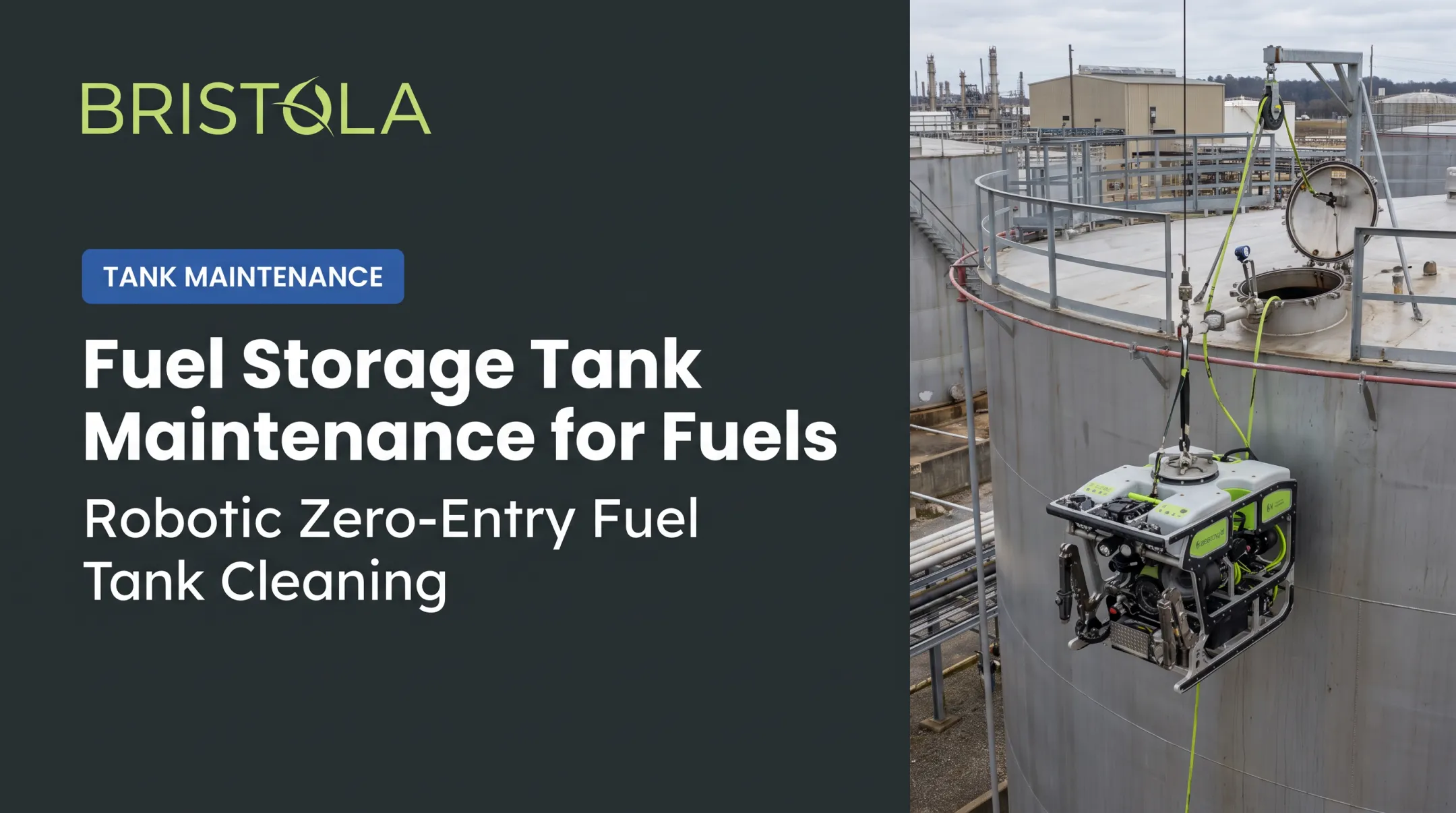
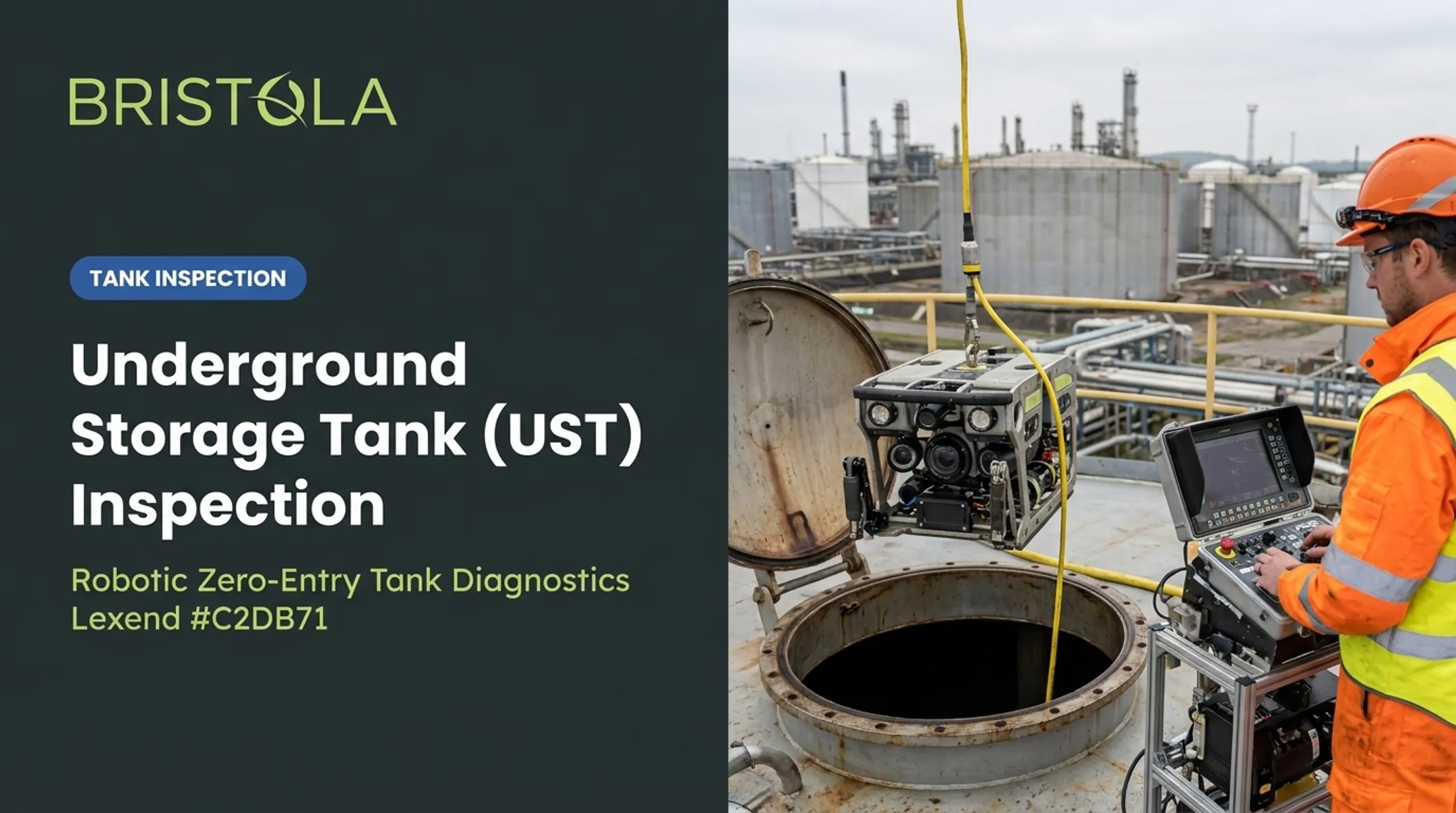
Cleaning frequency should follow performance indicators — sludge accumulation, throughput decline, water in the tank — rather than a fixed calendar. There's no single industry-mandated cleaning interval; PEI's RP900 practice covers inspection requirements but leaves cleaning frequency condition-based. Traditional tank cleaning still requires confined-space entry, full tank draining, and vapor purging. That process falls under OSHA's permit-required confined space standard (29 CFR 1910.146), which means written entry permits, atmospheric testing, trained attendants, and rescue plans before anyone climbs in. It is slow, expensive, and dangerous. Bristola's patented zero-human-entry robotic system avoids that cycle. A submersible robot enters through an equalization chamber entry portal, installed on manholes 24 inches or larger, and cleans the tank floor through a flexible hose while the tank stays full and operational. No draining, no vapor purging, and no human inside the tank.
One documented Bristola project compared annualized costs directly: $170,000 with the robotic approach versus $250,000 for traditional cleaning — roughly $80,000 saved per tank, per year.

Major / Overhaul Maintenance
This covers tank relining, cathodic protection replacement, or full decommissioning and replacement. It's typically required when:
- A tank fails integrity or tightness testing
- Age-related regulatory mandates force action
- The tank is incompatible with a new product being stored
How to Check If Your UST Needs Maintenance
Catching problems early beats discovering them during an inspection audit.
Performance or Output Changes
- Reduced storage capacity or slower dispensing
- Inconsistent readings during inventory reconciliation
- Unexplained product loss between deliveries
Visible Wear, Errors, or Irregularities
- Sludge, sediment, or water accumulation found during gauging
- Alarm triggers or failed readings from an automatic tank gauge (ATG)
- Fuel odors, staining, or vapor detected near the tank site
EPA's ATG performance standard requires detection of a leak as small as 0.2 gallons per hour. Common alarms include high product, low product, high water, and theft — and every one deserves investigation, not a reset button.
Recurring Issues or Downtime
- Repeated failed leak-detection tests
- Frequent manual dipping or temporary storage due to tank problems
- Unplanned dispenser downtime or repeat service calls
If any of these show up more than once, schedule a professional inspection before a small issue turns into a compliance failure or unplanned shutdown.
Underground Storage Tank Maintenance Schedule
Exact schedules vary by tank type, product stored, and state rules. Federal requirements set the minimum baseline:
| Frequency | Tasks |
|---|---|
| Daily/per-use | Visual checks of fill boxes, dispensers, and hoses |
| Monthly (at least every 30 days) | Release detection monitoring Inventory reconciliation |
| Annually | Full inspection Cathodic protection testing ATG equipment checks Cleaning assessment |
| Every 3–5 years (varies by configuration and state) | Tightness testing Major cleaning Piping tests |
| Within 6 months of a cathodic protection repair | Retest the repaired system |

High-throughput sites like gas stations need tighter monitoring than low-usage industrial tanks. More product throughput means faster wear on dispensers and detection equipment.
Match your inspection cadence to actual usage—not a generic calendar alone.
The Bottom Line
UST maintenance is a compliance requirement that belongs in every facility budget. The right approach balances safety, cost, and uptime, and that balance is changing as safer methods become available.
Bristola's zero-human-entry robotic cleaning system points to a practical path forward: safer for workers, without the operational downtime traditional confined-space cleaning demands.
Frequently Asked Questions
How often should underground storage tanks be cleaned?
Cleaning frequency depends on product type, tank usage, and sediment buildup rather than a fixed rule. Most facilities schedule cleaning every 1-3 years, with condition monitoring in between to catch buildup early.
Can I sell a house with an underground oil tank?
Yes, but it's rarely simple. Buyers, lenders, and state programs often require tank testing, cleaning, or removal before closing, and requirements vary significantly by state.
What is the average lifespan of an underground storage tank?
Lifespan varies by material and protection method, with steel and fiberglass tanks aging differently. Industry data shows the average age at removal has climbed from 17 years in 1985 to 33 years today, reflecting better corrosion protection.
How long will diesel stay good in a storage tank?
Diesel has no universal shelf-life deadline. Degradation depends on water content, sediment buildup, and storage conditions. Regular fuel testing and water removal matter more than any fixed timeline.
What happens if a UST is not properly maintained?
Poor maintenance leads to leaks, soil and groundwater contamination, vapor intrusion risks, and regulatory penalties. The national UST program has cleaned up over 530,000 petroleum releases.
Is confined-space entry required for tank cleaning?
Traditional cleaning methods require confined-space entry under OSHA's permit-required standards, including atmospheric testing and rescue planning. Bristola's robotic systems eliminate that requirement by cleaning tanks remotely.