When maintenance slips, the consequences aren't minor. Poor upkeep leads to sunken roofs, dangerous vapor releases, and regulatory violations that can cost hundreds of thousands of dollars. This guide covers why maintenance matters, the different maintenance types, warning signs to watch, and realistic schedules based on API and EPA guidance.
Key Takeaways
- Seal degradation and drainage failures are the leading causes of floating roof emissions and sinking incidents
- API 653 inspection intervals vary by edition and corrosion data: don't assume a blanket 10-year rule
- A 2023 EPA settlement cost one refiner $287,756 plus a year of monitoring
- Zero-human-entry robotic systems clean and inspect tanks without draining or sending workers inside
Why Maintenance of Floating Roof Storage Tanks Is Important
Consistent maintenance keeps floating roof tanks compliant, safe, and operational for decades. Skip it, and small problems compound fast.
Performance and Product Loss
A degraded seal or a roof that's out of alignment lets vapors escape past the intended barrier. That means lost product and rising VOC readings, the opposite of what the floating roof was designed to prevent.
Lifespan Impact
Corrosion at the center deck, fatigue cracking in pontoons, and unresolved drainage issues shorten a tank's service life considerably. Ignore them, and minor repairs turn into structural failures.
Safety and Compliance
API 653 governs inspection intervals, though the specifics depend on edition and corrosion data. A 1999 API/NJDEP guide called for monthly routine inspections and external inspections every 5 years, or sooner based on shell corrosion rates. Internal inspection intervals can stretch much longer in practice, often into the 20- to 25-year range when condition monitoring supports it, but only with a documented inspection program. Those inspections still collide with a harder constraint: confined-space entry. The Bureau of Labor Statistics recorded 1,030 occupational confined-space deaths between 2011 and 2018. Every manual tank entry for cleaning or internal inspection carries that risk, which is why operators increasingly look for methods that cut how often people go inside.
Cost of Reactive Repair
Deferred maintenance shows up on the balance sheet just as fast as it shows up in the field:
- In 2023, the EPA settled with Peerless Oil and Chemicals for $287,756 and required monthly infrared-camera inspections for 12 months after floating roof VOC violations
- During Hurricane Harvey, one facility released 57,000 pounds of product when rainfall overwhelmed roof drain capacity after drainage maintenance gaps

Types of Maintenance for Floating Roof Storage Tanks
Floating roof systems need a layered approach: no single maintenance type covers every risk.
Routine / Preventive Maintenance
This is your baseline, done on a fixed schedule:
- Seal, drain, and vent inspections
- Clearing debris from the deck and sumps
- Checking anti-rotation devices
- Verifying roof leg settings Routine care fits younger tanks in stable service, where operating conditions are not driving early component failure.
Corrective / Reactive Maintenance
This kicks in after something is already wrong: seal failure, blocked drains, or visible corrosion. It fixes the immediate problem but does nothing to prevent the next one. Relying only on reactive fixes is risky. A delayed response to a blocked drain can turn a quick repair into a tilted, partially sunken roof.
Predictive / Condition-Based Maintenance
Instead of fixed intervals, this approach schedules work from actual condition data. Teams typically track:
- Seal wear and gap trends
- Deck and pontoon condition
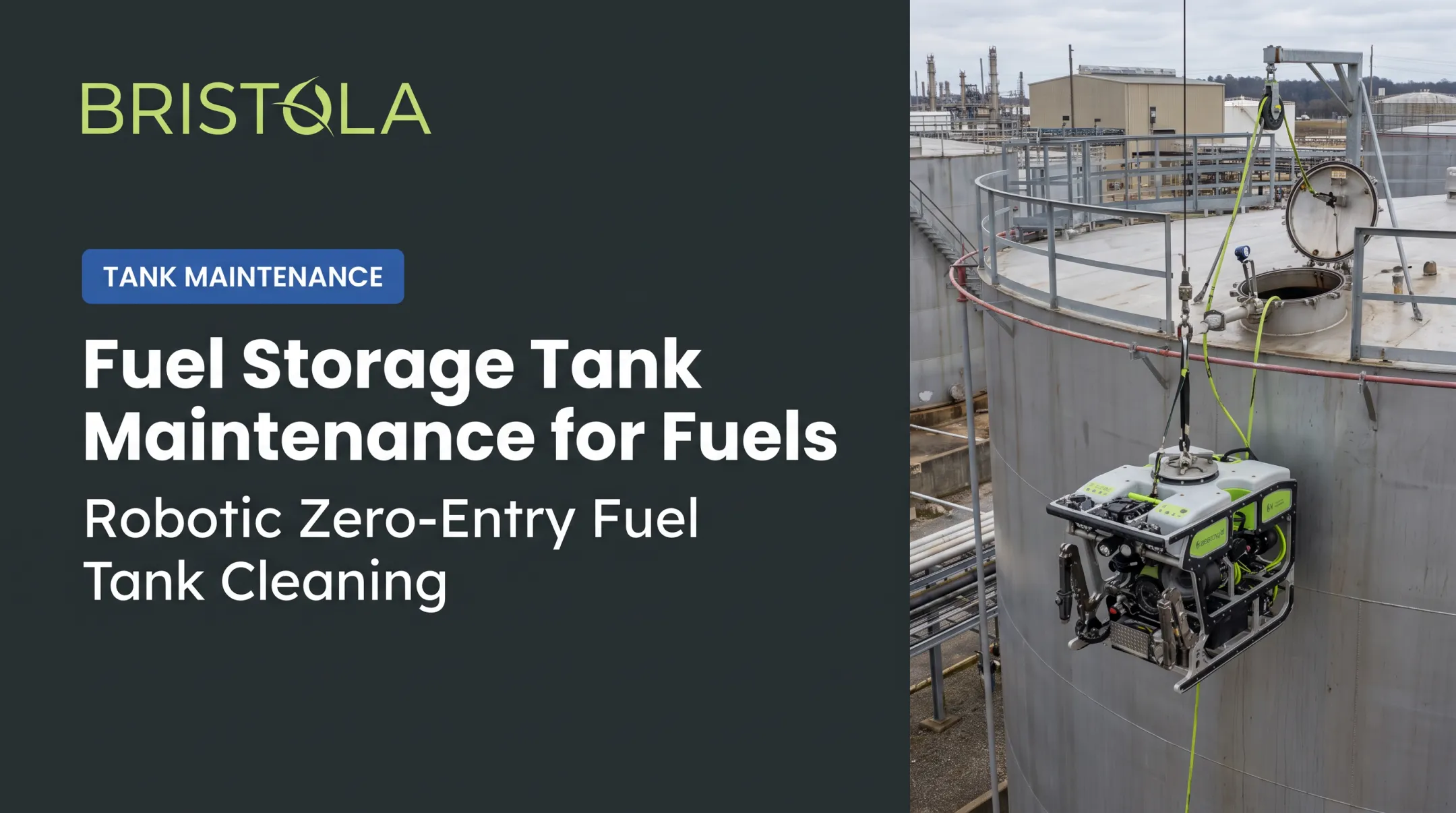
- Drainage performance over time Bristola's submersible ROV technology evaluates tank condition and reports sediment and sludge buildup without draining the tank or sending anyone inside. Condition assessment can run on an ongoing basis, not only during scheduled shutdowns.
Major / Overhaul Maintenance
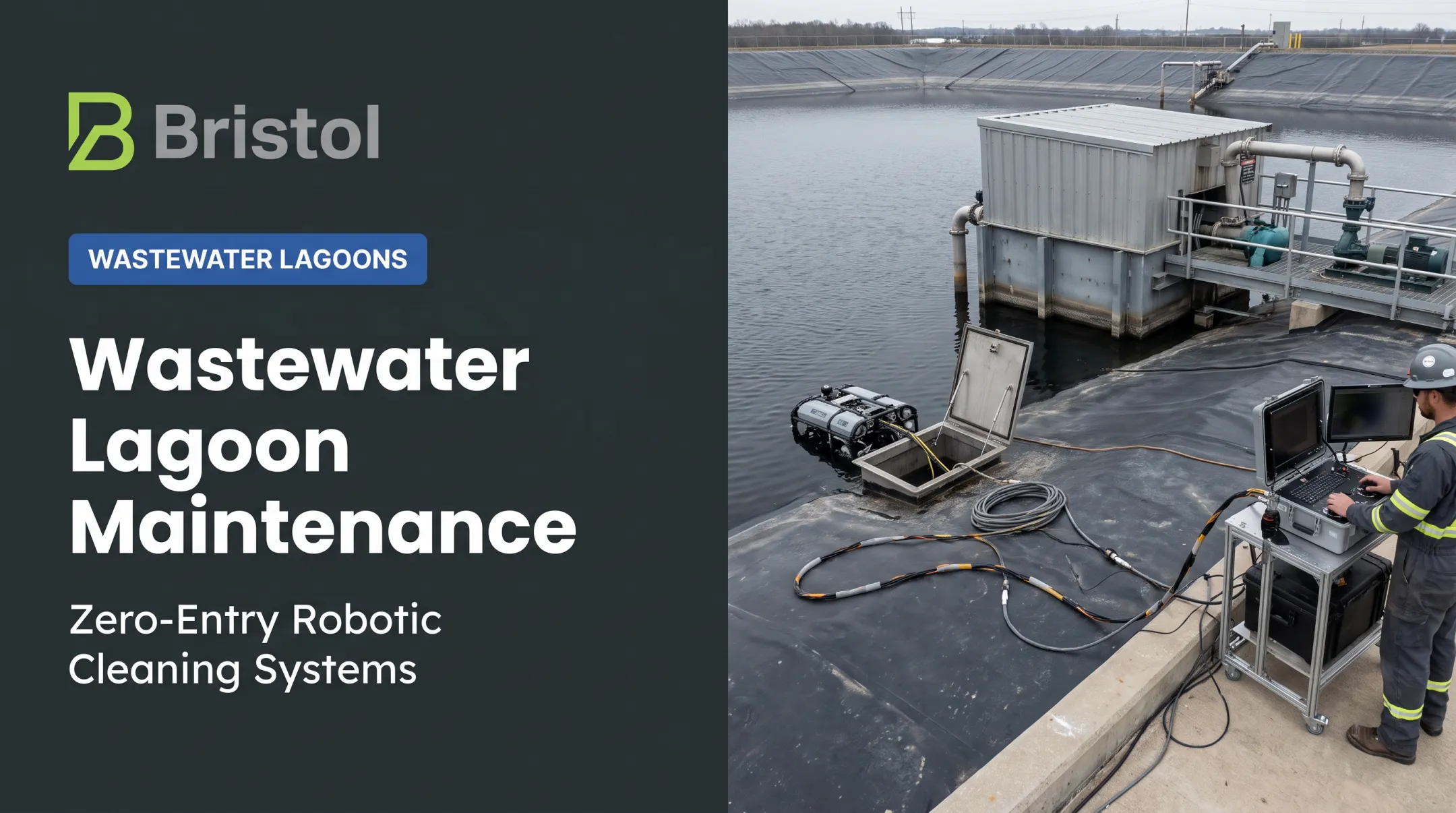
This is deep servicing: full seal replacement, pontoon repair, and structural work requiring tank entry. Becht's industry data puts seal mean-time-between-failure at roughly 10-12 years, though this varies by design and service conditions. Traditionally, this level of work means degassing the tank and sending workers inside, with full downtime and full confined-space risk. Bristola's patented equalization chamber offers another path. The system installs at an existing manhole (24 inches or larger) and lets a submersible robot enter while the tank stays full and operational. Sludge and sediment are removed through a flexible hose, without draining the tank or requiring human entry.

How to Check If a Floating Roof Tank Needs Maintenance
Catching problems early prevents small issues from becoming shutdown-level emergencies.
Visible Wear, Corrosion, or Irregularities
- Corrosion on the center deck, drain sumps, or leg sleeves
- Cracked, hardened, or torn primary/secondary seals
- Oil pooling or standing water on the roof deck
Unusual Roof Behavior
- Uncontrolled or unexpected roof landings
- Tilting, binding, or resistance during rise and fall
- Rubbing or grinding sounds near guide poles or anti-rotation devices
Increased Emissions or Product Loss
These signs often point to seal or fitting failures:
- Noticeable odor near the tank
- Rising VOC readings
- Unexplained inventory discrepancies
EPA Subpart Kb sets hard gap limits: primary seals cannot exceed 212 cm² per meter of accumulated gap, and secondary seals 21.2 cm² per meter. Once those limits are exceeded, defined repair windows apply.

Recurring Issues or Downtime
These patterns mean reactive fixes are no longer enough:
- Minor seal leaks that keep returning and grow more frequent
- Repeated emergency shutdowns for drain repairs
Either one is a signal to move to a structured maintenance plan.
Floating Roof Tank Maintenance Schedule
Exact schedules depend on tank age, product volatility, climate, and applicable regulations, but here's a general framework:
| Frequency | Tasks |
|---|---|
| Daily/Weekly | Visual checks of drains, vents, and seal gaps |
| Monthly/Quarterly | Seal condition, roof leg, and anti-rotation device inspections |
| Annual | Full external inspection per API 653 guidelines |
| Every 10-12 years or per regulatory interval | Major overhaul, seal replacement, internal inspection |
External floating roofs (EFRs) need closer attention to drainage, especially in high-rainfall regions. Hurricane Harvey showed how quickly excess rainwater can overwhelm drain capacity and tilt the roof.
Internal floating roofs (IFRs), protected by an outer fixed roof, generally need less frequent exterior attention. EPA still requires seal inspections through manholes at set intervals for specific seal designs.

The Bottom Line
Floating roof maintenance isn't optional. API compliance and emissions regulations make that clear, and the financial penalties for skipping it are steep.
Balancing routine checks, predictive monitoring, and major overhaul work protects both safety and operating costs. Zero-entry technologies like Bristola's equalization chamber system let facilities complete major cleaning and inspection work without the downtime and confined-space risk that used to be unavoidable.
Frequently Asked Questions
What is the working principle of a floating roof tank?
The roof rests directly on the liquid surface and rises or falls with it. This eliminates the vapor space found in fixed-roof tanks, reducing evaporation losses.
Why use a floating roof tank?
Floating roofs reduce VOC emissions, fire risk, and product loss compared to fixed-roof tanks storing volatile liquids like crude oil or gasoline. The design removes the vapor space where dangerous concentrations can build up.
What is the average lifespan of a floating roof tank?
With solid maintenance, floating roof tanks often last 30–50 years or longer. Seals, coatings, and drain components wear faster and usually need service or replacement on 10–20 year cycles.
How often should floating roof seals be inspected or replaced?
Seals typically last 10-12 years and should be visually inspected quarterly at minimum. Replace sooner if you spot cracking, hardening, or tearing.
What causes a floating roof to sink?
Common causes include drainage system failure, pontoon punctures, seismic or storm damage, and excessive rainwater accumulation overwhelming the drain system. Blocked or frozen drains are frequent culprits.
Can floating roof tank cleaning be done without entering the tank?
Yes. Modern zero-human-entry robotic systems, like Bristola's equalization chamber technology, allow submersible robots to clean and inspect tanks while they remain full and in service — eliminating both confined-space risk and production downtime.