Many facility managers struggle with a familiar trio of headaches: rising disposal bills, tightening EPA rules, and lost production capacity when tanks and lagoons fill up with waste nobody planned for. This guide breaks down proven volume reduction methods, the waste types you're actually dealing with, and a specialized approach for liquid and sludge waste sitting in your storage tanks right now.
Key Takeaways
- Source reduction delivers the highest impact and lowest cost in the waste hierarchy
- Segregation, recycling, and process changes cut disposal volumes fast
- Addressing sludge and solids buildup in tanks and digesters recovers storage capacity
- Waste audits and tracking software reveal hidden reduction opportunities
- Combining prevention, mechanical reduction, and maintenance produces lasting results
Understanding Industrial Waste Volume Reduction
Industrial waste volume reduction covers the techniques facilities use to shrink the physical amount of waste that needs transport, treatment, or disposal. The work starts before waste is generated, not only when loads are compacted for hauling.
The EPA's waste management hierarchy ranks strategies by preference:
- Source reduction and reuse — preventing waste before it exists
- Recycling and composting — recovering material value
- Energy recovery — converting waste to usable energy
- Treatment and disposal — the last resort
Source reduction sits at the top because it eliminates costs entirely, rather than just shifting them (EPA, 2025).
The scale here is real. EPA's 2023 Toxics Release Inventory reported 34.6 billion pounds of TRI-listed chemicals managed as waste nationally, with 90% recycled, combusted for energy, or treated . Only 10% was disposed of outright. That's just one regulated subset of industrial waste, not the full national picture, but it frames how much material US industry moves through its waste streams every year.

Why Volume Reduction Matters Beyond Cost Savings
Lower waste volume means fewer trucks on the road, less energy spent on treatment, and reduced emissions tied to transport and processing. It also frees up physical space. A facility drowning in waste storage has less room for actual production, and every gallon of tank capacity lost to sludge is capacity you paid for but can't use.
Common Types of Industrial Waste (Know What You're Reducing)
You can't reduce what you haven't identified. Major categories include:
- Hazardous waste — ignitable, corrosive, reactive, or toxic materials under the Resource Conservation and Recovery Act (RCRA)
- Scrap metal — from manufacturing, fabrication, or equipment repair
- Chemical and solvent waste — spent solvents, unused reagents, cleaning agents
- Wastewater and sludge — treatment byproducts, biological solids
- Organic and biological waste — food processing residue, agricultural material
- Packaging waste — cardboard, plastics, pallets
- Electronic waste — retired equipment and components
Beyond these broad categories, EPA specifically names seven listed hazardous waste groups:
- Spent solvents
- Electroplating and metal-finishing wastes
- Dioxin-bearing wastes
- Chlorinated aliphatic hydrocarbons production waste
- Wood-preserving wastes
- Petroleum-refinery wastewater sludges
- Multisource leachate
Different sectors skew toward different dominant waste streams. Food processors deal heavily in organic sludge and FOG (fats, oils, and grease). Oil and gas facilities handle chemical waste and tank sediment. Anaerobic digesters accumulate solids that directly affect biogas output.
Knowing your dominant stream is step one before picking a reduction method.
Proven Methods to Reduce Industrial Waste Volume
Source Reduction and Process Optimization
Redesign processes so less waste is created upfront by upgrading machinery, substituting materials, tightening production specs, or cutting unnecessary packaging. It is the highest-impact move available: waste you never generate does not need to be hauled, treated, or paid for.
Material Segregation
Standardizing separation policies with clearly labeled bins, consistent signage, and staff training preserves recyclable value that gets lost when materials mix. One US manufacturer went from 65% waste diversion in 2021 to 91% diversion in 2023, cutting average monthly trash from 100 tons to 34 tons through characterization studies, better signage, and staff engagement (Arcadia case study).
Recycling and Material Recovery
Scrap metal, plastics, and process byproducts can often be reclaimed and resold rather than landfilled. An EPA case study on Earth Friendly Products reported 98% waste diversion in 2018 through recovery-focused initiatives.
Mechanical Volume Reduction (Compaction and Baling)
Balers and compactors physically shrink solid waste before hauling, sometimes reducing volume by up to 98% depending on material type and machine force (vendor data from Bramidan). Shops see fewer hauls and lower frequency fees as a result.
Evaporation and Membrane Filtration for Liquid Waste
Wastewater evaporators can cut liquid waste volume by up to 95%, concentrating contaminants into a smaller stream for disposal while recovering clean water (Caloris Engineering, 2024). Membrane filtration works similarly, concentrating waste streams, though exact reduction percentages vary by application.
Data and Technology-Driven Auditing
Waste audits and digital tracking catch inefficiencies such as oversized dumpsters, unnecessary hauls, and mismatched service frequency that inflate disposal costs. This is often the cheapest reduction lever available, since it requires no capital investment.

Reducing Volume in Liquid Storage Tanks and Digesters
Here's a volume reduction challenge most facilities overlook entirely: sediment, sludge, and solids quietly accumulating on the floor of storage tanks, digesters, and covered lagoons. This buildup reduces effective capacity and traps material that should be processed or removed altogether. Industry reporting confirms periodic sludge removal is often necessary to maintain usable storage volume (Inspectioneering, 2023).
The problem? Traditional tank cleaning means draining the tank, sending workers into a confined space, and shutting down production for days or weeks. That combination drives up cost and safety risk simultaneously. Confined space entry isn't a minor concern — BLS recorded 1,030 deaths tied to confined space incidents between 2011 and 2018.
A Different Approach: Cleaning Without Draining
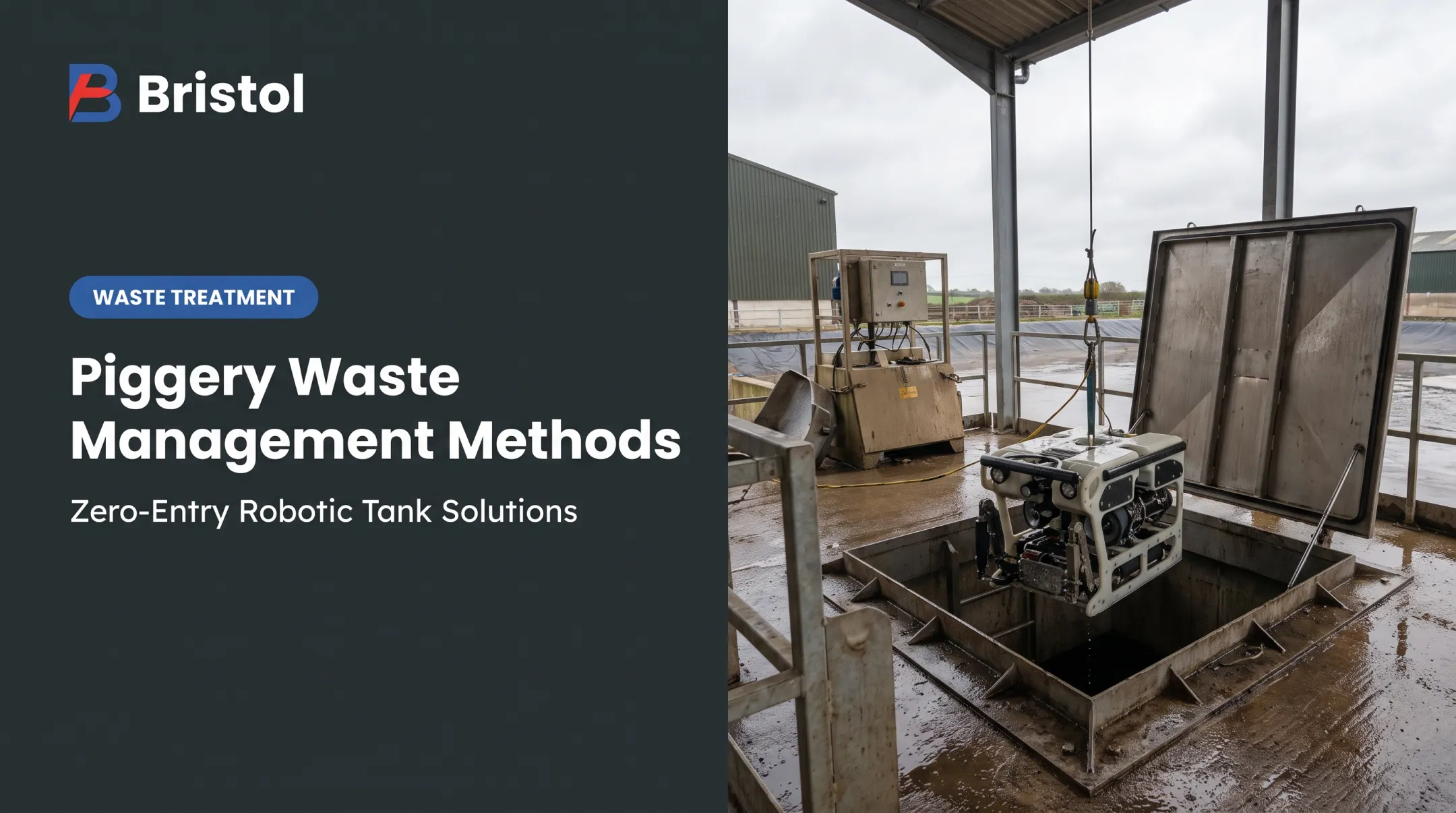
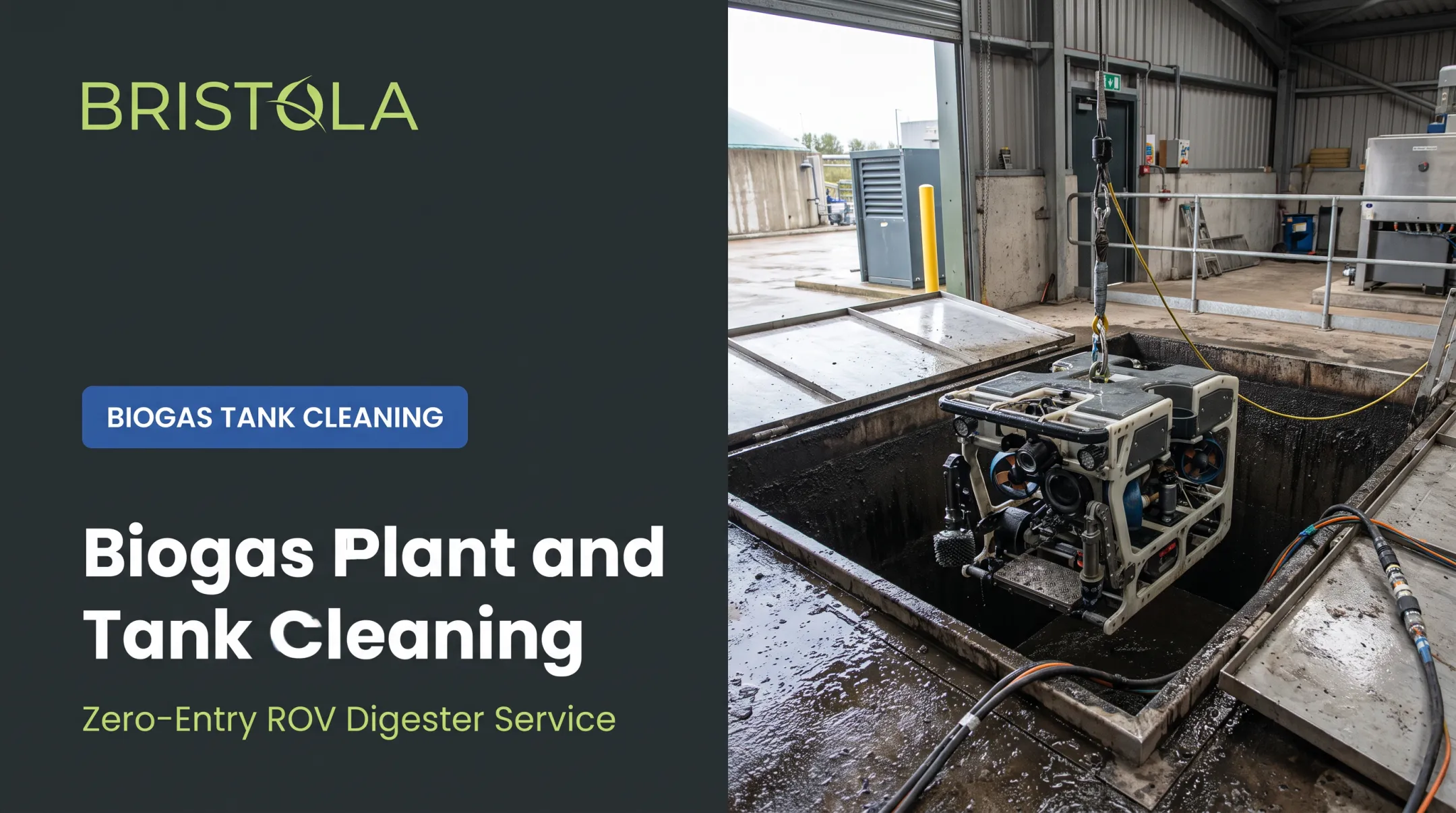
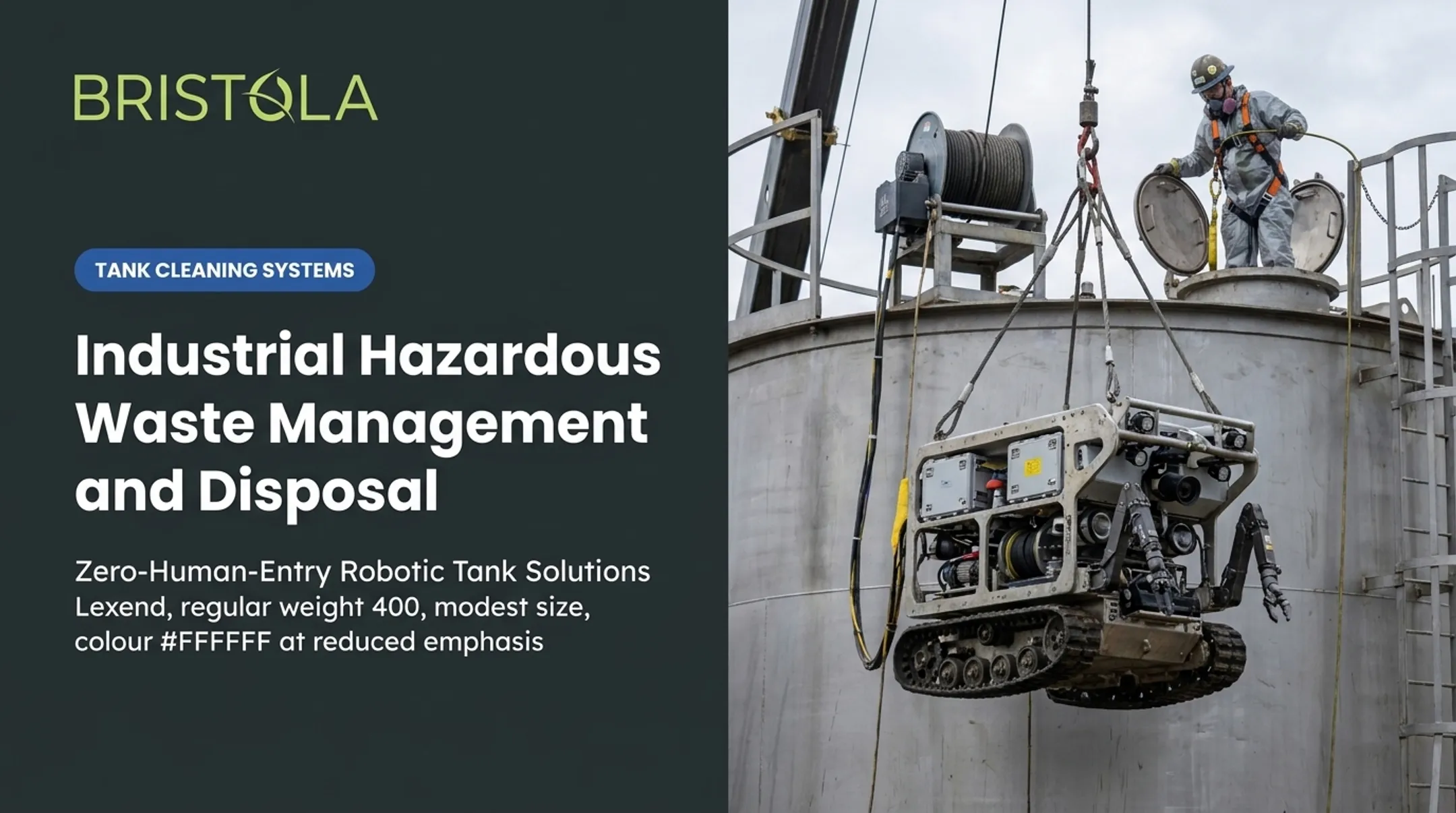
This is where Bristola's zero-human-entry robotic tank cleaning system avoids that tradeoff. A remotely operated submersible robot enters through a patented equalization chamber and entry portal, fitting through manholes 24 inches or larger, without draining the tank or sending anyone inside.
The robot navigates by sonar, reaches the tank floor via winch, and removes accumulated solids through a flexible hose while the facility stays fully operational.

For volume reduction specifically, that approach delivers:
- No production downtime, so no temporary storage workarounds
- Sediment mapping with sonar and GPS that shows exactly where capacity has been lost before cleaning starts
- Continuous cleaning that prevents severe buildup instead of waiting for crisis-level accumulation
One documented case shows the cost of neglect: a 1.2-million-gallon digester left uncleaned for four-plus years saw volatile-solids reduction drop below 25% and daily biogas output fall 20%.
This approach applies across anaerobic digesters, covered lagoons, wastewater treatment tanks, food and beverage processing tanks, and oil and gas/refinery facilities. For biogas and renewable energy operators, maintaining full digester capacity through routine, non-disruptive cleaning directly supports consistent gas output rather than production dips caused by neglected solids removal.
Overcoming Common Challenges in Waste Reduction Programs
Resistance to change and low awareness. Employees often don't see waste reduction as their job. Fix this with targeted training and visible performance metrics tied to diversion rates. People respond to numbers they can track.
Financial barriers. A 2024 Manufacturers Alliance survey found 70% of member companies wanted more budget for sustainability initiatives, citing implementation cost as the top obstacle (Manufacturers Alliance, 2024). Start with low-cost wins:
- Segregation and labeling programs
- Inventory control to avoid overordering
- Waste audits before any capital investment
Inconsistent regulations. Requirements shift by state. Texas, for example, distinguishes nonhazardous industrial waste into Classes 1, 2, and 3, with petroleum waste above 1,500 ppm TPH classified separately (TCEQ, 2025). Partnering with experienced providers who track these variations reduces compliance risk and costly rework.

Frequently Asked Questions
What is volume reduction in waste management?
Volume reduction refers to techniques like compaction, evaporation, recycling, and source reduction that decrease the physical amount of waste requiring transport or disposal. It applies to solid, liquid, and sludge waste streams alike.
What are some effective ways to reduce industrial waste?
Source reduction, material segregation, recycling and recovery, mechanical compaction, and evaporation/filtration for liquids all cut disposal volumes. Combining several methods works better than relying on just one.
What are the 7 types of industrial waste?
EPA's seven listed hazardous waste categories are spent solvents, electroplating/metal-finishing waste, dioxin-bearing waste, chlorinated hydrocarbon production waste, wood-preserving waste, petroleum-refinery sludges, and multisource leachate. Facilities also generate non-hazardous streams like scrap metal, packaging, and organic waste.
How often should industrial storage tanks be cleaned to manage waste volume?
Frequency depends on facility type and solids accumulation rate rather than a fixed schedule. Continuous or scheduled cleaning without downtime preserves capacity far better than waiting for a forced, reactive cleanout.
Can waste reduction methods also improve regulatory compliance?
Yes. Lower waste volumes and better documentation make it easier to meet EPA and state discharge or disposal requirements, including NPDES permit conditions, which run on five-year terms.
Is investing in waste reduction technology cost-effective for smaller facilities?
Low-cost strategies like segregation and inventory control often deliver quick returns without major capital outlay. Larger technology investments, including tank cleaning systems, can follow once these basics are in place.