
Choosing the Right Tank Cleaning Method: What Operators Need To Know
If you manage a digester, lagoon or liquid storage tank, cleaning is not optional. Over time, grit and sludge build up, cutting into capacity and performance. The real decision is how to clean the tank in a way that protects people and keeps the system running simultaneously.
Most facilities still rely on traditional methods that require draining tanks and sending people inside. Bristola was created as an alternative to that model. Here is a simple look at common options and how remotely operated vehicle cleaning changes the picture.
Vacuum Truck Cleaning
Vacuum trucks remove sludge and settled solids by pulling material out through access points around the tank. They work well for softer material and lighter grit, and the closed system helps control odors and keep waste contained.
These trade-offs show up in both downtime and how much the team can actually reach. Hoses have a hard time breaking through thick or stringy buildup, and they can’t always get into every corner of a large tank. In most cases, the tank must be taken offline, which means lost production and finding a place to hold incoming material. There is also the cost of hauling and disposal, which adds up quickly on bigger jobs. Even with careful gas monitoring, crews may still need to enter the tank if the buildup is too heavy.
Skid Loader and Side Panel Removal
In some situations, operators remove a side panel and use a skid loader to push out grit and debris. This can be a fast way to remove large volumes of material when the tank is already empty, and it allows direct inspection of the floor and walls.
It also creates structural and safety risks. Once a panel comes off, there is no way to control how the sediment comes out, which can spread material across the site and require extensive cleanup. Opening the tank also exposes workers to confined-space risks and gas. The steps that follow — including draining, purging, entering, repairing and resealing — all take time and keep the tank out of service even longer.
Crane or Clamshell With Roof Removal
Another option is removing the roof and using a crane with a clamshell bucket to scoop material out. This provides full access for deep cleanouts and hardened grit that other methods cannot handle.
However, roof removal is typically expensive and labor intensive. Weather can slow work, and the tank must be resealed and tested before it returns to service. Opening the roof also releases gas and odors, which can create air quality concerns. For many facilities, this becomes a last resort, not a routine cleaning plan.
ROV Cleaning: Bristola’s Method
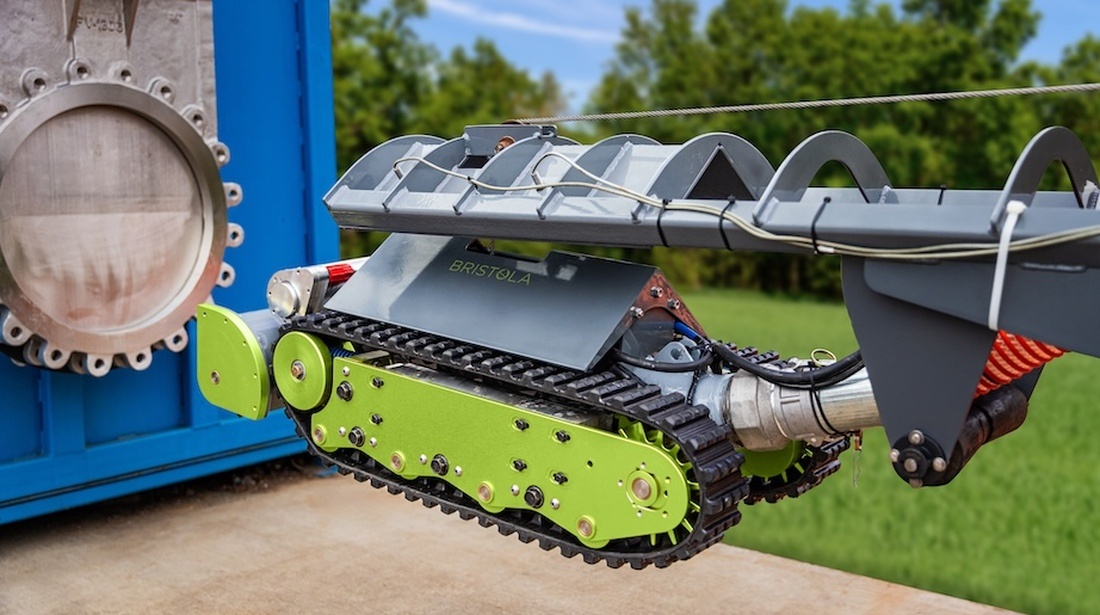
At Bristola, we take a different approach. Instead of opening tanks or sending people inside, a remotely operated vehicle enters through a specialized entry system. Operators remain in the safest area outside the tank while cleaning happens with the tank still online, with no human entry and no costly downtime.
That creates several clear advantages:
-
No human entry: Crews stay out of harsh, confined environments.
-
No costly downtime: Tanks remain full and in service during cleaning.
-
More efficient cleaning: The ROV can target grit in hard-to-reach areas and manage buildup before it causes problems.
-
Lower overall cost: With no draining, fewer labor needs and less waste handling, cleaning is easier to plan and budget.
-
Better visibility: Onboard cameras and data help teams see what is happening inside the tank and schedule maintenance at the right time.
For operators, the difference is straightforward. Instead of planning for shutdowns, temporary storage and manual entry, they can keep systems running while addressing sediment and sludge. Because tanks do not sit empty, they avoid biological upsets, reheating costs and extra wear on the structure.
Choosing What Is Right for Your Facility
Operators need cleaning solutions that keep people safe and systems running. Older methods often cause more disruption than expected, from long shutdowns to confined-space risks. For many facilities, automated, zero-human-entry cleaning is becoming the new standard.
Bristola’s ROV technology is designed around that standard. With a focus on safety, efficiency and savings, we help liquid storage facilities and tanks stay clean and productive.
Join the Future of Tank Maintenance
Bristola is redefining what’s possible in industrial tank maintenance. Our technology-driven approach ensures safer, smarter and more cost-effective solutions for industries that rely on clean, functional tanks.
Want to learn more? Contact us today to see how Bristola can help your operations run more safely and efficiently. Stay informed about the latest innovations in tank maintenance.